

The United Nations Office at Geneva
Multimedia Newsroom
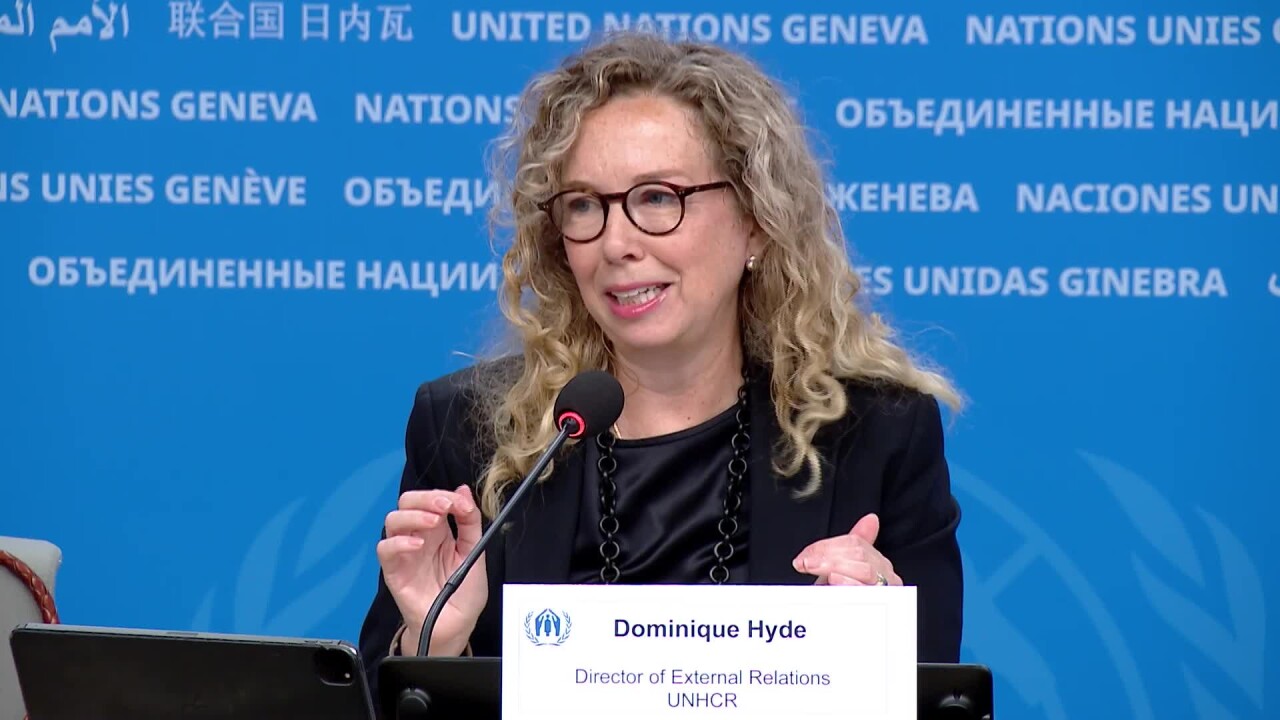
Plus de 11,6 millions de réfugiés risquent de perdre l'accès à l'aide en raison des réductions de financement, déclare le HCR
Environ un réfugié sur trois et d'autres personnes vulnérables normalement soutenues par l'agence des Nations Unies pour les réfugiés (HCR) devraient perdre l'accès à l'aide en raison des réductions de financement, a-t-il déclaré vendredi.
Sur les 10,6 milliards de dollars de besoins de financement du HCR cette année, seulement 23 % ont été couverts jusqu'à présent, a déclaré Dominique Hyde, Directrice des Relations Extérieures du HCR.
« Derrière ces chiffres se cachent des familles, des vies qui tiennent à un fil très, très mince. Les familles voient le soutien sur lequel elles comptaient disparaître, » a-t-elle déclaré.
La crise de financement résulte de grandes réductions de l'aide étrangère par des pays donateurs tels que la Suède, la France et le Japon, aggravées par la diminution de l'aide humanitaire des États-Unis.
Plus de réfugiés et moins d'aide
Les déplacements forcés augmentent dans le monde entier tandis que l'aide humanitaire diminue fortement, créant un "cocktail mortel" qui met les populations déplacées en grave danger, note un nouveau rapport du HCR.
L'agence des Nations Unies a rapporté qu'elle a été contrainte d'arrêter ou de suspendre environ 1,4 milliard de dollars de programmes d'assistance, y compris une réduction de 60 % des fournitures de secours d'urgence dans de nombreux pays, tels que le Soudan, le Tchad et l'Afghanistan.
Le soutien essentiel tel que l'aide médicale, l'éducation, l'abri, la nutrition et la protection font partie des services perdus.
Les femmes et les filles sont touchées de manière disproportionnée. L'agence doit réduire d'un quart son soutien aux programmes qui fournissent protection et réponse à la violence basée sur le genre, y compris aux survivantes.
Fin
Orateur : Dominique Hyde, Directrice des Relations Extérieures du HCR
TRT : 01’47”
SOURCE : UNTV CH
LANGUE : ANGLAIS / NATS
FORMAT D'IMAGE : 16:9
DATE : 18 juin 2025 - GENÈVE, SUISSE
LISTE DES PLANS
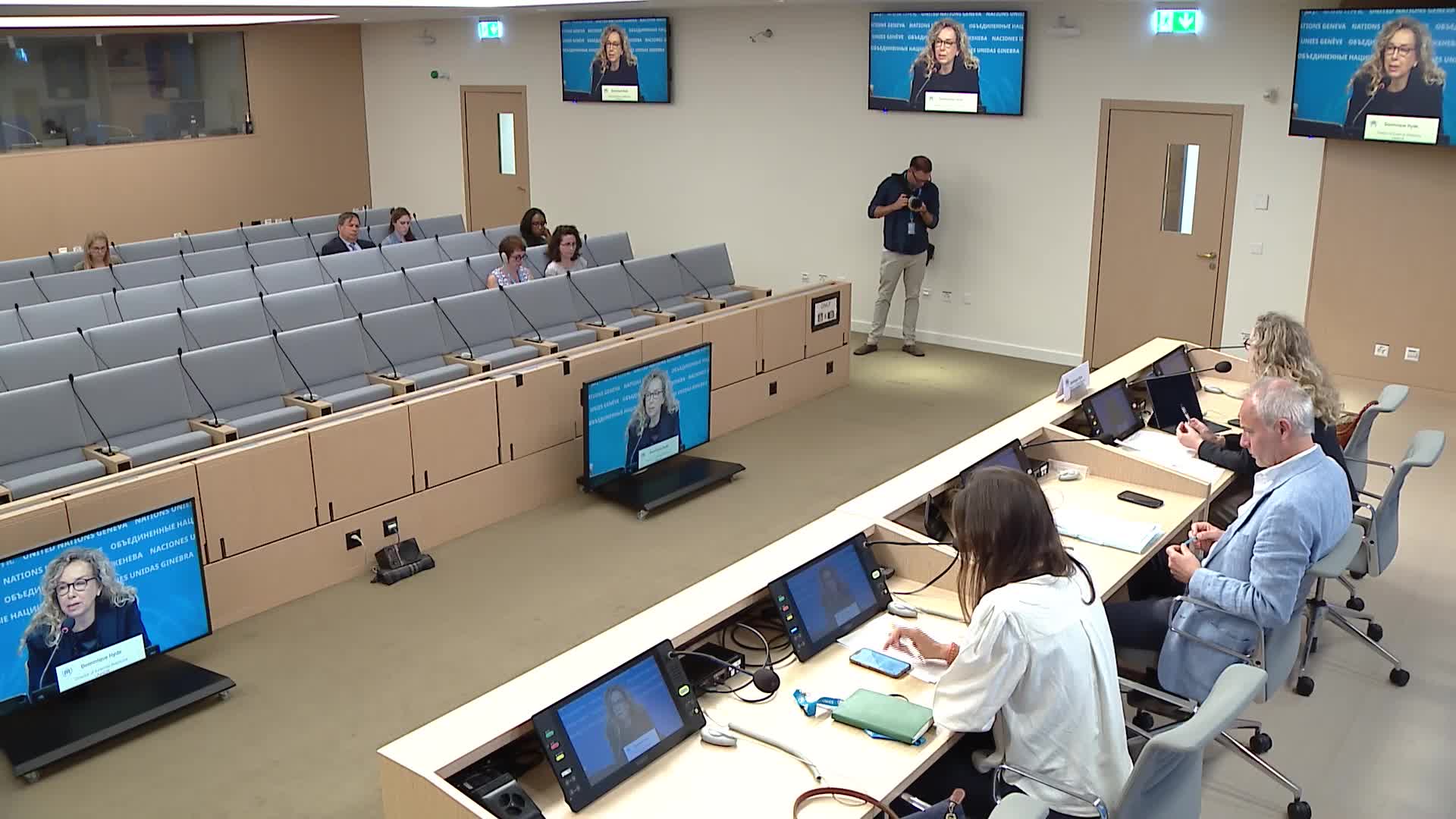
1. Plan large de la salle de conférence de presse au Palais des Nations à Genève.
2. Extrait sonore (Anglais) Dominique Hyde, Directrice des Relations Extérieures du HCR : "Nous craignons que jusqu'à 11,6 millions de réfugiés et de personnes forcées de fuir perdent l'accès à l'aide humanitaire fournie par le HCR, et cela signifie qu'un tiers des personnes que nous assistons habituellement ne recevront pas les services que nous sommes habituellement en mesure de fournir. Et derrière ces chiffres se cachent des familles, des vies qui tiennent à un fil très, très mince. Les familles voient le soutien sur lequel elles comptaient disparaître."
3. Plan de coupe : plan large de la salle de conférence de presse.
4. Extrait sonore (Anglais) Dominique Hyde, Directrice des Relations Extérieures du HCR : "Si je me concentre sur quelques exemples, j'aimerais parler du Soudan du Sud, où 75 % des espaces sûrs pour les femmes et les filles soutenus par le HCR ont fermé, laissant jusqu'à 80 000 réfugiés, femmes et filles, y compris des survivantes de violences sexuelles, sans accès aux soins médicaux, au soutien psychosocial, à l'aide juridique, au soutien matériel ou aux activités génératrices de revenus. Sans ce soutien, elles ne pourront tout simplement pas avancer dans leur vie et cela prendra beaucoup plus de temps sur leur chemin vers la guérison."
5. Plans de coupe : gros plan de journalistes écoutant et plan large latéral de la salle de conférence de presse.
6. Extrait sonore (Anglais) Dominique Hyde, Directrice des Relations Extérieures du HCR : "Nous sommes touchés. Ces organisations dirigées par des femmes sont touchées. Les gouvernements qui accueillent des réfugiés sont touchés. Je l'ai dit au début. C'est un cocktail mortel. Ce n'est pas une bonne nouvelle pour le monde."
7. Plan large de la salle de conférence de presse.
Similar Stories

1
1
1
Edited News | OCHA , UNICEF , WFP
Aid agencies warned on Friday of the fast-developing humanitarian emergency inside Taiz City in Yemen, which has been encircled by de facto Houthi forces fighting government troops along the country’s west coast.

2
17
1
2
Edited News , Press Conferences , Images | OCHA , WMO
Two UN agencies teamed up on Wednesday to issue an appeal for immediate assistance to help communities already being impacted by the strongest El Niño on record.

3
16
2
2
Edited News , B-roll , Conferences , Images | UNITED NATIONS , UNOG
Sixth Consultative Meeting on Enhancing Coordination of Peace Initiatives and Efforts for Sudan

1
1
1
Edited News | UNICEF , WHO , UNHCR
Yemen war continues to force families from homes amid hunger and disease
More than 250,000 people have now fled renewed fighting in Yemen, the UN said on Tuesday, citing particular concern for those sheltering in the southwestern city of Taiz and the wider governorate, where access is “essentially blocked”.

1
1
1
Edited News | UNICEF
A little over one year since a ceasefire agreement was announced between Hamas fighters and Israel, more than 340 children have been reported killed and hundreds more injured, the UN Children’s Fund, UNICEF, said on Friday.

1
1
1
Edited News | UNICEF , IFRC
Six weeks after Nepal’s deadly flooding disaster, communities are still struggling to rebuild their lives, but they will need sustained help as global warming increases the risk of another Himalayan catastrophe, the UN Children’s Fund (UNICEF) said on Friday.

1
1
1
Edited News | WHO
In suspected Russia plague death, testing and monitoring underway – WHO
The death of a lab worker in Russia’s Siberia region has sparked concerns about plague being the cause, the UN World Health Organization (WHO) said on Tuesday, adding that it was following the situation closely.

1
1
Edited News | OHCHR , UNOG
UN Human Rights Chief Volker Türk on Friday provided and oral update to the 63rd session of the Human rights Council on Ukraine.

1
1
1
Edited News | OHCHR , UNOG
UN Human Rights Chief Volker Türk on Friday provided and oral update to the 63rd session of the Human rights Council on the human rights situation in Haiti.

1
1
1
Edited News | WHO
Repeated delays in bringing lifesaving medicines, prosthetics and more from Israel into Gaza risk having devastating consequences on Palestinians who urgently need them in the wartorn enclave, the UN World Health Organization (WHO) said on Friday. “A truck full of non-priority supplies or the right supplies arriving too late, doesn't save lives. That's the question that actually matters," said Dr Reinhilde Van De Weerdt, WHO Representative in the OPT.

1
1
1
Edited News | WHO
DRC: Early access to care and oxygen decisive for Ebola patients’ survival – WHO
In the Democratic Republic of the Congo (DRC), health workers fighting the country’s largest-ever Ebola outbreak are struggling to overcome critical challenges to patient care, the UN World Health Organization (WHO) warned on Tuesday.

1
1
1
Edited News | OCHA , UN
Civilians in Iran are continuing to feel the consequences of months of conflict and military escalation, the UN’s top official in the country has said, as loss of life, damage to civilian infrastructure and mounting economic pressures leave many facing continued uncertainty.