

The United Nations Office at Geneva
Multimedia Newsroom
Edited News | OHCHR , UNOG
Le Haut Commissaire des Nations Unies aux droits de l'homme Volker Türk fait le point sur la République démocratique du Congo à la 59e session du Conseil des droits de l'homme
La situation en République démocratique du Congo est aujourd’hui encore plus grave et alarmante, a averti lundi le Haut-Commissaire des Nations Unies aux droits de l’homme Volker Türk.
« Toutes les parties au conflit dans les provinces du Nord-Kivu et du Sud-Kivu ont commis des violations ou atteintes aux droits humains, ainsi que des violations du droit international humanitaire, » a declaré Türk au Conseil des droits de l’homme à Genève.
Ce sont les conclusions préliminaires de la Mission d’établissement des faits que le Conseil à son Bureau il y a quatre mois, et qui s’est concentrée sur la période depuis janvier 2025.
« Pour l’instant, les enquêtes et analyses menées par la Mission démontrent une apparente absence totale de considération pour la protection des civils pendant et après les opérations militaires, » a dit Türk.
« Le M23, soutenu par le Rwanda, a utilisé des armes lourdes lors de son offensive sur Goma en janvier, frappant des quartiers densément peuplés et des camps de personnes déplacées.
Quand les forces armées de la RDC se sont repliées, il y a eu un effondrement total de la chaine de commandement, de contrôle et de discipline militaire. Des soldats congolais, et des membres des milices Wazalendo soutenues par la RDC, ont tué, violé et pillé. »
Le Bureau des droits de l’homme est en train d’enquêter sur d’autres violations présumées du droit international humanitaire, et beaucoup d’entre elles pourraient constituer des crimes de guerre.
Le M23 a procédé à des exécutions sommaires et extrajudiciaires, en violation manifeste des droits humains et du droit international humanitaire, et qui pourraient être qualifiées de crimes de guerre. La Mission d’établissement des faits enquête aussi sur des exécutions sommaires présumées commises par des membres des FARDC et des milices Wazalendo.
La Mission enquête également sur des allégations d’arrestations arbitraires et de disparitions forcées par les services de renseignements militaires des FARDC de personnes soupçonnées de soutenir le M23.
« La Mission a reçu des informations sur l’usage choquant de la violence sexuelle par toutes les parties au conflit dans le Nord-Kivu et le Sud-Kivu. Ces violences auraient été utilisées comme une forme de représailles contre certaines communautés, contre les proches des opposants présumés, et contre des membres d’autres groupes ethniques. »
Des centaines de milliers de personnes déplacées subissent les conséquences les plus graves des combats dans le Nord-Kivu et le Sud-Kivu. Environ un million de personnes ont été forcées de fuir leur domicile, ou de se déplacer d’un site temporaire à un autre.
La Mission documente des violations et atteintes aux droits humains d’une ampleur et étendue effroyables. Il est très préoccupant que les affrontements continuent, sans répit, dans le Nord-Kivu et le Sud-Kivu.
« J’appelle toutes les parties au conflit à s’engager immédiatement en faveur d’un cessez-le-feu et à reprendre les négociations, et de respecter le droit international humanitaire et les droits humains. Je renouvelle mon appel au Rwanda à retirer ses troupes du territoire de la RDC et à cesser tout soutien au M23, » a déclaré Türk.
Le Haut-Commissaire a également appelé tous les États qui ont une influence sur les parties au conflit à encourager le respect du droit international.
« Je les exhorte à faire tout ce qui est en leur pouvoir pour répondre à cette grave crise dans cette région, et à soutenir les efforts de médiation pour trouver une solution durable, notamment en traitant les causes profondes de cette instabilité, » a conclu Türk.
Translation :
The situation in the Democratic Republic of Congo is now even more serious and alarming, the United Nations High Commissioner for Human Rights Volker Türk warned on Monday.
‘All parties to the conflict in the provinces of North and South Kivu have committed human rights violations and abuses, as well as violations of international humanitarian law,’ Türk told the Human Rights Council in Geneva.
These are the preliminary conclusions of the Fact-Finding Mission that the Council entrusted to its Office four months ago, and which focused on the period since January 2025.
‘For the time being, the investigations and analyses carried out by the Mission demonstrate an apparent total lack of consideration for the protection of civilians during and after military operations,’ said Türk.
"The M23, supported by Rwanda, used heavy weapons during its offensive on Goma in January, hitting densely populated neighbourhoods and camps for displaced people.
When the DRC's armed forces withdrew, there was a complete breakdown in the chain of command, control and military discipline. Congolese soldiers and members of the DRC-backed Wazalendo militia killed, raped and pillaged.
The Human Rights Office is currently investigating other alleged violations of international humanitarian law, many of which could constitute crimes under international law.
The Human Rights Office is currently investigating other alleged violations of international humanitarian law, many of which could constitute war crimes.
The M23 has carried out summary and extrajudicial executions, in clear violation of human rights and international humanitarian law, which could be qualified as war crimes. The Fact-Finding Mission is also investigating alleged summary executions committed by members of the FARDC and the Wazalendo militia.
The Mission is also investigating allegations of arbitrary arrests and enforced disappearances by FARDC military intelligence of people suspected of supporting the M23.
"The Mission has received information on the shocking use of sexual violence by all parties to the conflict in North and South Kivu. This violence has reportedly been used as a form of reprisal against certain communities, against relatives of suspected opponents, and against members of other ethnic groups."
Hundreds of thousands of displaced people are suffering the most serious consequences of the fighting in North and South Kivu. Around one million people have been forced to flee their homes or move from one temporary site to another.
The Mission has documented human rights violations and abuses on an appalling scale and scope. It is very worrying that clashes continue unabated in North and South Kivu.
"I call on all parties to the conflict to commit immediately to a ceasefire and to resume negotiations, and to respect international humanitarian law and human rights. I renew my call on Rwanda to withdraw its troops from DRC territory and to cease all support for the M23," said Türk.
The High Commissioner also called on all States with influence over the parties to the conflict to encourage respect for international law.
‘I urge them to do everything in their power to respond to this serious crisis in the region, and to support mediation efforts to find a lasting solution, in particular by addressing the root causes of this instability,’ concluded Türk.
For more information and media requests, please contact
Liz Throssell + 41 22 917 9296 / elizabeth.throssell@un.org
Jeremy Laurence - + 41 22 917 9383 / jeremy.laurence@un.org
Thameen Al-Kheetan - + - +41 22 917 4232 / thameen.alkheetan@un.org
Tag and share –
Twitter: @UNHumanRights
Facebook: unitednationshumanrights
Instagram: @unitednationshumanrights
HISTOIRE : Mise à jour du Haut-Commissaire des Nations Unies aux droits de l'homme Volker Türk sur la République Démocratique du Congo au 59ème Conseil des droits de l'homme
TRT : 02:39
SOURCE : OHCHR / UNOG
RESTRICTIONS : AUCUNE
LANGUE : Français/NATS- traduction en anglais ci-dessous
FORMAT D'IMAGE : 16:9
DATELINE : 16 juin 2025 GENÈVE, SUISSE
LISTE DE PLANS
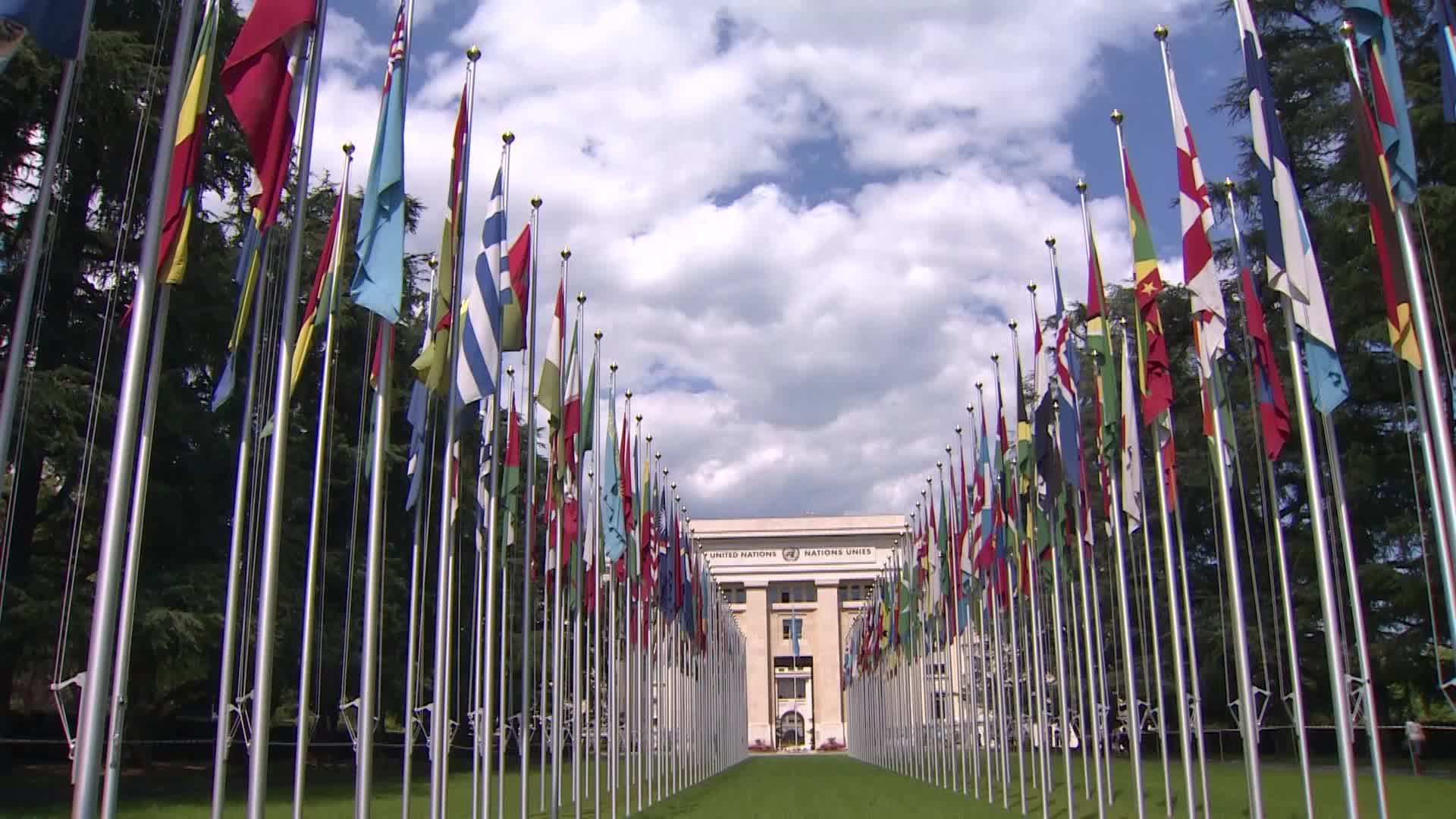
- Plan extérieur : Palais des Nations
- Plan large : Salle 20
- Plan large : Podium
- EXTRAIT SONORE (Français)— Volker Türk, Haut-Commissaire des Nations Unies aux droits de l'homme : « Toutes les parties au conflit dans les provinces du Nord-Kivu et du Sud-Kivu ont commis des violations ou atteintes aux droits humains, ainsi que des violations du droit international humanitaire.”
- Plan de coupe : Salle 20
- EXTRAIT SONORE (Français)— Volker Türk, Haut-Commissaire des Nations Unies aux droits de l'homme : “Pour l’instant, les enquêtes et analyses menées par la Mission démontrent une apparente absence totale de considération pour la protection des civils pendant et après les opérations militaires.”
- Plan de coupe : Salle 20
- EXTRAIT SONORE (Français)— Volker Türk, Haut-Commissaire des Nations Unies aux droits de l'homme : “Le M23, soutenu par le Rwanda, a utilisé des armes lourdes lors de son offensive sur Goma en janvier, frappant des quartiers densément peuplés et des camps de personnes déplacées. Quand les forces armées de la RDC se sont repliées, il y a eu un effondrement total de la chaîne de commandement, de contrôle et de discipline militaire. Des soldats congolais, et des membres des milices Wazalendo soutenues par la RDC, ont tué, violé et pillé.”
- Plan de coupe : Salle 20
- EXTRAIT SONORE (Français)— Volker Türk, Haut-Commissaire des Nations Unies aux droits de l'homme : “La Mission a reçu des informations sur l’usage choquant de la violence sexuelle par toutes les parties au conflit dans le Nord-Kivu et le Sud-Kivu. Ces violences auraient été utilisées comme une forme de représailles contre certaines communautés, contre les proches des opposants présumés, et contre des membres d’autres groupes ethniques.”
- Plan de coupe : Salle 20
- EXTRAIT SONORE (Français)— Volker Türk, Haut-Commissaire des Nations Unies aux droits de l'homme : “J’appelle toutes les parties au conflit à s’engager immédiatement en faveur d’un cessez-le-feu et à reprendre les négociations, et de respecter le droit international humanitaire et les droits humains. Je renouvelle mon appel au Rwanda à retirer ses troupes du territoire de la RDC et à cesser tout soutien au M23.”
- Plan de coupe : Salle 20
- EXTRAIT SONORE (Français)— Volker Türk, Haut-Commissaire des Nations Unies aux droits de l'homme : “Je les exhorte à faire tout ce qui est en leur pouvoir pour répondre à cette grave crise dans cette région, et à soutenir les efforts de médiation pour trouver une solution durable, notamment en traitant les causes profondes de cette instabilité.”
Similar Stories

1
1
1
Edited News | OCHA , UNICEF , WFP
Aid agencies warned on Friday of the fast-developing humanitarian emergency inside Taiz City in Yemen, which has been encircled by de facto Houthi forces fighting government troops along the country’s west coast.

2
17
1
2
Edited News , Press Conferences , Images | OCHA , WMO
Two UN agencies teamed up on Wednesday to issue an appeal for immediate assistance to help communities already being impacted by the strongest El Niño on record.

3
16
2
2
Edited News , B-roll , Conferences , Images | UNITED NATIONS , UNOG
Sixth Consultative Meeting on Enhancing Coordination of Peace Initiatives and Efforts for Sudan

1
1
1
Edited News | UNICEF , WHO , UNHCR
Yemen war continues to force families from homes amid hunger and disease
More than 250,000 people have now fled renewed fighting in Yemen, the UN said on Tuesday, citing particular concern for those sheltering in the southwestern city of Taiz and the wider governorate, where access is “essentially blocked”.

1
1
1
Edited News | UNICEF
A little over one year since a ceasefire agreement was announced between Hamas fighters and Israel, more than 340 children have been reported killed and hundreds more injured, the UN Children’s Fund, UNICEF, said on Friday.

1
1
1
Edited News | UNICEF , IFRC
Six weeks after Nepal’s deadly flooding disaster, communities are still struggling to rebuild their lives, but they will need sustained help as global warming increases the risk of another Himalayan catastrophe, the UN Children’s Fund (UNICEF) said on Friday.

1
1
1
Edited News | WHO
In suspected Russia plague death, testing and monitoring underway – WHO
The death of a lab worker in Russia’s Siberia region has sparked concerns about plague being the cause, the UN World Health Organization (WHO) said on Tuesday, adding that it was following the situation closely.

1
1
Edited News | OHCHR , UNOG
UN Human Rights Chief Volker Türk on Friday provided and oral update to the 63rd session of the Human rights Council on Ukraine.

1
1
1
Edited News | OHCHR , UNOG
UN Human Rights Chief Volker Türk on Friday provided and oral update to the 63rd session of the Human rights Council on the human rights situation in Haiti.

1
1
1
Edited News | WHO
Repeated delays in bringing lifesaving medicines, prosthetics and more from Israel into Gaza risk having devastating consequences on Palestinians who urgently need them in the wartorn enclave, the UN World Health Organization (WHO) said on Friday. “A truck full of non-priority supplies or the right supplies arriving too late, doesn't save lives. That's the question that actually matters," said Dr Reinhilde Van De Weerdt, WHO Representative in the OPT.

1
1
1
Edited News | WHO
DRC: Early access to care and oxygen decisive for Ebola patients’ survival – WHO
In the Democratic Republic of the Congo (DRC), health workers fighting the country’s largest-ever Ebola outbreak are struggling to overcome critical challenges to patient care, the UN World Health Organization (WHO) warned on Tuesday.

1
1
1
Edited News | OCHA , UN
Civilians in Iran are continuing to feel the consequences of months of conflict and military escalation, the UN’s top official in the country has said, as loss of life, damage to civilian infrastructure and mounting economic pressures leave many facing continued uncertainty.