

The United Nations Office at Geneva
Multimedia Newsroom
Edited News | OHCHR , UNOG
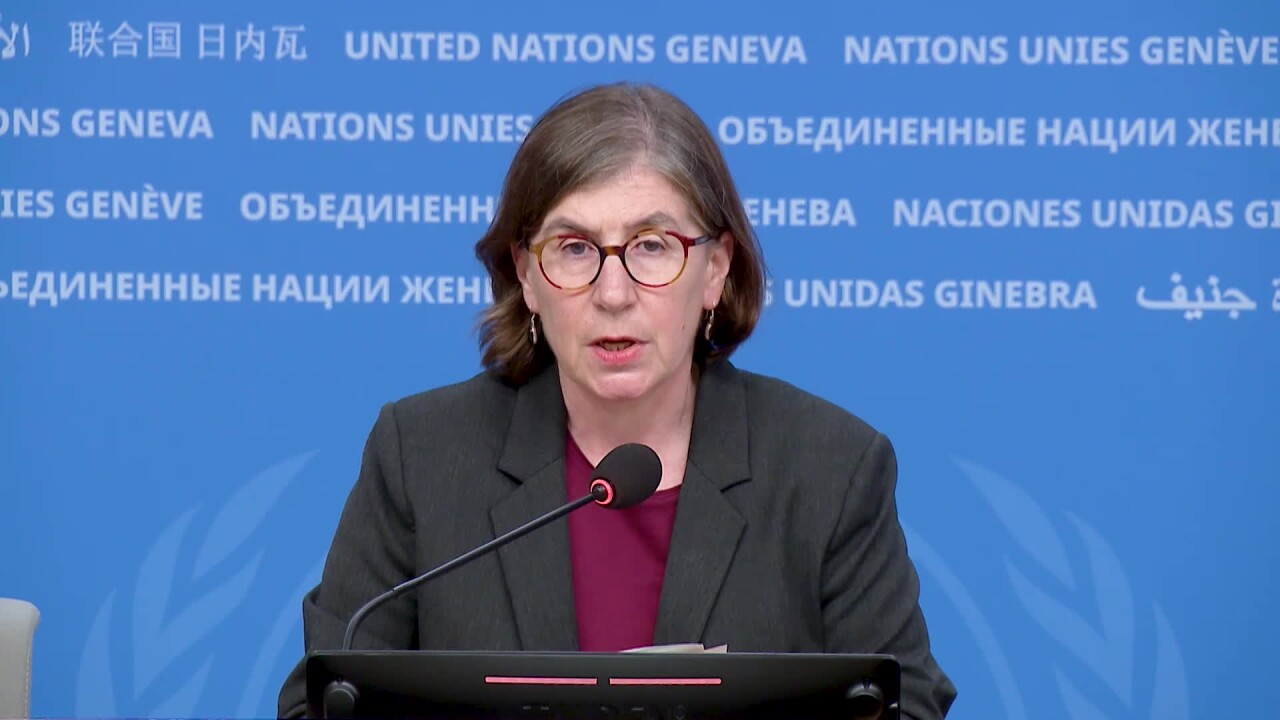
Liz Throssell, porte-parole de l'ONU pour les droits de l'homme, s'inquiète des attaques russes dans la région de Kharkiv en Ukraine
“Nous sommes profondément préoccupés par la situation des civils en Ukraine, en particulier dans la région de Kharkiv, alors que les forces armées russes ont intensifié leurs attaques ces derniers jours. Cette offensive a permis de saisir davantage de territoire ukrainien, a provoqué de nouveaux déplacements et menace potentiellement Kharkiv, la deuxième plus grande ville d'Ukraine,” a déclaré la porte-parole Liz Throssell lors de la conférence de presse bihebdomadaire à Genève.
Depuis la dernière incursion des forces russes le 10 mai, au cours de laquelle elles ont pris le contrôle de plusieurs petites localités, au moins 6 000 personnes sont censées avoir fui ou été évacuées des zones frontalières. Beaucoup ont atteint la ville de Kharkiv, située à seulement 30 à 40 kilomètres des combats.
“Notre équipe de surveillance des droits de l'homme en Ukraine, qui continue d'analyser les informations sur le terrain, a vérifié qu'au moins huit civils ont été tués et 35 blessés dans la région de Kharkiv depuis vendredi dernier,” a-t-elle déclaré.
“Cela fait suite à une série de victimes civiles documentées pour le mois d'avril, où au moins 129 civils ont été tués et 574 blessés, la majorité lors d'attaques des forces armées russes le long des lignes de front,” a déclaré Throssell.
“Dans la région de Kharkiv, la situation est désespérée alors que les combats s'intensifient. Des collègues à Kharkiv signalent que les sirènes d'alerte aérienne retentissent presque constamment et que des explosions sont entendues dans la zone frontalière et dans la ville elle-même. Les attaques continues contre l'infrastructure énergétique de l'Ukraine, qui depuis mars ont affecté des millions de personnes à travers l'Ukraine, ont également entraîné des coupures de courant quotidiennes dans de nombreuses parties de Kharkiv,” a-t-elle déclaré.
Des rapports indiquent que dans la ville frontalière nord-est de Vovchansk, où il y a eu d'importants dégâts, de violents combats se poursuivent. Plusieurs centaines de résidents civils sur une population d'environ 3 000 avant le 10 mai sont censés être encore là.
Le Bureau des droits de l'homme de l'ONU examine également des rapports selon lesquels des débris provenant d'un missile intercepté ont frappé un immeuble d'appartements à Belgorod, en Fédération de Russie, causant des victimes civiles.
“Nous appelons une fois de plus la Fédération de Russie à cesser immédiatement son attaque armée contre l'Ukraine - conformément aux résolutions pertinentes de l'Assemblée générale des Nations Unies, aux mesures provisoires contraignantes ordonnées par la Cour internationale de Justice et au droit international plus large - et à se retirer aux frontières internationalement reconnues,” a déclaré Throssell.
Elle a également exhorté toutes les parties à faire tout leur possible pour éviter ou du moins minimiser les dommages causés aux civils, notamment en évitant l'utilisation d'armes explosives à large effet dans les zones peuplées.
FIN
Pour plus d'informations et demandes des médias, veuillez contacter :
À Genève
Liz Throssell - + 41 22 917 9296 / elizabeth.throssell@un.org or
Jeremy Laurence - +41 22 917 9383 / jeremy.laurence@un.org
Tag and share
Twitter @UNHumanRights
Facebook unitednationshumanrights
Instagram @unitednationshumanrights
LISTE DES PLANS
1. Plans extérieurs: Palais des Nations
2. Plans de coupe: Salle de briefing.
3. DÉCLARATION (anglais)—Liz Throssell, Porte-parole du Haut-Commissariat des Nations unies aux droits de l'homme (HCDH) : “Nous sommes profondément préoccupés par la situation des civils en Ukraine, en particulier dans la région de Kharkiv, alors que les forces armées russes ont intensifié leurs attaques ces derniers jours. Cette offensive a permis de prendre davantage de territoire ukrainien, a provoqué de nouveaux déplacements et menace potentiellement Kharkiv, la deuxième plus grande ville d'Ukraine.”
4. Plans de coupe: Salle de briefing.
5. DÉCLARATION (anglais)—Liz Throssell, Porte-parole du Haut-Commissariat des Nations unies aux droits de l'homme (HCDH) : “Notre équipe de surveillance des droits de l'homme en Ukraine, qui continue d'analyser les informations du terrain, a vérifié qu'au moins huit civils ont été tués et 35 blessés dans la région de Kharkiv depuis vendredi dernier.”
6. Plans de coupe: Salle de briefing.
7. DÉCLARATION (anglais)—Liz Throssell, Porte-parole du Haut-Commissariat des Nations unies aux droits de l'homme (HCDH) : “Cela s'inscrit dans une tendance de victimes civiles documentée pour le mois d'avril, où au moins 129 civils ont été tués et 574 blessés, la majorité lors d'attaques des forces armées russes le long des lignes de front.”
8. Plans de coupe: Salle de briefing.
9. DÉCLARATION (anglais)—Liz Throssell, Porte-parole du Haut-Commissariat des Nations unies aux droits de l'homme (HCDH) : “Dans la région de Kharkiv, la situation est grave, alors que les combats s'intensifient. Des collègues à Kharkiv signalent que les sirènes d'alerte aérienne retentissent presque constamment et qu'ils entendent des explosions dans la zone frontalière et dans la ville elle-même. Les attaques continues contre l'infrastructure énergétique de l'Ukraine, qui depuis mars ont affecté des millions de personnes à travers l'Ukraine, ont également entraîné des coupures de courant quotidiennes dans de nombreuses parties de Kharkiv.”
10. Plans de coupe: Salle de briefing.
11. DÉCLARATION (anglais)—Liz Throssell, Porte-parole du Haut-Commissariat des Nations unies aux droits de l'homme (HCDH) : “Nous appelons une fois de plus la Fédération de Russie à cesser immédiatement son attaque armée contre l'Ukraine - conformément aux résolutions pertinentes de l'Assemblée générale de l'ONU, aux mesures provisoires contraignantes ordonnées par la Cour internationale de Justice, et au droit international plus large - et à se retirer vers les frontières internationalement reconnues.”
12. Plans de coupe: Salle de briefing.
Similar Stories

1
1
1
Edited News | OCHA , UNICEF , WFP
Aid agencies warned on Friday of the fast-developing humanitarian emergency inside Taiz City in Yemen, which has been encircled by de facto Houthi forces fighting government troops along the country’s west coast.

2
17
1
2
Edited News , Press Conferences , Images | OCHA , WMO
Two UN agencies teamed up on Wednesday to issue an appeal for immediate assistance to help communities already being impacted by the strongest El Niño on record.

3
16
2
2
Edited News , B-roll , Conferences , Images | UNITED NATIONS , UNOG
Sixth Consultative Meeting on Enhancing Coordination of Peace Initiatives and Efforts for Sudan

1
1
1
Edited News | UNICEF , WHO , UNHCR
Yemen war continues to force families from homes amid hunger and disease
More than 250,000 people have now fled renewed fighting in Yemen, the UN said on Tuesday, citing particular concern for those sheltering in the southwestern city of Taiz and the wider governorate, where access is “essentially blocked”.

1
1
1
Edited News | UNICEF
A little over one year since a ceasefire agreement was announced between Hamas fighters and Israel, more than 340 children have been reported killed and hundreds more injured, the UN Children’s Fund, UNICEF, said on Friday.

1
1
1
Edited News | UNICEF , IFRC
Six weeks after Nepal’s deadly flooding disaster, communities are still struggling to rebuild their lives, but they will need sustained help as global warming increases the risk of another Himalayan catastrophe, the UN Children’s Fund (UNICEF) said on Friday.

1
1
1
Edited News | WHO
In suspected Russia plague death, testing and monitoring underway – WHO
The death of a lab worker in Russia’s Siberia region has sparked concerns about plague being the cause, the UN World Health Organization (WHO) said on Tuesday, adding that it was following the situation closely.

1
1
Edited News | OHCHR , UNOG
UN Human Rights Chief Volker Türk on Friday provided and oral update to the 63rd session of the Human rights Council on Ukraine.

1
1
1
Edited News | OHCHR , UNOG
UN Human Rights Chief Volker Türk on Friday provided and oral update to the 63rd session of the Human rights Council on the human rights situation in Haiti.

1
1
1
Edited News | WHO
Repeated delays in bringing lifesaving medicines, prosthetics and more from Israel into Gaza risk having devastating consequences on Palestinians who urgently need them in the wartorn enclave, the UN World Health Organization (WHO) said on Friday. “A truck full of non-priority supplies or the right supplies arriving too late, doesn't save lives. That's the question that actually matters," said Dr Reinhilde Van De Weerdt, WHO Representative in the OPT.

1
1
1
Edited News | WHO
DRC: Early access to care and oxygen decisive for Ebola patients’ survival – WHO
In the Democratic Republic of the Congo (DRC), health workers fighting the country’s largest-ever Ebola outbreak are struggling to overcome critical challenges to patient care, the UN World Health Organization (WHO) warned on Tuesday.

1
1
1
Edited News | OCHA , UN
Civilians in Iran are continuing to feel the consequences of months of conflict and military escalation, the UN’s top official in the country has said, as loss of life, damage to civilian infrastructure and mounting economic pressures leave many facing continued uncertainty.