

The United Nations Office at Geneva
Multimedia Newsroom
Young Activists Summit 2021 takes place in Geneva
In Geneva the Young Activists Summit is taking place. Six young people with inspirational plans for our world have come to the United Nations to share their hopes and dreams, and to show other young people what can be achieved when a vision of making the world a better place becomes reality.
Titouan Bernicot has come all the way from French Polynesia, to tell the summit about his work restoring coral reefs.
“I’m so glad today because I can do what I love, working with corals, fighting for climate change, and coral ecosystems, and I want to tell other people with big dreams that it’s not about the academic background you have, the places you come from. If you work hard you can connect with the right people and achieve your dreams.
The summit, the third of its kind, also provides the young activists with a chance to discuss their work with experienced UN professionals. This is especially helpful for Louise Mabulo, who has created a sustainable agriculture project in her native Philippines.
“The Young Activists Summit has been extremely supportive in organising bilateral meetings and workshops as well that help train us on how to further develop our project in a way that’s more meaningful, and I know that all of the things that I’ve learned here I can take back, including networks and opportunities, that will benefit hundreds of farmers in my home town.”
For Lual Mayen, a refugee from South Sudan who has created a video game which raises awareness of what it is like to flee violence and persecution, the summit was a great chance to connect with the home of the UN Refugee Agency.
“My message is that you know, refugees can be able to contribute to the economy of the world. People do not have to look at them in a way that they are part of the burden. We can become who we are, we can become entrepreneurs, we can become developers, we can make the world a better place.”
Having a global platform to show off her work is also very important to Stacy Dina Adhiambo, who has created an innovative way to support women and girls at risk of female genital mutilation.
“Us being at the Young Activists Summit is such a reaffirmation not only for us, i-cut creators but for every other female genital mutilation campaigner out there, that our work is important and that the world is listening to our cries.”
And the activists even got a special message straight from Hollywood, when Angelina Jolie appeared with her own words of encouragement for them.
“This is where your strength lies, find each other, grow together, hold on to what you know to be true and right and insist on solutions. And then, I believe your generation may really be able to pull our world back from the brink and set us on a better path. We’re listening, so speak up, and speak loudly.”
That’s the kind of boost any young activist needs! Jose Quisocala was delighted to hear Angelina Jolie’s words. For him, the big win from the summit is the chance to spread the message about recycling, and how the environment benefits from projects like his green bank.
“The best thing about the summit is that it shows that what I am doing is important, that means a lot. And it means more people in the world get a chance to learn about what I do.”
So what’s the message for young people around the world, who may already have ideas about how our planet can be improved? Don’t hesitate, go for it, suggests Gitanjali Rao, and she’s still only 15 herself.
“The worst answer you’re going to get is no, the worst thing that’s going to happen is that you fail, and at the end of the day the reward is always more than the risk. So don’t be afraid to dream big.”
Shot list Young Activists Summit
Location: Geneva
TIME DESCRIPTION LOCATION/SOURCE
| 0:00 – 0:07 | Exteriors UN Geneva | UN, Geneva |
| 0:07 – 0:12 | Various activists arriving at summit |
|
| 0:12 – 0:21 | Various activists |
|
| 0:21 – 0:26 | Summit venue interior
|
|
| 0:26 – 0:39 | Various Titouan Bernicot |
|
| 0:39 – 1:00 | Soundbite Titouan Bernicot “I’m so glad today because I can do what I love, working with corals, fighting for climate change, and coral ecosystems, and I want to tell other people with big dreams that it’s not about the academic background you have, the places you come from. If you work hard you can connect with the right people and achieve your dreams.”
|
|
| 1:00 – 1:19 | Various Louise Mabulo |
|
| 1:19 - 1:36 | Soundbite Louise Mabulo “The Young Activists Summit has been extremely supportive in organising bilateral meetings and workshops as well that help train us on how to further develop our project in a way that’s more meaningful, and I know that all of the things that I’ve learned here I can take back, including networks and opportunities, that will benefit hundreds of farmers in my home town.” |
|
| 1:36 – 2:04 | Various Lual Mayen |
|
| 2:04 – 2:24 | Soundbite Lual Mayen “My message is that you know, refugees can be able to contribute to the economy of the world. People do not have to look at them in a way that they are part of the burden. We can become who we are, we can become entrepreneurs, we can become developers, we can make the world a better place.” |
|
| 2:24 - 2:42 | Various Stacy Adhiambo |
|
| 2:42 – 2:59 | Soundbite Stacy Adhimabo “Us being at the Young Activists Summit is such a reaffirmation not only for us, i-cut creators but for every other female genital mutilation campaigner out there, that our work is important and that the world is listening to our cries.” |
|
| 2:59 – 3:12 | Various Angelina Jolie |
|
| 3:12 – 3:46 | Soundbite Angelina Jolie “This is where your strength lies, find each other, grow together, hold on to what you know to be true and right and insist on solutions. And then, I believe your generation may really be able to pull our world back from the brink and set us on a better path. We’re listening, so speak up, and speak loudly.” |
|
| 3:46 – 4:06 | Various Jose Quisocala |
|
| 4:06 – 4:31 | Soundbite Jose Quisocala (Spanish original) “The best thing about the summit is that it shows that what I am doing is important, that means a lot. And it means more people in the world get a chance to learn about what I do.” |
|
| 4:31 – 4:51 | Various Gitanjali Rao |
|
| 4:51 – 5:00 | Soundbite Gitanjali Rao “The worst answer you’re going to get is no, the worst thing that’s going to happen is that you fail, and at the end of the day the reward is always more than the risk. So don’t be afraid to dream big.” |
|
| 5:00 – 5:09 | Various summit, activists together |
|
Similar Stories
2
17
1
2
Edited News , Press Conferences | OCHA , WMO
Two UN agencies teamed up on Wednesday to issue an appeal for immediate assistance to help communities already being impacted by the strongest El Niño on record.
3
16
2
2
B-roll , Conferences , Edited News | UNITED NATIONS , UNOG
Sixth Consultative Meeting on Enhancing Coordination of Peace Initiatives and Efforts for Sudan
1
1
1
Edited News | UNICEF , WHO , UNHCR
Yemen war continues to force families from homes amid hunger and disease
More than 250,000 people have now fled renewed fighting in Yemen, the UN said on Tuesday, citing particular concern for those sheltering in the southwestern city of Taiz and the wider governorate, where access is “essentially blocked”.
1
1
1
Edited News | UNICEF
A little over one year since a ceasefire agreement was announced between Hamas fighters and Israel, more than 340 children have been reported killed and hundreds more injured, the UN Children’s Fund, UNICEF, said on Friday.
1
1
1
Edited News | UNICEF , IFRC
Six weeks after Nepal’s deadly flooding disaster, communities are still struggling to rebuild their lives, but they will need sustained help as global warming increases the risk of another Himalayan catastrophe, the UN Children’s Fund (UNICEF) said on Friday.
1
1
1
Edited News | WHO
In suspected Russia plague death, testing and monitoring underway – WHO
The death of a lab worker in Russia’s Siberia region has sparked concerns about plague being the cause, the UN World Health Organization (WHO) said on Tuesday, adding that it was following the situation closely.
1
1
Edited News | OHCHR , UNOG
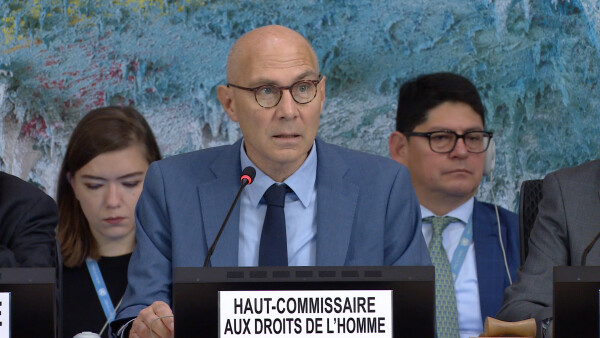
UN Human Rights Chief Volker Türk on Friday provided and oral update to the 63rd session of the Human rights Council on Ukraine.
1
1
1
Edited News | OHCHR , UNOG
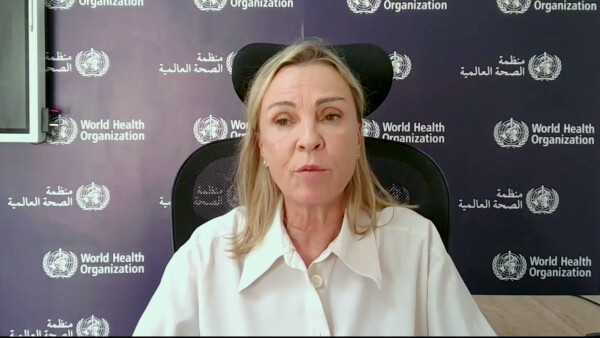
UN Human Rights Chief Volker Türk on Friday provided and oral update to the 63rd session of the Human rights Council on the human rights situation in Haiti.
1
1
1
Edited News | WHO
Repeated delays in bringing lifesaving medicines, prosthetics and more from Israel into Gaza risk having devastating consequences on Palestinians who urgently need them in the wartorn enclave, the UN World Health Organization (WHO) said on Friday. “A truck full of non-priority supplies or the right supplies arriving too late, doesn't save lives. That's the question that actually matters," said Dr Reinhilde Van De Weerdt, WHO Representative in the OPT.
1
1
1
Edited News | WHO
DRC: Early access to care and oxygen decisive for Ebola patients’ survival – WHO
In the Democratic Republic of the Congo (DRC), health workers fighting the country’s largest-ever Ebola outbreak are struggling to overcome critical challenges to patient care, the UN World Health Organization (WHO) warned on Tuesday.
1
1
1
Edited News | OCHA , UN
Civilians in Iran are continuing to feel the consequences of months of conflict and military escalation, the UN’s top official in the country has said, as loss of life, damage to civilian infrastructure and mounting economic pressures leave many facing continued uncertainty.
1
1
1
Edited News | WHO , UNICEF
Aid agencies in Yemen highlighted the growing hunger emergency sparked by renewed fighting between Houthi opposition forces and Government troops, after mobile health clinics reported that hundreds of children displaced by the violence are suffering from the most deadly form of malnutrition.