

The United Nations Office at Geneva
Multimedia Newsroom
$667 million funding call to help Afghans through economic crisis -- UNDP
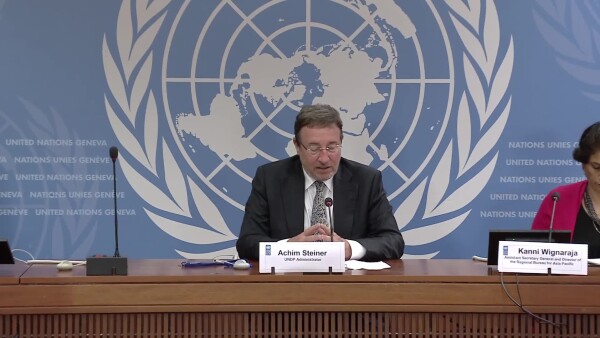
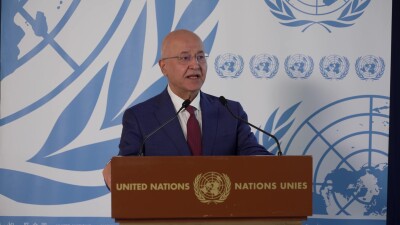
Afghanistan’s economy is imploding, with all but three per cent of households expected to fall below the poverty line in coming months, the UN said on Thursday. To help ordinary Afghans, the UN Development Programme (UNDP) has announced the launch of a “people’s economy” fund, to provide desperately needed access to cash. The fund will tap into donations frozen since the Taliban takeover in August. Germany has already pledged $58 million of the more than $660 million required over the next 12 months, said Achim Steiner, UNDP Administrator:
“There are 38 million people who cannot be kept alive just from the outside. We have to step in, we have to stabilise a 'people's economy’ and in addition to saving lives, we also have to save livelihoods. Because otherwise, we will indeed confront a scenario through this winter and into next year where millions and millions of Afghans are simply unable to stay on their land, in their homes, in their villages and survive.” UNDP is now in touch with other donors to mobilise resources, he added. "Discussions over the last few weeks have focused on how we do find a way to be able to mobilise these resources in view of the economic implosion that is now unfolding and the international community's repeated commitment not to abandon the people of Afghanistan".
Last week UN Secretary-General António Guterres urged the world to take action during a "make or break" moment for the country. While reiterating that “humanitarian assistance saves lives”, the UN chief warned that “it will not solve the problem if the economy of Afghanistan collapses”.
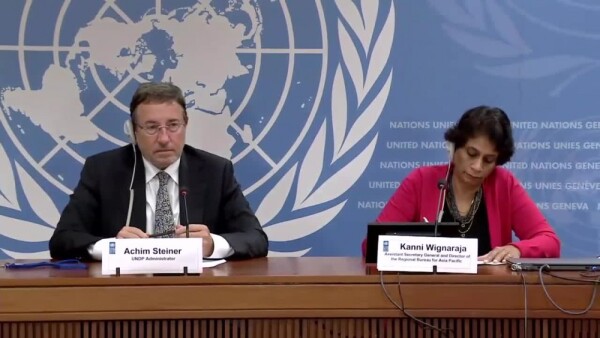
The fund is part of a new programme for the country called ABADEI, which denotes community resilience. It will contribute to preventing a humanitarian catastrophe and the country’s economy from “completely crashing” by supporting the most vulnerable populations and collapsing micro-businesses in Afghanistan. The initiative is part of the overall UN system’s response. “The country needs immediate humanitarian assistance, but we also need to keep the local economies going – this is fundamental to ensure that people still have livelihoods and feel that they have a future in their communities,” Mr. Steiner said. Cash in local currency will be provided directly to community groups and to Afghan workers in public works programmes, such as drought and flood control. Grants will also be given to micro-enterprises and a temporary basic income would be paid to the vulnerable elderly and disabled, said Kanni Wignaraja, Director of UNDP's regional bureau for the Asia Pacific said. This will enable people to stay and live and work on their lands and in their homes and allow them to earn an income and give them “the respect and dignity that they deserve and call for”, Ms. Wignaraja said. All assistance provided will be based on impartial assessments carried out in conjunction with local community leaders and independently of authorities.
ends
STORY: Afghanistan Trust Fund
TRT: 03:09”
SOURCE: UNTV CH
RESTRICTIONS: NONE
LANGUAGE: ENGLISH
ASPECT RATIO: 16:9
DATELINE: 21 Oct 2021, GENEVA, SWITZERLAND
SHOTLIST
1. Exterior wide shot, United Nations flag flying.
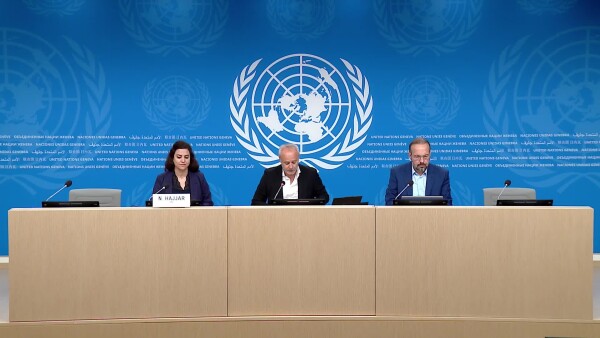
2. Wide shot, Panellists at briefing.
3. SOUNDBITE: (ENGLISH) Achim Steiner, UN Development Programme (UNDP) Administrator: “What we are witnessing is not only a nation and a country in the midst of political turmoil. What we are also witnessing is an economic implosion, both in terms of a national economic and financial system, but perhaps more dramatically and immediate. The people's economy, the economy of where people earn their daily livelihoods, the incomes they use to feed their families. We are witnessing across the whole country an enormous unfolding economic crisis.”
3. Close of reporting working on laptop.
4. SOUNDBITE: (ENGLISH) Achim Steiner, UN Development Programme (UNDP) Administrator: “Indeed, UNDP, in its latest assessment published a few weeks ago, envisages a scenario on a current trajectory whereby 97 per cent of households in Afghanistan could be below the poverty line by early to mid-2022. 97 per cent. It doesn't take much imagination to understand that the implications of this in terms of disruption, not just to livelihoods but to a nation and ultimately to the lives of millions and millions of people is enormous.”
5. Panelist listening to briefing.
6. SOUNDBITE: (ENGLISH) Achim Steiner, UN Development Programme (UNDP) Administrator: “There are 38 million people who cannot be kept alive just from the outside. We have to step in, we have to stabilise a people's economy and in addition to saving lives in the immediate, we also have to save livelihoods because otherwise, we will confront indeed a scenario through this winter and into next year, where millions and millions of Afghans are simply unable to stay on the land, in their homes, in their villages and survive.
7. Mid of cameras filming briefing.
8. SOUNDBITE: (ENGLISH) Kanni Wignaraja, UN Development Programme (UNDP) Assistant Secretary-General and Director of the Regional Bureau for Asia Pacific:
“People who are fundamentally, they wish to stay and live and work on their lands and in their homes and it prevents them from having to get up and leave with their families. So it really is a sense of moving very quickly, particularly behind a group of dynamic young people, women, those who are currently extremely vulnerable, to give them that extra bit of income that they can earn and the respect and dignity that they deserve and call for.”
9. Wide of briefing.
8. SOUNDBITE: (ENGLISH) Kanni Wignaraja, UN Development Programme (UNDP) Assistant Secretary-General and Director of the Regional Bureau for Asia Pacific: “It channels of funding directly to community groups, to community members. It will provide a cash for work to support small public works efforts. As Achim said, it will provide a temporary basic income for the most vulnerable, including the elderly and disabled.”
9. Mid of attendee in front of screen.
10. Mid of attendee with laptop.
Similar Stories
1
1
1
Edited News | OCHA , UNICEF , WFP
Aid agencies warned on Friday of the fast-developing humanitarian emergency inside Taiz City in Yemen, which has been encircled by de facto Houthi forces fighting government troops along the country’s west coast.
1
1
1
Press Conferences | UN WOMEN , WFP , WHO
UN WOMEN: Sudan Women and girls one year after the fall of El Fasher; increasing drone attacks across the country; WFP: DRC - Ebola spreads to eighth DRC province as WFP delivers food, builds treatment centres and keeps supplies moving; WHO - Update on Ebola (Bundibugyo Virus Disease)
1
12
1
1
Press Conferences , Images | UNOG
Closing Press Conference following the Sixth Consultative Meeting on Enhancing Coordination of Peace Initiatives and Efforts in Sudan

2
17
1
2
Edited News , Press Conferences , Images | OCHA , WMO
Two UN agencies teamed up on Wednesday to issue an appeal for immediate assistance to help communities already being impacted by the strongest El Niño on record.
3
16
2
2
Edited News , B-roll , Conferences , Images | UNITED NATIONS , UNOG
Sixth Consultative Meeting on Enhancing Coordination of Peace Initiatives and Efforts for Sudan
1
1
1
Press Conferences | CITES
Wildlife trade and conservation policy discussions at the 81st meeting of the CITES Standing Committee (SC81)

1
1
1
Edited News | UNICEF , WHO , UNHCR
Yemen war continues to force families from homes amid hunger and disease
More than 250,000 people have now fled renewed fighting in Yemen, the UN said on Tuesday, citing particular concern for those sheltering in the southwestern city of Taiz and the wider governorate, where access is “essentially blocked”.
1
1
1
Press Conferences | UNHCR , UNCTAD , WMO , OCHA , UNICEF , WHO
UNHCR Hungary’s 1956 Refugee Crisis: 70 Years On, UNCTAD World Investment Forum 2026, Doha, WMO Greenhouse Gas Bulletin and Climate Update for COP31, OCHA Afghanistan: Malnutrition, Girls’ Education and Recovery, UNICEF Yemen: Child Malnutrition and Unsafe Water in Taiz, WHO Inequalities in Noncommunicable Diseases and Risk Factors
1
1
1
Press Conferences | UNHCR
End of UNHCR's 77th Annual Executive Committee (ExCom) meeting week

1
1
1
Edited News | UNICEF
A little over one year since a ceasefire agreement was announced between Hamas fighters and Israel, more than 340 children have been reported killed and hundreds more injured, the UN Children’s Fund, UNICEF, said on Friday.
1
1
1
Press Conferences | UNICEF , IOM , UNHCR
UN Special Assistant to the Personal Envoy Office (SUDAN): Peace Initiatives and Efforts in Sudan; UNICEF: Dire situation of children in Gaza; IOM: Damaged Homes and Energy Attacks Risk Displacing Ukrainians for this winter; UNHCR: update on EXCOM week

1
1
1
Press Conferences | IOM , UNDRR
UN stresses importance of household preparedness for disaster risk reduction.