

The United Nations Office at Geneva
Multimedia Newsroom
Ceasefire in Tigray more urgent than ever: UN emergency relief chief
A ceasefire in Tigray on humanitarian grounds is needed now more than ever if a massive aid operation across frontlines is to succeed, the UN’s emergency relief chief said on Friday.
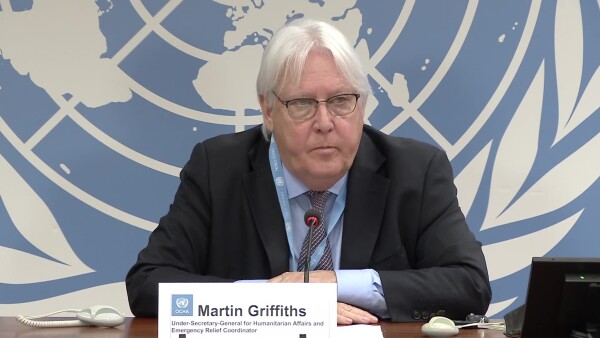
Speaking from UN Geneva, Martin Griffiths highlighted the urgency of the situation for all those affected in the northern Ethiopian region, after eight months of fighting between Government forces and those loyal to the Tigray People’s Liberation Front (TPLF).
Earlier this week, the UN official warned that 200,000 people had been displaced by fighting in neighbouring Amhara region, along with more than 50,000 in Afar.
“This war has to stop, this war has to end; we will all of us continue to try to make sure that those 100 trucks a day reach Mekelle, reach the beneficiaries,” Mr. Griffiths insisted. “We will do everything we can to help the people affected in Amhara and Afar, while continuing the work in other parts of Ethiopia.”
Highlighting the logistical challenge of negotiating aid access into Tigray while the violence continues, the UN emergency relief chief said that he had “no reason to doubt” the ceasefire announced by Ethiopian premier Abiy Ahmed, who he met in person in Addis Ababa on a six-day visit, along with other senior government leaders.
“The Prime Minister has issued a unilateral ceasefire, he repeated his commitment to it on the two occasions that we met and I have no reason to doubt that at all. For the Tigrayans who are spreading the war into the south and east, into Afar and Amhara, they need to take into account that without that ceasefire, we will try to get those 100 trucks in, but it’s going to be easier for the Tigrayan people if the war is stopped.”
Since conflict erupted last November, humanitarian needs have grown, amid killings, looting and destruction of health centres and farming infrastructure, including irrigation systems that are vital to successful harvests.
Some 400,000 people face famine in Tigray, UN humanitarians have warned repeatedly, in recent weeks.
“They need food, the harvest which has recently been planted is likely only to produce between a quarter and maximum a half of its likely production. So, the need for food is going to go right through until next year,” said Mr. Griffiths.
“They need re-equipment of primary health centres. We saw hospitals and health centres destroyed, the equipment taken away. There are health workers but not salaries.”
Noting that some 178 aid trucks had reportedly reached Tigray regional capital Mekelle in recent days, with another 40 waiting to arrive, the UN official underscored how difficult it has been to secure regular aid access amid checkpoint delays and detailed searches, which he had experienced at first hand on a UN flight to Mekelle.
“The frustration of agencies – and you know, I’ve just spent two days with them – national NGOs, international NGOs, UN agencies, is that they have access, but haven’t had the supplies needed to exploit the access,” he said. So, hopefully a little bit better today because of those 178 trucks, but a lot – a lot – still to be done.”
Despite the complexity of the situation, Mr. Griffiths maintained that his discussions with the Prime Minister, the Deputy Prime Minister and Foreign minister and the Minister of Peace and others had been “very constructive” during his just-completed visit to Addis Ababa and Tigray. “They of course told me that they were very keen to help on the difficult issue of delivery of assistance and then protection of civilians,” he added, before repeating his condemnation of the “very high degree of rhetoric” which had seen humanitarian officials and aid workers “condemned in public and on social media” for “feeding the Tigrayan machine”.
“I spoke to those leaders that I’ve mentioned that any such criticisms need to stop. First of all, it threatens the lives of people who are there to help, and secondly of course, it has an impact on humanitarian delivery,” he said.
STORY: Tigray Update – UN Emergency Relief Coordinator
TRT: 3’17”
SOURCE: UNTV CH
RESTRICTIONS: NONE
LANGUAGE: ENGLISH
ASPECT RATIO: 16:9
DATELINE: 6 August 2021, GENEVA, SWITZERLAND
SHOTLIST
- Exterior wide shot, United Nations flag flying, a sunny day.
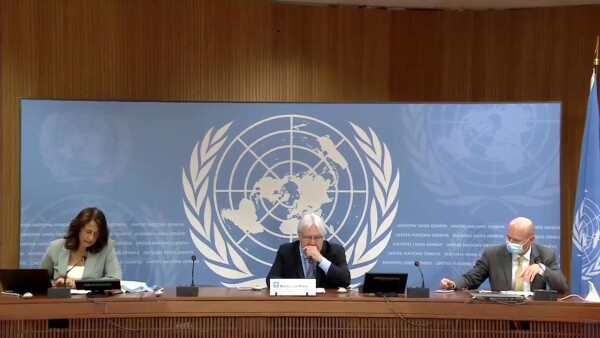
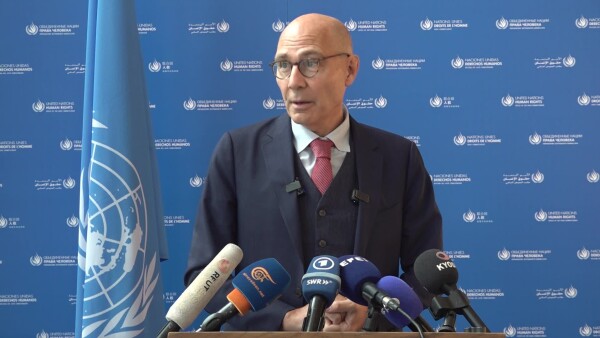
- Wide shot, press conference venue, UN Geneva.
- SOUNDBITE: (ENGLISH) Martin Griffiths, Under-Secretary-General for Humanitarian Affairs and Emergency Relief Coordinator, Office for the Coordination of Humanitarian Affairs (OCHA): “This war has to stop, this war has to end; we will all of us continue to try to make sure that those 100 trucks a day reach Mekelle, reach the beneficiaries. We will do everything we can to help the people affected in Amhara and Afar, while continuing the work in other parts of Ethiopia.”
- Medium shot, Martin Griffiths with raised hand at podium.
- SOUNDBITE: (ENGLISH) Martin Griffiths, Under-Secretary-General for Humanitarian Affairs and Emergency Relief Coordinator, Office for the Coordination of Humanitarian Affairs (OCHA): “The Prime Minister has issued a unilateral ceasefire, he repeated his commitment to it on the two occasions that we met and I have no reason to doubt that at all. For the Tigrayans who are spreading the war into the south and east, into Afar and Amhara, they need to take into account that without that ceasefire, we will try to get those 100 trucks in, but it’s going to be easier for the Tigrayan people if the war is stopped.”
- Medium shot, Martin Griffiths flanked by UN staff (masked) on podium.
- SOUNDBITE: (ENGLISH) Martin Griffiths, Under-Secretary-General for Humanitarian Affairs and Emergency Relief Coordinator, Office for the Coordination of Humanitarian Affairs (OCHA): “They need food, the harvest which has recently been planted is likely only to produce between a quarter and maximum a half of its likely production. So, the need for food is going to go right through until next year.”
- Wide shot, press conference in progress, photographer crouching, Martin Griffiths talking.
- SOUNDBITE: (ENGLISH) Martin Griffiths, Under-Secretary-General for Humanitarian Affairs and Emergency Relief Coordinator, Office for the Coordination of Humanitarian Affairs (OCHA): “They need re-equipment of primary health centres. We saw hospitals and health centres destroyed, the equipment taken away. There are health workers but not salaries.”
- Medium shot, TV screen showing broadcast image of Martin Griffiths, who is also in background on podium.
- SOUNDBITE: (ENGLISH) Martin Griffiths, Under-Secretary-General for Humanitarian Affairs and Emergency Relief Coordinator, Office for the Coordination of Humanitarian Affairs (OCHA): “The frustration of agencies – and you know, I’ve just spent two days with them – national NGOs, international NGOs, UN agencies, is that they have access, but haven’t had the supplies needed to exploit the access. So, hopefully a little bit better today because of those 178 trucks, but a lot – a lot – still to be done.”
- Medium shot, podium shot from side with Martin Griffiths speaking.
- SOUNDBITE: (ENGLISH) Martin Griffiths, Under-Secretary-General for Humanitarian Affairs and Emergency Relief Coordinator, Office for the Coordination of Humanitarian Affairs (OCHA): “So, we had very constructive meetings, they of course told me that they were very keen to help on the difficult issue of delivery of assistance and then protection of civilians.”
- Close-up, participant, masked and wearing headphones, looking down.
- SOUNDBITE: (ENGLISH) Martin Griffiths, Under-Secretary-General for Humanitarian Affairs and Emergency Relief Coordinator, Office for the Coordination of Humanitarian Affairs (OCHA): “Ethiopia is going through a very high degree of rhetoric; humanitarian officials and aid workers are being condemned in public and on social media; I think I’ve spoken on the record about this and I spoke to those leaders that I’ve mentioned that any such criticisms need to stop. First of all, it threatens the lives of people who are there to help, and secondly of course, it has an impact on humanitarian delivery.”
- Medium shot, Martin Griffiths and photographer.
- Close-up, photographer’s monitor showing an image of Martin Griffiths.
- Wide shot, press conference proceedings.
- Medium shot, TV camera operator checking equipment.
- Medium shot, participant flanked by microphones.
- Medium shot, participant looking at laptop.
Similar Stories
1
12
1
1
Press Conferences , Images | UNOG
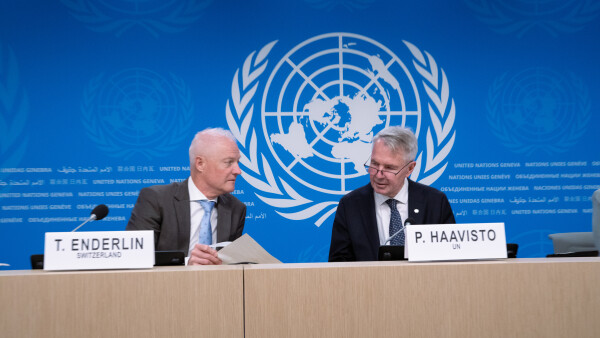
Closing Press Conference following the Sixth Consultative Meeting on Enhancing Coordination of Peace Initiatives and Efforts in Sudan

2
17
1
2
Edited News , Press Conferences | OCHA , WMO
Two UN agencies teamed up on Wednesday to issue an appeal for immediate assistance to help communities already being impacted by the strongest El Niño on record.
3
16
2
2
B-roll , Conferences , Edited News | UNITED NATIONS , UNOG
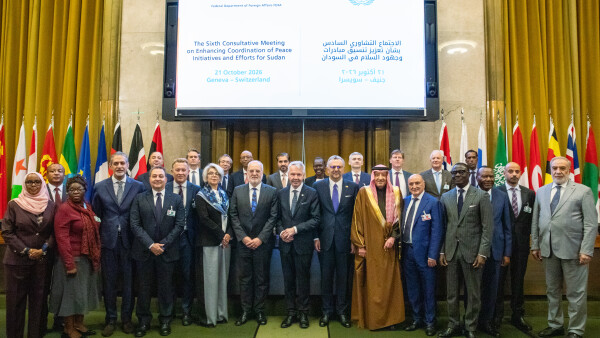
Sixth Consultative Meeting on Enhancing Coordination of Peace Initiatives and Efforts for Sudan
1
1
1
Press Conferences | CITES
Wildlife trade and conservation policy discussions at the 81st meeting of the CITES Standing Committee (SC81)

1
1
1
Edited News | UNICEF , WHO , UNHCR
Yemen war continues to force families from homes amid hunger and disease
More than 250,000 people have now fled renewed fighting in Yemen, the UN said on Tuesday, citing particular concern for those sheltering in the southwestern city of Taiz and the wider governorate, where access is “essentially blocked”.
1
1
1
Press Conferences | UNHCR , UNCTAD , WMO , OCHA , UNICEF , WHO
UNHCR Hungary’s 1956 Refugee Crisis: 70 Years On, UNCTAD World Investment Forum 2026, Doha, WMO Greenhouse Gas Bulletin and Climate Update for COP31, OCHA Afghanistan: Malnutrition, Girls’ Education and Recovery, UNICEF Yemen: Child Malnutrition and Unsafe Water in Taiz, WHO Inequalities in Noncommunicable Diseases and Risk Factors
1
1
1
Press Conferences | UNHCR
End of UNHCR's 77th Annual Executive Committee (ExCom) meeting week

1
1
1
Edited News | UNICEF
A little over one year since a ceasefire agreement was announced between Hamas fighters and Israel, more than 340 children have been reported killed and hundreds more injured, the UN Children’s Fund, UNICEF, said on Friday.
1
1
1
Press Conferences | UNICEF , IOM , UNHCR
UN Special Assistant to the Personal Envoy Office (SUDAN): Peace Initiatives and Efforts in Sudan; UNICEF: Dire situation of children in Gaza; IOM: Damaged Homes and Energy Attacks Risk Displacing Ukrainians for this winter; UNHCR: update on EXCOM week

1
1
1
Press Conferences | IOM , UNDRR
UN stresses importance of household preparedness for disaster risk reduction.

1
1
1
Edited News | UNICEF , IFRC
Six weeks after Nepal’s deadly flooding disaster, communities are still struggling to rebuild their lives, but they will need sustained help as global warming increases the risk of another Himalayan catastrophe, the UN Children’s Fund (UNICEF) said on Friday.
1
1
1
Statements , Press Conferences | OHCHR