

The United Nations Office at Geneva
Multimedia Newsroom
The United Nations Human Rights Council has been given a mandate to collect and preserve information and evidence of crimes related to Sri Lanka's 37-year long civil war that ended in 2009.
The 47-member council on Tuesday adopted a resolution on Tuesday, brought by Britain on behalf of a group of countries, boosting UN rights chief, Michelle Bachelet’s staff and powers, with a view to future prosecutions.
22 countries voted in favour of the text, 11 opposed and 14 abstained, including Sri Lanka’s neighbours, India and Nepal and most Muslim majority countries, except for Pakistan, Bangladesh and Uzbekistan, who voted against the motion.
In the resolution the UNHCR expressed "deep concern" at the “deteriorating situation" in Sri Lanka, and criticised the erosion of judicial independence, marginalisation of minorities and impunity.
The text pointed to trends emerging over the past year, which according to Elisabeth Tichy-Fisslberger, speaking on behalf of the European Union, represent clear early “warning signs of a deteriorating human rights situation in Sri Lanka”
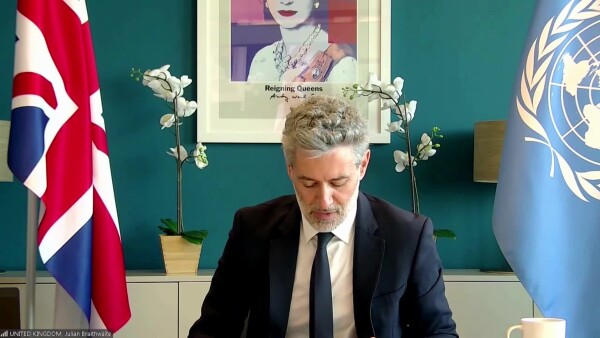
In his introductory comments, UK Representative to the UN, Julian Braithwaite warned of trends which “threaten to reverse the limited gains made in recent years and risked the recurrence of policies and practices that gave rise to the grave violations of the past.”
Tichy-Fisslberger highlighted the “accelerating militarisation of civilian government functions, "the erosion of the independence of the judiciary", and "increased marginalisation" of Tamil and Muslim minorities, which has been “exacerbated” by the island's response to the COVID-19 pandemic, such as the prevention of Muslims and members of other religions from practicing their own religious burial rites.
The resolution also called on the Sri Lankan government to revise the law on the prevention of terrorism which rights groups have warned is being used as a weapon targeting dissidents and minorities in the country.
Under the PTA, the detention of anyone suspected of causing "acts of violence or religious, racial or communal disharmony” is allowed.
In the vote, Asian countries including China and the Philippines closed ranks around Sri Lanka's government, while Japan abstained.
Representative for the Philippines, Evan P. Garcia, said the text was “driven by simplistic generalisations of complex conditions on the ground,” whilst Pakistan’s spokesperson, Khalil-ur-Rahman Hashmi argued that the draft resolution “fails to acknowledge the long struggle of the Sri Lankan people and government against LTTE (Liberation Tigers of Tamil Eelam),” and “shies away from a call for accountability of the LTTE and its sponsors and financiers”.
Sri Lanka's ambassador, C.A. Chandraprema, rejected the text as "unhelpful and divisive”. He argued it would “polarise Sri Lankan society and adversely affect economic development, peace and harmony.”
1. Exterior wide shot, Palais des Nations flag alley, nations’ flags flying.
2. Wide shot, Assembly Hall in line with COVID-19 distancing measures, Palais des Nations.
3. United Kingdom of Great Britain and Northern Ireland Permanent Representative to the WTO & UN in Geneva Mr. Julian Braithwaite: “This resolution and this courtroom is not anti Sri Lanka. We are friends of Sri Lanka and its people, We bring this resolution in the hope that it will help advance the human rights of all communities, including Buddhist, Christian, Muslim, Sinhala or Tamil And most importantly that it will help prevent the recurrence of past grave violations which the high commissioners report wants this council about in such clear terms.”
4. Mid of President of the Human Rights Council, Nazhat Shameem Khan.
5. Austria (on behalf of the European Union), Ms. Elisabeth Tichy-Fisslberger: “ This resolution is also important given the warning signs of a deteriorating Human Rights situation including the erosion of democratic checks and balances, rise of exclusionary rhetoric, intensified surveillance and intimidations of CSO’s, human rights defenders and victims as well as discrimination of people belonging to religious and ethnic minority communities. the EU is deeply concerned about these developments, We call on the government of the Sri Lanka to continue to promote reconciliation, accountability and human rights in Sri Lanka including through cooperation on this resolution. For the above reasons the EU supports resolution L1/Rev.1 and hopes it will be adopted by this council, by consensus.
6.Medium-wide shot, podium with speakers, Assembly Hall, Palais des Nations.
7. Philippines, Mr. Evan P. Garcia: “There is no merit in actions by the council that disrespect these national processes and are driven by simplistic generalisations of complex conditions on the ground. Many of us in Geneva are sheltered from the actual experience of terrorism, conflict and social economic challenges that are everyday realities for 21 million people. This is a handicap that prevents some council members from being more sober in their judgements about the situation in Sri Lanka and from flexing the powers of the council more wisely. Madam President the Philippines will vote on this resolution and we ask other council members to apply wisdom responsibility and sobriety on this matter and do the same.”
8.Medium-wide shot, podium with speakers, Assembly Hall, Palais des Nations.
9.Pakistan, Mr. Khalil-ur-Rahman Hashmi: “Madam President, the draft resolution fails to acknowledge the long struggle of the Sri Lankan people and government against LTTE (Liberation Tigers of Tamil Eelam) an internationally recognised terrorist organisation. The horrendous terrorist activities organised by the organisation aided, abetted and financed externally had resulted in the loss of innocent lives and deprived the people of Sri Lanka from their basic rights and freedoms. The draft resolution fails to condemn these crimes unequivocally and shies away from a call for accountability of the LTTE and its sponsors and financiers. Unfortunately the draft resolution appress to rekindle the suffering rather than dealing with the wounds of the people of Sri Lanka. Madam President, in view of these reasons Pakistan delegation would call the revolution to abort and vote against it.
9. Medium-wide shot, podium with speakers, Assembly Hall, Palais des Nations.
10. Sri Lanka (Country Concerned), Mr. C. A. Chandraprema: “ The resolution will polarise Sri Lankan society and adversely affect economic development, peace and harmony. For all the above reasons Sri Lanka rejects this draft resolution and requests that members of this council reject this resolution by a vote.”
11. Medium-wide shot, podium with speakers, including President of the Human Rights Council, Nazhat Shameem Khan at the Assembly Hall, Palais des Nations.
12. Close of screen showing vote results. Over laid with voice of President of the Human Rights Council, Nazhat Shameem Khan: “ draft proposal L1 Rev. 1 is therefore adopted.
13. Close of podium with speakers, including President of the Human Rights Council, Nazhat Shameem Khan at the Assembly Hall, Palais des Nations.
Similar Stories

1
1
1
Edited News | UNICEF
A little over one year since a ceasefire agreement was announced between Hamas fighters and Israel, more than 340 children have been reported killed and hundreds more injured, the UN Children’s Fund, UNICEF, said on Friday.

1
1
1
Edited News | UNICEF , IFRC
Six weeks after Nepal’s deadly flooding disaster, communities are still struggling to rebuild their lives, but they will need sustained help as global warming increases the risk of another Himalayan catastrophe, the UN Children’s Fund (UNICEF) said on Friday.

1
1
1
Edited News | WHO
In suspected Russia plague death, testing and monitoring underway – WHO
The death of a lab worker in Russia’s Siberia region has sparked concerns about plague being the cause, the UN World Health Organization (WHO) said on Tuesday, adding that it was following the situation closely.

1
1
Edited News | OHCHR , UNOG
UN Human Rights Chief Volker Türk on Friday provided and oral update to the 63rd session of the Human rights Council on Ukraine.

1
1
1
Edited News | OHCHR , UNOG
UN Human Rights Chief Volker Türk on Friday provided and oral update to the 63rd session of the Human rights Council on the human rights situation in Haiti.

1
1
1
Edited News | WHO
Repeated delays in bringing lifesaving medicines, prosthetics and more from Israel into Gaza risk having devastating consequences on Palestinians who urgently need them in the wartorn enclave, the UN World Health Organization (WHO) said on Friday. “A truck full of non-priority supplies or the right supplies arriving too late, doesn't save lives. That's the question that actually matters," said Dr Reinhilde Van De Weerdt, WHO Representative in the OPT.

1
1
1
Edited News | WHO
DRC: Early access to care and oxygen decisive for Ebola patients’ survival – WHO
In the Democratic Republic of the Congo (DRC), health workers fighting the country’s largest-ever Ebola outbreak are struggling to overcome critical challenges to patient care, the UN World Health Organization (WHO) warned on Tuesday.

1
1
1
Edited News | OCHA , UN
Civilians in Iran are continuing to feel the consequences of months of conflict and military escalation, the UN’s top official in the country has said, as loss of life, damage to civilian infrastructure and mounting economic pressures leave many facing continued uncertainty.
1
1
1
Edited News | WHO , UNICEF
Aid agencies in Yemen highlighted the growing hunger emergency sparked by renewed fighting between Houthi opposition forces and Government troops, after mobile health clinics reported that hundreds of children displaced by the violence are suffering from the most deadly form of malnutrition.
1
1
1
Edited News | UNHCR
Displacement on the rise in Yemen as fighting continues - UNHCR
As hostilities worsen in Yemen, more people have been fleeing their homes, further intensifying the humanitarian crisis within the region, the UN Refugee Agency (UNHCR) warned on Tuesday.
1
1
1
Edited News | IOM , OHCHR , UNFPA , UNOG , UNHCR , WHO
Yemen’s humanitarian crisis growing by the hour amid spike in displacement
Yemenis displaced by renewed fighting have described fleeing for their lives amid shelling and gunfire, aid agencies reported on Friday, while highlighting the dramatic increase in humanitarian needs in the country and in Djibouti, where thousands have sought shelter.
1
1
1
Edited News | OHCHR , UNOG
The UN Human Rights Office issued on Friday a report documenting a shocking pattern of sexual violence amid Russia’s full-scale armed attack on Ukraine.