

The United Nations Office at Geneva
Multimedia Newsroom
Syrian Constitutional Committee agrees to continue discussions, says UN negotiator
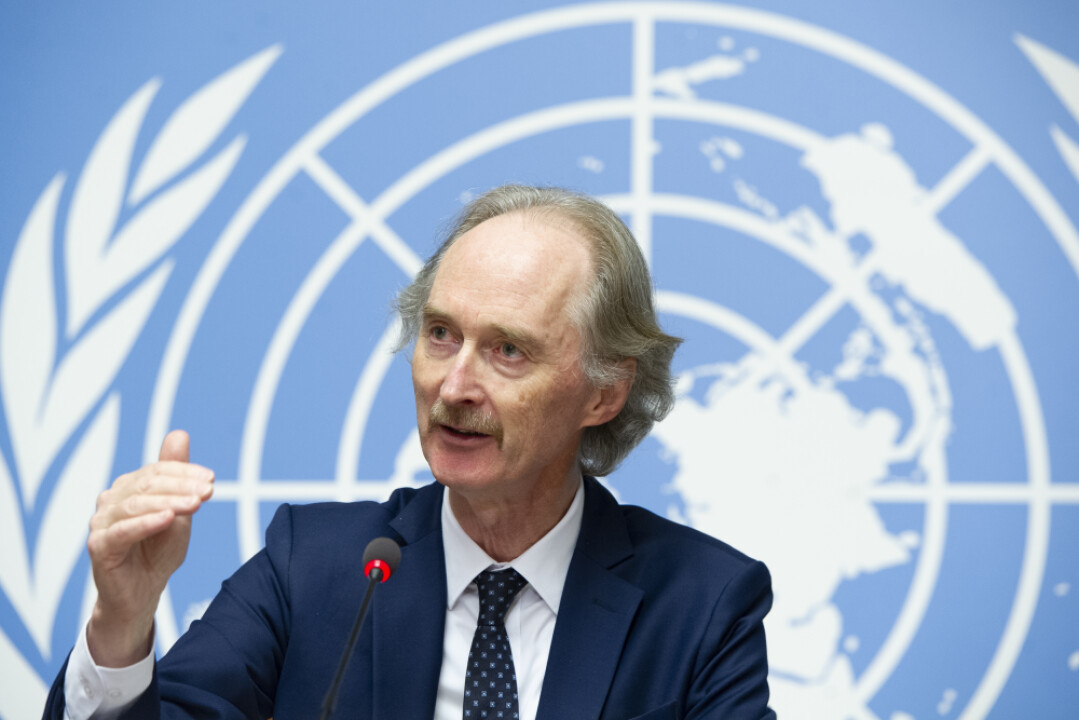
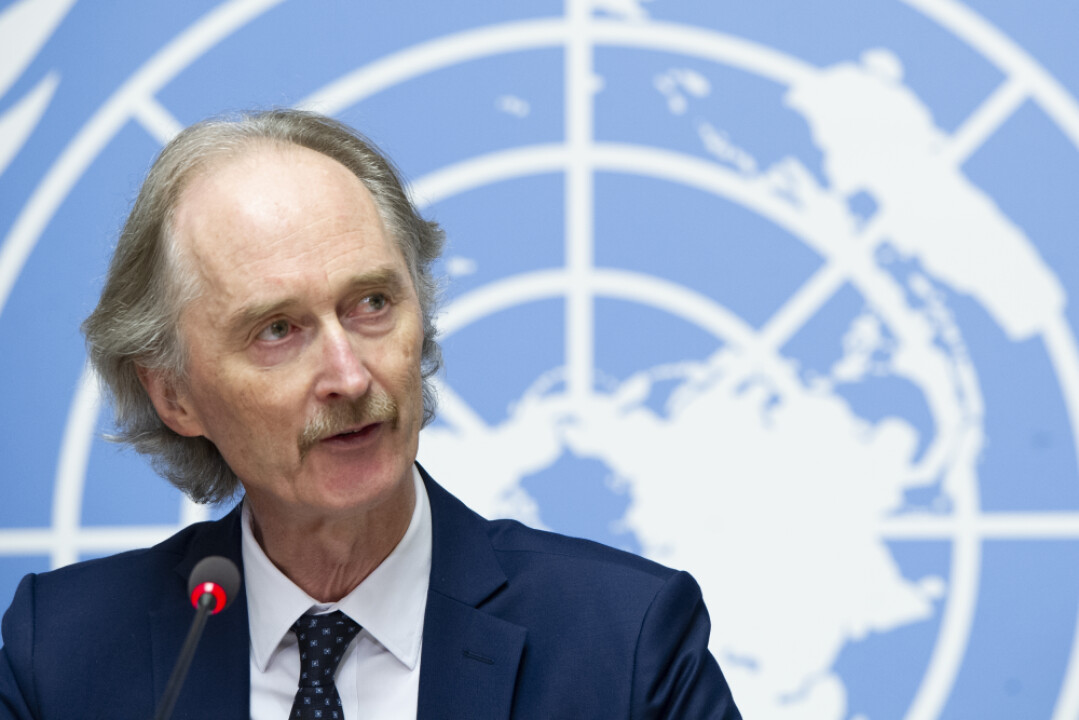
UN Special Envoy for Syria Geir Pedersen announced on Friday in Geneva that initial discussions on a new foundational document for the war-torn country by its opposing parties have been “successful” and will resume in two weeks.
“The two Co-Chairs have agreed to meet here in Geneva again in 14 days. So the next round of discussions will start on 25 November,” he told journalists in the Swiss city.
Describing the discussions in addition as “intensive” among the 45 members of the drafting body - comprising 15 members nominated by the Government of Syria, 15 members nominated by the Opposition and 15 members from civil society – Mr. Pedersen said that all issues related to the conflict on Syria and of relevance to developing a new constitution had been addressed.
“They have started to listen to each other very seriously,” he insisted. “They of course, these are sometimes very painful discussions and it takes courage to sit and listen to the other side presenting its views on these issues. But I think they have begun to address both difficult and painful issues and I think it is fair to say that the discussions have been very professional.”
Explaining that discussions had been guided by an agreed code of conduct, the UN Envoy said he expected next steps to be decided after all 150 delegates who had participated in last week’s larger Syrian Constitutional Committee meetings in Geneva had had their say.
“Obviously, you know, no secret, that they have been discussing issues related to Syria’s sovereignty, independence and territorial integrity, they have obviously been discussing issues related to terrorism, they have been discussing issues related to the importance of State institutions, they have been discussing issues related to the rule of law, the importance of that, the separation of powers, all issues you could imagine which is of relevance to developing a Constitution.”
Mr. Pedersen also reiterated his previous words of caution that the Syrian Constitutional Committee “in itself is not a solution to the conflict”, before pointing to the significance of “recent developments on the ground”, in reference ongoing violence in northwest and northeast Syria.
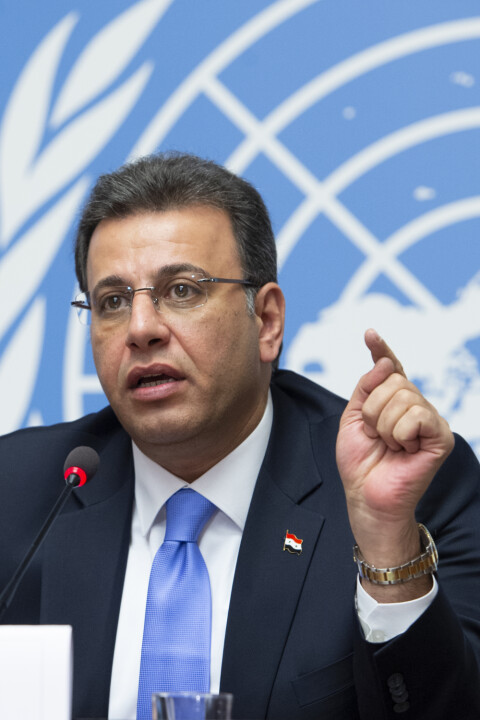
In a separate press conference, Ahmad Kuzbari, Co-Chair for the Government of Syria, insisted that his delegation had “not come to build a new State. The Syrian Arab Republic is a State; it has a Constitution and a Parliament and a Government, an army and institutions. We came here to reform the Constitution, we already said that this reform could be through amending some of the provisions of the current applicable Constitution of 2012 and which remain applicable until the last minute, until the Syrian people decide on a new Constitution. We also said we are open to (inaudible) a new Constitution we don’t want; we could draft a new Constitution as long as it meets the objectives of the Syrian State, as long as it preserves national constants, and first and foremost, the Syrian people must approve it.”
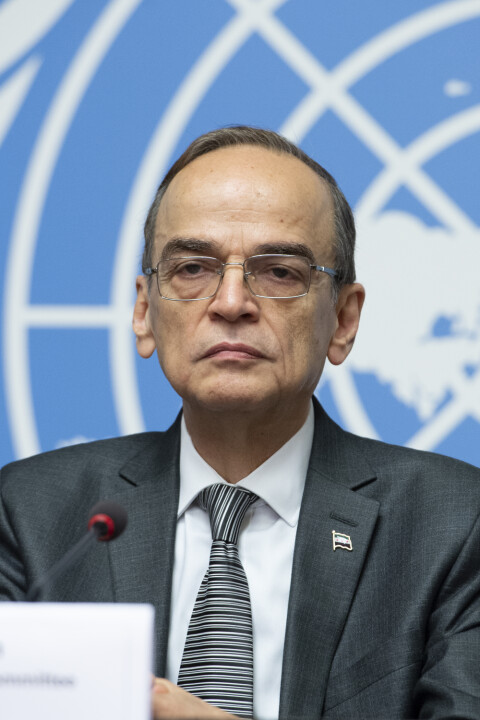
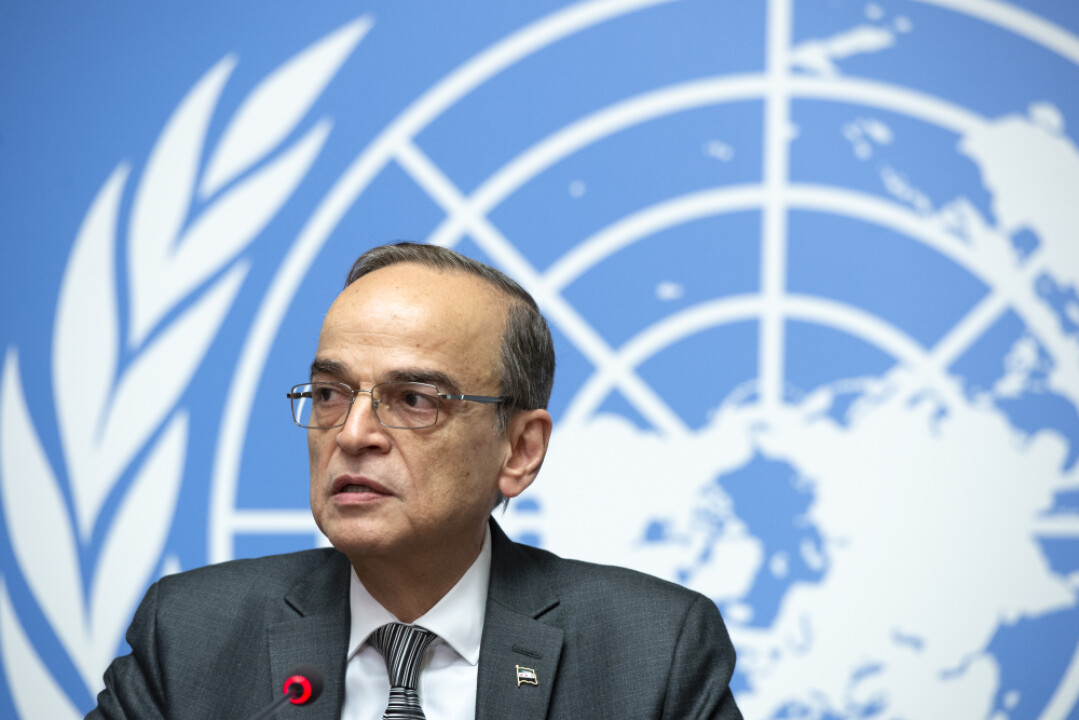
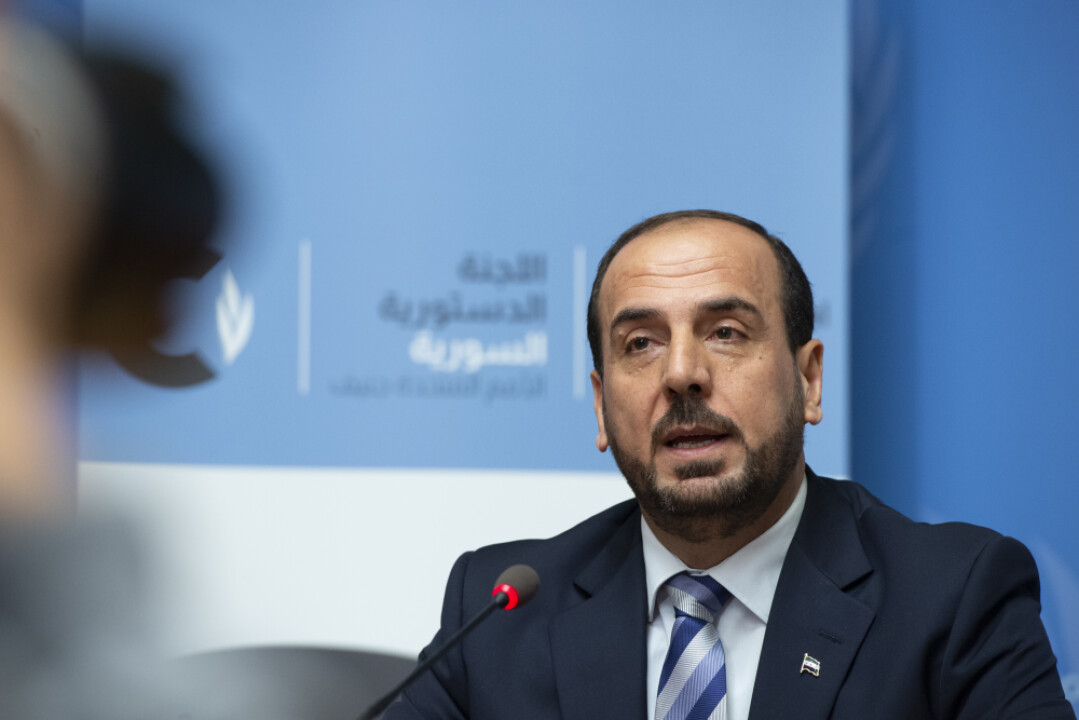
Meanwhile, Hadi Albahra, Co-Chair for the Opposition noted that the discussions “should be above all differences and should be the unifying contract of all the Syrians. We’re talking about a Constitution that will help us turn a page full of suffering and sacrifices. We are talking about a Constitution that will bring back the refuges from the diaspora to their homeland. We are talking about a Constitution that will take the IDPs to their homes and their homeland. We’re talking about a Constitution that will bring back the refugees from Lebanon, from (inaudible), from Jordan, from Turkey and from across the world to a country that is one for all.”
Highlighting the enormity of the challenge that lies ahead in future discussions, Mr. Albahra listed some of the issues that were of particular importance to his delegation: “We noticed of course in the beginning there were points without contention, for example the unity, the sovereignty of Syria, the unity of the Syrian people. These are given matters that no two people would object to. But what about the new future, what is the new Parliament, how are we going to address the imperatives of the coming to terms, the IDPs, the refugees, the migrants, the transitional justice, the detainees. We are talking about a whole generation, the generation that was born at the beginning of the crisis; they are now 10 years old.”
- Exterior shot, Palais des Nations flag alley.
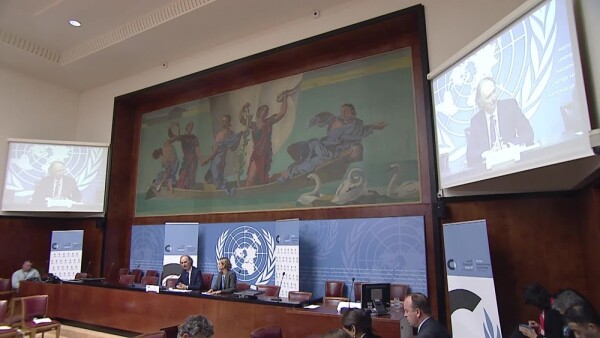
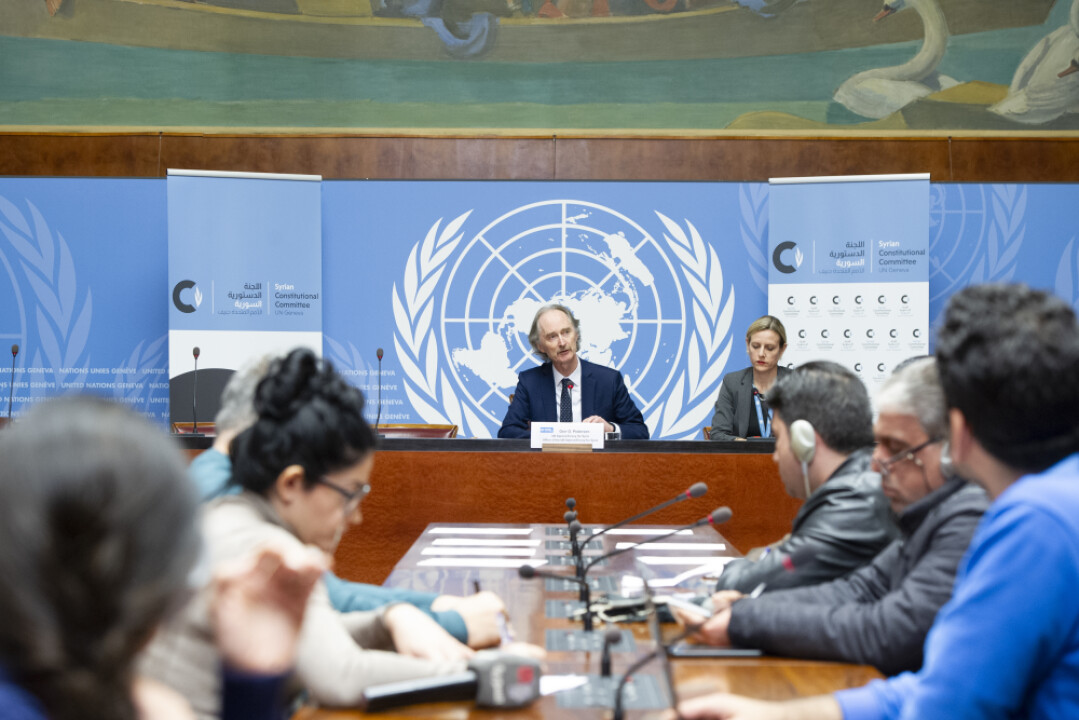
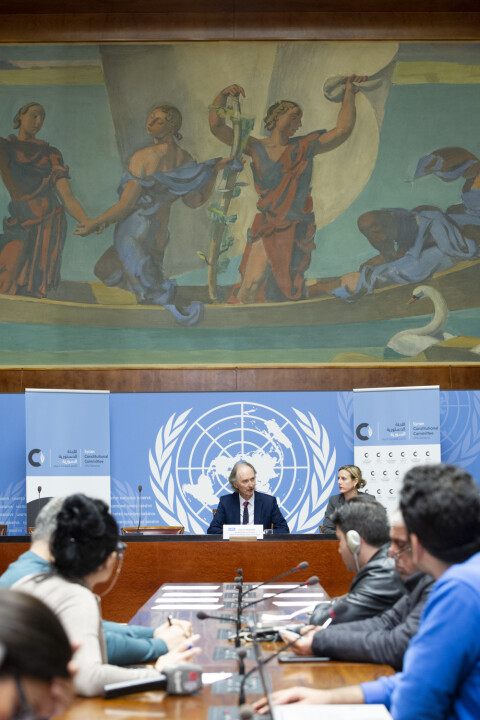
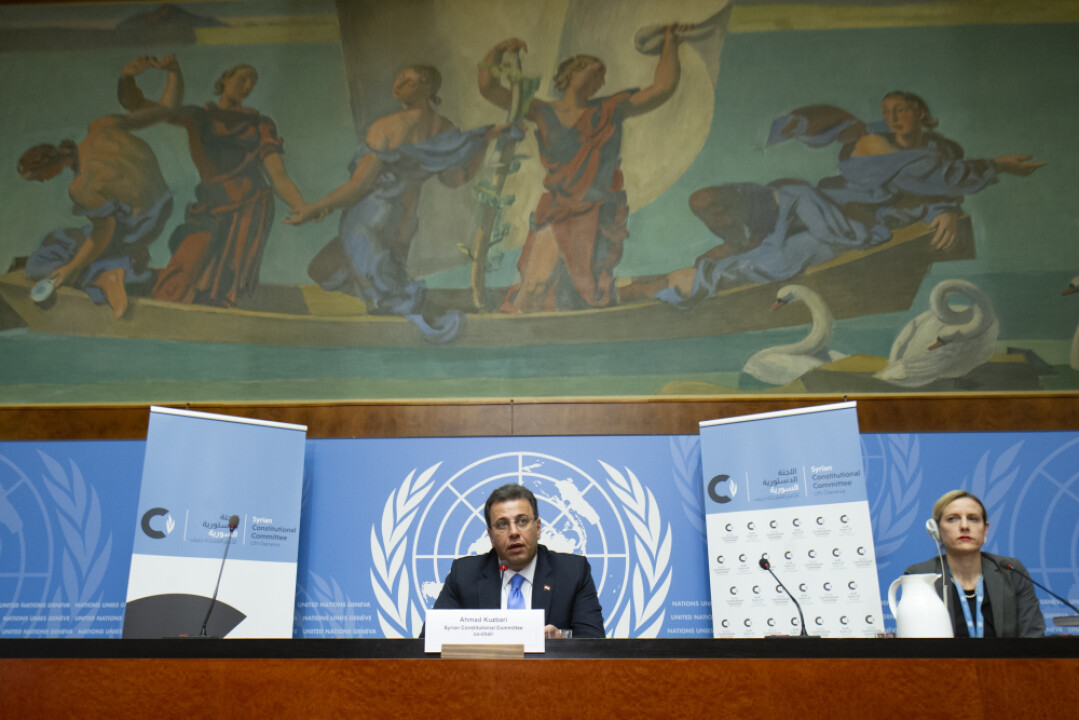
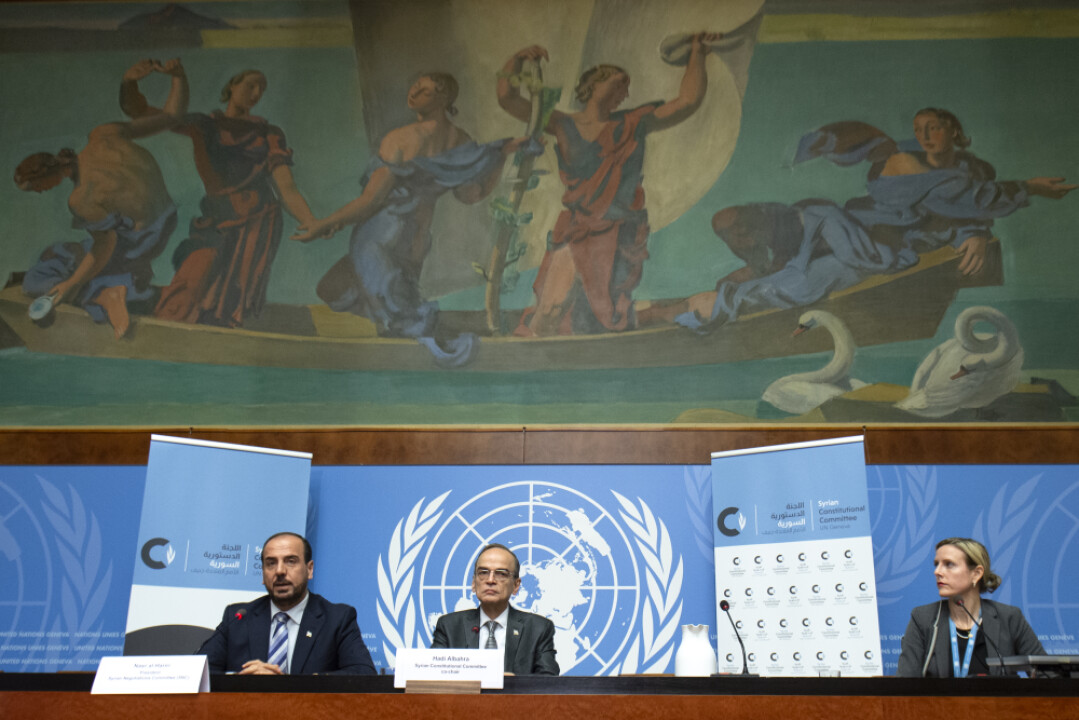
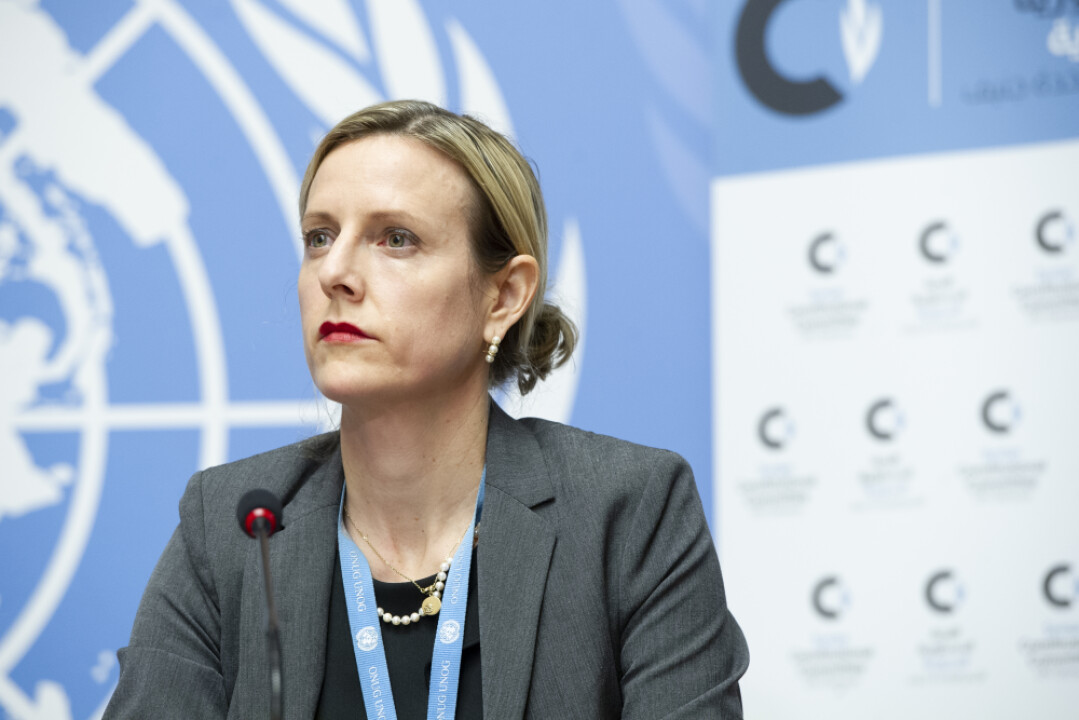
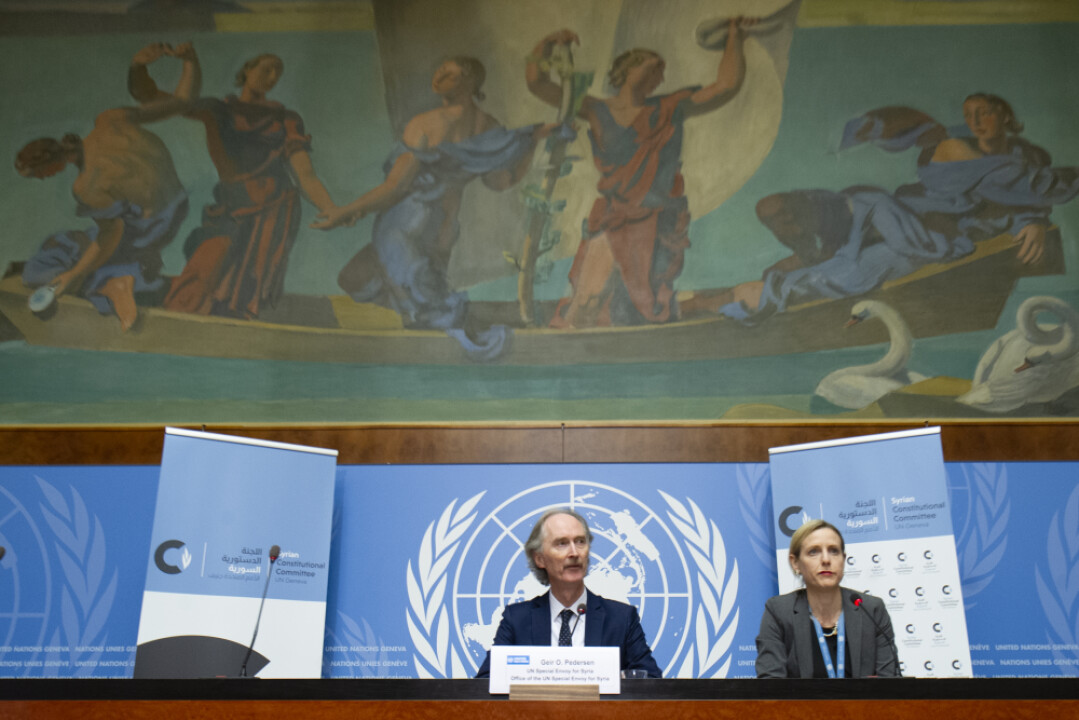
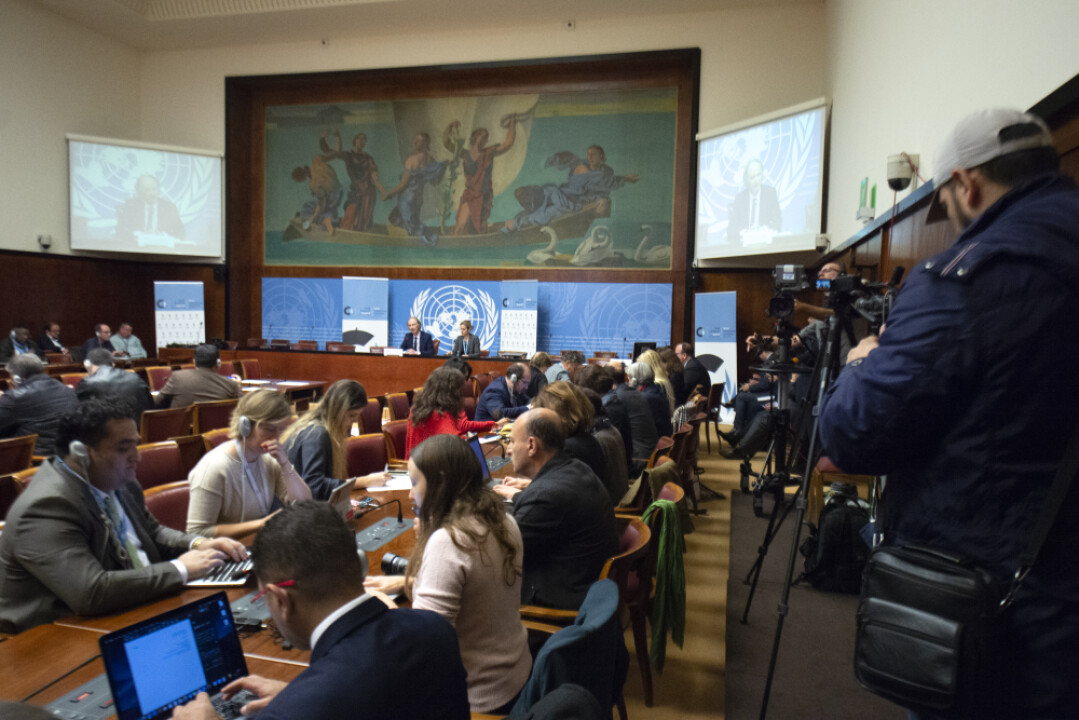
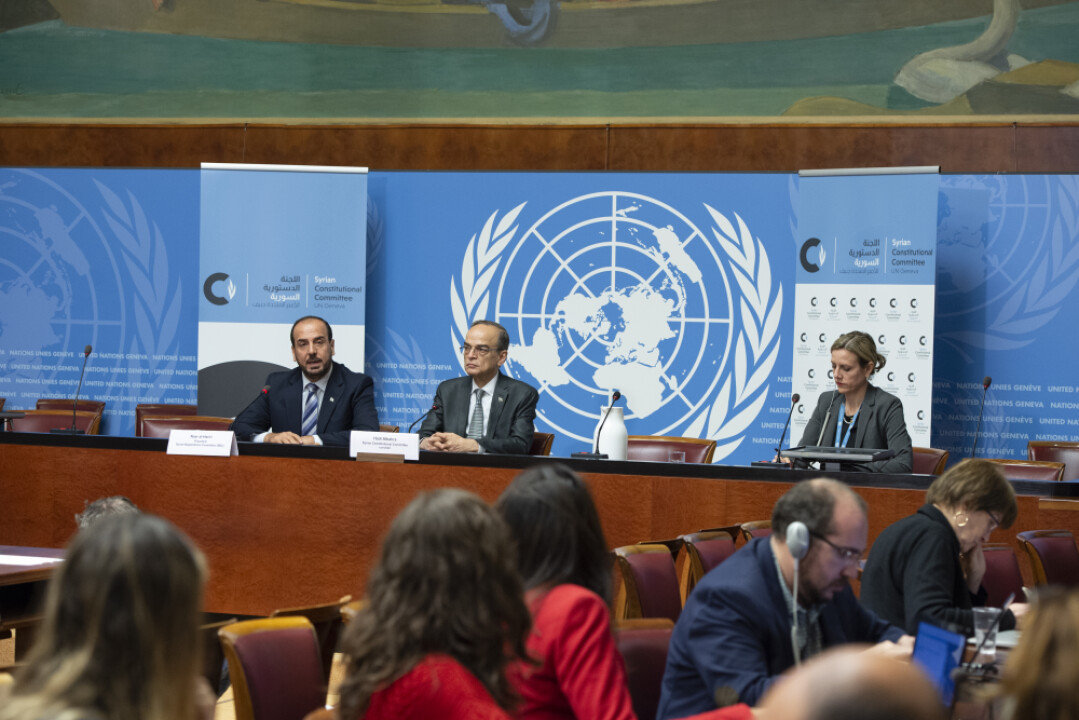
- Medium shot, journalists, podium with UN Special Envoy Geir Pedersen and spokesperson Jenifer Fenton, Room III.
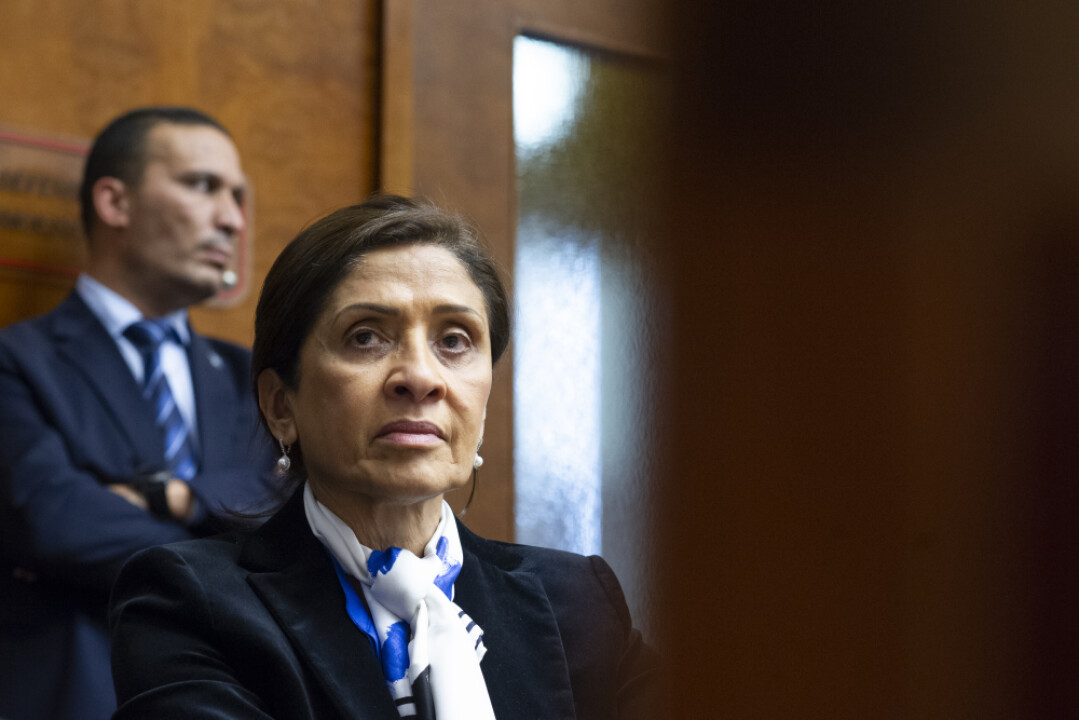
- Close up, onlookers, profile.
- Wide shot, podium and projection screens, Room III
- SOUNDBITE (English) — UN Special Envoy for Syria, Geir Pedersen: “The two Co-Chairs have agreed to meet here in Geneva again in 14 days. So the next round of discussions will start on 25 November.”
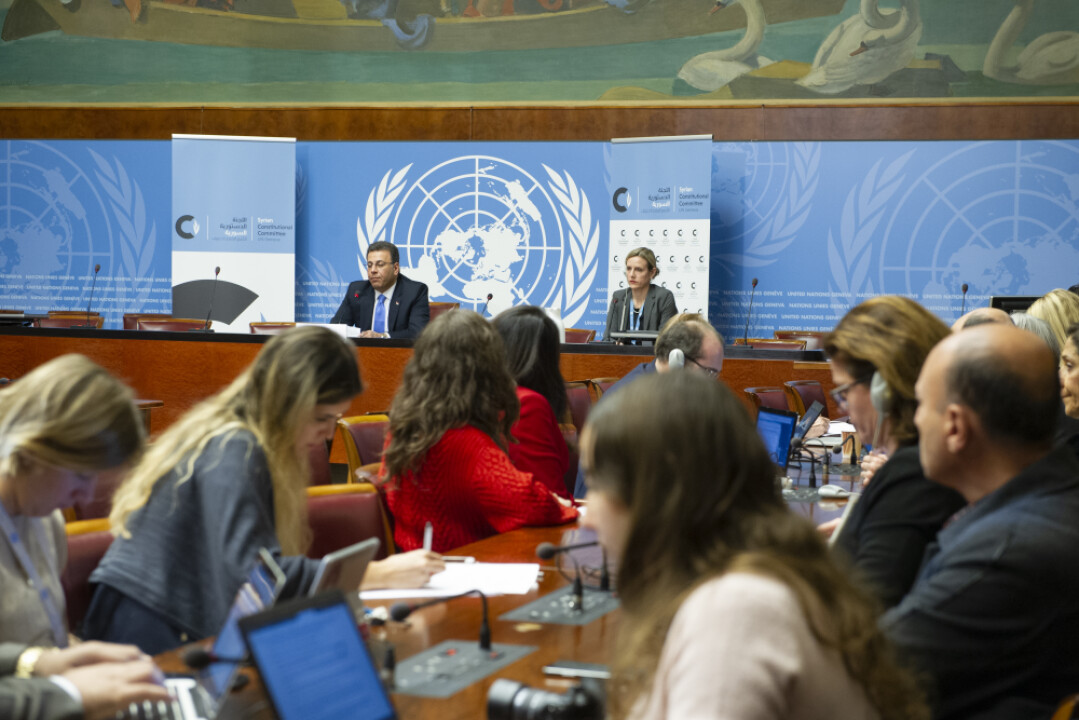
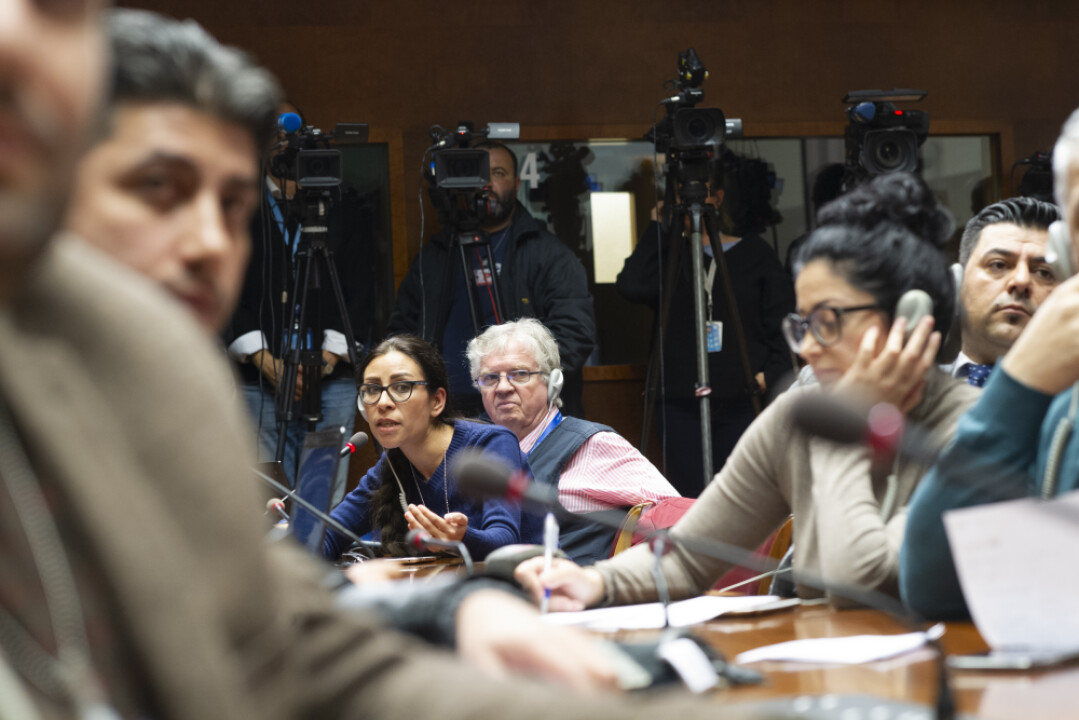
- Medium shot, journalists, TV crews, Room III.
- SOUNDBITE (English) — UN Special Envoy for Syria, Geir Pedersen: “They have started to listen to each other very seriously. They of course, these are sometimes very painful discussions and it takes courage to sit and listen to the other side presenting its views on these issues. But I think they have begun to address both difficult and painful issues and I think it is fair to say that the discussions have been very professional.”
- Medium shot, observers conferring, Room III.
- SOUNDBITE (English) — UN Special Envoy for Syria, Geir Pedersen: “All the issues related to the conflict on Syria and of relevance to developing a new constitution have been addressed.”
- Medium shot, photographer, Room III.
- SOUNDBITE (English) — UN Special Envoy for Syria, Geir Pedersen: “Obviously, you know, no secret, that they have been discussing issues related to Syria’s sovereignty, independence and territorial integrity, they have obviously been discussing issues related to terrorism, they have been discussing issues related to the importance of State institutions, they have been discussing issues related to the rule of law, the importance of that, the separation of powers, all issues you could imagine which is of relevance to developing a Constitution.”
- Medium shot, journalists, Room III.
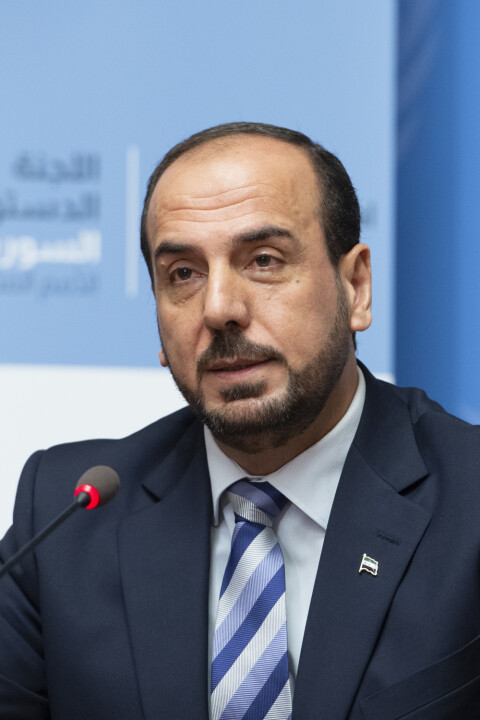
- SOUNDBITE (English) — Ahmad Kuzbari, Co-Chair, Government: “We did not come to build a new State. The Syrian Arab Republic is a State; it has a Constitution and a Parliament and a Government, an army and institutions. We came here to reform the Constitution, we already said that this reform could be through amending some of the provisions of the current applicable Constitution of 2012 and which remain applicable until the last minute, until the Syrian people decide on a new Constitution. We also said we are open to (inaudible) a new Constitution we don’t want; we could draft a new Constitution as long as it meets the objectives of the Syrian State, as long as it preserves national constants, and first and foremost, the Syrian people must approve it.”
- Medium shot, journalists, Room III.
- SOUNDBITE (English) — Hadi Albahra, Co-Chair, Opposition: “It should be above all differences and should be the unifying contract of all the Syrians. We’re talking about a Constitution that will help us turn a page full of suffering and sacrifices. We are talking about a Constitution that will bring back the refuges from the diaspora to their homeland. We are talking about a Constitution that will take the IDPs to their homes and their homeland. We’re talking about a Constitution that will bring back the refugees from Lebanon, from (inaudible), from Jordan, from Turkey and from across the world to a country that is one for all.”
- Medium shot, journalists, Room III.
- SOUNDBITE (English) — Hadi Albahra, Co-Chair, Opposition: “We noticed of course in the beginning there were points without contention, for example the unity, the sovereignty of Syria, the unity of the Syrian people. These are given matters that no two people would object to. But what about the new future, what is the new Parliament, how are we going to address the imperatives of the coming to terms, the IDPs, the refugees, the migrants, the transitional justice, the detainees. We are talking about a whole generation, the generation that was born at the beginning of the crisis; they are now 10 years old.”
- Medium shot, photographer, TV camera operator, journalists, Room III
- Medium shot, journalists, podium, Room III.
- Medium shot, photographer, crouching, Room III.
- Wide shot, podium.
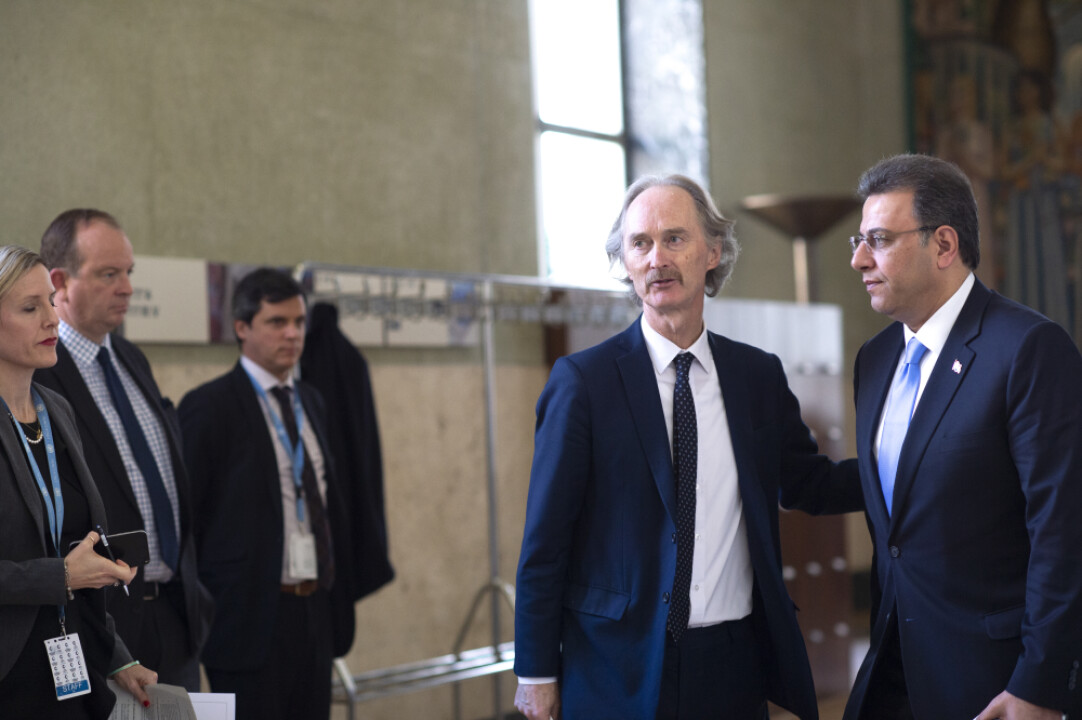
- Wide shot, up, UN Special Envoy for Syria, Geir Pedersen leaving Room III with entourage and TV camera following, Room III.
- Medium shot, UN Special Envoy for Syria, Geir Pedersen leaving Room III with aide and TV camera following, Room III.
Similar Stories

1
1
1
Edited News | OCHA , UNICEF , WFP
Aid agencies warned on Friday of the fast-developing humanitarian emergency inside Taiz City in Yemen, which has been encircled by de facto Houthi forces fighting government troops along the country’s west coast.

2
17
1
2
Edited News , Press Conferences , Images | OCHA , WMO
Two UN agencies teamed up on Wednesday to issue an appeal for immediate assistance to help communities already being impacted by the strongest El Niño on record.

3
16
2
2
Edited News , B-roll , Conferences , Images | UNITED NATIONS , UNOG
Sixth Consultative Meeting on Enhancing Coordination of Peace Initiatives and Efforts for Sudan

1
1
1
Edited News | UNICEF , WHO , UNHCR
Yemen war continues to force families from homes amid hunger and disease
More than 250,000 people have now fled renewed fighting in Yemen, the UN said on Tuesday, citing particular concern for those sheltering in the southwestern city of Taiz and the wider governorate, where access is “essentially blocked”.

1
1
1
Edited News | UNICEF
A little over one year since a ceasefire agreement was announced between Hamas fighters and Israel, more than 340 children have been reported killed and hundreds more injured, the UN Children’s Fund, UNICEF, said on Friday.

1
1
1
Edited News | UNICEF , IFRC
Six weeks after Nepal’s deadly flooding disaster, communities are still struggling to rebuild their lives, but they will need sustained help as global warming increases the risk of another Himalayan catastrophe, the UN Children’s Fund (UNICEF) said on Friday.

1
1
1
Edited News | WHO
In suspected Russia plague death, testing and monitoring underway – WHO
The death of a lab worker in Russia’s Siberia region has sparked concerns about plague being the cause, the UN World Health Organization (WHO) said on Tuesday, adding that it was following the situation closely.

1
1
Edited News | OHCHR , UNOG
UN Human Rights Chief Volker Türk on Friday provided and oral update to the 63rd session of the Human rights Council on Ukraine.

1
1
1
Edited News | OHCHR , UNOG
UN Human Rights Chief Volker Türk on Friday provided and oral update to the 63rd session of the Human rights Council on the human rights situation in Haiti.

1
1
1
Edited News | WHO
Repeated delays in bringing lifesaving medicines, prosthetics and more from Israel into Gaza risk having devastating consequences on Palestinians who urgently need them in the wartorn enclave, the UN World Health Organization (WHO) said on Friday. “A truck full of non-priority supplies or the right supplies arriving too late, doesn't save lives. That's the question that actually matters," said Dr Reinhilde Van De Weerdt, WHO Representative in the OPT.

1
1
1
Edited News | WHO
DRC: Early access to care and oxygen decisive for Ebola patients’ survival – WHO
In the Democratic Republic of the Congo (DRC), health workers fighting the country’s largest-ever Ebola outbreak are struggling to overcome critical challenges to patient care, the UN World Health Organization (WHO) warned on Tuesday.

1
1
1
Edited News | OCHA , UN
Civilians in Iran are continuing to feel the consequences of months of conflict and military escalation, the UN’s top official in the country has said, as loss of life, damage to civilian infrastructure and mounting economic pressures leave many facing continued uncertainty.