

The United Nations Office at Geneva
Multimedia Newsroom
Afghanistan pledging conference eyes development goals for coming fours years, from 2021-24
A high-level pledging conference on Afghanistan has been confirmed at UN Geneva next week whose objectives include helping to contribute to a peaceful and sustainable future for the country’s people, participants announced on Friday.
The specific aim of event, which coincides with peace talks between the Government of Afghanistan and Taliban leaders in Qatar, is to determine shared development goals and commitments over the next three years for the Afghan government and the international community, the UN Assistance Mission in Afghanistan (UNAMA) said.
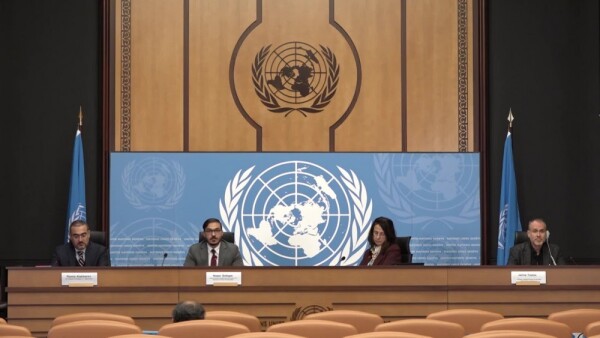
"The 2020 Afghanistan Conference is taking place at a historic and critical moment, both for the Government of Afghanistan and our international development partners," said Naser Sidiqee, Director General of the Monitoring and Evaluation Unit, Ministry of Finance of Afghanistan, at a press conference in the Swiss city.
Co-hosted by the Governments of Afghanistan and Finland with the United Nations, more than 70 countries, international organizations and agencies are expected to take part, as well as civil society representatives.
Previous editions have taken place in 2016 in Brussels and Tokyo in 2012.
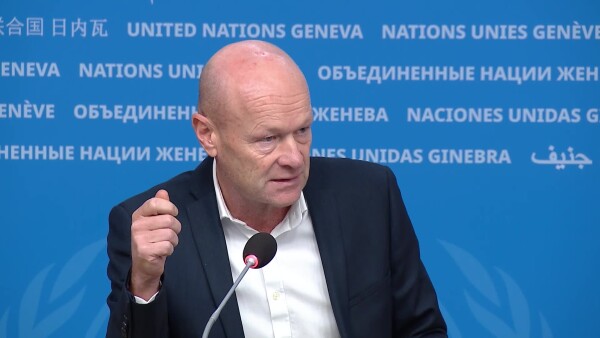
"We have been investing and we have been cooperating with Afghanistan well, in years,” said Janne Taalas, Finland’s Special Envoy to Afghanistan 2020. “And we have also made a significant contribution to the crisis management in Afghanistan."
The conference comes amid surging insecurity across Afganistan, including an attack on Kabul University earlier in the month that killed dozens of students that was reportedly claimed by ISIL extremists.
"At this critical time, the United Nations anticipates that conference will provide strong support to the people of Afghanistan," said Ramiz Alakbarov, UN Resident Coordinator in Afghanistan, ad interim.
"The decisions that will be taken in the next few days, we also view them as mutually reinforcing to the Afghanistan peace negotiations."
Participants are expected to engage in two days of discussions to pledge “financial support, a new development framework, a joint political declaration and a new aid architecture supporting Afghanistan’s development needs and priorities are the anticipated outcomes of the conference,” UNAMA said on its website.
“(Development assistance) has been significant and it has contributed quite significantly to the development of Afghanistan in different parts of the country,” said Mr. Sidiqee, from the Ministry of Finance of Afghanistan. “And we believe the continuation of the development assistance to Afghanistan will play a key role in stabilizing Afghanistan and also supporting the government on its journey to self-reliance."
Owing to restrictions on large meetings in a bid to restrict the transmission of COVID-19 in Switzerland, the Conference will take place virtually, coordinated by UN Geneva.
n Afghanistan ad interim
- Wide shot, flags, United Nations Office in Geneva.
- Close-up shot, building, United Nations Office in Geneva.
- SOUNDBITE (English): Naser Sidiqee, Director General of the Monitoring and Evaluation Unit, Ministry of Finance of Afghanistan: "The 2020 Afghanistan Conference is taking place at a historic and critical moment, both for the Government of Afghanistan and our international development partners."
- Wide shot, journalists at the news briefing.
- SOUNDBITE (English): Janne Taalas, Finland’s Special Envoy to Afghanistan 2020: " We have been investing and we have been cooperating with Afghanistan well, in years. And we have also made a significant contribution to the crisis management in Afghanistan."
- Wide shot, a journalist at the news briefing.
- SOUNDBITE (English): Ramiz Alakbarov, UN Resident Coordinator in Afghanistan, a.i.: "At this critical time, the United Nations anticipates that conference will provide strong support to the people of Afghanistan."
- Wide shot, a journalist at the news briefing.
- SOUNDBITE (English): Ramiz Alakbarov, UN Resident Coordinator in Afghanistan, a.i.: "The decisions that will be taken in the next few days, we also view them as mutually reinforcing to the Afghanistan peace negotiations."
- Wide shot, journalists at the news briefing.
- SOUNDBITE (English): Naser Sidiqee, Director General of the Monitoring and Evaluation Unit, Ministry of Finance of Afghanistan: "It has been significant and it has contributed quite significantly to the development of Afghanistan in different parts of the country. And we believe : the continuation of the development assistance to Afghanistan will play a key role in stabilizing Afghanistan and also supporting the government on its journey to self-reliance."
- Wide shot, news briefing.
- Wide shot, news briefing.
- Wide shot, journalists at the news briefing.
Similar Stories
1
1
1
Edited News | OCHA , UNICEF , WFP
Aid agencies warned on Friday of the fast-developing humanitarian emergency inside Taiz City in Yemen, which has been encircled by de facto Houthi forces fighting government troops along the country’s west coast.

2
17
1
2
Edited News , Press Conferences , Images | OCHA , WMO
Two UN agencies teamed up on Wednesday to issue an appeal for immediate assistance to help communities already being impacted by the strongest El Niño on record.
3
16
2
2
Edited News , B-roll , Conferences , Images | UNITED NATIONS , UNOG
Sixth Consultative Meeting on Enhancing Coordination of Peace Initiatives and Efforts for Sudan

1
1
1
Edited News | UNICEF , WHO , UNHCR
Yemen war continues to force families from homes amid hunger and disease
More than 250,000 people have now fled renewed fighting in Yemen, the UN said on Tuesday, citing particular concern for those sheltering in the southwestern city of Taiz and the wider governorate, where access is “essentially blocked”.

1
1
1
Edited News | UNICEF
A little over one year since a ceasefire agreement was announced between Hamas fighters and Israel, more than 340 children have been reported killed and hundreds more injured, the UN Children’s Fund, UNICEF, said on Friday.

1
1
1
Edited News | UNICEF , IFRC
Six weeks after Nepal’s deadly flooding disaster, communities are still struggling to rebuild their lives, but they will need sustained help as global warming increases the risk of another Himalayan catastrophe, the UN Children’s Fund (UNICEF) said on Friday.

1
1
1
Edited News | WHO
In suspected Russia plague death, testing and monitoring underway – WHO
The death of a lab worker in Russia’s Siberia region has sparked concerns about plague being the cause, the UN World Health Organization (WHO) said on Tuesday, adding that it was following the situation closely.

1
1
Edited News | OHCHR , UNOG
UN Human Rights Chief Volker Türk on Friday provided and oral update to the 63rd session of the Human rights Council on Ukraine.

1
1
1
Edited News | OHCHR , UNOG
UN Human Rights Chief Volker Türk on Friday provided and oral update to the 63rd session of the Human rights Council on the human rights situation in Haiti.

1
1
1
Edited News | WHO
Repeated delays in bringing lifesaving medicines, prosthetics and more from Israel into Gaza risk having devastating consequences on Palestinians who urgently need them in the wartorn enclave, the UN World Health Organization (WHO) said on Friday. “A truck full of non-priority supplies or the right supplies arriving too late, doesn't save lives. That's the question that actually matters," said Dr Reinhilde Van De Weerdt, WHO Representative in the OPT.

1
1
1
Edited News | WHO
DRC: Early access to care and oxygen decisive for Ebola patients’ survival – WHO
In the Democratic Republic of the Congo (DRC), health workers fighting the country’s largest-ever Ebola outbreak are struggling to overcome critical challenges to patient care, the UN World Health Organization (WHO) warned on Tuesday.

1
1
1
Edited News | OCHA , UN
Civilians in Iran are continuing to feel the consequences of months of conflict and military escalation, the UN’s top official in the country has said, as loss of life, damage to civilian infrastructure and mounting economic pressures leave many facing continued uncertainty.