

The United Nations Office at Geneva
Multimedia Newsroom
Gaza: Sneeze and you might get shot, warns UNICEF in alert on child killings
After another deadly night of clashes in Lebanon, aid agencies issued a new alert for Gaza, where 265 Palestinian children have been killed since a ceasefire was announced in October 2025.
“During a period supposedly defined by restraint and protection, a child has been killed, on average, every single day for more than eight months,” said UN Children’s Fund (UNICEF) spokesperson James Elder. “That is an absurd and devastating figure.”
Briefing journalists in Geneva via video from Amman, the UNICEF aid veteran noted that the children “were not killed in a warzone” but rather in their homes, schools while playing football or fishing. “They were shot, they were bombed, they were struck by quadcopters” operated by the Israeli military, Mr. Elder continued.
The child fatalities are included among the nearly 1,000 Palestinians killed in Gaza and more than 3,100 injured since the ceasefire began, according to the enclave’s health authorities.
“You sneeze near the Orange line and you may well get shot,” Mr. Elder maintained, referring to the “continual creeping” of Israel’s so-called “Yellow Line” and “Orange Line”. The uncertainty of these moving boundaries and “an utter lack of accountability” are the reason for such a high number of killings, with the Israeli forces responsible for “the vast, vast majority - 90 per cent plus”, the UNICEF spokesperson said.
The UN and partners have repeatedly warned that the conflict has had a catastrophic humanitarian impact since war erupted in October 2023, in response to Hamas-led terror attacks on Israel. According to the UN World Health Organization (WHO), no hospital is fully operational in Gaza, while UNICEF warns that water remains a daily uncertainty for 1.1 million children.
“I talk to mothers who have children screaming because they don't have the clean water to wash [their skin]. Imagine a parent unable to fix that night after night,” Mr. Elder said. “The scale of human suffering in Gaza being inflicted upon Gaza and enabled by others on Palestinian children, it's almost beyond comparison in our lifetime.”
Today, nearly 1.9 million people have been displaced in Gaza, many repeatedly, while more than 1.2 million have lost their homes.
In an update to the Security Council on Thursday, UN emergency relief chief Tom Fletcher reported that Israeli denial rates for aid missions into Gaza had dropped from 31 per cent before the ceasefire to 11 per cent today. Nonetheless, Palestinians in Gaza remain “deprived of the basics that you would all demand for your own families: safety, shelter, clean water, healthcare, education”, he stressed.
Mr. Elder echoed that dire assessment, explaining that although some fuel is reaching generators still in working order, the Israeli authorities are not allowing spare parts into the enclave to fix broken machines, nor the oil needed to keep engines running smoothly. “This is the environment my colleagues on the ground work in, keeping children breathing without a semblance of dignity,” he said.
Other major problems continue to go unresolved in Gaza caused by delays and denials of aid deliveries, not least the massive amount of solid waste still piling up, said Jens Laerke, spokesperson for the UN aid coordination office, OCHA.
“We've all heard the stories about the rats, the insects, and so on and so forth, that this causes. So, there is an opportunity, there is a possibility to get rid of all that, but we are not getting the access to it,” he told journalists in Geneva.
More killing in Lebanon
The OCHA spokesperson also condemned the continuing flare-up in Lebanon overnight, with reports of at least 18 people killed in Israeli airstrikes in the south targeting Hezbollah fighters.
“We are seeing the same reports overnight, of course, with enormous concern, frankly…more fighting is not going to help anyone,” Mr. Laerke said, highlighting the high level of humanitarian needs across Lebanon and particularly in the south.
“It is infinitely easier and faster to hurt people and inflict damage than it is to restore people's livelihoods, get them back to their homes, feed them and so on and so forth. There's just one or two days of this kind of warfare that translate into months, sometimes years, of humanitarian operations on the ground.”
According to UNICEF, more than 770,000 children are experiencing heightened distress after repeated exposure to violence, loss and displacement.
ends
Gaza - Lebanon update – UNICEF OCHA
TRT: 3 min 21s
SOURCE: UNTV CH
RESTRICTIONS: NONE
LANGUAGE: ENGLISH / FRENCH / NATS
ASPECT RATIO: 16:9
DATELINE: 19 JUNE 2026 GENEVA, SWITZERLAND
Speakers:
- UNICEF spokesperson James Elder (from Amman)
- OCHA spokesperson Jens Laerke
SHOTLIST
-
-
-
- Exterior wide, UN Geneva flag alley.
- Wide, podium speakers, UN Geneva.
- SOUNDBITE (English) — James Elder, UNICEF: “Since the ceasefire was announced in October 2025, 265 Palestinian children have been killed across Gaza. That is an absurd, devastating figure. During a period supposedly defined by restraint and protection, a child has been killed, on average, every single day for more than eight months.”
- Wide, UN Geneva Press room.
- SOUNDBITE (English) — James Elder, UNICEF: “These children were not killed in a warzone; they were killed in their homes, they were killed in their schools, they were killed playing football, they were killed fishing. They were shot, they were bombed, they were struck by quadcopters.”
- Wide, podium speakers, UN Geneva.
- SOUNDBITE (English) — James Elder, UNICEF: “You sneeze near the Orange Line and you may well get shot. So, the continual creeping of that alongside an utter lack of accountability for a long, long time has meant, yes, this is why we have these numbers. And as I say the vast, vast majority, 90 per cent plus Israeli forces, bombs, airstrikes, quadcopters and live ammunition.”
- Medium-wide, podium speaker, UN Geneva.
- SOUNDBITE (English) — James Elder, UNICEF: “I talk to mothers who have children screaming because they don't have the clean water to wash that. Imagine a parent unable to fix that night after night. I mean, the scale of human suffering in Gaza being inflicted upon Gaza and enabled by others on Palestinian children, it's almost beyond comparison in our lifetime.”
- Wide, UN Geneva Press room.
- SOUNDBITE (English) — James Elder, UNICEF: “We're pleased now that despite not being able to bring in the supplies to repair so many of the generators and water systems, those generators that can function, we are now getting the fuel we need in. At the same time they then deny the oil that those generators need to function. This is the environment my colleagues on the ground work in, keeping children breathing without a semblance of dignity.”
- Wide, podium speakers.
- SOUNDBITE (English) — Jens Laerke, OCHA: “You have all this solid waste piling up inside Gaza and we've all heard the stories about the rats, the insects, and so on and so forth, that this causes. So, there is an opportunity, there is a possibility to get rid of all that, but we are not getting the access to it.”
- Wide, Press room podium speakers, journalists.
- SOUNDBITE (English) — Jens Laerke, OCHA: “We are seeing the same reports overnight, of course, with enormous concern, frankly. We will try to get a better handle on what the humanitarian implications of that has been, but more fighting is not going to help anyone.”
- Medium, journalist.
- SOUNDBITE (English) — Jens Laerke, OCHA: “It is infinitely easier and faster to hurt people and inflict damage than it is to restore people's livelihoods, get them back to their homes, feed them and so on and so forth. There's just one or two days of this kind of warfare that translate into months, sometimes years, of humanitarian operations on the ground.”
- Wide, Press room, technical booths, journalists, participants.
-
-

Similar Stories

1
1
1
Edited News | UNICEF
A little over one year since a ceasefire agreement was announced between Hamas fighters and Israel, more than 340 children have been reported killed and hundreds more injured, the UN Children’s Fund, UNICEF, said on Friday.

1
1
1
Edited News | UNICEF , IFRC
Six weeks after Nepal’s deadly flooding disaster, communities are still struggling to rebuild their lives, but they will need sustained help as global warming increases the risk of another Himalayan catastrophe, the UN Children’s Fund (UNICEF) said on Friday.

1
1
1
Edited News | WHO
In suspected Russia plague death, testing and monitoring underway – WHO
The death of a lab worker in Russia’s Siberia region has sparked concerns about plague being the cause, the UN World Health Organization (WHO) said on Tuesday, adding that it was following the situation closely.

1
1
Edited News | OHCHR , UNOG
UN Human Rights Chief Volker Türk on Friday provided and oral update to the 63rd session of the Human rights Council on Ukraine.

1
1
1
Edited News | OHCHR , UNOG
UN Human Rights Chief Volker Türk on Friday provided and oral update to the 63rd session of the Human rights Council on the human rights situation in Haiti.

1
1
1
Edited News | WHO
Repeated delays in bringing lifesaving medicines, prosthetics and more from Israel into Gaza risk having devastating consequences on Palestinians who urgently need them in the wartorn enclave, the UN World Health Organization (WHO) said on Friday. “A truck full of non-priority supplies or the right supplies arriving too late, doesn't save lives. That's the question that actually matters," said Dr Reinhilde Van De Weerdt, WHO Representative in the OPT.

1
1
1
Edited News | WHO
DRC: Early access to care and oxygen decisive for Ebola patients’ survival – WHO
In the Democratic Republic of the Congo (DRC), health workers fighting the country’s largest-ever Ebola outbreak are struggling to overcome critical challenges to patient care, the UN World Health Organization (WHO) warned on Tuesday.

1
1
1
Edited News | OCHA , UN
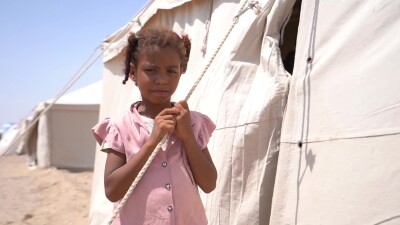
Civilians in Iran are continuing to feel the consequences of months of conflict and military escalation, the UN’s top official in the country has said, as loss of life, damage to civilian infrastructure and mounting economic pressures leave many facing continued uncertainty.
1
1
1
Edited News | WHO , UNICEF
Aid agencies in Yemen highlighted the growing hunger emergency sparked by renewed fighting between Houthi opposition forces and Government troops, after mobile health clinics reported that hundreds of children displaced by the violence are suffering from the most deadly form of malnutrition.
1
1
1
Edited News | UNHCR
Displacement on the rise in Yemen as fighting continues - UNHCR
As hostilities worsen in Yemen, more people have been fleeing their homes, further intensifying the humanitarian crisis within the region, the UN Refugee Agency (UNHCR) warned on Tuesday.
1
1
1
Edited News | IOM , OHCHR , UNFPA , UNOG , UNHCR , WHO
Yemen’s humanitarian crisis growing by the hour amid spike in displacement
Yemenis displaced by renewed fighting have described fleeing for their lives amid shelling and gunfire, aid agencies reported on Friday, while highlighting the dramatic increase in humanitarian needs in the country and in Djibouti, where thousands have sought shelter.
1
1
1
Edited News | OHCHR , UNOG
The UN Human Rights Office issued on Friday a report documenting a shocking pattern of sexual violence amid Russia’s full-scale armed attack on Ukraine.