

The United Nations Office at Geneva
Multimedia Newsroom
Millions of desperate Sudanese return home amid dire conditions as war rages – IOM
Three years into the devastating conflict in Sudan, nearly four million displaced people have returned to their places of origin across the country, only to face “another struggle for survival”, the UN International Organization for Migration (IOM) said on Tuesday.
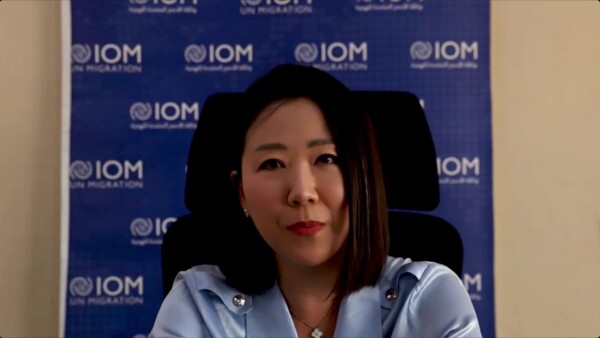
IOM Deputy Director General Sung Ah Lee said that returns were concentrated mainly in the capital Khartoum and neighbouring Al Jazirah state, where she was speaking to reporters.
“I was in Khartoum yesterday and I saw large numbers of people are returning to areas where homes and critical infrastructure including water, health, electricity, have been heavily damaged,” she said.
Going home despite the very “stark” reality encountered there reflects the determination of the displaced and the difficult circumstances pushing them to return, Ms. Lee explained.
IOM indicates that more than two million additional people are expected to return to Khartoum alone in 2026.
“Many are returning because they believe security has improved,” she said, while for others, life in displacement has become unbearable, notably due to economic pressures and increasingly hard conditions in neighbouring countries.
According to IOM, at the height of the conflict between the Sudanese Armed Forces (SAF) and the paramilitary Rapid Support Forces (RSF) which erupted on 15 April 2023, nearly 12 million people fled heavily affected areas, particularly Al Jazirah, Khartoum and parts of Sennar and Kordofan. More than 4.5 million crossed into neighbouring countries, first and foremost Egypt, South Sudan and Chad.
Today, almost nine million remain internally displaced.
“Host communities across the eastern and northern Sudan… Kassala, Gedaref, Red Sea, Northern and River Nile states, have carried much of this burden, welcoming displaced families while already facing economic hardship and climate-related pressures,” Ms. Lee stressed.
“This has stretched the available infrastructure almost to the limit.”
While in Khartoum rising returns have placed additional strain on war-damaged urban infrastructure, in Al Jazirah, a major agricultural region, returnees are finding levels of destruction that may jeopardize their chances of growing anything to survive.
“Farmers are returning to fields where irrigation systems and equipment have been damaged,” Ms. Lee said, “threatening livelihoods and food production at a critical moment for the country”.
While the humanitarian response remains severely underfunded, “without urgent investment to restore essential services and rebuild infrastructure and revive livelihoods, safe and sustainable returns are at serious risk,” she concluded.
-Ends-
STORY Sudan returns – IOM
TRT: 2:10’’
SOURCE: UNTV CH
RESTRICTIONS: NONE
LANGUAGE: ENGLISH/NATS
ASPECT RATIO: 16:9
DATELINE: 21 APRIL 2026 GENEVA, SWITZERLAND
1. Exterior wide shot: Palais des Nations, Flag Alley.
2. Medium-wide reverse shot: Speakers at the podium of the press conference; speaker on screens; journalists in the Press room.
3. SOUNDBITE (English) – Sung Ah Lee, Deputy Director General for Management and Reforms, International Organization for Migration (IOM): “Families are making really difficult journeys home. Nearly four million people have voluntarily returned to their places of origin, particularly to Al Jazirah.”
4. Medium reverse shot: Speakers at the podium of the press conference; speaker on screen; journalists in the Press room.
5. SOUNDBITE (English) – Sung Ah Lee, Deputy Director General for Management and Reforms, International Organization for Migration (IOM): “I was in Khartoum yesterday and I saw large numbers of people are returning to areas where homes and critical infrastructure, including water, health, electricity, have been heavily damaged.”
6. Wide shot: Journalists in the Press room; speaker on screens.
7. SOUNDBITE (English) – Sung Ah Lee, Deputy Director General for Management and Reforms, International Organization for Migration (IOM): “Many are returning because they believe security has improved. Others are returning because life in displacement has become unbearable, because [of] economic pressures, also to reunite with families, or because conditions in neighboring countries are increasingly hard.”
8. Wide shot: Journalists in the Press room; speaker on screens.
9. SOUNDBITE (English) – Sung Ah Lee, Deputy Director General for Management and Reforms, International Organization for Migration (IOM): “Host communities across the eastern and northern Sudan, so that includes Kassala, Gedaref, Red Sea, Northern and River Nile states, these have carried much of this burden, welcoming displaced families while already facing economic hardship and climate-related pressures. This has stretched the available infrastructure almost to the limit.”
10. Medium reverse shot: Speakers at the podium of the press conference; speaker on screen; journalists in the Press room.
11. SOUNDBITE (English) – Sung Ah Lee, Deputy Director General for Management and Reforms, International Organization for Migration (IOM): “Farmers are returning to fields, but where irrigation systems and equipment have been damaged, it's threatening livelihoods and food production at a critical moment for the country. Without urgent investment to restore essential services and rebuild infrastructure and revive livelihoods, safe and sustainable returns are at serious risk.”
12. Various shots of journalists in the Press room.
Similar Stories

1
1
1
Edited News | UNICEF , WHO , UNHCR
Yemen war continues to force families from homes amid hunger and disease
More than 250,000 people have now fled renewed fighting in Yemen, the UN said on Tuesday, citing particular concern for those sheltering in the southwestern city of Taiz and the wider governorate, where access is “essentially blocked”.

1
1
1
Edited News | UNICEF
A little over one year since a ceasefire agreement was announced between Hamas fighters and Israel, more than 340 children have been reported killed and hundreds more injured, the UN Children’s Fund, UNICEF, said on Friday.

1
1
1
Edited News | UNICEF , IFRC
Six weeks after Nepal’s deadly flooding disaster, communities are still struggling to rebuild their lives, but they will need sustained help as global warming increases the risk of another Himalayan catastrophe, the UN Children’s Fund (UNICEF) said on Friday.

1
1
1
Edited News | WHO
In suspected Russia plague death, testing and monitoring underway – WHO
The death of a lab worker in Russia’s Siberia region has sparked concerns about plague being the cause, the UN World Health Organization (WHO) said on Tuesday, adding that it was following the situation closely.

1
1
Edited News | OHCHR , UNOG
UN Human Rights Chief Volker Türk on Friday provided and oral update to the 63rd session of the Human rights Council on Ukraine.

1
1
1
Edited News | OHCHR , UNOG
UN Human Rights Chief Volker Türk on Friday provided and oral update to the 63rd session of the Human rights Council on the human rights situation in Haiti.

1
1
1
Edited News | WHO
Repeated delays in bringing lifesaving medicines, prosthetics and more from Israel into Gaza risk having devastating consequences on Palestinians who urgently need them in the wartorn enclave, the UN World Health Organization (WHO) said on Friday. “A truck full of non-priority supplies or the right supplies arriving too late, doesn't save lives. That's the question that actually matters," said Dr Reinhilde Van De Weerdt, WHO Representative in the OPT.

1
1
1
Edited News | WHO
DRC: Early access to care and oxygen decisive for Ebola patients’ survival – WHO
In the Democratic Republic of the Congo (DRC), health workers fighting the country’s largest-ever Ebola outbreak are struggling to overcome critical challenges to patient care, the UN World Health Organization (WHO) warned on Tuesday.

1
1
1
Edited News | OCHA , UN
Civilians in Iran are continuing to feel the consequences of months of conflict and military escalation, the UN’s top official in the country has said, as loss of life, damage to civilian infrastructure and mounting economic pressures leave many facing continued uncertainty.
1
1
1
Edited News | WHO , UNICEF
Aid agencies in Yemen highlighted the growing hunger emergency sparked by renewed fighting between Houthi opposition forces and Government troops, after mobile health clinics reported that hundreds of children displaced by the violence are suffering from the most deadly form of malnutrition.
1
1
1
Edited News | UNHCR
Displacement on the rise in Yemen as fighting continues - UNHCR
As hostilities worsen in Yemen, more people have been fleeing their homes, further intensifying the humanitarian crisis within the region, the UN Refugee Agency (UNHCR) warned on Tuesday.
1
1
1
Edited News | IOM , OHCHR , UNFPA , UNOG , UNHCR , WHO
Yemen’s humanitarian crisis growing by the hour amid spike in displacement
Yemenis displaced by renewed fighting have described fleeing for their lives amid shelling and gunfire, aid agencies reported on Friday, while highlighting the dramatic increase in humanitarian needs in the country and in Djibouti, where thousands have sought shelter.