

The United Nations Office at Geneva
Multimedia Newsroom
Edited News | IFRC , UN WOMEN , UNHCR , UNICEF , WHO
Iran, Lebanon aid update – WHO, IFRC, UNHCR, UN Women, UNICEF, IFRC
Middle East war: Attacks on vital healthcare, evacuation strike fears
Almost one month since Israeli and US airstrikes on Iran began, sparking a wider regional war, UN agencies and partners on Friday highlighted the terror among civilians fleeing bombardment, with “no safe space” to go.
In a rare piece of good news, though, the UN World Health Organization (WHO) said that aid shipments are getting “back on track” from Dubai, one of its key relief hubs, after major disruption to flights and other shipments caused by Iranian attacks throughout the Gulf.
“I would say the first two weeks of the crisis really set us back. But we're now receiving bookings for commercially scheduled cargo, and we're able to begin moving supplies out as we were in the past,” said Robert Blanchard, WHO Emergency Operations Team Lead at the Dubai Logistics Hub.
After a “significant reduction” in air freight across the region after war erupted on 28 February, most airlines in the Gulf “are now back to around 50 or 60 per cent of their capacity”, he explained, noting that more charter flights will accelerate the delivery of supplies, in addition to an Egypt-bound convoy carrying lifesaving medicines for Gaza.
Iran latest
From Iran, meanwhile, UN partner the International Federation of Red Cross and Red Crescent Societies highlighted the “rapidly deteriorating” impact of strikes in the capital, Tehran, “a city of roughly nine million people [that] feels completely empty”.
“While Tehran still maintains some basic services, some cities in the south are facing water and electricity cuts. Not to mention the fact that we have a nationwide internet blackout since 28 February,” said Maria Martinez, IFRC Head of Delegation in Iran.
The humanitarian official described how one IFRC search and rescue responder “discovered the bodies of his own family beneath the rubble. In Qom, another first responder recovered his aunt and her husband alongside a young child. This is the reality humanitarian workers are facing saving lives while carrying unimaginable personal loss.”
According to WHO’s healthcare attacks monitor, there have been 21 attacks on health workers and facilities in Iran since the war began. Ms. Martinez noted that 17 Red Crescent centres have been struck and nearly 100 ambulances damaged or destroyed. “These are not just vehicles. They are often the only hope people have when the bombs fall.”
Lebanon evacuation terror
From Lebanon, UN teams highlighted how civilians endure “intensified Israeli strikes” on targets linked to Hezbollah militants, who have continued to fire rockets at Israel since the war began.
Frequently, there is little warning about impending attacks.
“The attack in Bashura in central Beirut last week, there was a warning issued, but maybe less than an hour before the strike hit and it was very early in the morning,” said Karolina Lindholm Billing, UNHCR Representative in Lebanon.
She added that a second strike “close to several collective shelters hosting displaced (people), gave “no warning, it was a direct target…as far as I'm aware, there have been no sites designated as safe where civilians have been advised to go to.”
Echoing those concerns, the UN Children’s Fund (UNICEF)’s Marcoluigi Corsi, Country Representative in Lebanon insisted that “there is no safe space” for people to go – including the capital, Beirut. “Although the evaluation order has been issued for the southern part of Beirut, people, they move out of there, but then, you know, we just recently saw that the strikes actually happen also in other part of Beirut (too).”
More than one million people have now fled their homes in Lebanon in just a few weeks, UN aid teams say, highlighting the trauma of the upheaval.
“I have met women and girls forced to make devastating choices, fleeing their homes at night without clear destination, losing their families' entire livelihoods and leaving behind their sense of safety and everything that is familiar,” said Gielan El Messiri, UN Women Representative in Lebanon.
The destruction of key bridges in southern Lebanon by the Israeli military has created serious safety and access concerns.
“Access …is also becoming increasingly difficult because the destruction of key bridges in the South has cut off entire districts and isolating over 150,000 people and severely limiting humanitarian access with essential items to reach them,” UNHCR’s Ms. Billing added.
Iran, Lebanon aid update – WHO, IFRC, UNHCR, UN Women, UNICEF, IFRC
TRT: 4’01”
SOURCE: UNTV CH
RESTRICTIONS: NONE
LANGUAGE: ENGLISH / NATS
ASPECT RATIO: 16:9
DATELINE: 27 MARCH 2026 GENEVA, SWITZERLAND
Speakers:
- Robert Blanchard, Emergency Operations Team Lead, WHO/Dubai Logistics Hub (from Dubai)
- Maria Martinez, IFRC Head of Delegation in Iran (from Tehran)
- Karolina Lindholm Billing, UNHCR Representative in Lebanon (from Beirut)
- Gielan El Messiri, UN Women Representative in Lebanon (from Beirut)
- Marcoluigi Corsi, UNICEF Country Representative in Lebanon (from Beirut)
SHOTLIST
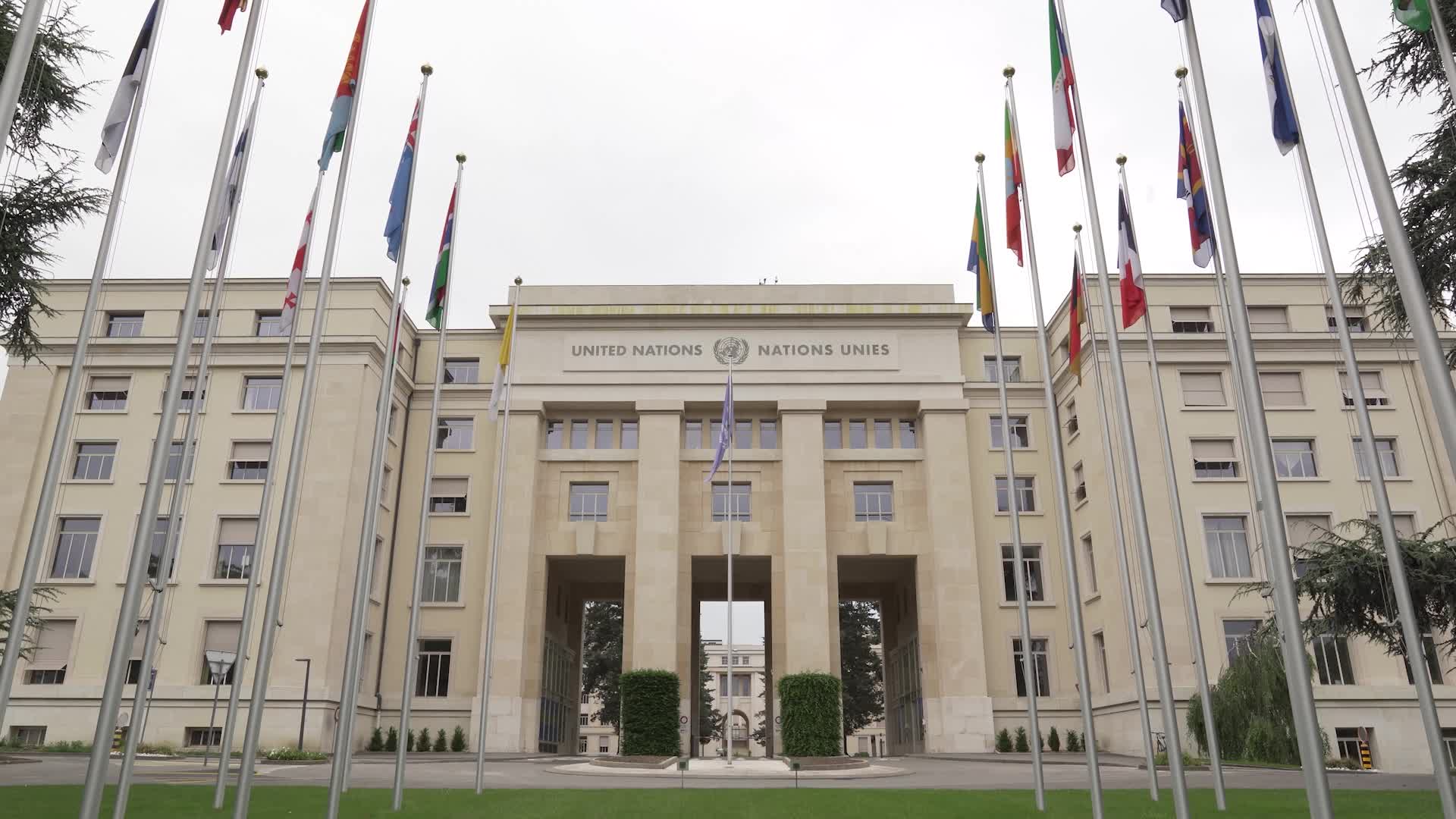
- Exterior wide, UN Geneva flag alley.
- Wide, UN Geneva Press room, podium speakers, journalists.
- SOUNDBITE (English) – Robert Blanchard, Emergency Operations Team Lead, WHO/Dubai Logistics Hub (from Dubai): “I would say the first two weeks of the crisis really set us back. But we're now receiving bookings for commercially-scheduled cargo, and we're able to begin moving supplies out as we were in the past. So, there was a significant reduction in air freight across the region, but most of the airlines are now back to around 50 or 60 per cent of their capacity. And that's pretty much where we are; at the same time these charter flights and the convoys will most certainly accelerate the delivery of supplies and get the operations back on track.”
- Wide, podium speakers.
- SOUNDBITE (French) – SOUNDBITE (English) – Maria Martinez, IFRC Head of Delegation in Iran (from Tehran): “One of the most striking and heartbreaking moments was when a search and rescue responder discovered the bodies of his own family beneath the rubble. In Qom, another first responder recovered his aunt and her husband alongside a young child. This is the reality humanitarian workers are facing saving lives while carrying unimaginable personal loss.”
- Medium, TV journalist.
- SOUNDBITE (English) – Maria Martinez, IFRC Head of Delegation in Iran (from Tehran): “Tehran, a city of roughly nine million people, feels completely empty. The humanitarian situation is rapidly deteriorating. While Tehran still maintains some basic services, some cities in the south are facing water and electricity cuts. Not to mention the fact that we have a nationwide internet blackout since 28 February.”
- Wide, podium speakers, journalists.
- SOUNDBITE (English) – Maria Martinez, IFRC Head of Delegation in Iran (from Tehran): "According to the Iranian Red Crescent latest report from today, 17 Red Crescent centres have been struck and nearly 100 ambulances were damaged or destroyed. These are not just vehicles. They are often the only hope people have when the bombs fall."
- Wide, podium speakers, journalists.
- SOUNDBITE (English) – Karolina Lindholm Billing, UNHCR Representative in Lebanon (from Beirut): “It is really a deepening humanitarian crisis that we here on the ground are seeing in Lebanon because the intensified Israeli strikes, the widespread evacuation orders that have forced more than a million people in just a couple of weeks to flee their homes.”
- Wide, journalists, participants.
- SOUNDBITE (English) – Gielan El Messiri, UN Women Representative in Lebanon (from Beirut): “I have met women and girls forced to make devastating choices, fleeing their homes at night without clear destination, losing their families' entire livelihoods and leaving behind their sense of safety and everything that is familiar.”
- Wide, participants, journalists.
- SOUNDBITE (English) – Marcoluigi Corsi, UNICEF Country Representative in Lebanon (from Beirut): “To be honest with you, there is no safe space where to go. Actually, even here in Beirut, although the evacuation order has been issued for the southern part of Beirut. People, they move out of there, but then, you know, we just recently saw that the strikes actually happen also in other part(s) of Beirut.”
- Wide, podium speakers, journalists, participants.
- SOUNDBITE (English) – Karolina Lindholm Billing, UNHCR Representative in Lebanon (from Beirut): “The attack in Bashura in central Beirut last week, there was a warning issued, but maybe less than an hour before the strike hit and it was very early in the morning. The second strike that was close to several collective shelters hosting displaced (people), there was no warning, it was a direct target. And as far as I'm aware, there have been no sites designated as safe where civilians have been advised to go to.”
- Medium, journalist.
- SOUNDBITE (English) – Karolina Lindholm Billing, UNHCR Representative in Lebanon (from Beirut): “Access to safety is also becoming increasingly difficult because the destruction of key bridges in the South has cut off entire districts and isolating over 150,000 people and severely limiting humanitarian access with essential items to reach them.”
- Wide, journalists.
Similar Stories

1
1
1
Edited News | UNICEF
A little over one year since a ceasefire agreement was announced between Hamas fighters and Israel, more than 340 children have been reported killed and hundreds more injured, the UN Children’s Fund, UNICEF, said on Friday.

1
1
1
Edited News | UNICEF , IFRC
Six weeks after Nepal’s deadly flooding disaster, communities are still struggling to rebuild their lives, but they will need sustained help as global warming increases the risk of another Himalayan catastrophe, the UN Children’s Fund (UNICEF) said on Friday.

1
1
1
Edited News | WHO
In suspected Russia plague death, testing and monitoring underway – WHO
The death of a lab worker in Russia’s Siberia region has sparked concerns about plague being the cause, the UN World Health Organization (WHO) said on Tuesday, adding that it was following the situation closely.

1
1
Edited News | OHCHR , UNOG
UN Human Rights Chief Volker Türk on Friday provided and oral update to the 63rd session of the Human rights Council on Ukraine.

1
1
1
Edited News | OHCHR , UNOG
UN Human Rights Chief Volker Türk on Friday provided and oral update to the 63rd session of the Human rights Council on the human rights situation in Haiti.

1
1
1
Edited News | WHO
Repeated delays in bringing lifesaving medicines, prosthetics and more from Israel into Gaza risk having devastating consequences on Palestinians who urgently need them in the wartorn enclave, the UN World Health Organization (WHO) said on Friday. “A truck full of non-priority supplies or the right supplies arriving too late, doesn't save lives. That's the question that actually matters," said Dr Reinhilde Van De Weerdt, WHO Representative in the OPT.

1
1
1
Edited News | WHO
DRC: Early access to care and oxygen decisive for Ebola patients’ survival – WHO
In the Democratic Republic of the Congo (DRC), health workers fighting the country’s largest-ever Ebola outbreak are struggling to overcome critical challenges to patient care, the UN World Health Organization (WHO) warned on Tuesday.

1
1
1
Edited News | OCHA , UN
Civilians in Iran are continuing to feel the consequences of months of conflict and military escalation, the UN’s top official in the country has said, as loss of life, damage to civilian infrastructure and mounting economic pressures leave many facing continued uncertainty.
1
1
1
Edited News | WHO , UNICEF
Aid agencies in Yemen highlighted the growing hunger emergency sparked by renewed fighting between Houthi opposition forces and Government troops, after mobile health clinics reported that hundreds of children displaced by the violence are suffering from the most deadly form of malnutrition.
1
1
1
Edited News | UNHCR
Displacement on the rise in Yemen as fighting continues - UNHCR
As hostilities worsen in Yemen, more people have been fleeing their homes, further intensifying the humanitarian crisis within the region, the UN Refugee Agency (UNHCR) warned on Tuesday.
1
1
1
Edited News | IOM , OHCHR , UNFPA , UNOG , UNHCR , WHO
Yemen’s humanitarian crisis growing by the hour amid spike in displacement
Yemenis displaced by renewed fighting have described fleeing for their lives amid shelling and gunfire, aid agencies reported on Friday, while highlighting the dramatic increase in humanitarian needs in the country and in Djibouti, where thousands have sought shelter.
1
1
1
Edited News | OHCHR , UNOG
The UN Human Rights Office issued on Friday a report documenting a shocking pattern of sexual violence amid Russia’s full-scale armed attack on Ukraine.