

The United Nations Office at Geneva
Multimedia Newsroom
Press Conferences | UNICEF , UN WOMEN , UNHCR , IFRC , IOM , WHO
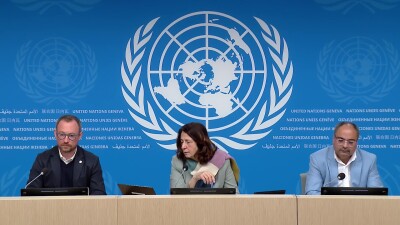
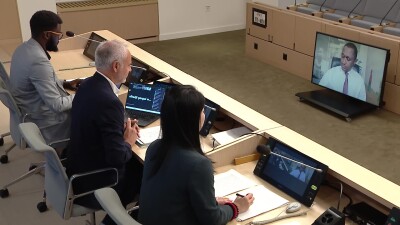
UN Geneva Press Briefing - 27 March 2026
27 March 2026
Conflict in Lebanon
Marcoluigi Corsi, United Nations Children’s Fund (UNICEF) Country Representative in Lebanon, connecting from Beirut, stated that in just three weeks, more than 370,000 children had been forced out of their homes in Lebanon, an average of at least 19,000 girls and boys displaced every single day. This was the equivalent of hundreds of school buses filled with children fleeing for their lives every 24 hours. In less than a single month, 20 per cent of Lebanon’s population had been displaced, and more than one million people were now uprooted.
Mr. Corsi stressed that the mental and emotional exhaustion weighing on the children of Lebanon was devastating. Before having a single moment to heal from the trauma of the last escalation just 15 months ago, they were being violently uprooted all over again. Today, over 135,000 internally displaced persons were seeking refuge in over 660 collective shelters. The living conditions were increasingly strained. Many displaced households were sheltering in informal, overcrowded, and unsafe settings, including unfinished buildings, public spaces, and vehicles. The essential services that children relied on for their survival and futures were being severely disrupted.
To date, at least 121 children had been killed, and 395 had been injured, said Mr. Corsi. Those who survived the bombardment were waking up to a dire humanitarian reality. Meanwhile, essential civilian infrastructure, including hospitals, schools, bridges and water and sanitation systems, upon which children depended to carry on with their lives had been consistently attacked, damaged, or destroyed. UNICEF was on the ground, working around the clock with partner and national systems to support children on the move, in shelters, and hard-to-reach areas. Mr. Corsi said that humanitarian assistance alone could not solve this crisis. Children were paying the highest price for the conflict. UNICEF thus urgently called for an immediate end to attacks on civilian infrastructure.
Gielan El Messiri, UN Women Representative in Lebanon, also speaking from Beirut, informed that since 2 March, an estimated 620,000 women and girls had been forced to flee their homes. This represented nearly one quarter of all women and girls in Lebanon, and more than half of those displaced, including Lebanese, Syrian, Palestinian, and migrant communities. This escalation was unfolding in a context where women already faced pre-existing inequalities, including limited access to income, unequal legal protections, and reduced access to services.
Ms. El Messiri said that 85 per cent of displaced women and girls were living outside formal shelters. They were staying in overcrowded apartments and informal arrangements, with Beirut and Mount Lebanon hosting the largest numbers. These were not just difficult conditions; they created serious protection risks, including exploitation, abuse, and gender-based violence. As essential protection and justice services were disrupted, women and girls were finding it harder to report violations and seek protection. Mental health needs were rising rapidly, as women described constant fear, sleeplessness, and exhaustion while also comforting frightened children. UN Women was working in major displacement hubs across Lebanon, scaling up lifesaving protection, cash-for-work and livelihood support for women and girls, strengthening coordination to ensure the response is gender-responsive, and amplifying women’s role in decision-making. UN Women echoed the Secretary-General’s call for immediate de-escalation, full respect for international humanitarian law, and an urgent scale-up of gender-responsive humanitarian assistance to meet the needs of women and girls.
Full remarks can be accessed here.
Karolina Lindholm Billing, United Nations Refugee Agency (UNHCR) Representative in Lebanon, speaking from Beirut, stated that it was a deepening humanitarian crisis, with intensified Israeli strikes and expanding evacuation orders stretching across the country. One in five residents of Lebanon had been forced to flee. When displaced to supposedly safer areas, people were not feeling safe. Just recently Israeli strikes hit central Beirut, where people had been looking for safety in collective shelters. Families were living in constant fear, and psychological toll, especially on children, would last for a long time. Destruction of bridges in the south cut off as many as 150,000 people and made humanitarian access difficult. Today, more than 136,000 displaced people were staying in 660 collective shelters, mostly schools crowded beyond their capacity, which increased protection risks. Ms. Billing said that older people and people with disabilities were particularly affected, struggling to sleep in collective accommodation. Beyond the immediate shelter needs, there was an urgent need to scale up protection efforts.
The situation remained extremely worrying, with a real risk of a humanitarian catastrophe. UNHCR continued to lead the protection and shelter sectors together with the Ministry of Social Affairs and NGO partners, and had delivered over 198,000 essential relief items, while working to improve privacy and dignity within shelters. Support for the Lebanon flash appeal went beyond an immediate emergency and aimed to strengthen longer-term social security protection system in the country. Civilians wanted to return home, and UNHCR was helping them until they could do so safely.
Full briefing note is available here.
Tommaso Della Longa, for the International Federation of Red Cross and Red Crescent Societies (IFRC), said that the IFRC was supporting the lifesaving activities of the Lebanese Red Cross and ensuring the continuity of its operations. The Lebanese Red Cross was the main provider of ambulance services in the country. Its activities also included blood services, the deployment of Mobile Medical Units to deliver essential healthcare, and the distribution of assistance to displaced people in shelter centres. Sixteen Emergency Operations Rooms were active across the country, coordinating with local authorities and partners to support shelter operations, monitor displacement, and plan the response. In coordination with the Ministry of Social Affairs, the Red Cross was managing major collective shelters, and distributing essential items to displaced people across the country. Between 2 and 23 March, the Red Cross had conducted 2,754 missions and distributed over 3,244 units of blood. Most urgent needs included shelter, food, access to emergency services, and psychosocial support.
Staff and volunteers were working under extreme pressure. One of the major challenges faced was the high level of risk facing volunteers, particularly during nighttime missions. Staff and volunteers were working under extreme pressure while ensuring both their personal safety and the safe evacuation of injured individuals. IFRC’s priority was to sustain the response, addressing both immediate needs and the longer-term sustainability of operations. In Lebanon, the IFRC had immediately mobilized nearly 500,000 CHF through its Disaster Response Emergency Fund to support Lebanese Red Cross activities. IFRC called on the international community, partners, and donors to show solidarity and support the humanitarian response. Needs were growing, and the affected communities in Lebanon could not be left to face this crisis alone.
Responding to questions from the media, Mr. Corsi, for UNICEF, said that there were no safe places to go to in Lebanon, as Israeli strikes happened across the country, not only in the areas under evacuation orders. Ms. El Messiri, for UN Women, stated that as strikes often happened during the night, families needed to make rushed decisions on where to go, with very limited time, and families often got split up. She spoke of limited WASH facilities and heating in collective shelters. UN Women’s and UNICEF’s own staff had been displaced. Ms. Billing, for UNHCR, explained that the roads from the south had been very congested following evacuation orders, and for the first strike in central Beirut an evacuation order had been issued only one hour prior. Until the start of the escalation, children used to attend schools which were now used as collective shelters, said Ms. Billing, which forced children to be schooled at home, and it was not a sustainable solution. Around 150,000 people were believed to remain in the south of the country, she said. Some 15 humanitarian movements had been successfully completed to support these communities with essential items. Alessandra Vellucci, for the United Nations Information Service (UNIS), said that Lebanon’s territorial integrity and sovereignty had to be fully respected.
Conflict in Iran
Maria Martinez, Head of Delegation of the International Federation of Red Cross and Red Crescent Societies (IFRC) in Iran, connecting from Tehran, said that 28 days since the start of the conflict, the Iranian Red Crescent and IFRC staff and volunteers continued to show up and deliver, around the clock, and despite risks to their own safety. Over 1,900 people had been killed and 20,000 people injured over the past four weeks, according to the Iranian Red Crescent Society. One Iranian Red Crescent rescuer had been killed, and 14 relief workers had been injured while trying to save others. Some three percent of the population were internally displaced. Seventeen Red Crescent centers had been stricken and as many as 100 ambulances had been damaged or destroyed, but Red Crescent volunteers were not deterred. In one case, a first responder had discovered the bodies of his own family, said Ms. Martinez. Nowruz had coincided with Eid this year, but the two usually joyous holidays had passed in silence instead of celebration. Tehran, a city of nine million people, felt completely empty. Some cities in the south were facing water and electricity cuts, with nationwide Internet cuts and quickly rising inflation. Livelihoods were disrupted, and households were facing mounting challenges with high inflation.
The Iranian Red Crescent Society remained the primary humanitarian actor in the country, said Ms. Martinez, playing a central role in the nation’s emergency infrastructure. It continued to provide medical care and supported basic needs of the population. Today, it had 529 branches activated across all 30 provinces, with 100,000 responders deployed and conducting search and rescue, providing emergency care, and supporting communities. At the same time, the Red Crescent was also providing vital psychosocial support, having received over 67,000 calls from people in distress across the country. It was a true lifeline for communities in need. Ms. Martinez added that across the country, Red Crescent teams were providing support and health services to people in need. IFRC had immediately allocated CHF 1.5 million, which had enabled rapid procurement of essential health supplies. An initial CHF 40 million appeal had been launched to support five million people. IFRC had worked on a list of good and items needed by the Iranian Red Crescent, and a dedicated supply team was in place, both in the country and across the region, she said. Saving lives, providing relief, offering psychosocial support, and securing access to essential services remained among the priorities.
Babar Baloch, for the United Nations Refugee Agency (UNHCR), said that UNHCR with humanitarian partners had compiled a flash refugee response plan to support refugees in Iran and their generous host communities, seeking USD 80 million to respond to urgent humanitarian needs of over 1.8 million refugees and one million Iranian hosts. Most refugees lived in urban communities, side by side with local people, Mr. Baloch explained.
Answering questions, Ms. Martinez said that IFRC’s mandate was purely humanitarian, not political. Explaining how IFRC was getting supplies in, she said that the ground border from Türkiye served as an entry point. She further said that 17 IFRC operation branches in Iran had been affected, which included an ambulance providing direct support. On the number of people killed and injured, Ms. Martinez explained that the figures provided by the Iranian Red Crescent showed that over 1,900 people had been killed and at least 20,000 people injured.
Displacement in the Middle East
Zoe Brennan, for the International Organization for Migration (IOM), stated that the conflict in the Middle East since late February continued to affect human mobility and displacement in the region. Despite heightened regional tensions, cross‑border mobility around the Iran had remained stable, with no observed surge in movements or atypical outflows from the country.
IOM’s Displacement Tracking Matrix showed that between 1 and 23 March there had been 97,527 movements from Iran to Afghanistan, 7,542 to Pakistan, and 32,576 movements from Afghanistan into Iran, reflecting fluid, complex mobility dynamics. Neighboring countries had received growing numbers of third-country nationals departing Iran. More than 500 people have crossed into Turkmenistan, and 549 people from countries including Russia, China, Kazakhstan, Germany and India entered Armenia from Iran.
Supply operations in the Middle East
Robert Blanchard, Emergency Operations Team Lead for the World Health Organization (WHO), speaking from Dubai, said that delivering life-saving medicines, medical supplies and equipment in response to health emergencies around the world, WHO’s global health supply chains were agile, responsive, and resilient. The WHO Hub for Global Health Emergencies Logistics in Dubai was located within the world’s largest humanitarian free zone and was strategically positioned to reach two-thirds of the world’s population within five to seven hours flight time. Earlier this month, the WHO Hub had activated its supply chain contingency plans to utilize alternative ports of entry to resupply the Hub. It had simultaneously begun sourcing critical medical commodities from other points of origin in Europe to maintain deliveries.
Today, Mr. Blanchard informed, the WHO Hub had a humanitarian convoy moving towards Lebanon with enough medicines and surgical supplies to treat 50,000 patients. A second humanitarian convoy was being readied from the Hub to Gaza and it now had a humanitarian charter flight being readied to deliver over 78 metric tons of pediatric and essential medicines to Afghanistan the following week. These humanitarian movements were made possible by Dubai Humanitarian, the Government of Dubai, and the Government of the United Arab Emirates. Saving WHO over 90 million dollars in operational costs through in-kind infrastructure and charter flights, their support had enabled WHO to deliver more medicines to reach more people, more quickly than ever before. Today’s supply chain disruptions presented new challenges, he said, but the delivery of humanitarian health supplies had to continue and would continue. The WHO Hub would continue to deliver to the world’s most vulnerable populations at their greatest time of need.
Responding to questions, Mr. Blanchard explained that the first two weeks of the conflict had indeed set the supply routes back, but supplies were now being moved out as they used to in the past. Most airlines were now back at 50 to 60 percent of their capacities, which should get the operations back on track. There had been no drone or missile impact on the WHO Hub, said Mr. Blanchard responding to another question. WHO was continuing to evaluate where prepositioned stocks around the world could be activated, so that supplies would not necessarily need to always come from the Dubai hub. Every day, the situation was being re-evaluated to see where the most critical priorities were and how to address them.
Shipwreck off the coast of Djibouti
Tanja Pacifico, Chief of Mission of the International Organization for Migration in Djibouti, speaking from Djibouti, said that on 24 March, the first shipwreck of the year off the coast of Djibouti had been recorded. The vessel was believed to have been carrying more than 300 people on board. So far, the bodies of three women and six men had been recovered. IOM teams were providing food, shelter, and health and mental health and psychosocial support to the more than 120 survivors, all Ethiopian nationals. The vessel had been heading to Yemen, a short distance away, but the sea had been very rough and dangerous. Ms. Pacifico reminded that 2025 had been the deadliest on record along this so-called “Eastern route”, with 900 deaths recorded, according to the IOM’s Missing Migrants Project. Government-led search and rescue operations were ongoing in the hope of finding more survivors, while local authorities were putting in place dignified burial arrangements for the deceased and supporting medical treatment for those rescued.
More details are available here.
Announcements
Alessandra Vellucci, for the UN Information Service (UNIS), informed that on 31 March at 9:30 am, Philippe Lazzarini, the outgoing UNRWA Commissioner-General, would hold his final press conference in that role from the UN Geneva press room.
The Human Rights Council was holding this morning, at the request of Iran, China and Cuba, an urgent debate on “The protection of children and educational institutions in international armed conflicts: the aerial attacks on Shajareh Tayyebeh Girls’ School in Minab, Iran, as a grave breach of international humanitarian law and international human rights law”. This afternoon, the Council would start taking action on draft resolutions.
The first part of the 2026 session of the Conference on Disarmament was ending today. The President of the Conference, Ambassador in den Bosch of the Netherlands, would not convene meetings throughout the duration of the Treaty on the Non-Proliferation of Nuclear Weapons Review Conference, through the week of 19 May.
***
Similar Stories
1
1
1
Press Conferences | UNHCR
End of UNHCR's 77th Annual Executive Committee (ExCom) meeting week
1
1
1
Press Conferences | UNICEF , IOM , UNHCR
UN Special Assistant to the Personal Envoy Office (SUDAN): Peace Initiatives and Efforts in Sudan; UNICEF: Dire situation of children in Gaza; IOM: Damaged Homes and Energy Attacks Risk Displacing Ukrainians for this winter; UNHCR: update on EXCOM week
1
1
1
Press Conferences | IOM , UNDRR
UN stresses importance of household preparedness for disaster risk reduction.
1
1
1
Statements , Press Conferences | OHCHR
1
1
1
Press Conferences | UNHCR , UNICEF , IFRC , OHCHR , UN WOMEN , IOM , OCHA , WHO
UNHCR – ExCom Meeting, UNICEF – Nepal Recovery, IFRC – Flash Floods, WHO – Mental Health, IOM – South Sudan Floods, OCHA – DRC Humanitarian aid, UNHCR – Sahel Displacement, UNICEF – Yemen Update, IOM – Gaza Shelter, UN Women – Gaza Women, OHCHR – Arrests and detentions of Syrians by Israeli force
2
1
2
Press Conferences | UNCTAD
Presentation of the Trade and Developement Report 2026
Embargoed until 9 October 2026 at 11 a.m. (Geneva Time)
UNCTAD: UNCTAD’s flagship report finds that governments increasingly use industrial, trade, financial and technology policies to pursue economic and national security objectives. Market access and the ability to move into higher-value activities now depend more heavily on technology, finance and geopolitics.
1
1
1
Press Conferences | UPU
Release of the State of the Postal Sector Report 2026
1
1
1
Press Conferences | IOM , ITU , UNECE , UNICEF , WHO , WMO
UNICEF: Ebola, DRC - children orphans or separating them from parents and caregivers; IOM: Humanitarian needs in Djibouti amid arrivals from Yemen and increased migrant movements; WHO: Darfur, scale of health needs far exceeds available resources; WMO co-sponsored Global Heat Forum, Bangkok, monthly Global Seasonal Climate Update; UNECE: UN Forum of Mayors; ITU Plenipotentiary Conference 2026; WHO: child and adolescent obesity guidelines and new global roadmap to tackle pregnancy hypertension, a leading cause of maternal mortality
1
1
1
Press Conferences | OCHA , UN WOMEN , UNHCR , WFP , WHO , WTO , UNEP
OCHA – $160M CERF allocation to 12 underfunded crises; UNHCR – 5.8M refugee children remain out of school amid funding cuts; UN Women – Middle East escalation and food security among women/girls; WHO – Gaza supplies and overall situation; WFP – Yemen food insecurity and impact on global hunger ; UNEP - First International Conference of the Global Framework on Chemicals in Geneva | 16-20 November 2026
1
1
1
Press Conferences | UNHCR , WHO
Yemen's health system nears collapse amid conflict, causing rising casualties and medicine shortages.
1
1
1
Press Conferences | HRC
Update by the Expert Mechanism to Advance Racial Justice and Equality in Law Enforcement
1
1
1
Press Conferences | WIPO , WHO , UNICEF , UNHCR , IOM , WFP , FAO
WIPO Global Innovation Index 2026 launch and press conference, WHO Composition of influenza vaccines for the 2027 Southern Hemisphere flu season, UNICEF Yemen hunger and malnutrition; UNHCR Sudan displacement into Chad; IOM Ebola and population movements in DRC; WFP emergency food assistance in Nepal; and FAO food loss and waste.