

The United Nations Office at Geneva
Multimedia Newsroom
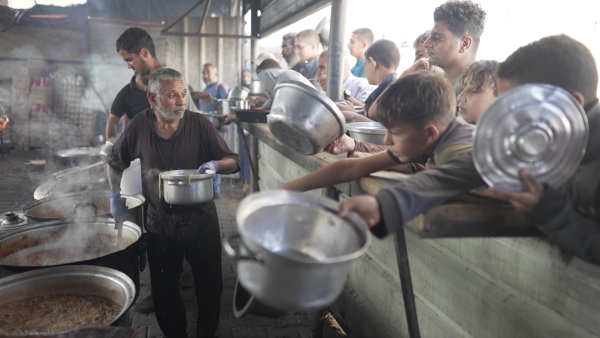
Gaza: One million receive food parcels as humanitarians race to ‘push back hunger’
Food is slowly returning to the shelves in Gaza amid “apocalyptic scenes” but supplies are still desperately inadequate, UN humanitarians said on Tuesday, as they issued fresh calls for wider access and continued financial support.
Briefing reporters in Geneva, Abeer Etefa, Senior Spokesperson at the World Food Programme (WFP), said that in October hundreds of thousands of people returned to northern Gaza – where famine was declared at the end of August – and that their access to food is “severely limited.”
While many returnees have found their homes in ruins, the displaced who remain in the south are “often living in tents and without access to food and services”, she warned.
Speaking from Cairo, Ms. Etefa said that three and a half weeks into the fragile ceasefire WFP has distributed food parcels to around a million people across the Strip against a target of 1.6 million as “part of the broad operation to push back hunger in Gaza”.
“Supplies are still limited, so each family is receiving a reduced food ration, which is one parcel, and that's enough food for 10 days,” she explained.
The WFP spokesperson explained that in order to continue to expand operations “to the level required and the level that we have committed to, we really need more access, more border crossings to be opened and… more access to key roads inside Gaza.”
UN aid coordination office OCHA said on Monday that no food aid convoy has reached the north via any direct crossings since 12 September.
“We still have only two border crossing points that are operational,” Ms. Etefa emphasized, referring to Kerem Shalom in the south of the enclave and Kissufim in central Gaza. “This severely limits the quantity of aid that WFP and other agencies are able to bring in to stabilize the markets and to address people's needs,” she said, highlighting the fact that the continued closure of the northern crossings into the Gaza Strip means that aid convoys are obliged to “follow a slow, difficult route from the south.”
The UN food relief agency spokesperson also said that some 700,000 people receive fresh bread on a daily basis through 17 WFP-supported bakeries, nine in south and central Gaza and eight in the north, with a goal to ramp up to 25.
Speaking from Gaza, WFP Communications Officer Nour Hammad said that while she was witnessing “apocalyptic scenes” across the enclave she also saw on people’s faces “the joy that the guns have fallen silent after all this time and the fear of whether or not the silence will last”.
She said that Gazans likened the destruction brought on by over two years of war to “the aftermath of an earthquake”.
“In every distribution point I have been to across the Gaza Strip over the past couple of days, people tell me one thing: this assistance matters,” she said. After months of “surviving on bits and pieces, rationing food, stretching one meal over days”, people are finally accessing “fresh bread, food parcels, cash transfers, nutrition and support”.
“This is where the journey to recovery starts,” she stressed.
While 200,000 of the most vulnerable are now receiving digital cash payments in order to “complement the food baskets with fresh foods” from local markets, prices there remain prohibitive.
“Food is slowly coming back to the shelves, but prices are still beyond the reach of families, considering… that they have depleted their resources to survive two years of war,” Ms. Hammad said. “Today, for example, I buy one apple at the cost of a kilo before the war,” she explained.
The fragility of the ceasefire and of aid flows is at the centre of people’s preoccupations, Ms. Hammad said, as she told the story of a displaced mother whom she met in Gaza City. Even though the woman is receiving assistance she has warned her children against eating the rations right away as “she cannot trust that tomorrow we'll bring food too,” the WFP communicator said.
“Families invite us into their tents…worn out by winter cold and summer heat, and they want to show us their reality. And their reality is that people need food. People need shelter, people need warm clothing because winter is around the corner and they need continued support,” she concluded.
-ENDS -
STORY Gaza food aid update – WFP
TRT: 4:36”
SOURCE: UNTV CH AND WORLD FOOD PROGRAMME (WFP)
RESTRICTIONS: NONE
LANGUAGE: ENGLISH/NATS
ASPECT RATIO: 16:9
DATELINE: 4 NOVEMBER 2025 GENEVA, SWITZERLAND AND 20 OCTOBER - 2 NOVEMBER 2025, GAZA VARIOUS LOCATIONS
1. WFP b-roll: Various shots of destruction in Gaza City, 21 October 2025/ 2 November 2025
2. Exterior wide shot: Palais des Nations, Flag Alley.
3. Wide shot: Speaker at the podium of the press conference; speaker on screens; journalists in the Press room.
3. SOUNDBITE (English) – Abeer Etefa, Senior Spokesperson for the Middle East, North Africa and Eastern Europe, World Food Programme (WFP): “In October, hundreds of thousands of people have returned to northern Gaza, many of them to homes that are in ruins. The access to food is severely limited, their access to food is severely limited. Most displaced households remain in the South, often living in tents and without access to food and services.”
4. Medium shot: Speaker at the podium of the press conference; speaker on screens.
5. SOUNDBITE (English) – Abeer Etefa, Senior Spokesperson for the Middle East, North Africa and Eastern Europe, World Food Programme (WFP): “Three and a half weeks into the cease-fire in Gaza, we have distributed food parcels to around one million people across the Gaza Strip. That's part of the broad operation to push back hunger in Gaza. But to continue to expand operations to the level required and the level that we have committed to, we really need more access, more border crossings to be opened and you know, more access to key roads inside Gaza.”
6. Wide shot: Journalists in the Press room; speaker on screens.
7. SOUNDBITE (English) – Abeer Etefa, Senior Spokesperson for the Middle East, North Africa and Eastern Europe, World Food Programme (WFP): “Getting food into the north remains difficult. A major obstacle is the continued closure of the northern crossings into the Gaza Strip. Aid convoys are obliged to follow a slow, difficult route from the south.”
8. Wide shot: Speaker at the podium of the press conference; speaker on screens; journalists in the Press room.
9. SOUNDBITE (English) – Nour Hammad, Communications Officer, Country Office, World Food Programme (WFP): “Amid the apocalyptic scenes we see across Gaza, we also witness on people's faces the joy that the guns have fallen silent after all this time and the fear of whether or not the silence will last. And the shock, of course, and the destruction that they described to us as the aftermath of an earthquake.”
10. Wide shot: Journalists in the Press room; speaker on screens.
11. SOUNDBITE (English) – Nour Hammad, Communications Officer, Country Office, World Food Programme (WFP): “In every distribution point I have been to across the Gaza Strip over the past couple of days, people tell me one thing: this assistance matters, and after months of surviving on bits and pieces, rationing food, stretching one meal over days, Palestinians finally are receiving fresh bread, food parcels, cash transfers and nutrition and support from WFP and other humanitarian partners. And this is where the journey to recovery starts.”
12. Medium shot: Speaker at the podium of the press conference; speaker on screens.
13. SOUNDBITE (English) – Nour Hammad, Communications Officer, Country Office, World Food Programme (WFP): “Food is slowly coming back to the shelves, but prices are still beyond the reach of families, considering, of course, that they have depleted their resources to survive two years of war. Today, for example, I buy one apple at the cost of a kilo before the war.”
14. Medium shot: Technician in the Press room.
15. SOUNDBITE (English) – Nour Hammad, Communications Officer, Country Office, World Food Programme (WFP): “Families invite us into their tents most of the time in the field, and their tents are worn out by winter cold and summer heat, and they want to show us their reality. And their reality is that people need food. People need shelter, people need warm clothing because winter is around the corner and they need continued support.”
18. Various shots of journalists in the Press room.
19. WFP b-roll: Various shots of destruction and people returning to their homes in Gaza City, 21 October 2025/ 2 November 2025
20. WFP b-roll: Various shots of displaced family returning to their home in Gaza City, 21 October 2025
21. WFP b-roll: Distribution of WFP family food parcels, Gaza City, 26 October 2025
22. WFP b-roll: WFP hot meals distribution, Khan Younis, 30 October 2025
Similar Stories

1
1
1
Edited News | OCHA , UNICEF , WFP
Aid agencies warned on Friday of the fast-developing humanitarian emergency inside Taiz City in Yemen, which has been encircled by de facto Houthi forces fighting government troops along the country’s west coast.

2
17
1
2
Edited News , Press Conferences , Images | OCHA , WMO
Two UN agencies teamed up on Wednesday to issue an appeal for immediate assistance to help communities already being impacted by the strongest El Niño on record.

3
16
2
2
Edited News , B-roll , Conferences , Images | UNITED NATIONS , UNOG
Sixth Consultative Meeting on Enhancing Coordination of Peace Initiatives and Efforts for Sudan

1
1
1
Edited News | UNICEF , WHO , UNHCR
Yemen war continues to force families from homes amid hunger and disease
More than 250,000 people have now fled renewed fighting in Yemen, the UN said on Tuesday, citing particular concern for those sheltering in the southwestern city of Taiz and the wider governorate, where access is “essentially blocked”.

1
1
1
Edited News | UNICEF
A little over one year since a ceasefire agreement was announced between Hamas fighters and Israel, more than 340 children have been reported killed and hundreds more injured, the UN Children’s Fund, UNICEF, said on Friday.

1
1
1
Edited News | UNICEF , IFRC
Six weeks after Nepal’s deadly flooding disaster, communities are still struggling to rebuild their lives, but they will need sustained help as global warming increases the risk of another Himalayan catastrophe, the UN Children’s Fund (UNICEF) said on Friday.

1
1
1
Edited News | WHO
In suspected Russia plague death, testing and monitoring underway – WHO
The death of a lab worker in Russia’s Siberia region has sparked concerns about plague being the cause, the UN World Health Organization (WHO) said on Tuesday, adding that it was following the situation closely.

1
1
Edited News | OHCHR , UNOG
UN Human Rights Chief Volker Türk on Friday provided and oral update to the 63rd session of the Human rights Council on Ukraine.

1
1
1
Edited News | OHCHR , UNOG
UN Human Rights Chief Volker Türk on Friday provided and oral update to the 63rd session of the Human rights Council on the human rights situation in Haiti.

1
1
1
Edited News | WHO
Repeated delays in bringing lifesaving medicines, prosthetics and more from Israel into Gaza risk having devastating consequences on Palestinians who urgently need them in the wartorn enclave, the UN World Health Organization (WHO) said on Friday. “A truck full of non-priority supplies or the right supplies arriving too late, doesn't save lives. That's the question that actually matters," said Dr Reinhilde Van De Weerdt, WHO Representative in the OPT.

1
1
1
Edited News | WHO
DRC: Early access to care and oxygen decisive for Ebola patients’ survival – WHO
In the Democratic Republic of the Congo (DRC), health workers fighting the country’s largest-ever Ebola outbreak are struggling to overcome critical challenges to patient care, the UN World Health Organization (WHO) warned on Tuesday.

1
1
1
Edited News | OCHA , UN
Civilians in Iran are continuing to feel the consequences of months of conflict and military escalation, the UN’s top official in the country has said, as loss of life, damage to civilian infrastructure and mounting economic pressures leave many facing continued uncertainty.