

The United Nations Office at Geneva
Multimedia Newsroom
Press Conferences , Edited News | HRC
HRC Press Conference: Independent International Fact-Finding Mission for the Sudan -17 June 2025
Sudan’s war is intensifying while people are still starving, rights probe warns
Heavy fighting in Sudan continues to escalate as a “direct result” of the continued flow of arms into the country meaning that the war is far from over, top independent human rights investigators said on Tuesday.
In an update on the emergency in the northeast African nation, the Independent International Fact-Finding Mission for the Sudan highlighted the increased use of heavy weaponry in populated areas - and a sharp rise in sexual violence.
“Many Sudanese are dying from hunger and especially those who have been detained and in detention - they are dying and millions affected,” said Joy Ngozi Ezeilo, Expert Member of the Fact-Finding Mission.
“In terms of international responsibility, we urge all States to respect and enforce the arms embargo of the United Nations Security Council Resolution 1556,” she added.
Humanitarian relief continues to be weaponized and hospitals and medical facilities remain under siege, warned the investigators, whose mandate was established by the Human Rights Council in October 2023.
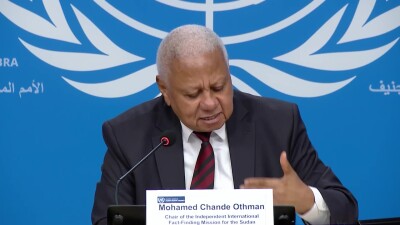
“There is a direct link between the flow of arms in Sudan, armed hostilities and the resulting violence amounting to violations of international humanitarian law and human rights violations,” said Mohamed Chande Othman, Chair of the Fact-Finding Mission. “We know the kind of arms that are being used: heavy artillery, modern warfare, drones and in fact, they have escalated.”
“The scale of human suffering continues to deepen,” Mr. Othman continued. “The fragmentation of governance, the militarization of society, and the involvement of foreign actors are fuelling an ever-deadlier crisis.”
Fellow investigator Mona Rishmawi insisted that testimonies gathered pointed to “both sides” continuing to commit war crimes – a reference to the Sudanese Armed Forces (SAF) and the Rapid Support Forces (RSF) which turned on each other in April 2023, following a breakdown in transition to civilian rule.
Around El Fasher, for instance, civilians have been “assaulted, detained and killed while villages have been attacked, burned and looted” by the RSF. During one RSF attack from 10 to 13 April, more than 100 civilians were reportedly killed, while a SAF bombing in Al Koma killed at least 15 civilians.
In areas recaptured by the SAF, such as Khartoum, Gezira, and Sennar, the fact-finding mission documented widespread retaliation between late 2024 and mid-2025.
“Individuals perceived to have supported the RSF — including human rights defenders, medical workers, and aid personnel — have faced arbitrary arrest, torture, and in some cases, execution,” the investigators maintained. “The RSF, too, has carried out reprisals, killing 30 civilians in Omdurman’s Al-Salha neighborhood on 27 April,” they noted.
Now into its third year, the war has killed tens of thousands of civilians so far, displacing over 13 million Sudanese and subjecting many more to sexual violence, looting and the destruction of homes, health facilities, markets and other infrastructure.
Crimes against humanity continue, “particularly in the context of persecution of certain ethnic groups”, Ms. Rishmawi insisted.
To explain how humanitarian relief has been weaponized, the mission noted that the SAF had imposed “bureaucratic restrictions, while the RSF has looted convoys and blocked aid entirely”.
The result of these actions has been to drive famine, “especially in Darfur”, said the investigators, who are respected human rights experts and not UN staff .
Condemning the bombing of a UN aid convoy in Al Koma en route to El Fasher on 2 June that killed five staff, the fact-finding mission added that the RSF had shelled the Saudi Hospital in El Fasher a dozen times.
In May, an RSF drone strike on Obeid International Hospital in North Kordofan also killed six civilians and shut down one of the region’s last functioning clinics.
Such attacks are “crippling” the delivery of aid in a lot of these communities,” said Mona Rishmawi. “It has impact on starvation, it has an impact on famine, it has an impact on access to basic things like food, like the kitchens that they actually organize.”
In their latest update to the Human Rights Council, the investigators documented a sharp rise in sexual and gender-based violence, with women and girls subjected to rape, gang rape, abduction, sexual slavery and forced marriage, mostly in RSF-controlled displacement camps.
ends
STORY: Sudan Fact Finding Mission update
TRT: 2’36”
SOURCE: UNTV CH
RESTRICTIONS: NONE
LANGUAGE: ENGLISH/ NATS
ASPECT RATIO: 16:9
DATELINE: 17 JUNE 2025 GENEVA, SWITZERLAND
Speakers
- Mohamed Chande Othman, Chair of the Fact-Finding Mission
- Joy Ngozi Ezeilo, Expert Member of the Fact-Finding Mission
- Mona Rishmawi, Expert Member of the Fact-Finding Mission
SHOTLIST
- Exterior wide shot: Palais des Nations, flag alley.
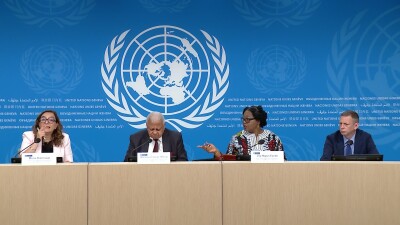
- Wide shot: podium speakers.
- SOUNDBITE (English) – Joy Ngozi Ezeilo, Expert Member of the Fact-Finding Mission: “Many Sudanese are dying from hunger and especially those who have been detained and in detention - they are dying and millions affected by absolute hunger is increasing by the day.”
- Medium: Mr. Othman delivering his remarks.
- SOUNDBITE (English) – Mohamed Chande Othman, Chair of the Fact-Finding Mission: “There is a direct link between the flow of arms in Sudan, armed hostilities and the resulting violence amounting to violations of international humanitarian law and human rights violations.”
- Medium: podium speakers, journalists, photographer.
- SOUNDBITE (English) – Mohamed Chande Othman, Chair of the Fact-Finding Mission: “Now we know the kind of arms that are being used: heavy artillery, modern warfare, drones and in fact, they have escalated.”
- Wide: Control booths, podium speakers, automatic cameras and UN logo reflected in glass window.
- SOUNDBITE (English) – Joy Ngozi Ezeilo, Expert Member of the Fact-Finding Mission: “In terms of international responsibility, we urge all States to respect and enforce the arms embargo of the United Nations Security Council Resolution 1556.”
- Wide: podium speakers.
- SOUNDBITE (English) – Mona Rishmawi, Expert Member of the Fact-Finding Mission: “Both sides are committing war crimes, we didn't say that SAF did not commit. We actually think SAF - particularly the bombardment and the shelling - it does indicate war crimes as well as torture.”
- Wide: TV screens showing speaker, photographer.
- SOUNDBITE (English) – Mona Rishmawi, Expert Member of the Fact-Finding Mission: “We spoke about, crimes against humanity, particularly in the context of persecution of certain ethnic groups. This continues, this continues.”
- Medium shot: podium speakers.
- SOUNDBITE (English) – Mona Rishmawi, Expert Member of the Fact-Finding Mission: “The attack on these humanitarian workers and human rights defenders is really crippling the delivery of aid in a lot of these, in a lot of these communities, it has impact on starvation. It has an impact on famine, it has an impact on access to basic things like food, like the kitchens that they actually, organize and so on.”
- Medium: journalist.
- Medium: photographer.
- Medium: journalist.
Similar Stories

1
1
1
Edited News | UNICEF , IFRC
Six weeks after Nepal’s deadly flooding disaster, communities are still struggling to rebuild their lives, but they will need sustained help as global warming increases the risk of another Himalayan catastrophe, the UN Children’s Fund (UNICEF) said on Friday.
1
1
1
Statements , Press Conferences | OHCHR
1
1
1
Press Conferences | UNHCR , UNICEF , IFRC , OHCHR , UN WOMEN , IOM , OCHA , WHO
UNHCR – ExCom Meeting, UNICEF – Nepal Recovery, IFRC – Flash Floods, WHO – Mental Health, IOM – South Sudan Floods, OCHA – DRC Humanitarian aid, UNHCR – Sahel Displacement, UNICEF – Yemen Update, IOM – Gaza Shelter, UN Women – Gaza Women, OHCHR – Arrests and detentions of Syrians by Israeli force
2
1
2
Press Conferences | UNCTAD
Presentation of the Trade and Developement Report 2026
Embargoed until 9 October 2026 at 11 a.m. (Geneva Time)
UNCTAD: UNCTAD’s flagship report finds that governments increasingly use industrial, trade, financial and technology policies to pursue economic and national security objectives. Market access and the ability to move into higher-value activities now depend more heavily on technology, finance and geopolitics.
1
1
1
Press Conferences | UPU
Release of the State of the Postal Sector Report 2026

1
1
1
Edited News | WHO
In suspected Russia plague death, testing and monitoring underway – WHO
The death of a lab worker in Russia’s Siberia region has sparked concerns about plague being the cause, the UN World Health Organization (WHO) said on Tuesday, adding that it was following the situation closely.
1
1
1
Press Conferences | IOM , ITU , UNECE , UNICEF , WHO , WMO
UNICEF: Ebola, DRC - children orphans or separating them from parents and caregivers; IOM: Humanitarian needs in Djibouti amid arrivals from Yemen and increased migrant movements; WHO: Darfur, scale of health needs far exceeds available resources; WMO co-sponsored Global Heat Forum, Bangkok, monthly Global Seasonal Climate Update; UNECE: UN Forum of Mayors; ITU Plenipotentiary Conference 2026; WHO: child and adolescent obesity guidelines and new global roadmap to tackle pregnancy hypertension, a leading cause of maternal mortality

1
1
Edited News | OHCHR , UNOG
UN Human Rights Chief Volker Türk on Friday provided and oral update to the 63rd session of the Human rights Council on Ukraine.

1
1
1
Edited News | OHCHR , UNOG
UN Human Rights Chief Volker Türk on Friday provided and oral update to the 63rd session of the Human rights Council on the human rights situation in Haiti.

1
1
1
Edited News | WHO
Repeated delays in bringing lifesaving medicines, prosthetics and more from Israel into Gaza risk having devastating consequences on Palestinians who urgently need them in the wartorn enclave, the UN World Health Organization (WHO) said on Friday. “A truck full of non-priority supplies or the right supplies arriving too late, doesn't save lives. That's the question that actually matters," said Dr Reinhilde Van De Weerdt, WHO Representative in the OPT.
1
1
1
Press Conferences | OCHA , UN WOMEN , UNHCR , WFP , WHO , WTO , UNEP
OCHA – $160M CERF allocation to 12 underfunded crises; UNHCR – 5.8M refugee children remain out of school amid funding cuts; UN Women – Middle East escalation and food security among women/girls; WHO – Gaza supplies and overall situation; WFP – Yemen food insecurity and impact on global hunger ; UNEP - First International Conference of the Global Framework on Chemicals in Geneva | 16-20 November 2026

1
1
1
Edited News | WHO
DRC: Early access to care and oxygen decisive for Ebola patients’ survival – WHO
In the Democratic Republic of the Congo (DRC), health workers fighting the country’s largest-ever Ebola outbreak are struggling to overcome critical challenges to patient care, the UN World Health Organization (WHO) warned on Tuesday.