

The United Nations Office at Geneva
Multimedia Newsroom
More Gazans killed trying to get food, healthcare near to ‘full disaster’
Gaza’s health system is at breaking point, overwhelmed time and again by scores of patients killed or injured near aid distribution sites, the UN World Health Organization (WHO) said on Tuesday.
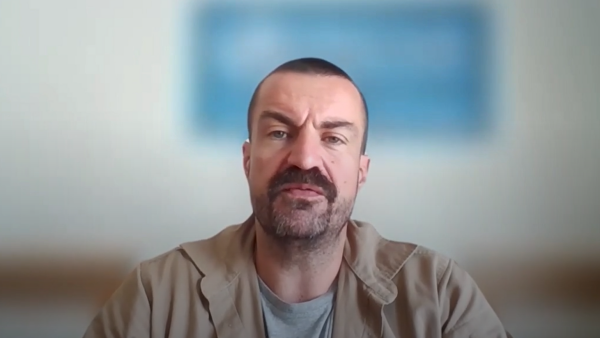
Speaking from the enclave, Dr Thanos Gargavanis, WHO trauma surgeon and emergency officer, told reporters in Geneva: “We are walking the fine grey line between operational capacity and full disaster, every day.”
Health services are “barely available” and difficult to access, he said, since more than 80 per cent of Gaza’s territory is under evacuation orders.
“The shrinking humanitarian space makes every health activity way more difficult than the previous day,” Dr Garavanis insisted.
WHO’s Representative in the occupied Palestinian territory, Dr Rik Peeperkorn, highlighted new reports on Tuesday morning of another mass casualty incident with “hundreds of casualties completely overwhelming Nasser Medical Complex” in Khan Younis, in the south of the Strip.
Nasser is the largest referral hospital in Gaza and the only remaining main hospital in Khan Younis, Dr Peeperkorn said. It is currently situated within the evacuation zone announced by Israeli forces on 12 June.
The nearby Al-Amal Hospital operated by the Palestinian Red Crescent Society (PRCS) continues to provide services to patients already there, but it is unable to admit anyone else because of the ongoing military operations.
“It is what we call a completely minimal functional hospital,” Dr Peeperkorn said.
Only 17 of Gaza’s 36 hospitals are currently partially functional, medical supplies are critically low and no fuel has entered the Strip for more than 100 days.
As details of the latest mass casualty event continued to come in, the WHO representative highlighted the frequency of such incidents as desperate Gazans try to access aid.
On Monday, more than 200 patients had arrived at the Red Cross Field Hospital in Al Mawasi - the highest number received by the facility in one single mass casualty incident. Of that number, 28 patients were reportedly declared dead. Just one day prior, on 15 June, the same hospital received at least 170 patients, who reportedly had been trying to access a food distribution site.
WHO’s Dr Gargavanis warned that “the recent food distribution initiatives by non-UN actors every time result in mass casualty incidents”.
Since late May, the UN and humanitarian partners have been sidelined in Gaza as a new aid distribution model backed by Israel and the United States began operations under the framework of the Gaza Humanitarian Foundation (GHF), which uses private military contractors, according to media reports.
The WHO trauma surgeon highlighted a “constant correlation” between the locations of food distribution spots and the mass casualty incidents in Rafah, in Khan Younis and along the Netzarim corridor.
Asked about the type of injuries sustained by those seeking aid, and who is responsible, Dr Garavanis stressed that WHO is not a forensic agency.
“We're not in a position to clearly identify from the nature of the injury” who has caused it, he said. “What we can say, though, is that we're talking of gunshot wound injuries, and we're talking of very few incidents of shrapnel injuries.”
The UN has repeatedly warned that the new aid distribution system is not in line with humanitarian principles of humanity, impartiality, independence and neutrality. The global body has also called for aid restrictions to be lifted.
Dr Peeperkorn insisted that WHO must be facilitated to move supplies into Gaza in a cost-effective manner “via all possible routes” to prevent further shutdowns of medical services. He said that 33 WHO trucks with supplies are waiting at Al Arish in Egypt to be granted passage into the enclave, with another 15 standing by in the occupied West Bank.
-ends-
STORY: Gaza health update WHO 17 June 2025
TRT: 2:17”
SOURCE: UNTV CH
RESTRICTIONS: NONE
LANGUAGE: ENGLISH/ NATS
ASPECT RATIO: 16:9
DATELINE: 17 JUNE 2025 GENEVA, SWITZERLAND
1. Exterior wide shot: Palais des Nations, Flag Alley.
2. Wide shot: Journalists in the Press room; speaker on screen.
3. SOUNDBITE (English) – Dr Thanos Gargavanis, Trauma surgeon and emergency officer, World Health Organization (WHO): “We are walking the fine grey line between operational capacity and full disaster, every day. This means that services are barely available.”
4. Wide shot: Journalists in the Press room; speaker on screens.
5. SOUNDBITE (English) – Dr Rik Peeperkorn, Representative in the occupied Palestinian territory, World Health Organization (WHO): “We just received a report of another mass casualty incident with hundreds of casualties completely overwhelming Nasser Medical Complex. Now close to Nasser Medical we have Al Amal hospital, a PRCS hospital, [it] continues to provide service for patients remaining in the hospital, but it is completely inaccessible. So it is what we call a completely minimal functional hospital.”
6. Wide shot: Journalists in the Press room; speaker on screens.
7. SOUNDBITE (English) – Dr Rik Peeperkorn, Representative in the occupied Palestinian territory, World Health Organization (WHO): “Yesterday on 16 June, over 200 cases, I got that, arrived at the Red Cross Field hospital in Al-Mawasi, and that was the highest number received by the facility in one single mass casualty incident. And a total there, from that yesterday, 16 June, total of 28 patients were reportedly declared dead. And on 15 June, same hospital received over 170 patients who were reportedly trying to access the food distribution site.”
8. Medium shot: Journalists in the Press room.
9. SOUNDBITE (English) – Dr Thanos Gargavanis, Trauma surgeon and emergency officer, World Health Organization (WHO): “We have all to be aware that the recent food distribution initiatives by non-UN actors every time result in mass casualty incidents.”
10. Medium shot: Journalists in the Press room.
11. SOUNDBITE (English) – Dr Thanos Gargavanis, Trauma surgeon and emergency officer, World Health Organization (WHO): “WHO is not a forensic agency, which means that we're not in a position to clearly identify from the nature of the injury who's causing them. What we can say, though, is that we're talking of gunshot wound injuries, and we're talking of very few incidents of shrapnel injuries.”
12. Various shots of journalists in the Press room.
Similar Stories

1
1
1
Edited News | OCHA , UNICEF , WFP
Aid agencies warned on Friday of the fast-developing humanitarian emergency inside Taiz City in Yemen, which has been encircled by de facto Houthi forces fighting government troops along the country’s west coast.

2
17
1
2
Edited News , Press Conferences , Images | OCHA , WMO
Two UN agencies teamed up on Wednesday to issue an appeal for immediate assistance to help communities already being impacted by the strongest El Niño on record.

3
16
2
2
Edited News , B-roll , Conferences , Images | UNITED NATIONS , UNOG
Sixth Consultative Meeting on Enhancing Coordination of Peace Initiatives and Efforts for Sudan

1
1
1
Edited News | UNICEF , WHO , UNHCR
Yemen war continues to force families from homes amid hunger and disease
More than 250,000 people have now fled renewed fighting in Yemen, the UN said on Tuesday, citing particular concern for those sheltering in the southwestern city of Taiz and the wider governorate, where access is “essentially blocked”.

1
1
1
Edited News | UNICEF
A little over one year since a ceasefire agreement was announced between Hamas fighters and Israel, more than 340 children have been reported killed and hundreds more injured, the UN Children’s Fund, UNICEF, said on Friday.

1
1
1
Edited News | UNICEF , IFRC
Six weeks after Nepal’s deadly flooding disaster, communities are still struggling to rebuild their lives, but they will need sustained help as global warming increases the risk of another Himalayan catastrophe, the UN Children’s Fund (UNICEF) said on Friday.

1
1
1
Edited News | WHO
In suspected Russia plague death, testing and monitoring underway – WHO
The death of a lab worker in Russia’s Siberia region has sparked concerns about plague being the cause, the UN World Health Organization (WHO) said on Tuesday, adding that it was following the situation closely.

1
1
Edited News | OHCHR , UNOG
UN Human Rights Chief Volker Türk on Friday provided and oral update to the 63rd session of the Human rights Council on Ukraine.

1
1
1
Edited News | OHCHR , UNOG
UN Human Rights Chief Volker Türk on Friday provided and oral update to the 63rd session of the Human rights Council on the human rights situation in Haiti.

1
1
1
Edited News | WHO
Repeated delays in bringing lifesaving medicines, prosthetics and more from Israel into Gaza risk having devastating consequences on Palestinians who urgently need them in the wartorn enclave, the UN World Health Organization (WHO) said on Friday. “A truck full of non-priority supplies or the right supplies arriving too late, doesn't save lives. That's the question that actually matters," said Dr Reinhilde Van De Weerdt, WHO Representative in the OPT.

1
1
1
Edited News | WHO
DRC: Early access to care and oxygen decisive for Ebola patients’ survival – WHO
In the Democratic Republic of the Congo (DRC), health workers fighting the country’s largest-ever Ebola outbreak are struggling to overcome critical challenges to patient care, the UN World Health Organization (WHO) warned on Tuesday.

1
1
1
Edited News | OCHA , UN
Civilians in Iran are continuing to feel the consequences of months of conflict and military escalation, the UN’s top official in the country has said, as loss of life, damage to civilian infrastructure and mounting economic pressures leave many facing continued uncertainty.