

The United Nations Office at Geneva
Multimedia Newsroom
Gaza: Over 50 child malnutrition deaths amid aid blockade; entire generation will be ‘permanently affected’ - WHO
In the aid desert of Gaza, malnourished children are dying while survivors can expect a lifetime of dire health problems, the UN World Health Organization (WHO) said on Tuesday.
Since the aid blockade began on 2 March, 57 children have reportedly died from the effects of malnutrition, according to the Ministry of Health.
If the situation persists, nearly 71,000 children under the age of five are expected to be acutely malnourished over the next 11 months.
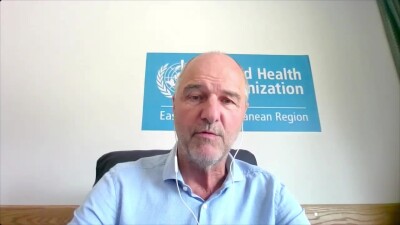
Briefing journalists in Geneva, WHO’s representative in the occupied Palestinian territory Dr. Rik Peeperkorn said that that Israel’s complete aid embargo has left only enough WHO supplies to treat 500 children with acute malnutrition – “a fraction of the urgent need”.
“People are trapped in this cycle where a lack of diversified food, malnutrition and disease fuel each other,” he warned.
Dr. Peeperkorn’s comments follow the publication on Monday of a new analysis by the UN-backed food security alert scale known as the IPC showing that one in five people in Gaza – 500,000 – faces starvation, while the entire 2.1 million population of the Strip is subjected to prolonged food shortages.
“This is one of the world’s worst hunger crises, unfolding in real time,” Dr. Peeperkorn said.
The UN health agency representative spoke of his recent visit to Kamal Adwan hospital in north Gaza, where each day more than 300 children are screened at a WHO-supported nutrition centre. During the visit, the hospital reported more than 11 per cent of cases with global acute malnutrition.
Describing the affected children, he said, “I’ve seen them [in the] wards… A child of five years old, and I thought he’s two and a half”.
WHO supports 16 outpatient and three inpatient malnutrition treatment centres in the enclave with lifesaving supplies, but the stopping of aid by Israel and shrinking humanitarian access are threatening its ability to sustain these operations.
Dr. Peeperkorn insisted on the long-term damage from malnutrition which “can last a lifetime”, with impacts including stunted growth, impaired cognitive development and health.
“Without enough nutritious food, clean water, access to health care, an entire generation will be permanently affected,” he warned.
The WHO official stressed that the agency was “constantly” raising with the Israeli authorities the need to get supplies into the Strip. Some 31 WHO aid trucks are at a standstill in Al- Arish in Egypt just a few dozen kilometres away from the Rafah border crossing with Gaza and more supplies are positioned in the West Bank, ready to move “any day when this is allowed”.
Turning to attacks on health care, Dr. Peeperkorn said that the burn unit of Nasser Medical Complex in the southern town of Khan Younis was reportedly hit by an Israeli airstrike on Tuesday, killing two and injuring 12. The attack has resulted in the loss of 18 hospital beds in the surgical department including eight “critical” intensive care beds.
Media reported that a Palestinian journalist was killed in the attack during treatment for injuries sustained in a previous airstrike.
“Health care is not a target,” Dr. Peeperkorn concluded. He reiterated calls for the protection of health facilities, an immediate end to the aid blockade, the release of all hostages held by Palestinian armed groups and for a ceasefire “which leads to lasting peace”.
-ends-
STORY: Gaza health update WHO 13 May 2025
TRT: 2:28”
SOURCE: UNTV CH
RESTRICT
IONS: NONE
LANGUAGE: ENGLISH/ NATS
ASPECT RATIO: 16:9
DATELINE: 13 MAY 2025 GENEVA, SWITZERLAND
1. Exterior wide shot: Palais des Nations, Flag Alley.
2. Wide shot: Speakers at the podium of the press conference; speaker on screens; journalists in the Press room.
3. SOUNDBITE (English) – Dr. Rik Peeperkorn, Representative in the occupied Palestinian territory, World Health Organization (WHO): “Remaining supplies in the WHO stocks inside Gaza are only enough to treat another 500 children with acute malnutrition – a fraction of the urgent needs.”
4. Wide shot: Speaker on screens; journalists in the Press room.
5. SOUNDBITE (English) – Dr. Rik Peeperkorn, Representative in the occupied Palestinian territory, World Health Organization (WHO): “We got reports from the Ministry of Health that 55 children have reportedly died from the effects of malnutrition. And if the situation persists, again, this dire situation persists, nearly 71,000 children under the age of five are expected to be acutely malnourished over the next 11 months. So, what we actually see in Gaza, people are trapped in this whole cycle where a lack of food, diversified food, malnutrition and disease fuel each other.”
6. Wide shot: Speaker on screens; journalists in the Press room.
7. SOUNDBITE (English) – Dr. Rik Peeperkorn, Representative in the occupied Palestinian territory, World Health Organization (WHO): “We all know that the long-term damage from malnutrition can last a lifetime, from stunted growth, impaired cognitive development, poor health, etc., so without enough nutritious food, clean water, access to health care, an entire generation will be permanently affected.”
8. Wide shot: Speaker on screens; journalists in the Press room.
9. SOUNDBITE (English) – Dr. Rik Peeperkorn, Representative in the occupied Palestinian territory, World Health Organization (WHO): “There’s 31 WHO trucks ready in Al- Arish but supplies cannot be moved. We also have supplies in the West Bank, blood products etc, which could be there any day when this is allowed.”
10. Wide shot: Speaker on screens; journalists in the Press room.
11. SOUNDBITE (English) – Dr. Rik Peeperkorn, Representative in the occupied Palestinian territory, World Health Organization (WHO): “The burn unit of Nasser Medical Complex was reportedly hit on 13 May, resulting in two fatalities and 12 injuries, that's reported to us. One of the injured individuals is in critical condition, is currently undergoing multiple surgical operations. So, the impact on the hospital infrastructure, 18 hospital beds are lost in the surgical department, eight ICU beds, and you know how critical they are, and ten inpatient beds. For us, of course, health care is not a target.”
12. Various shots of journalists in the Press room.
Similar Stories

1
1
1
Edited News | OCHA , UNICEF , WFP
Aid agencies warned on Friday of the fast-developing humanitarian emergency inside Taiz City in Yemen, which has been encircled by de facto Houthi forces fighting government troops along the country’s west coast.

2
17
1
2
Edited News , Press Conferences , Images | OCHA , WMO
Two UN agencies teamed up on Wednesday to issue an appeal for immediate assistance to help communities already being impacted by the strongest El Niño on record.

3
16
2
2
Edited News , B-roll , Conferences , Images | UNITED NATIONS , UNOG
Sixth Consultative Meeting on Enhancing Coordination of Peace Initiatives and Efforts for Sudan

1
1
1
Edited News | UNICEF , WHO , UNHCR
Yemen war continues to force families from homes amid hunger and disease
More than 250,000 people have now fled renewed fighting in Yemen, the UN said on Tuesday, citing particular concern for those sheltering in the southwestern city of Taiz and the wider governorate, where access is “essentially blocked”.

1
1
1
Edited News | UNICEF
A little over one year since a ceasefire agreement was announced between Hamas fighters and Israel, more than 340 children have been reported killed and hundreds more injured, the UN Children’s Fund, UNICEF, said on Friday.

1
1
1
Edited News | UNICEF , IFRC
Six weeks after Nepal’s deadly flooding disaster, communities are still struggling to rebuild their lives, but they will need sustained help as global warming increases the risk of another Himalayan catastrophe, the UN Children’s Fund (UNICEF) said on Friday.

1
1
1
Edited News | WHO
In suspected Russia plague death, testing and monitoring underway – WHO
The death of a lab worker in Russia’s Siberia region has sparked concerns about plague being the cause, the UN World Health Organization (WHO) said on Tuesday, adding that it was following the situation closely.

1
1
Edited News | OHCHR , UNOG
UN Human Rights Chief Volker Türk on Friday provided and oral update to the 63rd session of the Human rights Council on Ukraine.

1
1
1
Edited News | OHCHR , UNOG
UN Human Rights Chief Volker Türk on Friday provided and oral update to the 63rd session of the Human rights Council on the human rights situation in Haiti.

1
1
1
Edited News | WHO
Repeated delays in bringing lifesaving medicines, prosthetics and more from Israel into Gaza risk having devastating consequences on Palestinians who urgently need them in the wartorn enclave, the UN World Health Organization (WHO) said on Friday. “A truck full of non-priority supplies or the right supplies arriving too late, doesn't save lives. That's the question that actually matters," said Dr Reinhilde Van De Weerdt, WHO Representative in the OPT.

1
1
1
Edited News | WHO
DRC: Early access to care and oxygen decisive for Ebola patients’ survival – WHO
In the Democratic Republic of the Congo (DRC), health workers fighting the country’s largest-ever Ebola outbreak are struggling to overcome critical challenges to patient care, the UN World Health Organization (WHO) warned on Tuesday.

1
1
1
Edited News | OCHA , UN
Civilians in Iran are continuing to feel the consequences of months of conflict and military escalation, the UN’s top official in the country has said, as loss of life, damage to civilian infrastructure and mounting economic pressures leave many facing continued uncertainty.