

The United Nations Office at Geneva
Multimedia Newsroom
Press Conferences , Edited News | HRC
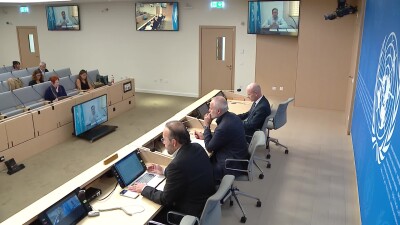
HRC - Press conference: Commission of Inquiry on Ukraine - 19 March 2025
Ukrainians tortured, raped, executed by Russian captors, Human Rights Council hears
The Human Rights Council on Wednesday heard gruesome testimony of torture, rape and execution of Ukrainian detainees and soldiers allegedly committed by Russian forces, as a high-level independent probe into Russia’s full-scale invasion delivered its latest mandated report in Geneva.
According to the Commission of Inquiry on Ukraine, enforced disappearances of civilians committed by Russian authorities have been “widespread and systematic” and likely amount to crimes against humanity.
“Many persons have been missing for months or years and some have died,” said Erik Mose, Chair of the independent investigative panel, whose Commissioners are not UN staff nor paid for their work. “The faith and whereabouts of many remain unknown, leaving their families in agonizing uncertainty.”
Requests from families of missing persons to Russian authorities for information about their relatives are typically met with unhelpful replies, while one young man was “detained and beaten when he went to the authorities to enquire about his missing girlfriend”, the Commission noted.
As in previous presentations prepared for the Human Rights Council, the Commission’s latest report contains equally disturbing findings about the use of torture by Russian authorities, panel member Vrinda Grover told journalists in Geneva: “A civilian woman who had been raped during confinement in a detention facility held by Russian authorities stated that she pleaded with the perpetrators, telling them she could be their mother's age, but they dismissed her saying. ‘B***h, don't even compare yourself to my mother. You are not even a human. You do not deserve to live.’ We have concluded that Russian authorities committed the war crimes of rape and sexual violence as a form of torture.”
Ms. Grover noted that the Commissioners’ investigations confirmed that members of Russia’s Federal Security Service (FSB) “exercised the highest authority. They committed or ordered torture at various stages of detention, and in particular during interrogations, when some of the most brutal treatment was inflicted”.
Challenged about the focus on alleged rights abuses by Russian authorities in their latest report, the Commissioners noted that they had detailed alleged violations committed by the Ukrainian forces “whenever we have found [them]”.
Commissioner Pablo de Greiff also noted that despite more than 30 requests for information from Russian authorities about possible Ukrainian attacks, “we have received absolutely none” and pointed to evidence of reprisals against supposed collaborators working with the Russian authorities.
Another aspect of the independent rights investigators’ report involves a growing number of incidents in which the Russian armed forces apparently killed or wounded Ukrainian soldiers who were captured or attempted to surrender. “This constitutes a war crime,” Mr. de Greiff said, relaying the testimony of a former soldier who alleged that “a deputy brigade commander told the entire regiment, quote, 'Prisoners are not needed, shoot them on the spot.'”
STORY: Press conference - Commission of Inquiry on Ukraine
TRT: 03’05”
SOURCE: UNTV CH
RESTRICTIONS: NONE
LANGUAGE: ENGLISH / NATS
ASPECT RATIO: 16:9
DATELINE: 19 March 2025 GENEVA, SWITZERLAND
Speakers:
- Erik Møse, Chair, UN Independent International Commission of Inquiry on Ukraine
- Pablo de Greiff, Commissioner, UN Independent International Commission of Inquiry on Ukraine
- Vrinda Grover, Commissioner, UN Independent International Commission of Inquiry on Ukraine
SHOTLIST
- Exterior medium shot: Palais des Nations, Flag Alley
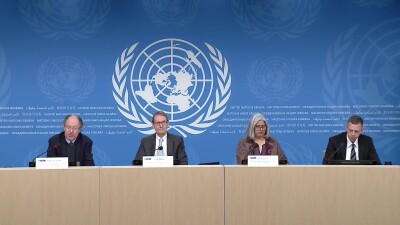
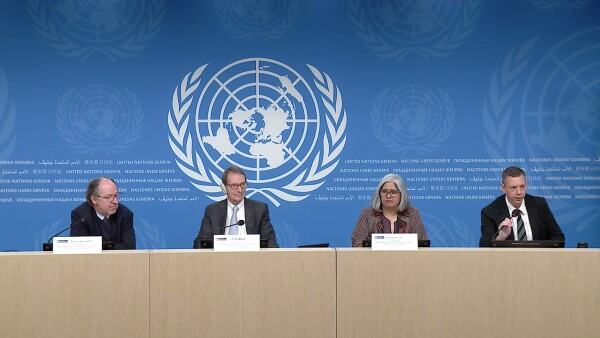
- Wide shot of podium with speakers.
- SOUNDBITE (English) - Pablo de Greiff, Commissioner, UN Independent International Commission of Inquiry on Ukraine: "The Commission examined a growing number of incidents in which the Russian armed forces killed or wounded Ukrainian soldiers who were captured or attempted to surrender. This constitutes a war crime."
- Medium shot of journalist holding camera.
- SOUNDBITE (English) - Pablo de Greiff, Commissioner, UN Independent International Commission of Inquiry on Ukraine: “The Commission found that both parties to the armed conflict using drones killed or wounded visibly injured soldiers who could no longer defend themselves. This is also a war crime.”
- Wide shot of journalists, participants in the press room.
- SOUNDBITE (English) - Pablo de Greiff, Commissioner, UN Independent International Commission of Inquiry on Ukraine: “One former soldier stated that in a meeting, a deputy brigade commander told the entire regiment. Quote, 'Prisoners are not needed, shoot them on the spot.' Close quote."
- Wide shot: speakers at podium.
- SOUNDBITE (English) - Vrinda Grover, Commissioner, UN Independent International Commission of Inquiry on Ukraine: “Russian authorities have committed torture pursuant to a coordinated State policy and as crimes against humanity. Personnel of the Federal Security Service, referred to as FSB in Russian, exercise the highest authority when present in detention facilities they committed or ordered torture during various stages of detention.”
- Medium shot of press room.
- SOUNDBITE (English) - Vrinda Grover, Commissioner, UN Independent International Commission of Inquiry on Ukraine: “A civilian woman who had been raped during confinement in a detention facility held by Russian authorities stated that she pleaded with the perpetrators, telling them she could be their mother's age, but they dismissed her saying. B***h, don't even compare yourself to my mother. You are not even a human. You do not deserve to live. We have concluded that Russian authorities committed the war crimes of rape and sexual violence as a form of torture.”
- Wide shot of journalists, participants in press room.
- SOUNDBITE (English) - Pablo de Greiff, Commissioner, UN Independent International Commission of Inquiry on Ukraine: “We documented some violations of human rights law committed by Ukrainian authorities against persons they accused of collaboration with Russian authorities.”
- Wide shot of speakers at podium.
- SOUNDBITE (English) - Erik Møse, Chair, UN Independent International Commission of Inquiry on Ukraine: “Many persons have been missing for months or years and some have died. The faith and whereabouts of many remain unknown, leaving their families in agonizing uncertainty.”
- Close up of journalist nodding.
- Close up of participant listening.
- Wide shot of journalists, participants in press room.
Similar Stories
1
12
1
1
Press Conferences , Images | UNOG
Closing Press Conference following the Sixth Consultative Meeting on Enhancing Coordination of Peace Initiatives and Efforts in Sudan

2
17
1
2
Edited News , Press Conferences | OCHA , WMO
Two UN agencies teamed up on Wednesday to issue an appeal for immediate assistance to help communities already being impacted by the strongest El Niño on record.

3
16
2
2
B-roll , Conferences , Edited News | UNITED NATIONS , UNOG
Sixth Consultative Meeting on Enhancing Coordination of Peace Initiatives and Efforts for Sudan
1
1
1
Press Conferences | CITES
Wildlife trade and conservation policy discussions at the 81st meeting of the CITES Standing Committee (SC81)

1
1
1
Edited News | UNICEF , WHO , UNHCR
Yemen war continues to force families from homes amid hunger and disease
More than 250,000 people have now fled renewed fighting in Yemen, the UN said on Tuesday, citing particular concern for those sheltering in the southwestern city of Taiz and the wider governorate, where access is “essentially blocked”.
1
1
1
Press Conferences | UNHCR , UNCTAD , WMO , OCHA , UNICEF , WHO
UNHCR Hungary’s 1956 Refugee Crisis: 70 Years On, UNCTAD World Investment Forum 2026, Doha, WMO Greenhouse Gas Bulletin and Climate Update for COP31, OCHA Afghanistan: Malnutrition, Girls’ Education and Recovery, UNICEF Yemen: Child Malnutrition and Unsafe Water in Taiz, WHO Inequalities in Noncommunicable Diseases and Risk Factors

1
1
1
Press Conferences | UNHCR
End of UNHCR's 77th Annual Executive Committee (ExCom) meeting week

1
1
1
Edited News | UNICEF
A little over one year since a ceasefire agreement was announced between Hamas fighters and Israel, more than 340 children have been reported killed and hundreds more injured, the UN Children’s Fund, UNICEF, said on Friday.

1
1
1
Press Conferences | UNICEF , IOM , UNHCR
UN Special Assistant to the Personal Envoy Office (SUDAN): Peace Initiatives and Efforts in Sudan; UNICEF: Dire situation of children in Gaza; IOM: Damaged Homes and Energy Attacks Risk Displacing Ukrainians for this winter; UNHCR: update on EXCOM week

1
1
1
Press Conferences | IOM , UNDRR
UN stresses importance of household preparedness for disaster risk reduction.

1
1
1
Edited News | UNICEF , IFRC
Six weeks after Nepal’s deadly flooding disaster, communities are still struggling to rebuild their lives, but they will need sustained help as global warming increases the risk of another Himalayan catastrophe, the UN Children’s Fund (UNICEF) said on Friday.

1
1
1
Statements , Press Conferences | OHCHR