

The United Nations Office at Geneva
Multimedia Newsroom
The aid response in Burundi to the crisis in neighbouring Democratic Republic of the Congo (DRC) “is literally buckling”, the UN refugee agency, UNHCR, warned on Friday, as it relayed dramatic testimonies from people forced to flee the unchecked advance of Rwanda-backed M23 rebels.
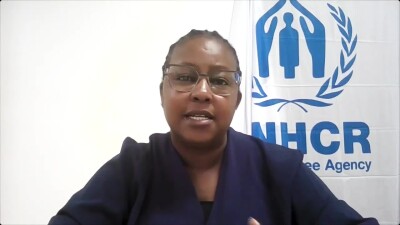
“Over 63,000 people now have crossed into the country, Burundi, fleeing atrocities, deadly conflict in parts of eastern DR Congo,” said Faith Kasina, UNHCR Regional Spokesperson for East and Horn of Africa and Great Lakes.
Amid the largest influx of refugees Burundi has seen in decades because of the hostilities in eastern DRC’s mineral-rich region, the UNHCR official issued an urgent appeal for immediate and sustained humanitarian funding to meet growing needs among the new arrivals. “This country, despite its best efforts, was not prepared for this emergency,” Ms. Kasina noted.
The alert comes just days since UNCHR warned that sexual violence and human rights abuses remain rampant near the frontlines in DRC, along with looting and destruction of homes and businesses.
To assist the new arrivals, UNCHR and partners are registering them in Rugombo before facilitating their onward passage to refugee sites far from the border. “But without more or without sustained funding, this - I mean - the aid response is literally buckling,” she warned.
At least 45,000 refugees have crammed into a stadium in Rugombo. “Conditions are extremely harsh…there are at least 45,000 people still sheltering in the stadium. The stadium is literally bursting at the seams.”
Testimonies from many of those fleeing grave rights violations in eastern DRC linked to the M23 advance have continued to highlight the seriousness of the ongoing emergency.
On 4 March, UNHCR warned that 895 cases of rape were reported to humanitarian actors in the last two weeks of February alone - an average of more than 60 a day.
One new mother “told me she gave birth three days before she had to flee and she had to cross the Rusizi river with her newborn baby in her arms and four more by her side,” Ms. Kasina said. “She was seeing people’s property and people's luggage sort of go down the river and she was scared for her life.”
Another DRC victim uprooted by the conflict described how she had already fled to Rugombo in Burundi as a teenager – “Now she's forced back in the exact - almost exact - same spot now with six children…it's just as an unending cycle of displacement.”
Highlighting the high number of children separated from their parents, UNHCR has set up a protection desk because “they have no point of contact and therefore these protection desks are useful in terms of trying to identify them, trying to connect them or reunite them with close family members”, the UNHCR official explained.
There are over one million Congolese refugees across Africa, mainly in neighbouring countries. Uganda hosts more than half of that total, while Burundi has seen most new arrivals since January’s flash M23 offensive. Prior to the current crisis, some 6.7 million people were internally displaced within the DRC.
ends
STORY: DR Congo update - UNHCR
TRT: 02:44”
SOURCE: UNTV CH
RESTRICTIONS: NONE
LANGUAGE: ENGLISH / NATS
ASPECT RATIO: 16:9
DATELINE: 7 March 2025 GENEVA, SWITZERLAND
SHOTLIST
- Exterior medium shot: Palais des Nations, Flag Alley.
- Wide shot of the Press room, UN Geneva.
- SOUNDBITE (English) - Faith Kasina, UNHCR Regional Spokesperson for East and Horn of Africa and Great Lakes (from Bujumbura, Burundi): “Over 63,000 people now have crossed into the country, Burundi, fleeing atrocities, deadly conflict in parts of eastern DR Congo.”
- Medium shot of podium speakers, journalists.
- SOUNDBITE (English) - Faith Kasina, UNHCR Regional Spokesperson for East and Horn of Africa and Great Lakes (from Bujumbura, Burundi): “I cannot underscore the importance of humanitarian funding for this response; it’s 60,000 people who've arrived in a matter of weeks, the largest influx this country has seen in decades.”
- Medium-wide, podium speakers, journalists.
- SOUNDBITE (English) - Faith Kasina, UNHCR Regional Spokesperson for East and Horn of Africa and Great Lakes (from Bujumbura, Burundi): “This country, despite its best efforts, was not prepared for this emergency. Humanitarian agencies are working round the clock Monday to Saturday, six days out of seven, at Rugombo, making sure that people are registered, trying to fasten the process so that the move to refugee sites. But without more or without sustained funding, this - I mean - the aid response is literally buckling.”
- Medium-wide, Press room.
- SOUNDBITE (English) - Faith Kasina, UNHCR Regional Spokesperson for East and Horn of Africa and Great Lakes (from Bujumbura, Burundi): “Conditions are extremely, extremely harsh at the local stadium where I was able to visit, there are at least 45,000 people still sheltering in the stadium. The stadium is literally bursting at the seams.”
- Medium, journalist.
- SOUNDBITE (English) - Faith Kasina, UNHCR Regional Spokesperson for East and Horn of Africa and Great Lakes (from Bujumbura, Burundi): “There's just a deep sense of exhaustion physically; mothers - new mothers - one in particular one who struck me because she told me she gave birth three days before she had to flee and she had to cross the Rusizi river with, her newborn baby in her arms and four more by her side. And you know, she was seeing people’s property and people's luggage sort of go down the river and she was scared for her life.”
- Medium-wide, Press room.
- SOUNDBITE (English) - Faith Kasina, UNHCR Regional Spokesperson for East and Horn of Africa and Great Lakes (from Bujumbura, Burundi): “I met this lady who's 45 years old and she told me, you know, this is not her first time being displaced. She had been in Burundi, specifically in Rugombo, in her teenage years, and now she's forced back in the exact - almost exact - same spot now with six children. And it's just as an unending cycle of displacement.”
- Medium, podium speakers, journalists.
- SOUNDBITE (English) - Faith Kasina, UNHCR Regional Spokesperson for East and Horn of Africa and Great Lakes (from Bujumbura, Burundi): “We've just set up a protection desk because we are seeing a huge number of unaccompanied and separated children, children who had to come - who've crossed over - you know, separated from their families. They have no point of contact and therefore these protection desks are useful in terms of trying to identify them, trying to connect them or reunite them with close family members.”
- Wide shot Press room.
Similar Stories

1
1
1
Edited News | UNICEF
A little over one year since a ceasefire agreement was announced between Hamas fighters and Israel, more than 340 children have been reported killed and hundreds more injured, the UN Children’s Fund, UNICEF, said on Friday.

1
1
1
Edited News | UNICEF , IFRC
Six weeks after Nepal’s deadly flooding disaster, communities are still struggling to rebuild their lives, but they will need sustained help as global warming increases the risk of another Himalayan catastrophe, the UN Children’s Fund (UNICEF) said on Friday.

1
1
1
Edited News | WHO
In suspected Russia plague death, testing and monitoring underway – WHO
The death of a lab worker in Russia’s Siberia region has sparked concerns about plague being the cause, the UN World Health Organization (WHO) said on Tuesday, adding that it was following the situation closely.

1
1
Edited News | OHCHR , UNOG
UN Human Rights Chief Volker Türk on Friday provided and oral update to the 63rd session of the Human rights Council on Ukraine.

1
1
1
Edited News | OHCHR , UNOG
UN Human Rights Chief Volker Türk on Friday provided and oral update to the 63rd session of the Human rights Council on the human rights situation in Haiti.

1
1
1
Edited News | WHO
Repeated delays in bringing lifesaving medicines, prosthetics and more from Israel into Gaza risk having devastating consequences on Palestinians who urgently need them in the wartorn enclave, the UN World Health Organization (WHO) said on Friday. “A truck full of non-priority supplies or the right supplies arriving too late, doesn't save lives. That's the question that actually matters," said Dr Reinhilde Van De Weerdt, WHO Representative in the OPT.

1
1
1
Edited News | WHO
DRC: Early access to care and oxygen decisive for Ebola patients’ survival – WHO
In the Democratic Republic of the Congo (DRC), health workers fighting the country’s largest-ever Ebola outbreak are struggling to overcome critical challenges to patient care, the UN World Health Organization (WHO) warned on Tuesday.

1
1
1
Edited News | OCHA , UN
Civilians in Iran are continuing to feel the consequences of months of conflict and military escalation, the UN’s top official in the country has said, as loss of life, damage to civilian infrastructure and mounting economic pressures leave many facing continued uncertainty.
1
1
1
Edited News | WHO , UNICEF
Aid agencies in Yemen highlighted the growing hunger emergency sparked by renewed fighting between Houthi opposition forces and Government troops, after mobile health clinics reported that hundreds of children displaced by the violence are suffering from the most deadly form of malnutrition.
1
1
1
Edited News | UNHCR
Displacement on the rise in Yemen as fighting continues - UNHCR
As hostilities worsen in Yemen, more people have been fleeing their homes, further intensifying the humanitarian crisis within the region, the UN Refugee Agency (UNHCR) warned on Tuesday.
1
1
1
Edited News | IOM , OHCHR , UNFPA , UNOG , UNHCR , WHO
Yemen’s humanitarian crisis growing by the hour amid spike in displacement
Yemenis displaced by renewed fighting have described fleeing for their lives amid shelling and gunfire, aid agencies reported on Friday, while highlighting the dramatic increase in humanitarian needs in the country and in Djibouti, where thousands have sought shelter.
1
1
1
Edited News | OHCHR , UNOG
The UN Human Rights Office issued on Friday a report documenting a shocking pattern of sexual violence amid Russia’s full-scale armed attack on Ukraine.