

The United Nations Office at Geneva
Multimedia Newsroom
UN regrets US exit from global cooperation on health, climate change
UN agencies reacted with regret on Tuesday to the United States’ decisions to withdraw from the World Health Organization (WHO) and the Paris Agreement on climate change.
The decisions were announced as part of a sweeping series of executive orders signed by US President Trump on his first day in office Monday.
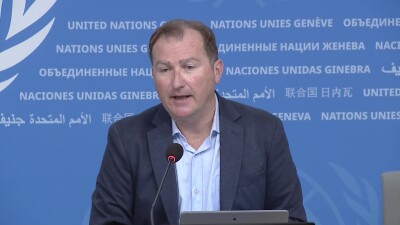
Speaking to reporters in Geneva, WHO spokesperson Tarik Jašarević underscored the agency’s “crucial role in protecting the health and security of the world’s people, including Americans”, stressing that it addresses the root causes of disease, helps build stronger health systems and prevents and responds to health emergencies “often in dangerous places where others cannot go”.
Mr. Jašarević highlighted WHO’s success in saving “countless lives” over the course of the past decades by ending smallpox and bringing polio to the brink of eradication, all with the support of the US.
“American institutions have contributed to and benefited from membership in WHO,” he said.
Asked about the impact of the US withdrawal, Mr. Jašarević pointed out that he saw the executive order “this morning like everyone else” and that further analysis will be needed. He confirmed that the US was WHO’s largest single donor, accounting for 18 per cent of the agency’s budget in 2023.
The US joined WHO in 1948 after a joint resolution was passed by both chambers of Congress. The resolution requires the country to provide one year’s notice to leave the organization.
The UN health agency spokesperson expressed hope that the US “will reconsider”.
“We look forward to engaging in constructive dialogue to maintain the partnership between the United States of America and WHO, for the benefit of the health and well-being of millions of people around the globe,” he concluded.
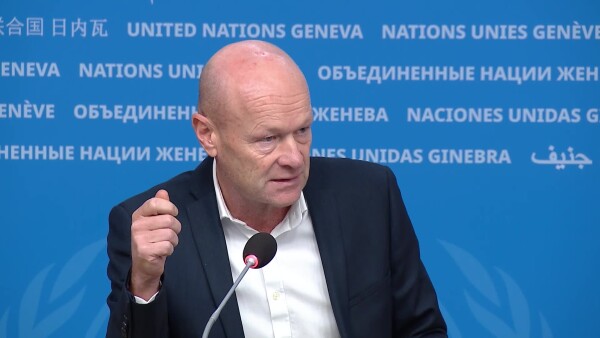
UN humanitarian affairs office (OCHA) spokesperson Jens Laerke highlighted the UN health agency’s importance, saying that “the world lives longer, healthier, perhaps a little bit happier because of WHO”.
“WHO is in places where others cannot go,” Mr. Laerke said, including Gaza, Yemen, Afghanistan and Sudan. “It is an indispensable part of the international humanitarian system,” he insisted.
Adding her voice to the chorus of reactions, Clare Nullis from UN weather agency WMO commented on the incoming US administration’s decision to withdraw from the 2015 Paris Agreement on climate change, calling the need for the pact “pretty obvious”.
“We reported two weeks ago that 2024 was the hottest year on record”, she said, stressing that last year the world “temporarily hit the 1.5°C level” above pre-industrial era temperatures.
A legally binding international treaty on climate change, the Paris Agreement was adopted by 196 parties at the COP 21 conference on climate change. Its main goal is to hold the increase in the global average temperature to “well below 2°C above pre-industrial levels” and pursue efforts to limit the increase to 1.5°C above pre-industrial levels.
Ms. Nullis said that climate change is making weather “more extreme”, accounting for a rise in weather-related disasters, such as the recent wildfires in California. She added that the US accounts for the “lion’s share of global economic losses from weather, climate and water-related hazards”.
According to the country’s own figures, “the US has sustained more than 400 weather and climate disasters since 1980 where overall damages or costs exceeded $1 billion”, she said, with the total cost of these events exceeding a shocking $2.9 trillion.
Climate change follows the laws of physics, which are “non-negotiable”, Ms. Nullis underscored.
“We look at climate change from the perspective of decades, even centuries, rather than a four- or five-year term in office… it is the defining challenge of our time,” she concluded.
-Ends -
STORY: Reax to US executive orders WHO - OCHA - WMO 21 January 2025
TRT: 3:50”
SOURCE: UNTV CH
RESTRICTIONS: NONE
LANGUAGE: ENGLISH/ NATS
ASPECT RATIO: 16:9
DATELINE: 21 JANUARY 2025 GENEVA, SWITZERLAND
1. Exterior wide shot: Palais des Nations, Flag Alley.
2. Wide shot: Speakers at the podium of the press conference; speaker on screen; journalists in the Press room.
3. SOUNDBITE (English) – Tarik Jašarević, spokesperson, UN World Health Organization (WHO): “The World Health Organization regrets the announcement that the United States of America intends to withdraw from the Organization.”
4. Medium shot: Speakers at the podium from rear; speaker on screen.
5. SOUNDBITE (English) – Tarik Jašarević, spokesperson, UN World Health Organization (WHO): “WHO plays a crucial role in protecting the health and security of the world’s people, including Americans, by addressing the root causes of disease, building stronger health systems, and detecting, preventing and responding to health emergencies, including disease outbreaks, and often in dangerous places where others cannot go.”
6. Wide shot: Journalists in the Press room.
7. SOUNDBITE (English) – Tarik Jašarević, spokesperson, UN World Health Organization (WHO): “For over seven decades, WHO and the United States of America have saved countless lives and protected Americans and all people from health threats. Together, we ended smallpox, and together we have brought polio to the brink of eradication. American institutions have contributed to and benefited from membership in WHO.”
8. Wide shot: Speakers at the podium of the press conference; speaker on screen; journalists in the Press room.
9. SOUNDBITE (English) – Tarik Jašarević, spokesperson, UN World Health Organization (WHO): “We hope the United States will reconsider and we look forward to engaging in constructive dialogue to maintain the partnership between the United States of America and WHO, for the benefit of the health and well-being of millions of people around the globe.”
10. Wide shot: Speaker on screens; journalists in the Press room.
11. SOUNDBITE (English) – Tarik Jašarević, spokesperson, UN World Health Organization (WHO): “It was 18 per cent of the budget in 2023, and as I said the US is the largest single donor. So, we have to see really how this will play out and we need to see what will be the consequences.”
12. Wide shot: Speaker on screens; journalists in the Press room.
13. SOUNDBITE (English) – Jens Laerke, spokesperson, UN Office for the Coordination of Humanitarian Affairs (OCHA): “The world lives longer, healthier, perhaps a little bit happier because of WHO. So, I noted that, Tarik mentioned that, WHO is in places where others cannot go, and that is exactly where we need our colleagues from WHO, in Gaza, in Yemen, in Afghanistan, everywhere… in Sudan. It is an indispensable part of the international humanitarian system.”
14. Wide shot: Speakers at the podium of the press conference from rear; speaker on screens; journalists in the Press room.
15. SOUNDBITE (English) – Clare Nullis, spokesperson, UN World Meteorological Organization (WMO): “The need for Paris Agreement is, you know, pretty obvious. We reported two weeks ago that 2024 was the hottest year on record, we temporarily hit the 1.5°C level.”
16. Wide shot: Speaker on screens; journalists in the Press room.
17. SOUNDBITE (English) – Clare Nullis, spokesperson, UN World Meteorological Organization (WMO): “The United States of America accounts for the lion’s share of global economic losses from weather, climate and water-related hazards. I’m quoting here from US figures. According to the US figures, the US has sustained more than 400 weather and climate disasters since 1980 where overall damages or costs exceeded $1 billion.”
18. Wide shot: Speakers at the podium of the press conference from rear; speaker on screens; journalists in the Press room.
19. SOUNDBITE (English) – Clare Nullis, spokesperson, UN World Meteorological Organization (WMO): “We look at climate change from the perspective of decades, even centuries, you know, rather than a four- or five-year term in office, and it is the, what our Secretary-General has said, it is the defining challenge of our time.”
20. Various shots of journalists in the Press room.
Similar Stories
1
1
1
Edited News | OCHA , UNICEF , WFP
Aid agencies warned on Friday of the fast-developing humanitarian emergency inside Taiz City in Yemen, which has been encircled by de facto Houthi forces fighting government troops along the country’s west coast.

2
17
1
2
Edited News , Press Conferences , Images | OCHA , WMO
Two UN agencies teamed up on Wednesday to issue an appeal for immediate assistance to help communities already being impacted by the strongest El Niño on record.
3
16
2
2
Edited News , B-roll , Conferences , Images | UNITED NATIONS , UNOG
Sixth Consultative Meeting on Enhancing Coordination of Peace Initiatives and Efforts for Sudan

1
1
1
Edited News | UNICEF , WHO , UNHCR
Yemen war continues to force families from homes amid hunger and disease
More than 250,000 people have now fled renewed fighting in Yemen, the UN said on Tuesday, citing particular concern for those sheltering in the southwestern city of Taiz and the wider governorate, where access is “essentially blocked”.

1
1
1
Edited News | UNICEF
A little over one year since a ceasefire agreement was announced between Hamas fighters and Israel, more than 340 children have been reported killed and hundreds more injured, the UN Children’s Fund, UNICEF, said on Friday.

1
1
1
Edited News | UNICEF , IFRC
Six weeks after Nepal’s deadly flooding disaster, communities are still struggling to rebuild their lives, but they will need sustained help as global warming increases the risk of another Himalayan catastrophe, the UN Children’s Fund (UNICEF) said on Friday.

1
1
1
Edited News | WHO
In suspected Russia plague death, testing and monitoring underway – WHO
The death of a lab worker in Russia’s Siberia region has sparked concerns about plague being the cause, the UN World Health Organization (WHO) said on Tuesday, adding that it was following the situation closely.

1
1
Edited News | OHCHR , UNOG
UN Human Rights Chief Volker Türk on Friday provided and oral update to the 63rd session of the Human rights Council on Ukraine.

1
1
1
Edited News | OHCHR , UNOG
UN Human Rights Chief Volker Türk on Friday provided and oral update to the 63rd session of the Human rights Council on the human rights situation in Haiti.

1
1
1
Edited News | WHO
Repeated delays in bringing lifesaving medicines, prosthetics and more from Israel into Gaza risk having devastating consequences on Palestinians who urgently need them in the wartorn enclave, the UN World Health Organization (WHO) said on Friday. “A truck full of non-priority supplies or the right supplies arriving too late, doesn't save lives. That's the question that actually matters," said Dr Reinhilde Van De Weerdt, WHO Representative in the OPT.

1
1
1
Edited News | WHO
DRC: Early access to care and oxygen decisive for Ebola patients’ survival – WHO
In the Democratic Republic of the Congo (DRC), health workers fighting the country’s largest-ever Ebola outbreak are struggling to overcome critical challenges to patient care, the UN World Health Organization (WHO) warned on Tuesday.

1
1
1
Edited News | OCHA , UN
Civilians in Iran are continuing to feel the consequences of months of conflict and military escalation, the UN’s top official in the country has said, as loss of life, damage to civilian infrastructure and mounting economic pressures leave many facing continued uncertainty.