

The United Nations Office at Geneva
Multimedia Newsroom
Avian flu risk still ‘low’ after first US patient dies – WHO
A day after the United States reported its first human death from avian flu, the UN World Health Organization (WHO) insisted that the risk to the general population remains “low”.
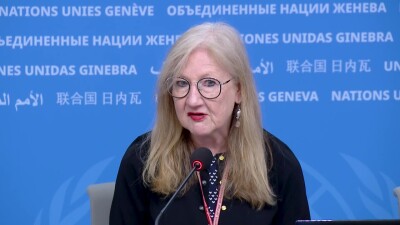
WHO spokesperson Dr. Margaret Harris told reporters in Geneva on Tuesday that the H5N1 virus causing the disease is “not circulating in humans, but jumping into humans who are exposed” to poultry or dairy cattle.
“We’re not seeing sustained circulation,” she insisted.
The patient who died of the disease in Louisiana was over 65 and reportedly had underlying medical conditions, Dr. Harris said. According to the health authorities he had been exposed to chickens and wild birds. Several dozen people in the US have contracted avian influenza during the current outbreak, mainly farmworkers in close contact with poultry flocks and cattle herds.
Dr. Harris stressed that WHO’s assessment of the risk to the general population “is still low and remains set”. The main concern is for those who work in animal industries, who need to be better protected.
The WHO spokesperson added that the United States was continuing to carry out “a lot of surveillance” in the human and animal population, “in the methods we use for farming, for our food production…all those things need to be combined because indeed it always does pose a risk”.
Meanwhile, a respiratory virus gaining ground in China, known as the human metapneumovirus, or hMPV, has been sparking media attention in recent weeks, but it does not represent a new or major threat, Dr. Harris insisted.
The UN health agency spokesperson said that such infections are on the rise in China “as expected during winter”, with seasonal influenza being “by far the most common among them”, as reported by the Chinese Center for Disease Control and Prevention.
“China’s reported levels of respiratory infections are within the usual range for the winter season,” Dr. Harris explained. “Authorities report that hospital utilization is currently lower than this time last year, and there have been no emergency declarations or responses triggered,” she added.
As for hMPV, it was first identified in 2001 and “has been in the human population for a long time”, Dr. Harris clarified.
She added that it is a common virus that circulates in winter and spring and usually “causes respiratory symptoms similar to the common cold”. Like any of the hundreds of common cold viruses known to exist, it can lead to more serious disease in patients with low immunity, particularly but not limited to newborns and the elderly.
Asked about hMPV’s mortality rate, Dr. Harris described it as “very, very low”. It is not a pathogen that normally leads to deaths in humans, save for the most vulnerable, she concluded, recommending “simple” prevention measures, such as wearing a mask, improving ventilation of closed spaces and handwashing.
-Ends-
STORY: Virus update WHO 07 January 2025
TRT: 1:53”
SOURCE: UNTV CH
RESTRICTIONS: NONE
LANGUAGE: ENGLISH/ NATS
ASPECT RATIO: 16:9
DATELINE: 7 JANUARY 2025 GENEVA, SWITZERLAND
1. Exterior wide shot: Palais des Nations, Flag Alley.
2. Wide lateral shot: Speakers at the podium of the press conference from rear; speaker on screens; journalists in the Press room.
3. SOUNDBITE (English) – Dr. Margaret Harris, spokesperson, UN World Health Organization (WHO): “It’s not circulating in humans, but it is jumping into humans who are exposed, particularly those exposed to poultry or to the dairy cattle, the two, sort of, groups where we’re seeing most of the movement from animal to human, but we’re not seeing sustained circulation.”
4. Medium shot: Journalists in the Press room.
5. SOUNDBITE (English) – Dr. Margaret Harris, spokesperson, UN World Health Organization (WHO): “It very much has to be looked at in the animal population and in the methods we use for farming, for our food production. All those things need to be combined, because indeed, it always does pose a risk. As you know, our risk assessment is still low and it remains set.”
6. Wide lateral shot: Speakers at the podium of the press conference from rear; speaker on screens.
7. SOUNDBITE (English) – Dr. Margaret Harris, spokesperson, UN World Health Organization (WHO): “China’s reported levels of respiratory infections are within the normal range, it’s what we expect to see for the winter season. Authorities report that hospital utilization is currently actually lower than usual, is currently lower than this time last year, and there have been no emergency declarations – this is really important - there have been no emergency declarations.”
8. Wide lateral shot: Speakers at the podium of the press conference from rear; speaker on screens; journalists in the Press room.
9. SOUNDBITE (English) – Dr. Margaret Harris, spokesperson, UN World Health Organization (WHO): “It is not a new virus. It was first identified in 2001, it’s been in the human population for a long time. It is a common virus that circulates in winter and spring. It usually causes respiratory symptoms similar to the common cold.”
10. Medium shot: Journalists in the Press room.
11. SOUNDBITE (English) – Dr. Margaret Harris, spokesperson, UN World Health Organization (WHO): “The case mortality is very, very low. The only group in which you would see mortality are the really, really vulnerable, and you would normally see pneumonia, you would see the more severe respiratory infections.”
12. Various shots of journalists in the Press room.
Similar Stories

1
1
1
Edited News | OCHA , UNICEF , WFP
Aid agencies warned on Friday of the fast-developing humanitarian emergency inside Taiz City in Yemen, which has been encircled by de facto Houthi forces fighting government troops along the country’s west coast.

2
17
1
2
Edited News , Press Conferences , Images | OCHA , WMO
Two UN agencies teamed up on Wednesday to issue an appeal for immediate assistance to help communities already being impacted by the strongest El Niño on record.

3
16
2
2
Edited News , B-roll , Conferences , Images | UNITED NATIONS , UNOG
Sixth Consultative Meeting on Enhancing Coordination of Peace Initiatives and Efforts for Sudan

1
1
1
Edited News | UNICEF , WHO , UNHCR
Yemen war continues to force families from homes amid hunger and disease
More than 250,000 people have now fled renewed fighting in Yemen, the UN said on Tuesday, citing particular concern for those sheltering in the southwestern city of Taiz and the wider governorate, where access is “essentially blocked”.

1
1
1
Edited News | UNICEF
A little over one year since a ceasefire agreement was announced between Hamas fighters and Israel, more than 340 children have been reported killed and hundreds more injured, the UN Children’s Fund, UNICEF, said on Friday.

1
1
1
Edited News | UNICEF , IFRC
Six weeks after Nepal’s deadly flooding disaster, communities are still struggling to rebuild their lives, but they will need sustained help as global warming increases the risk of another Himalayan catastrophe, the UN Children’s Fund (UNICEF) said on Friday.

1
1
1
Edited News | WHO
In suspected Russia plague death, testing and monitoring underway – WHO
The death of a lab worker in Russia’s Siberia region has sparked concerns about plague being the cause, the UN World Health Organization (WHO) said on Tuesday, adding that it was following the situation closely.

1
1
Edited News | OHCHR , UNOG
UN Human Rights Chief Volker Türk on Friday provided and oral update to the 63rd session of the Human rights Council on Ukraine.

1
1
1
Edited News | OHCHR , UNOG
UN Human Rights Chief Volker Türk on Friday provided and oral update to the 63rd session of the Human rights Council on the human rights situation in Haiti.

1
1
1
Edited News | WHO
Repeated delays in bringing lifesaving medicines, prosthetics and more from Israel into Gaza risk having devastating consequences on Palestinians who urgently need them in the wartorn enclave, the UN World Health Organization (WHO) said on Friday. “A truck full of non-priority supplies or the right supplies arriving too late, doesn't save lives. That's the question that actually matters," said Dr Reinhilde Van De Weerdt, WHO Representative in the OPT.

1
1
1
Edited News | WHO
DRC: Early access to care and oxygen decisive for Ebola patients’ survival – WHO
In the Democratic Republic of the Congo (DRC), health workers fighting the country’s largest-ever Ebola outbreak are struggling to overcome critical challenges to patient care, the UN World Health Organization (WHO) warned on Tuesday.

1
1
1
Edited News | OCHA , UN
Civilians in Iran are continuing to feel the consequences of months of conflict and military escalation, the UN’s top official in the country has said, as loss of life, damage to civilian infrastructure and mounting economic pressures leave many facing continued uncertainty.