

The United Nations Office at Geneva
Multimedia Newsroom
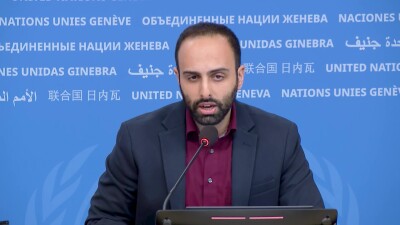
“UN High Commissioner for Human Rights Volker Türk has flagged how important this moment is in Syria - both for those who are still missing, and for their loved ones,” UN Human Rights office spokesperson Thameen Al-Kheetan.
“Since the fall of former president Bashar Al-Assad’s government, almost two weeks ago, we have seen footage of hundreds of detainees pouring out of now open prisons – some expressing happiness to see sunlight, but others so shocked after years of torture and inhumane treatment that they are incapable of any form of expression,” Al-Kheetan told the UN biweekly briefing in Geneva.
“Many families remain in distress as they haven’t found their loved ones yet,” he said.
“They deserve to have all the answers about their relatives’ fate and whereabouts, and to know the circumstances in which they went missing. They also need mental health and psychosocial support. This is where the work of the institution will be fundamental,” the spokesperson said.
While the Institution will focus on reducing the suffering of families of the missing, our Office and other international mechanisms will work on monitoring and collecting information about past and present human rights violations and abuses, within the scope of their respective mandates.
The High Commissioner is deploying next week a team of human rights officers to Syria to support the existing UN presence on human rights issues, as well as efforts aimed at ensuring that any transition is inclusive and within the framework of international law, Al-Kheetan said.
“Transitional justice and community trust building anchored in human rights will be a very important chapter in Syria’s future,” he said.
It is fundamental that the caretaker authorities take immediate steps to ensure the preservation of evidence of past crimes and violations. This includes mass graves, records and documents from prisons, detention centres, ministries and other state institutions, as well as any other material evidence that could be crucial in documenting what has happened and in holding those responsible to account.
In the meantime, the caretaker authorities must act to ensure security is restored, that those accused of committing crimes are held accountable in compliance with international human rights standards, and that women, children and diverse ethnic and religious communities can fully exercise their rights, the spokesperson said.
For more information and media requests, please contact:
In Geneva:
Liz Throssell + 41 22 917 9296 / elizabeth.throssell@un.org
Thameen Al-Kheetan - +41 22 917 4232 / thameen.alkheetan@un.org
Tag and share - Twitter: @UNHumanRights and Facebook: unitednationshumanrights
STORY: UN Human Rights Spokesperson Thameen Al-Kheetan on Syria
TRT: 01:32
SOURCE: OHCHR / UNOG
RESTRICTIONS: NONE
LANGUAGE: English/NATS
ASPECT RATIO: 16:9
DATELINE: 20 December 2024 GENEVA, SWITZERLAND
SHOTLIST
- Exterior shot : Palais des Nations
- SOUNDBITE (English)—Thameen Al-Kheetan, Spokesperson for the Office of the UN High Commissioner for Human Rights (OHCHR): “UN High Commissioner for Human Rights Volker Türk has flagged how important this moment is in Syria - both for those who are still missing, and for their loved one.”
- Cutaways: briefing room
- SOUNDBITE (English)—Thameen Al-Kheetan, Spokesperson for the Office of the UN High Commissioner for Human Rights (OHCHR): “Since the fall of former president Bashar Al-Assad’s government, almost two weeks ago, we have seen footage of hundreds of detainees pouring out of now open prisons – some expressing happiness to see sunlight, but others so shocked after years of torture and inhumane treatment that they are incapable of any form of expression.”
- Cutaways: briefing room
- SOUNDBITE (English)—Thameen Al-Kheetan, Spokesperson for the Office of the UN High Commissioner for Human Rights (OHCHR): “Many families remain in distress as they haven’t found their loved ones yet.”
- Cutaways: briefing room
- SOUNDBITE (English)—Thameen Al-Kheetan, Spokesperson for the Office of the UN High Commissioner for Human Rights (OHCHR): “They deserve to have all the answers about their relatives’ fate and whereabouts, and to know the circumstances in which they went missing. They also need mental health and psychosocial support. This is where the work of the institution will be fundamental.”
- Cutaways: briefing room
SOUNDBITE (English)—Thameen Al-Kheetan, Spokesperson for the Office of the UN High Commissioner for Human Rights (OHCHR): “Transitional justice and community trust building anchored in human rights will be a very important chapter in Syria’s
Similar Stories
2
Edited News | UN
Sudan war: Peace efforts resume to end ‘drone war’ fuelling humanitarian crisis
Talks to halt the fighting in Sudan and alleviate the humanitarian crisis there continued in Geneva on Wednesday, where nearly two dozen countries convened to discuss a pathway to a ceasefire and transition to peaceful governance that represents all Sudanese people.
1
1
1
Edited News , B-roll , Conferences | UNITED NATIONS , UNOG
Arrivals, roundtable and family photo-op at the 6th Consultative Meeting on Enhancing Coordination of Peace Initiatives and Efforts in Sudan
2
16
2
2
B-roll , Conferences , Edited News | UNITED NATIONS , UNOG
Sixth Consultative Meeting on Enhancing Coordination of Peace Initiatives and Efforts for Sudan

1
1
1
Edited News | UNICEF , WHO , UNHCR
Yemen war continues to force families from homes amid hunger and disease
More than 250,000 people have now fled renewed fighting in Yemen, the UN said on Tuesday, citing particular concern for those sheltering in the southwestern city of Taiz and the wider governorate, where access is “essentially blocked”.

1
1
1
Edited News | UNICEF
A little over one year since a ceasefire agreement was announced between Hamas fighters and Israel, more than 340 children have been reported killed and hundreds more injured, the UN Children’s Fund, UNICEF, said on Friday.

1
1
1
Edited News | UNICEF , IFRC
Six weeks after Nepal’s deadly flooding disaster, communities are still struggling to rebuild their lives, but they will need sustained help as global warming increases the risk of another Himalayan catastrophe, the UN Children’s Fund (UNICEF) said on Friday.

1
1
1
Edited News | WHO
In suspected Russia plague death, testing and monitoring underway – WHO
The death of a lab worker in Russia’s Siberia region has sparked concerns about plague being the cause, the UN World Health Organization (WHO) said on Tuesday, adding that it was following the situation closely.

1
1
Edited News | OHCHR , UNOG
UN Human Rights Chief Volker Türk on Friday provided and oral update to the 63rd session of the Human rights Council on Ukraine.

1
1
1
Edited News | OHCHR , UNOG
UN Human Rights Chief Volker Türk on Friday provided and oral update to the 63rd session of the Human rights Council on the human rights situation in Haiti.

1
1
1
Edited News | WHO
Repeated delays in bringing lifesaving medicines, prosthetics and more from Israel into Gaza risk having devastating consequences on Palestinians who urgently need them in the wartorn enclave, the UN World Health Organization (WHO) said on Friday. “A truck full of non-priority supplies or the right supplies arriving too late, doesn't save lives. That's the question that actually matters," said Dr Reinhilde Van De Weerdt, WHO Representative in the OPT.

1
1
1
Edited News | WHO
DRC: Early access to care and oxygen decisive for Ebola patients’ survival – WHO
In the Democratic Republic of the Congo (DRC), health workers fighting the country’s largest-ever Ebola outbreak are struggling to overcome critical challenges to patient care, the UN World Health Organization (WHO) warned on Tuesday.

1
1
1
Edited News | OCHA , UN
Civilians in Iran are continuing to feel the consequences of months of conflict and military escalation, the UN’s top official in the country has said, as loss of life, damage to civilian infrastructure and mounting economic pressures leave many facing continued uncertainty.