

The United Nations Office at Geneva
Multimedia Newsroom
“The cost of war is so high. The human toll is incalculable,” Türk told a press conference in Geneva, ahead of Human Rights Day on 10 December. He noted that 2024 has been marked by horrific numbers of people killed and severely injured in conflict, on and off the battlefield.
“The disregard for international law and apparent indifference to civilian lives and infrastructure have been starkly in focus in the conflict in Israel, the Occupied Palestinian Territory and Lebanon, as well as in Ukraine, Sudan and Myanmar, to name a few very stark examples,” he said.
“We need to stem the flow of arms into Haiti, Sudan and Myanmar; to put on notice those providing arms, including to Israel and non-State armed actors in Lebanon, Syria, the Occupied Palestinian Territory, that international law requires States to exercise care that weapons they provide are not used to commit violations. We need to insist that it is not okay, and not legal, to use anti-personnel mines in Ukraine, it is not okay to provide them for use there, and it is not okay to reduce the threshold for the use of nuclear weapons,” he said.
The High Commissioner highlighted developments in Syria, where he said, a regime had been driven from power following decades of brutal repression, and after nearly 14 years of relentless conflict.
The human rights of all Syrians must be at the core of any transition, through meaningful and inclusive participation, including notably of women and young people, he said. “Syria’s sovereignty, unity independence and territorial integrity must be restored.”
“Any political transition must ensure accountability for perpetrators of serious violations, and guarantee that those responsible are held to account. It is imperative that all evidence be collected and preserved meticulously for future use. Reform of the security apparatus will be key. This transition must also ensure that the tragedy of missing people is addressed,” Türk stressed.
The High Commissioner also highlighted the viral spread of disinformation on social platforms and in some traditional media, including State-sponsored and State-funded disinformation campaigns, is sowing divisions and hatred, and discrediting human rights defenders, independent journalism and international institutions.
Faced with so many challenges, we cannot lose the profound values and principles underpinning human rights, the High Commissioner said.
“Human rights are not abstract ideas or ideologies. They are about who we are, and how we live. They are grounded in facts, in law and in compassion. They embody our needs and our hopes,” he said.
For more information and media requests, please contact
Ravina Shamdasani - + 41 22 917 9169 / ravina.shamdasani@un.org
Liz Throssell + 41 22 917 9296 / elizabeth.throssell@un.org
Jeremy Laurence - + 41 22 917 9383 / jeremy.laurence@un.org
Seif Magango - + 254 788 343 897/ seif.magango@un.org
Thameen Al-Kheetan - + 41 76 223 77 62 / thameen.alkheetan@un.org
Tag and share –
Twitter: @UNHumanRights
Facebook: unitednationshumanrights
Instagram: @unitednationshumanrights
STORY: UN Human Rights Chief Volker Türk press conference remarks
TRT: 02:26
SOURCE: OHCHR / UNOG
RESTRICTIONS: NONE
LANGUAGE: English/NATS
ASPECT RATIO: 16:9
DATELINE: 09 December 2024 GENEVA, SWITZERLAND
SHOTLIST
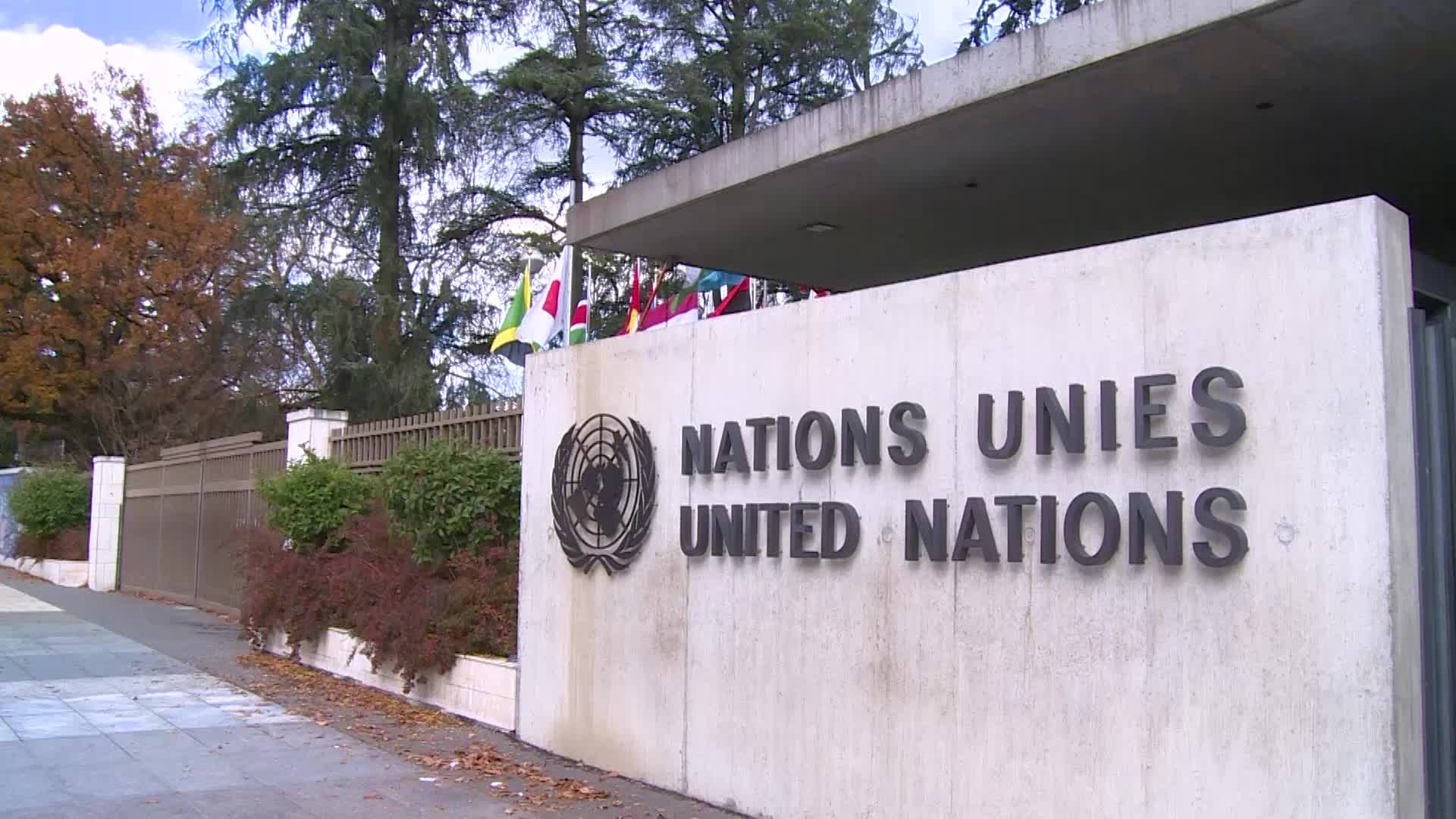
- Exterior shot:
- SOUNDBITE (English) — Volker Türk, UN High Commissioner for Human Rights: “The cost of war is so high. The human toll is incalculable.”
- Cutway: briefing room
- SOUNDBITE (English) — Volker Türk, UN High Commissioner for Human Rights: “Thedisregard for international law and apparent indifference to civilian lives and infrastructure have been starkly in focus in the conflict in Israel, the Occupied Palestinian Territory and Lebanon, as well as in Ukraine, Sudan and Myanmar, to name a few very stark examples.”
- SOUNDBITE (English) — Volker Türk, UN High Commissioner for Human Rights: “We need to stem the flow of arms into Haiti, Sudan and Myanmar; to put on notice those providing arms, including to Israel and non-State armed actors in Lebanon, Syria, the Occupied Palestinian Territory, that international law requires States to exercise care that weapons they provide are not used to commit violations. We need to insist that it is not okay, and not legal, to use anti-personnel mines in Ukraine, it is not okay to provide them for use there, and it is not okay to reduce the threshold for the use of nuclear weapons.”
- Cutway: briefing room
- SOUNDBITE (English) — Volker Türk, UN High Commissioner for Human Rights: “Syria’ssovereignty, unity, independence and territorial integrity must be restored.”
- Cutway: briefing room
- SOUNDBITE (English) — Volker Türk, UN High Commissioner for Human Rights: “Anypolitical transition must ensure accountability for perpetrators of serious violations, and guarantee that those responsible are held to account. It is imperative that all evidence be collected and preserved meticulously for future use. Reform of the security apparatus will be key. This transition must also ensure that the tragedy of missing people is addressed.”
- Cutway: briefing room
- SOUNDBITE (English) — Volker Türk, UN High Commissioner for Human Rights: “Humanrights are not abstract ideas or ideologies. They are about who we are, and how we live. They are grounded in facts, in law and in compassion. They embody our needs and our hopes.”
- Cutway: briefing room
Similar Stories

1
1
1
Edited News | UNICEF
A little over one year since a ceasefire agreement was announced between Hamas fighters and Israel, more than 340 children have been reported killed and hundreds more injured, the UN Children’s Fund, UNICEF, said on Friday.

1
1
1
Edited News | UNICEF , IFRC
Six weeks after Nepal’s deadly flooding disaster, communities are still struggling to rebuild their lives, but they will need sustained help as global warming increases the risk of another Himalayan catastrophe, the UN Children’s Fund (UNICEF) said on Friday.

1
1
1
Edited News | WHO
In suspected Russia plague death, testing and monitoring underway – WHO
The death of a lab worker in Russia’s Siberia region has sparked concerns about plague being the cause, the UN World Health Organization (WHO) said on Tuesday, adding that it was following the situation closely.

1
1
Edited News | OHCHR , UNOG
UN Human Rights Chief Volker Türk on Friday provided and oral update to the 63rd session of the Human rights Council on Ukraine.

1
1
1
Edited News | OHCHR , UNOG
UN Human Rights Chief Volker Türk on Friday provided and oral update to the 63rd session of the Human rights Council on the human rights situation in Haiti.

1
1
1
Edited News | WHO
Repeated delays in bringing lifesaving medicines, prosthetics and more from Israel into Gaza risk having devastating consequences on Palestinians who urgently need them in the wartorn enclave, the UN World Health Organization (WHO) said on Friday. “A truck full of non-priority supplies or the right supplies arriving too late, doesn't save lives. That's the question that actually matters," said Dr Reinhilde Van De Weerdt, WHO Representative in the OPT.

1
1
1
Edited News | WHO
DRC: Early access to care and oxygen decisive for Ebola patients’ survival – WHO
In the Democratic Republic of the Congo (DRC), health workers fighting the country’s largest-ever Ebola outbreak are struggling to overcome critical challenges to patient care, the UN World Health Organization (WHO) warned on Tuesday.

1
1
1
Edited News | OCHA , UN
Civilians in Iran are continuing to feel the consequences of months of conflict and military escalation, the UN’s top official in the country has said, as loss of life, damage to civilian infrastructure and mounting economic pressures leave many facing continued uncertainty.
1
1
1
Edited News | WHO , UNICEF
Aid agencies in Yemen highlighted the growing hunger emergency sparked by renewed fighting between Houthi opposition forces and Government troops, after mobile health clinics reported that hundreds of children displaced by the violence are suffering from the most deadly form of malnutrition.
1
1
1
Edited News | UNHCR
Displacement on the rise in Yemen as fighting continues - UNHCR
As hostilities worsen in Yemen, more people have been fleeing their homes, further intensifying the humanitarian crisis within the region, the UN Refugee Agency (UNHCR) warned on Tuesday.
1
1
1
Edited News | IOM , OHCHR , UNFPA , UNOG , UNHCR , WHO
Yemen’s humanitarian crisis growing by the hour amid spike in displacement
Yemenis displaced by renewed fighting have described fleeing for their lives amid shelling and gunfire, aid agencies reported on Friday, while highlighting the dramatic increase in humanitarian needs in the country and in Djibouti, where thousands have sought shelter.
1
1
1
Edited News | OHCHR , UNOG
The UN Human Rights Office issued on Friday a report documenting a shocking pattern of sexual violence amid Russia’s full-scale armed attack on Ukraine.