

The United Nations Office at Geneva
Multimedia Newsroom
Press Conferences | IPU , OHCHR , UNECE , UNHCR , UNICEF , UN WOMEN , WFP , WHO , WIPO
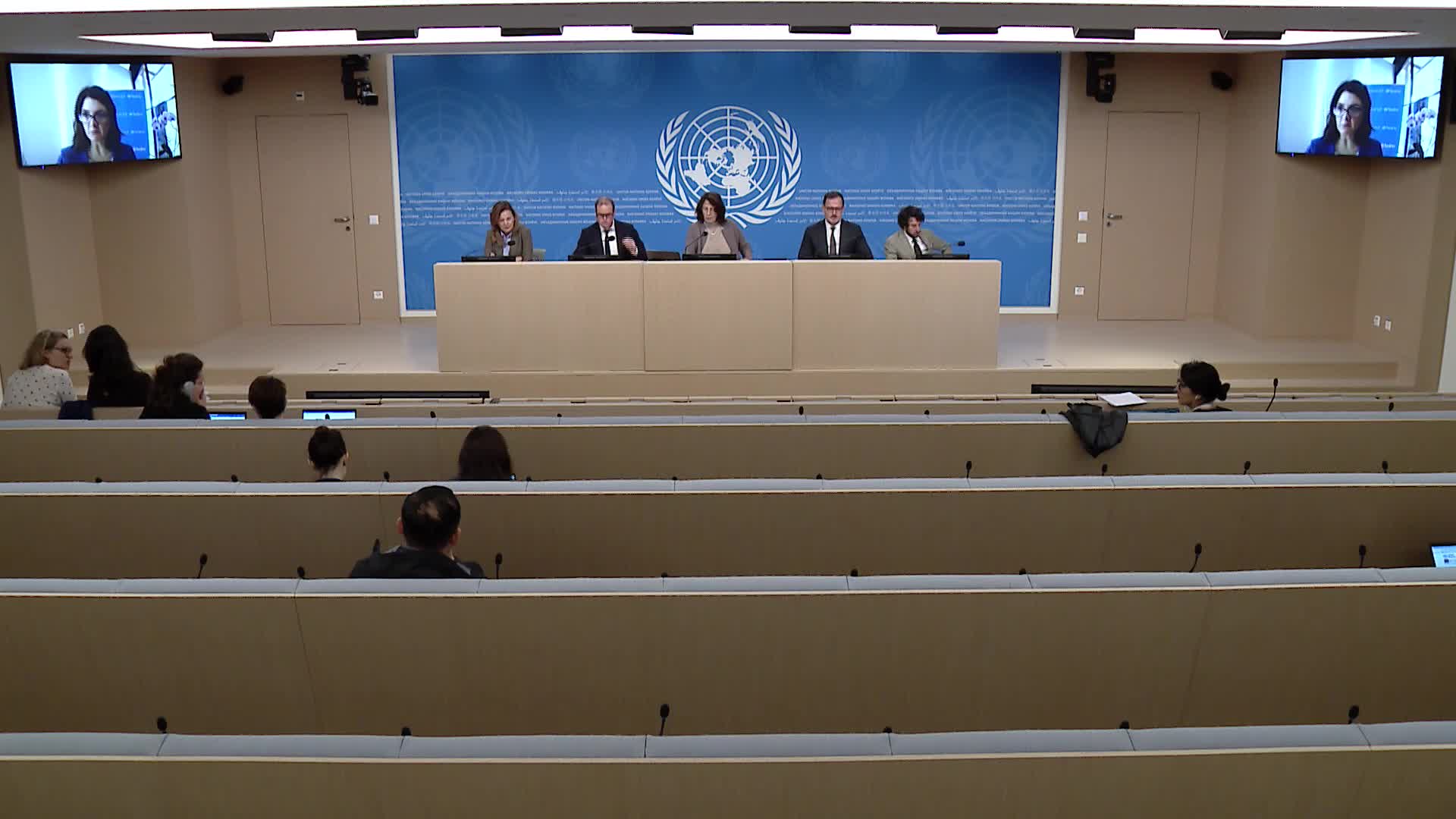
UN Geneva Press Briefing - 24 September 2024
UN GENEVA PRESS BRIEFING
24 September 2024
War in Lebanon
Alessandra Vellucci, for the United Nations Information Service (UNIS), stated that the Secretary-General was gravely alarmed by the escalating situation along the Blue Line and the large number of civilian casualties, including children and women, being reported by the Lebanese authorities, as well as thousands of displaced persons, amidst the most intense Israeli bombing campaign since last October. The Secretary-General was also gravely alarmed by the continued strikes by Hizbullah into Israel. He expressed grave concern for the safety of civilians on both sides of the Blue Line, including UN personnel, and strongly condemned the loss of lives. The Secretary-General reiterated his call for all parties to protect civilians and civilian infrastructure and ensure they were not put in harm’s way. He also reminded all actors of their responsibility to ensure the safety and security of all UN personnel and assets. Full statement is available here.
Ravina Shamdasani, for the Office of the High Commissioner for Human Rights (OHCHR), said that the OHCHR was extremely alarmed by the sharp escalation of hostilities between Israel and Hezbollah and called on all parties to immediately cease the violence and to ensure the protection of civilians. 23 September marked the deadliest day of violence in years, with reports of at least 492 killed and 1,645 injured following a series of Israeli airstrikes across Lebanon. Lebanon’s Health Ministry said that 35 children and 58 women were among those killed. Roads in southern Lebanon were crammed with people in cars fleeing the violence.
International humanitarian law was very clear, stressed Ms. Shamdasani: all parties to an armed conflict had to distinguish, at all times, between the civilian population and combatants and between civilian objects and military objectives. Constant care had to be taken to spare the civilian population and civilian objects. The laws of war also obliged all parties to observe the principle of proportionality. Incidents in which any civilians were killed or seriously injured, potentially in violation of international law, had to be subject to independent, thorough, and transparent investigations into the circumstances of the attacks. UN High Commissioner Volker Türk called on all States and actors with influence in the region and beyond to avert further escalation and do everything they could to ensure full respect for international law.
OHCHR statement can be found here.
Ettie Higgins, Deputy Representative of the United Nations Children’s Fund (UNICEF) in Lebanon, speaking from Beirut, highlighted the situation of children in light of the dangerous escalation that had had adverse effects on their physical and mental well-being. On 23 September alone, at least 35 children had been reportedly killed in Lebanon - more than the number of children killed in Lebanon in the previous 11 months. Almost 1,700 people had been injured, including children and women, according to the Lebanese Ministry of Public Health. Countless more children were in danger, exposed to ongoing attacks, displaced from their homes and unable to rely on an overstretched and under-sourced health system.
This time could be even worse for the children of Lebanon that the Israel-Lebanon war of 2006. Lebanon had recently been devastated by a protracted economic and political crisis; the massive Port of Beirut explosion; the impact of COVID-19; and the fifth year of a crippling economic downturn that had sent poverty soaring. Ms. Higgins warned that any further escalation in this conflict would be catastrophic for all children in Lebanon, but especially families from villages and towns in the south and the Bekaa, in Eastern Lebanon, who had been forced to leave their homes. She informed that 87 new shelters were accommodating the increasing number of displaced people in the South, Beirut, Mount Lebanon, Baalbek – Hermel, Bekaa, and the North governorates.
Schools were closed today across the country, leaving children at home in fear. Their caregivers were themselves afraid of the uncertainty of the situation. This fear could not be overstated, as the barrage of shelling and air raids continued, and increased, daily. UNICEF had worked to support and protect the children of Lebanon for 76 years and was ramping-up its response. UNICEF was preparing to deliver food, water, and essential supplies such as mattresses and hygiene kits to displaced families, especially those in collective shelters. UNICEF urgently called for an immediate de-escalation and for all parties to uphold their obligations under international humanitarian law to ensure the protection of civilian infrastructure and civilians, including children, humanitarian workers, and medical personnel.
Dr. Abdinasir Abubakar, World Health Organization (WHO) Representative in Lebanon, speaking from Beirut, said that over the past year, WHO had worked closely with the Ministry of Public Health to prepare the Lebanese health system for the management of possible mass casualty events while maintaining the delivery of essential health services. From 17 until 23 September, the Ministry reported approximately 582 deaths, including 40 children, and four healthcare workers/ There were close to 6,400 injuries, including 16 paramedics. Hospitals had been greatly challenged in managing the number of injured since 21 September, with thousands of wounds to bandage and surgeries to perform. Over 90 percent of the pager wounds were on the face and limbs, especially hands.
Dr. Abubakar explained that the WHO was supporting the health system in four main domains:
coordination of the national response; continuity of essential health services; disease surveillance; and mass casualty management. WHO supported the Ministry of Health to establish a health emergency operations centre, activated on 17 September to respond to the emergency. Since 8 October last year, WHO had provided over 60 metric tons of essential health supplies including surgical supplies, essential medicines, medical consumables, laboratory and blood transfusion supplies and personal protection equipment for health staff.
WHO had also delivered blood bank supplies to the Lebanese Red Cross in the first quarter of this year. During times of war and uncertainty, mental health and psychosocial services were also a priority WHO has worked with the ministry to integrate these services into hospitals making it easier for people to access care. To manage all this, stressed Dr. Abubakar, the health sector would need outside support. WHO called for health care to be protected, and emphasized again that health workers, facilities, supplies and transport had to be always protected.
Matthew Saltmarsh, for the United Nations Refugee Agency (UNHCR), stressed that the UNHCR was gravely concerned about the escalation in the attacks. Tens of thousands of people had been forced from their homes and these numbers continued to grow in the country that knew suffering all too well. The toll on civilians was unacceptable, and their protection was paramount under international humanitarian law. An end to hostilities was urgently needed, and the international community had to step up its support for Lebanon. UNHCR wad working tirelessly to provide urgent protection and assistance to those who needed it, whether they were Lebanese or refugees. Even prior to the latest escalation, some 100,000 people had been displaced from the southern regions of Lebanon, informed Mr. Saltmarsh, and the UNHCR had been supporting them already. UNHCR was also supporting collective shelters and safe access to health care. UNHCR was now conducting assessments of potential shelter sites in Mount Lebanon and Beirut, and it was on standby to move into other areas and conduct collective shelter assessments. UNHCR was working with the Health Ministry to procure trauma kits. Lebanon had, for many years, been a generous host to over 1.5 million Syrian refugees, who were now facing displacement once again, which further exacerbated their vulnerabilities. Continuous international support for the displaced people in Lebanon was as needed as ever, stressed Mr. Saltmarsh.
Responding to questions from the media, Dr. Abdinasir Abubakar, for the WHO, said that Lebanon had about 160 hospitals. There were adequate numbers of hospitals and health workers, but supplies and energy provisions were a major challenge to run those hospitals; continuous support for the system was necessary. Matthew Saltmarsh, for the UNHCR, said that the UN Refugee Agency was supporting national authorities and stood ready to do as much as needed to ensure the displaced people have access to shelter and other necessities. UNHCR was rolling out the existing contingency plan, he explained. Tens of thousands of people were now internally displaced, and the number was expected to grow.
On another question, Dr. Abubakar said that the pager explosions had mostly led to injuries of eyes, faces, and hands because those were hand-held devices and injured people had been looking at them at the moment of the explosions. Answering various questions, Ms. Shamdasani, for the OHCHR, stressed that the spillover into Lebanon was extremely grave; this was not a normal situation and it had to stop. If a party warned people of an imminent attack, it was still prohibited to strike those areas if the effect on those civilians would be disproportionate. Those not taking active part in hostilities should not be targeted, under international humanitarian law. Ms. Vellucci, for UNIS, reiterated that everything had to be done to avoid further escalation and bring the region back from the brink. Ms. Higgins, for UNICEF, spoke of psychological traumas experienced by Lebanese and Palestinian refugee children across the country.
Answering further questions, Ms. Shamdasani confirmed that the OHCHR had a presence in Lebanon, but verifying casualties would take time. The Israeli attacks which had led to such large numbers of casualties raised serious questions about compliance with international humanitarian law, she said. Protection of civilians was at the core of international humanitarian law, which was being strained and eroded. Dr. Abubakar explained that the WHO did not have information how many killed and injured were combatants and how many were civilians; it appeared that there were more civilians than combatants, but all of them needed to be given medical treatment. There was evidence of attacks against health care facilities, ambulances, and medical personnel. Their protection was paramount, emphasized Dr. Abubakar.
On another question, Ms. Shamdasani expressed concern over the Israeli closure of the Al Jazeera office in the occupied West Bank; similar sentiment had been expressed by the Spokesman of the UN Secretary-General, informed Ms. Vellucci. Mr. Saltmarsh, for the UNHCR, informed that there were still over 4,800 Iraqi refugees in Lebanon, who, along with all other refugees in Lebanon, were covered by the intra-agency response. Dr. Higgins, for UNICEF, provided the latest update that there were over 16,500 internally displaced people in Lebanon, a number which was certain to grow in the coming hours and days. An increase of gender-based violence cases and forced child labour had been observed. Speaking of the pager explosions the week before, Ms. Higgins said that a number of children had been killed or injured this way.
Dire situation in Sudan
Leni Kinzli, for the World Food Programme (WFP), speaking from Nairobi, said that the WFP was in a race against time to save lives in war-torn Sudan, as 1.5 million people across the country either faced famine or at risk of famine. Without urgent assistance, hundreds of thousands could die. WFP was working tirelessly to get aid into the hands of people who are facing starvation. So far this year, the WFP had supported 5.4 million people with life-saving food and nutrition assistance. WFP was taking advantage of the reopening of the Adre border from Chad into the conflict-rattled Darfur region. Trucks carrying vital food and nutrition supplies were crossing that border every single day, said Ms. Kinzli, despite facing delays due to flooded seasonal rivers and muddy road conditions where aid convoys are getting stuck. Since Adre’s reopening one month earlier, the WFP had transported 2,800 metric tons of food supplies into Darfur region via this route, enough aid for over 250,000 people. Of that, over 100,000 people in risk of famine areas in West Darfur had also received emergency food and nutrition supplies.
Even though the WFP was doing everything it could, that was just a drop in the ocean compared to the needs, not just in Sudan but regionally. Around 36 million people had been pushed into hunger because of the ongoing war. World leaders needed to give this humanitarian catastrophe the attention it required. That attention then needed to be translated into concerted diplomatic efforts – at the highest levels – to push for a humanitarian ceasefire and ultimately an end the conflict. The international community had to step up in demanding that the warring parties guarantee safe and unfettered humanitarian access and adhere to international humanitarian law. Lastly, the WFP needed a surge in funding to address the extraordinary level of need – over USD 600 million in the coming six months, to provide urgent aid to people in the most severe levels of hunger across the region.
National guard in Mexico
Replying to a question, Ravina Shamdasani, for the Office of the High Commissioner for Human Rights (OHCHR), said that the OHCHR had consistently cautioned against expanding the role of the army and the militarization of the national guard in Mexico. She stressed that the armed forces should be deployed only temporarily under special circumstances, and under supervision of civilian bodies.
Polio vaccination in Gaza
Responding to a question, Margaret Harris, for the World Health Organization (WHO), said that the second round of the polio vaccination campaign in Gaza was being planned, and it should go ahead in mid-October, for which humanitarian pauses in fighting would again be necessary.
Announcements
Edward Harris, for the World Intellectual Property Organization (WIPO), said that WIPO’s Global Innovation Index would be launched on 26 September, when the embargo would be lifted at 9:30 am. The Index ranked over 130 economies around the world and was the world’s benchmark resource charting global innovation trends to guide policy makers, business leaders and others in unleashing human ingenuity to improve lives and address shared challenges. A press conference, under embargo, would be held on 25 September at 3 pm, with Daren Tang, WIPO Director General and Sacha Wunsch-Vincent, GII co-editor, WIPO.
Adriana Quinones, Deputy Director of UN Women’s liaison office in Geneva, informed that Abuelas of Sepur Zarco, indigenous women human rights defenders from Guatemala, would be in Geneva today to participate in the 57th session of the Human Rights Council. On 25 September from 2 to 3 pm in Room XXII, the Abuelas would share their powerful testimonies on the importance of gender-transformative reparations in post-conflict settings. The exhibition “Women Walking for Peace. Indigenous Women from Sepur Zarco” would open in at the Palais des Nations on 26 September at 10:30 at Door 40 and would be on display for two weeks. Ms. Quinones stressed that the Abuelas of Sepur Zarco were a powerful example of the importance of accountability and justice for victims and survivors of wartime sexual violence.
Thomas Croll-Knight, for the United Nations Economic Commission for Europe (UNECE), informed that city leaders from across the globe would convene for the 4th Forum of Mayors, which would be held in Room XVII on 30 September and 1 October. Over 45 mayors and deputy mayors would attend the Forum from all world regions. Mayors would discuss the implications for local governments of the Pact for the Future, agreed upon this weekend by UN Member States at the United Nations Summit of the Future. Following the Forum, mayors would join a full day meeting on 2 October focusing on the housing affordability crisis in Europe and North America. The lack of affordable housing was closely linked to poverty and exclusion. Tackling this challenge called for political commitment bold policies, which the workshop would seek to address. These discussions would take place in the context of the UNECE Committee on Urban Development, Housing and Land Management. More details are available here: https://unece.org/housing/events/cudhlm-session85.
Thomas Fitzsimons, for the Interparliamentary Union (IPU), informed that the 149th IPU Assembly would take place from 13 to17 October in at the International Conference Centre of Geneva. Hundreds of parliamentarians and experts from some 150 countries were expected to attend. The overall theme was Harnessing science, technology and innovation for more peaceful and sustainable future. There would be a particular focus on Artificial Intelligence and how to regulate and legislate to mitigate the risks of AI while at the same time reaping the benefits. Ms. Fitzsimons said that delegations from Russia and Palestine were also registered and was expecting Ukrainians as well as Israelis and Lebanese, among others. Speakers of Parliament from Armenia and Azerbaijan would meet for the third time under the good offices of the IPU as part of overall peace efforts in the region.
Alessandra Vellucci, for the United Nations Information Service (UNIS), informed that the Committee on Economic, Social and Cultural Rights would conclude its 76th session on 27 September, at 5:30 pm, and issue its concluding observations on the countries reviewed: Iceland, Poland, Honduras, Kyrgyzstan, Albania, Cyprus, and Malawi.
The Committee on Enforced Disappearances was concluding this morning its review of the report of Ukraine. This afternoon, at 3 pm, it would begin consideration of the report of Morocco.
At 3 pm Geneva time, the 79th session of the UN General Assembly would begin in New York. All meetings would be webcast at UNTV, and all details on this week events in New York are available here.
Similar Stories
1
1
1
Press Conferences | UNHCR
End of UNHCR's 77th Annual Executive Committee (ExCom) meeting week
1
1
1
Press Conferences | UNICEF , IOM , UNHCR
UN Special Assistant to the Personal Envoy Office (SUDAN): Peace Initiatives and Efforts in Sudan; UNICEF: Dire situation of children in Gaza; IOM: Damaged Homes and Energy Attacks Risk Displacing Ukrainians for this winter; UNHCR: update on EXCOM week

1
1
1
Press Conferences | IOM , UNDRR
UN stresses importance of household preparedness for disaster risk reduction.
1
1
1
Statements , Press Conferences | OHCHR
1
1
1
Press Conferences | UNHCR , UNICEF , IFRC , OHCHR , UN WOMEN , IOM , OCHA , WHO
UNHCR – ExCom Meeting, UNICEF – Nepal Recovery, IFRC – Flash Floods, WHO – Mental Health, IOM – South Sudan Floods, OCHA – DRC Humanitarian aid, UNHCR – Sahel Displacement, UNICEF – Yemen Update, IOM – Gaza Shelter, UN Women – Gaza Women, OHCHR – Arrests and detentions of Syrians by Israeli force
2
1
2
Press Conferences | UNCTAD
Presentation of the Trade and Developement Report 2026
Embargoed until 9 October 2026 at 11 a.m. (Geneva Time)
UNCTAD: UNCTAD’s flagship report finds that governments increasingly use industrial, trade, financial and technology policies to pursue economic and national security objectives. Market access and the ability to move into higher-value activities now depend more heavily on technology, finance and geopolitics.
1
1
1
Press Conferences | UPU
Release of the State of the Postal Sector Report 2026
1
1
1
Press Conferences | IOM , ITU , UNECE , UNICEF , WHO , WMO
UNICEF: Ebola, DRC - children orphans or separating them from parents and caregivers; IOM: Humanitarian needs in Djibouti amid arrivals from Yemen and increased migrant movements; WHO: Darfur, scale of health needs far exceeds available resources; WMO co-sponsored Global Heat Forum, Bangkok, monthly Global Seasonal Climate Update; UNECE: UN Forum of Mayors; ITU Plenipotentiary Conference 2026; WHO: child and adolescent obesity guidelines and new global roadmap to tackle pregnancy hypertension, a leading cause of maternal mortality
1
1
1
Press Conferences | OCHA , UN WOMEN , UNHCR , WFP , WHO , WTO , UNEP
OCHA – $160M CERF allocation to 12 underfunded crises; UNHCR – 5.8M refugee children remain out of school amid funding cuts; UN Women – Middle East escalation and food security among women/girls; WHO – Gaza supplies and overall situation; WFP – Yemen food insecurity and impact on global hunger ; UNEP - First International Conference of the Global Framework on Chemicals in Geneva | 16-20 November 2026
1
1
1
Press Conferences | UNHCR , WHO
Yemen's health system nears collapse amid conflict, causing rising casualties and medicine shortages.
1
1
1
Press Conferences | HRC
Update by the Expert Mechanism to Advance Racial Justice and Equality in Law Enforcement
1
1
1
Press Conferences | WIPO , WHO , UNICEF , UNHCR , IOM , WFP , FAO
WIPO Global Innovation Index 2026 launch and press conference, WHO Composition of influenza vaccines for the 2027 Southern Hemisphere flu season, UNICEF Yemen hunger and malnutrition; UNHCR Sudan displacement into Chad; IOM Ebola and population movements in DRC; WFP emergency food assistance in Nepal; and FAO food loss and waste.