

The United Nations Office at Geneva
Multimedia Newsroom
DR Congo: Escalation of conflict raises concerns over widespread infectious diseases, says WHO
At least 25 million people have been caught up in the humanitarian crisis in the Democratic Republic of the Congo (DRC) where a neglected health crisis is unfolding at alarming speed, the UN health agency, WHO, said on Friday.
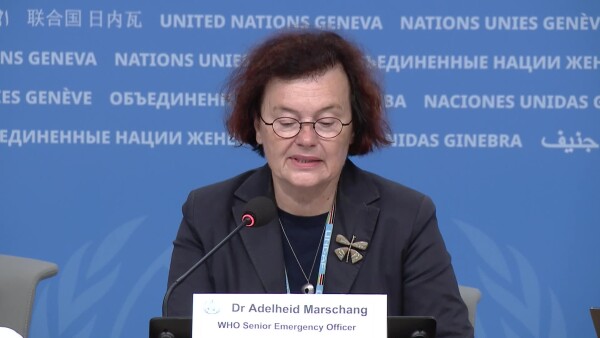
For decades, conflict in the mineral-rich eastern DRC has triggered alarming levels of violence, mass displacement, widespread disease, gender-based violence and severe mental trauma said Dr Adelheid Marschang, Senior Emergency Officer at the World Health Organization (WHO).
The vast central African nation has now the “highest number of people in need of humanitarian aid in the entire world, with 25.4 million affected”, she told journalists in Geneva.
A staggering 7.4 million people have been displaced, including 2.8 million in North Kivu alone. The number of people forcibly uprooted has increased since the separatist M23 movement launched a major offensive in 2022, prompting national and regional military responses that have struggled to restrain the militia's advance. These mass displacements have overwhelmed water and sanitation systems and brought an additional burden to the population’s scarce resources, warned the WHO.
“About 40 per cent of the population, that is 40.8 million people, face serious food shortages, with 15.7 million facing severe food insecurity and as a result, a higher risk of malnutrition and infectious diseases,” said Dr Marschang. “If immediate action is not taken to address basic needs in DRC, over one million children will suffer from acute malnutrition,” she added.
Outbreaks of cholera, measles, meningitis, Mpox and plague, have all been reported, exacerbated by severe flooding and landslides.
Mpox remains a global health threat with 26 countries reporting cases to WHO this month. DRC has seen 20,000 cases and more than 1,000 deaths from the virus since the start of 2023. Over 11,000 cases, including 443 deaths, have been reported so far this year, “again affecting mostly children”, Dr Marschang said.
Mpox spreads through close contact, causing flu-like symptoms and skin rash. Scientists raised the alarm last month about a dangerous new strain of Mpox in South Kivu and fear it will spread in overcrowded camps in and around Goma. Military activities around those camps make it difficult for health authorities to contain the virus if security is not granted, the UN health agency explained.
On Monday, the Special Representative of the Secretary-General, Bintou Keita, told the UN Security Council that the DRC is facing one of the most severe and neglected humanitarian crises of our times.
Dr Marschang echoed that observation, explaining that the Humanitarian Response Plan for 2024 aims to assist 8.7 million people and requires $2.6 billion for all UN and partner agencies. “The underfunding is severe,” she stressed, as “16 per cent of the Humanitarian Response plan is currently funded. For WHO, we are looking for something like $30 million to address the situation until the end of the year.”
The deterioration of the security situation has accompanied the full withdrawal from South Kivu of the UN Stabilization Mission (MONUSCO) in DRC, ending the first phase of disengagement following a request to close the mission from the Government in Kinshasa.
MONUSCO’s operations began winding down in January after two decades of operations, but its Head, Bintou Keita, told the UN Security Council on Monday there should not be a rush to further disengagement since this process has thrown up unexpected challenges. She explained the rebel activity from the M23 carries a “very real risk of provoking a wider regional conflict”. According to a UN expert group the militia is supported by Rwanda and has been responsible for unlawful killings, rapes and other apparent war crimes in the DRC since late 2022.
ends
Story: “Health situation in DRC – WHO” – 12 July 2024
Speaker:
- Dr Adelheid Marschang, WHO Senior Emergency Officer
TRT: 02’01”
SOURCE: UNTV CH
LANGUAGE: ENGLISH / NATS
ASPECT RATIO: 16:9
DATELINE: 12 July 2024 - GENEVA, SWITZERLAND
Geneva Press briefing
SHOTLIST
- Exterior medium shot: UN flag alley.
- Wide shot of the podium with speakers at the press conference room.
- SOUNDBITE (English) Dr Adelheid Marschang, WHO Senior Emergency Officer: “The DRC now has the highest number of people in need of humanitarian aid in the entire world, with 25.4 million people affected.”
- Wide shot of the press conference room.
- SOUNDBITE (English) Dr Adelheid Marschang, WHO Senior Emergency Officer: “About 40 per cent of the population, that is 40.8 million people just to share the size of it, face serious food shortages, with 15.7 million facing severe food insecurity and as a result, a higher risk of malnutrition and infectious diseases directly related to that. If immediate action is not taken to address basic needs in DRC, over one million children will suffer from acute malnutrition.”
- Medium lateral shot of the press conference room with screens showing speaker.
- SOUNDBITE (English) Dr Adelheid Marschang, WHO Senior Emergency Officer: “People are facing outbreaks of cholera, measles, meningitis, Mpox and plague, all exacerbated by severe flooding and landslides affecting some parts of the country.”
- Medium shot of press conference room and control room.
- SOUNDBITE (English) Dr Adelheid Marschang, WHO Senior Emergency Officer: “The outbreak in the DRC shows no sign of slowing, with more than 11,000 cases that have been reported this year and 445 deaths. Again, children most affected.”
- Medium shot: speakers at the podium in the press conference room.
- SOUNDBITE (English) Dr Adelheid Marschang, WHO Senior Emergency Officer: “The underfunding is indeed severe: 16 per cent of the Humanitarian Response plan is currently approximately funded. For WHO, we are looking for something like 30 million (USD) to address the situation until the end of year.”
- Various close shots of journalists in the press room.
- Close shot of technicians in the control room
Similar Stories
1
1
1
Edited News | OCHA , UNICEF , WFP
Aid agencies warned on Friday of the fast-developing humanitarian emergency inside Taiz City in Yemen, which has been encircled by de facto Houthi forces fighting government troops along the country’s west coast.

2
17
1
2
Edited News , Press Conferences , Images | OCHA , WMO
Two UN agencies teamed up on Wednesday to issue an appeal for immediate assistance to help communities already being impacted by the strongest El Niño on record.
3
16
2
2
Edited News , B-roll , Conferences , Images | UNITED NATIONS , UNOG
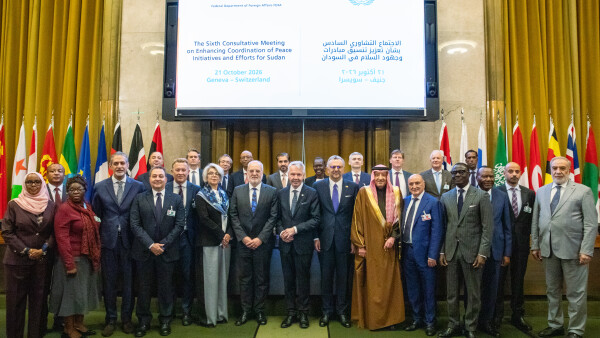
Sixth Consultative Meeting on Enhancing Coordination of Peace Initiatives and Efforts for Sudan

1
1
1
Edited News | UNICEF , WHO , UNHCR
Yemen war continues to force families from homes amid hunger and disease
More than 250,000 people have now fled renewed fighting in Yemen, the UN said on Tuesday, citing particular concern for those sheltering in the southwestern city of Taiz and the wider governorate, where access is “essentially blocked”.

1
1
1
Edited News | UNICEF
A little over one year since a ceasefire agreement was announced between Hamas fighters and Israel, more than 340 children have been reported killed and hundreds more injured, the UN Children’s Fund, UNICEF, said on Friday.

1
1
1
Edited News | UNICEF , IFRC
Six weeks after Nepal’s deadly flooding disaster, communities are still struggling to rebuild their lives, but they will need sustained help as global warming increases the risk of another Himalayan catastrophe, the UN Children’s Fund (UNICEF) said on Friday.

1
1
1
Edited News | WHO
In suspected Russia plague death, testing and monitoring underway – WHO
The death of a lab worker in Russia’s Siberia region has sparked concerns about plague being the cause, the UN World Health Organization (WHO) said on Tuesday, adding that it was following the situation closely.

1
1
Edited News | OHCHR , UNOG
UN Human Rights Chief Volker Türk on Friday provided and oral update to the 63rd session of the Human rights Council on Ukraine.

1
1
1
Edited News | OHCHR , UNOG
UN Human Rights Chief Volker Türk on Friday provided and oral update to the 63rd session of the Human rights Council on the human rights situation in Haiti.

1
1
1
Edited News | WHO
Repeated delays in bringing lifesaving medicines, prosthetics and more from Israel into Gaza risk having devastating consequences on Palestinians who urgently need them in the wartorn enclave, the UN World Health Organization (WHO) said on Friday. “A truck full of non-priority supplies or the right supplies arriving too late, doesn't save lives. That's the question that actually matters," said Dr Reinhilde Van De Weerdt, WHO Representative in the OPT.

1
1
1
Edited News | WHO
DRC: Early access to care and oxygen decisive for Ebola patients’ survival – WHO
In the Democratic Republic of the Congo (DRC), health workers fighting the country’s largest-ever Ebola outbreak are struggling to overcome critical challenges to patient care, the UN World Health Organization (WHO) warned on Tuesday.

1
1
1
Edited News | OCHA , UN
Civilians in Iran are continuing to feel the consequences of months of conflict and military escalation, the UN’s top official in the country has said, as loss of life, damage to civilian infrastructure and mounting economic pressures leave many facing continued uncertainty.