

The United Nations Office at Geneva
Multimedia Newsroom
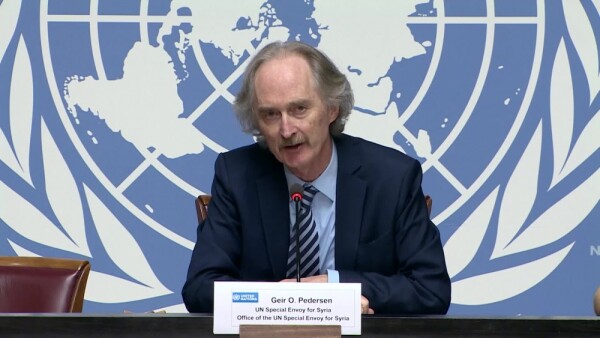
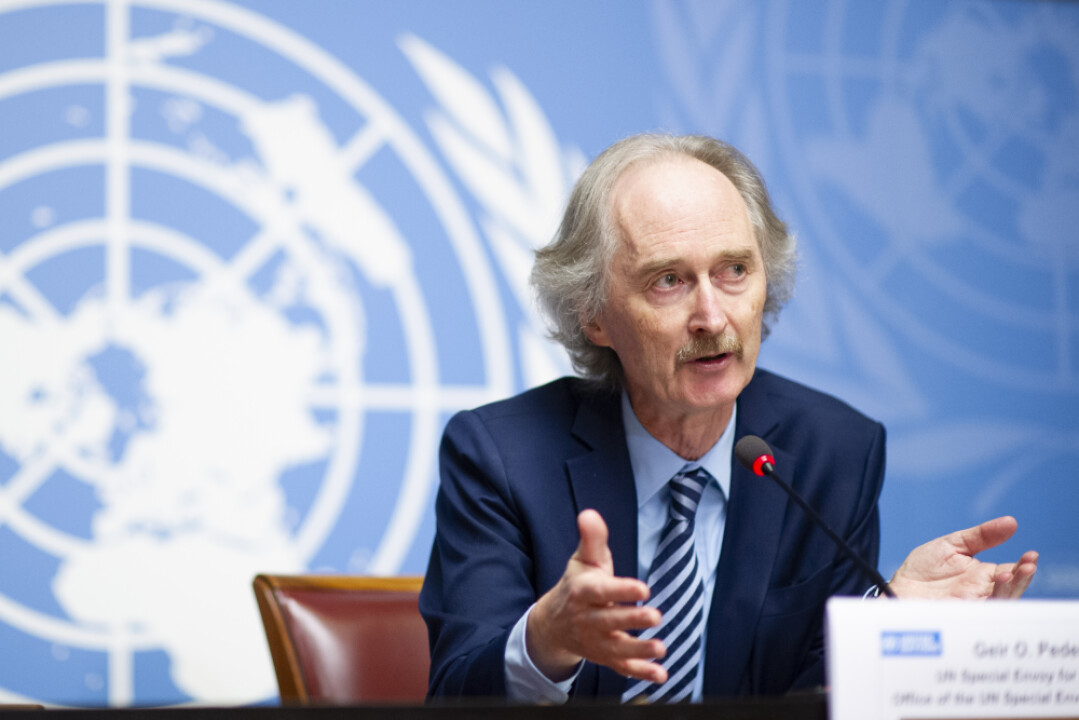
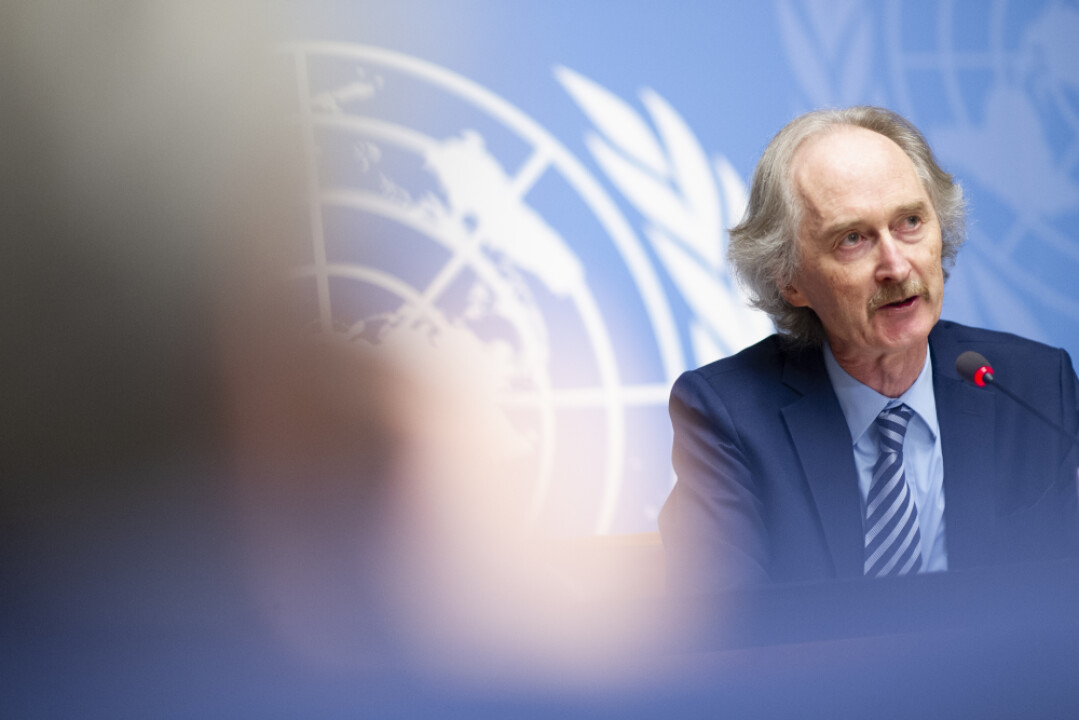
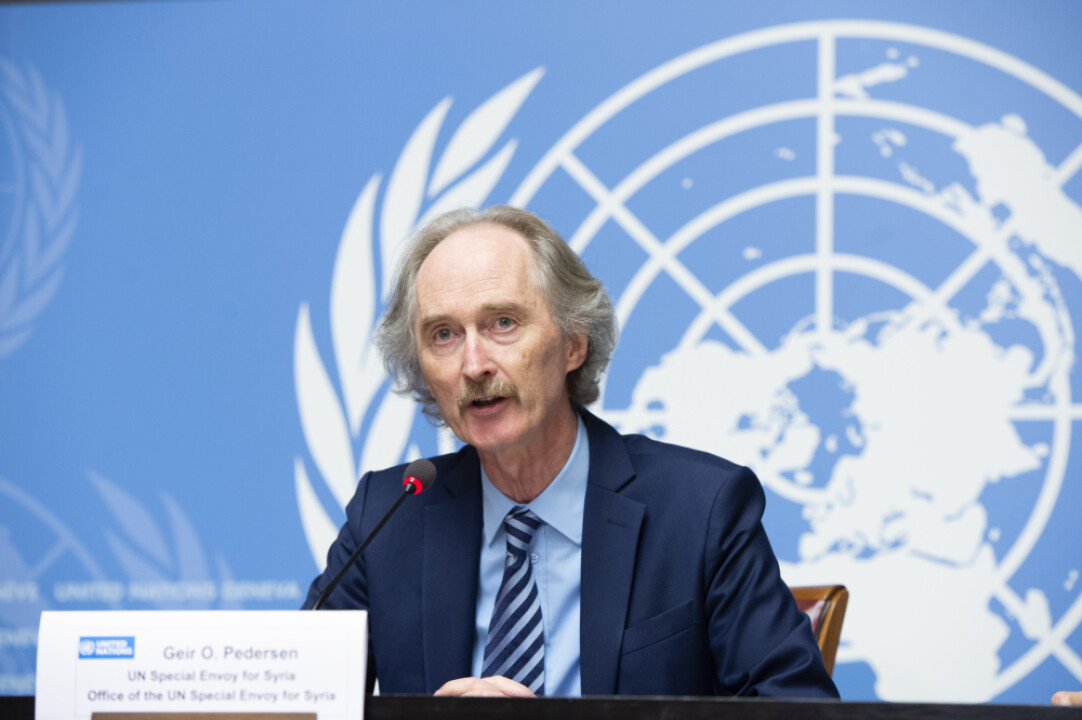
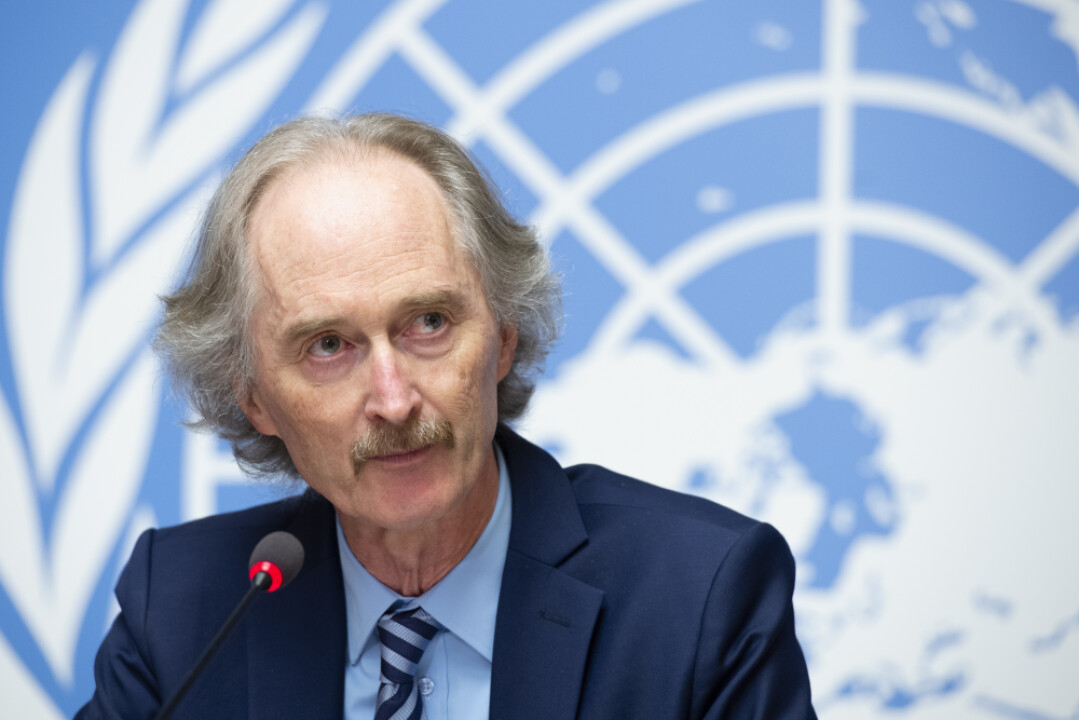
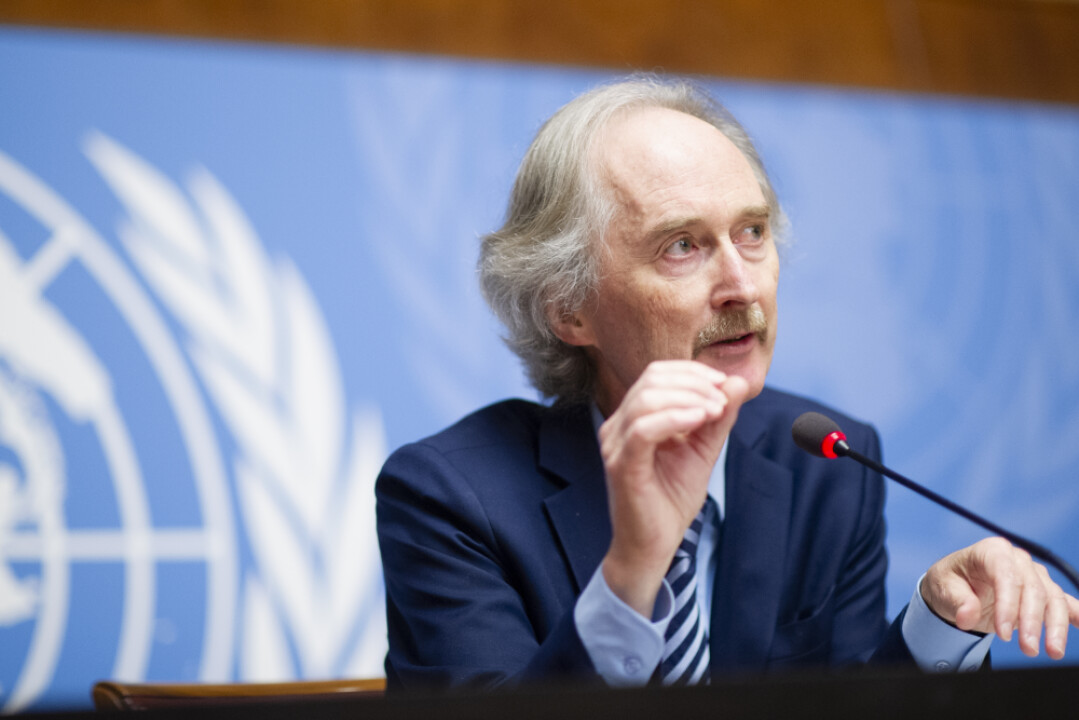
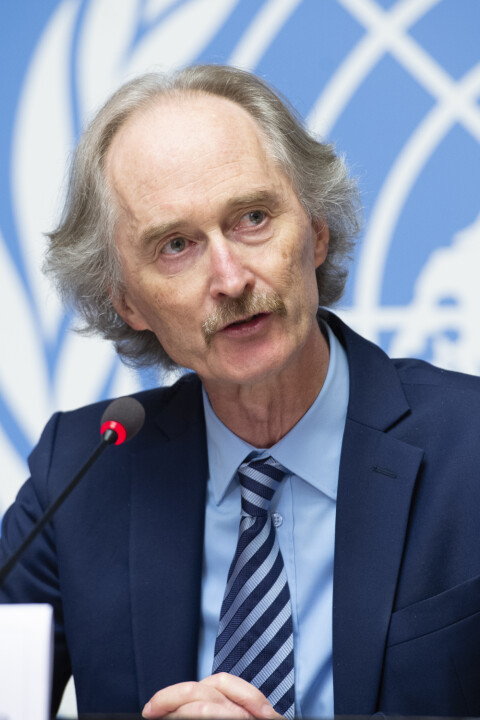
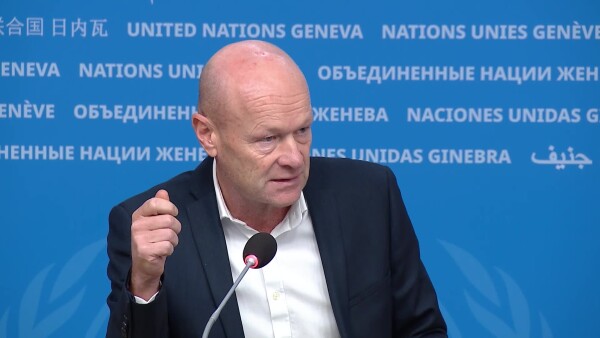
Forty-eight hours before a 150-member Constitutional Committee for Syria meets for the first time in Geneva to try to agree on a new foundational text for the war-ravaged country, UN Special Envoy Geir O. Pedersen on Monday repeated his call for a nationwide ceasefire and the release of prisoners to build trust between belligerents.
“We are strongly appealing for, you know, for the ceasefires to be respected and that we have also been appealing for a nationwide ceasefire to come into effect,” the Special Envoy said, his comments coming two weeks after a Turkish military incursion into north-east Syria that followed the withdrawal of U.S. troops there.
Speaking to journalists in the Swiss city, Mr. Pedersen underscored the significance of the fact that the upcoming meeting marks the first time that representatives from the Government of Syria and opposition groups had “ownership” of a political process that could end more than eight years of brutal conflict that has killed hundreds of thousands and displaced millions inside the country and abroad.
No-one apart from Syrians and the UN would be present for Wednesday’s meeting, he said, before expressing hope of seeing “tangible progress” from the open-ended process.
“The two parties have agreed to work expeditiously and continuously,” he said, referring to Government and opposition delegations that are made up of 50 members each.
A third group of 50 is also slated take part, representing Syrian civil society, with a smaller, 45-person body consisting of 15 Government, 15 opposition and 15 civil society members due to meet subsequently, in order to prepare and draft proposals in line with the UN Charter, Security Council resolutions, Syria’s sovereignty, independence and territorial integrity.
The Special Envoy added that while it was “impossible to say how long it will take for them to conclude its work”, as long as it was done “with serious intentions and we see progress - and as you know I will be reporting to the Security Council - I’m optimistic that we will within the not-too-distant future, that we see a tangible progress in the discussions”.
Such progress should include the release of tens of thousands of Syrians who remain “detained, abducted or missing”, Mr. Pedersen maintained, adding that he had made a special appeal for the early release of women and children.
“I believe that if this would happen, it would send a very powerful signal that we are indeed serious about making a new beginning for Syria,” he insisted.
Describing the Constitutional Committee as “remarkably representative” of Syrian society, Mr. Pedersen confirmed that while there was Kurdish representation, there were no SDF representatives on the Committee, in reference to the Kurdish-led Syrian Democratic Forces that have agreed to pull back from the north-east Syria-Turkey border.
And while the UN negotiator reiterated his belief that the “Constitutional Committee alone cannot and will not resolve the Syrian conflict”, he highlighted widespread international support for a UN-led political solution to end it.
“I think actually this is the first time since the adoption of Security Council resolution 2254 in December 2015 that we have all the key international actors agreeing on an important step forward within the Syrian crisis,” he said. “That goes both for the so-called Astana Three (Iran, Russia, Turkey) it goes for the so-called Small Group (Egypt, France, Germany, Jordan, Saudi Arabia, the UK and U.S.) and of course, as you will have noticed, the Security Council unanimously expressed its support to this process.”
Asked to assess the challenges the Committee faced, given the requirement under the rules of procedure that decisions should be based on consensus or by a 75 per cent majority, Mr. Pedersen explained that he hoped all sides would “try to understand the other side of the argument and then move forward. Hopefully it will take time before it will be necessary to have voting in the process.”.
- Wide shot, exterior, Palais des Nations, Geneva.
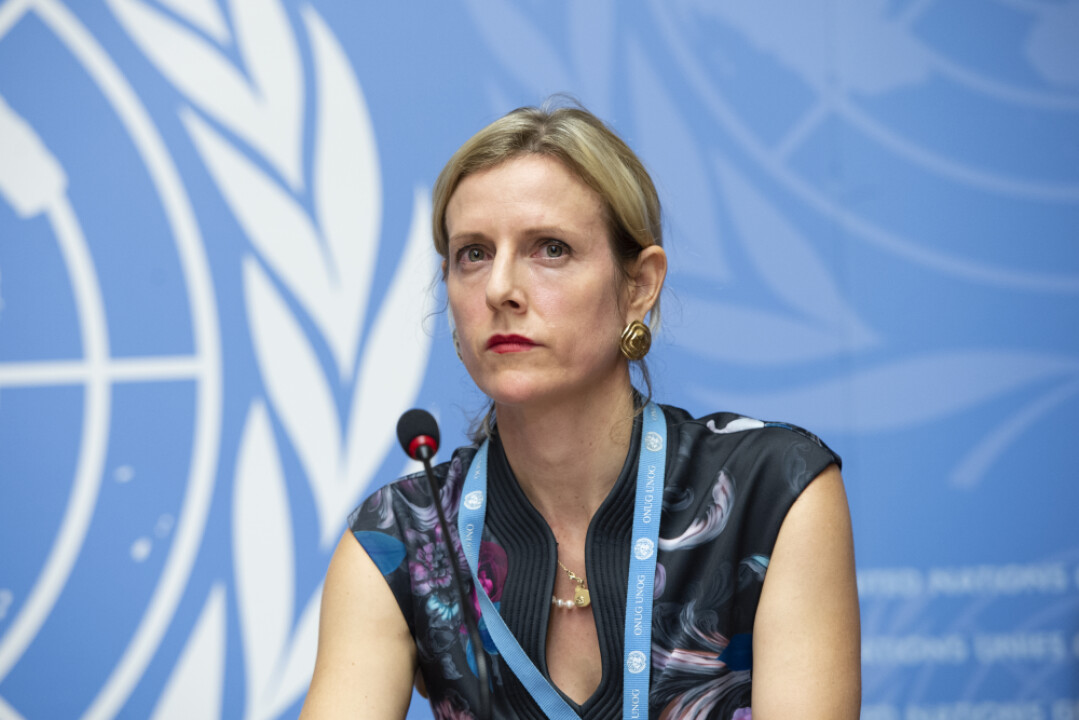
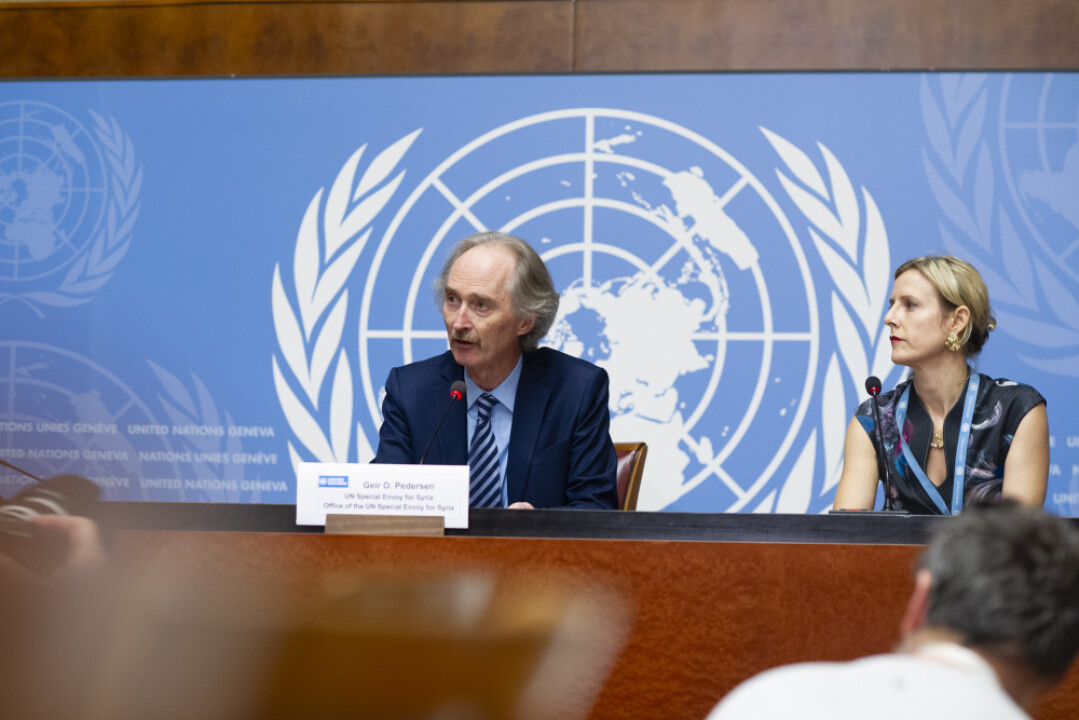
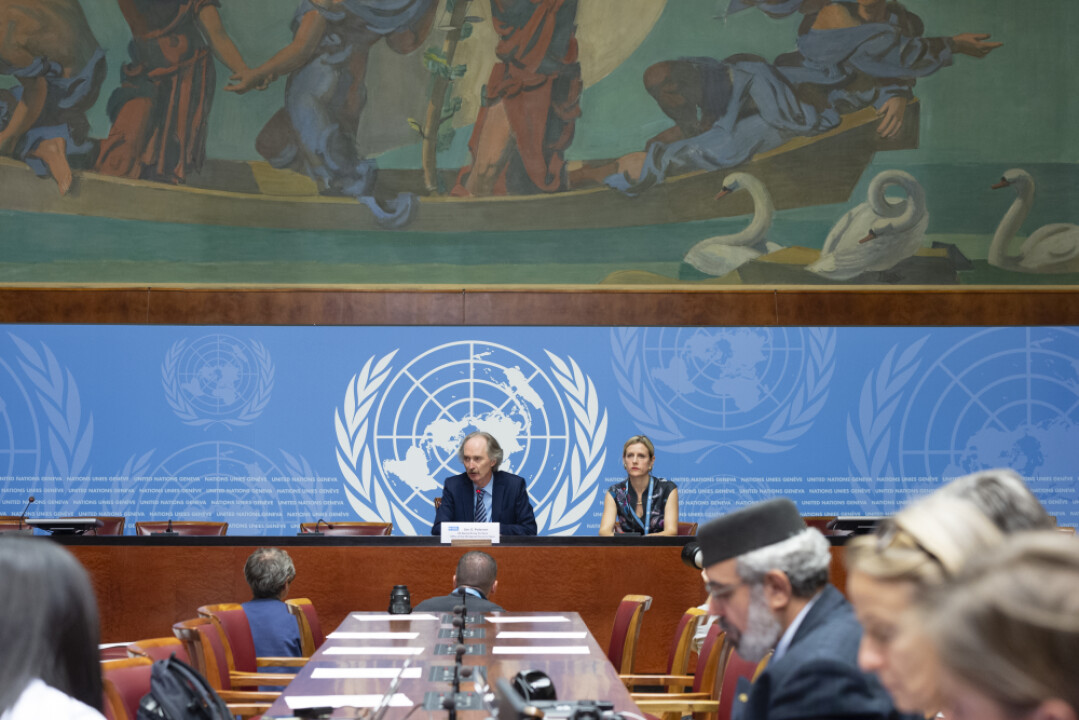
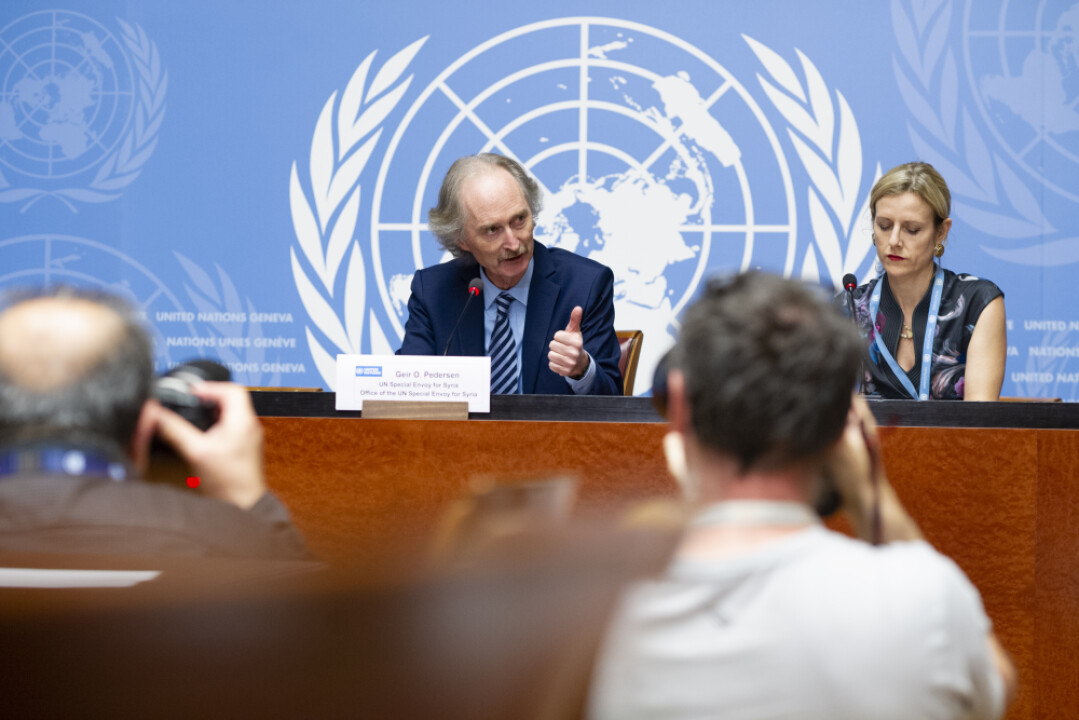
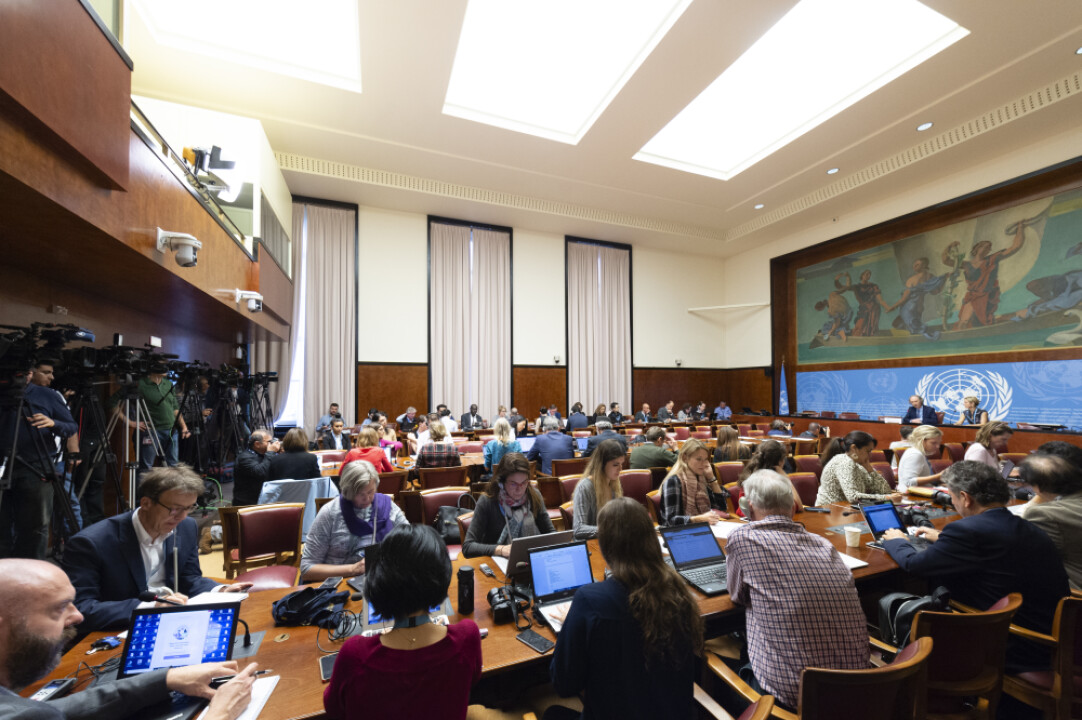
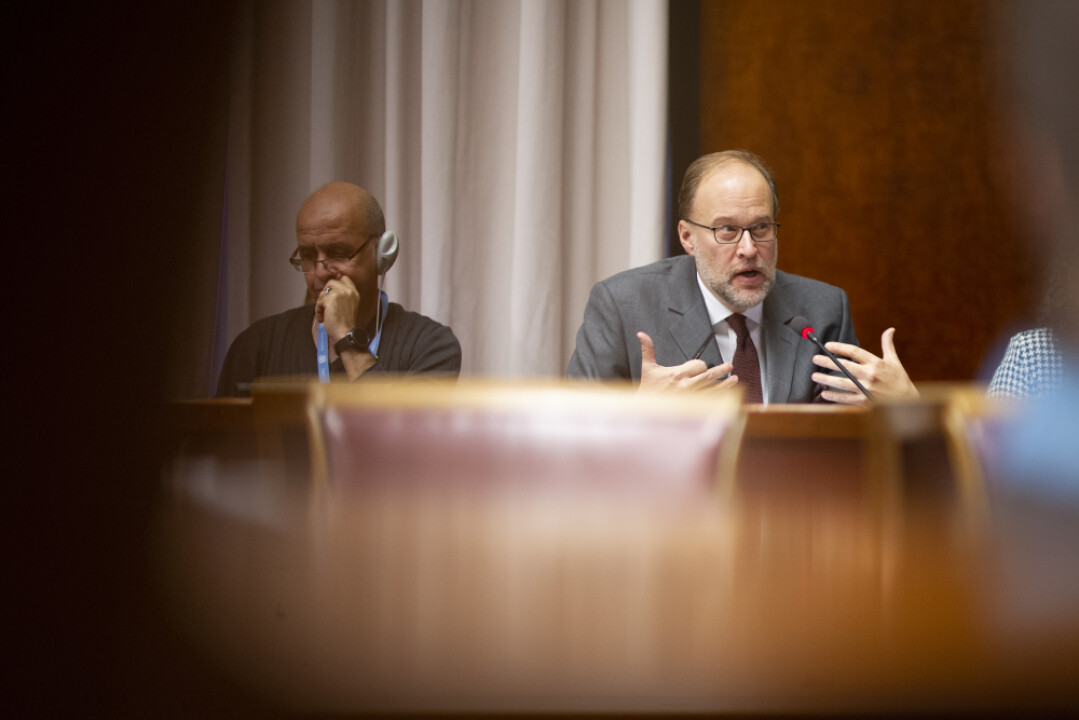
- Wide shot, journalists and podium with Geir O. Pedersen, UN Special Envoy for Syria, and spokesperson Jenifer Fenton, Room III.
- SOUNDBITE (English) — Geir O. Pedersen, UN Special Envoy for Syria: “The two parties have agreed to work expeditiously and continuously. It is impossible to say how long it will take for them to conclude its work, but as long as it is done with serious intentions, and we see progress and as you know I will be reporting to the Security Council, I’m optimistic that we will within the not-too-distant future, that we see a tangible progress in the discussions.”
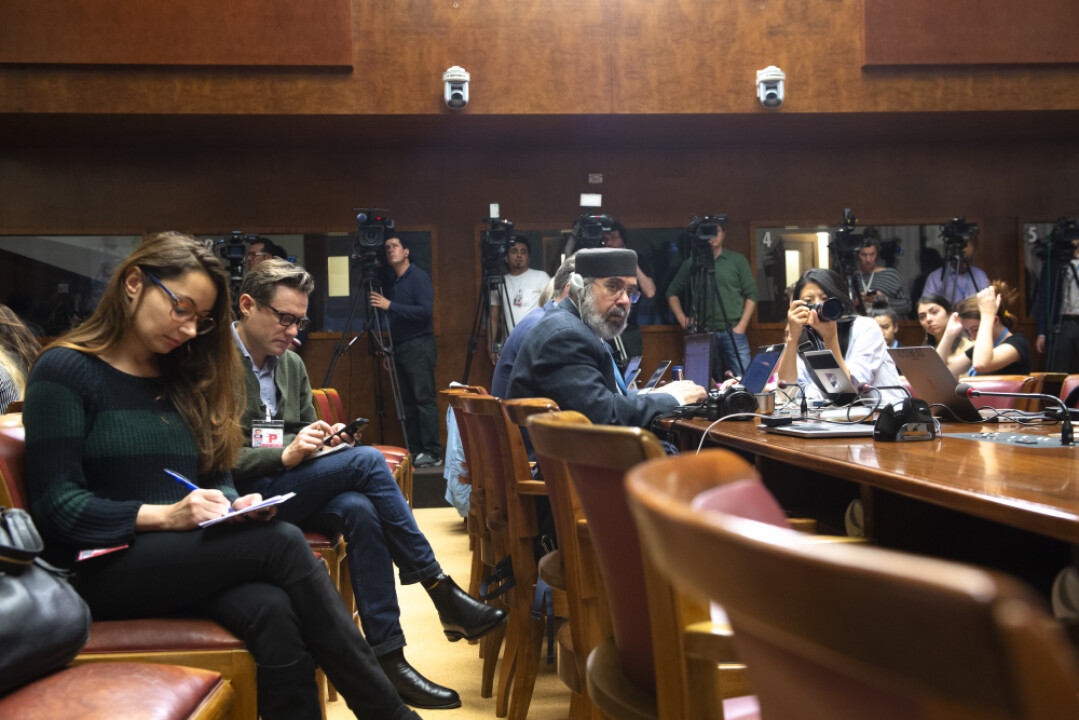
- Medium shot, journalists writing on laptop, TV crews, profile, Room III.
- SOUNDBITE (English) — Geir O. Pedersen, UN Special Envoy for Syria: “We are strongly appealing for, you know, for the ceasefires to be respected and that we have also been appealing for a nationwide ceasefire to come into effect.”
- Medium shot, journalists, TV crews, Room III.
- SOUNDBITE (English)— Geir O. Pedersen, UN Special Envoy for Syria: “It is a remarkable I think within the Syrian historical context, a remarkably representative committee. We have obviously also Kurds in the Committee, but you are absolutely right, there are no SDF representatives on the Committee.”
- Medium shot, journalists, Room III.
- SOUNDBITE (English) — Geir O. Pedersen, UN Special Envoy for Syria: “I think actually this is the first time since the adoption of Security Council resolution 2254 in December 2015 that we have all the key international actors agreeing on an important step forward within the Syrian crisis; that goes both for the so-called Astana Three, it goes for the so-called Small Group and of course, as you will have noticed, the Security Council unanimously expressed its support to this process.”
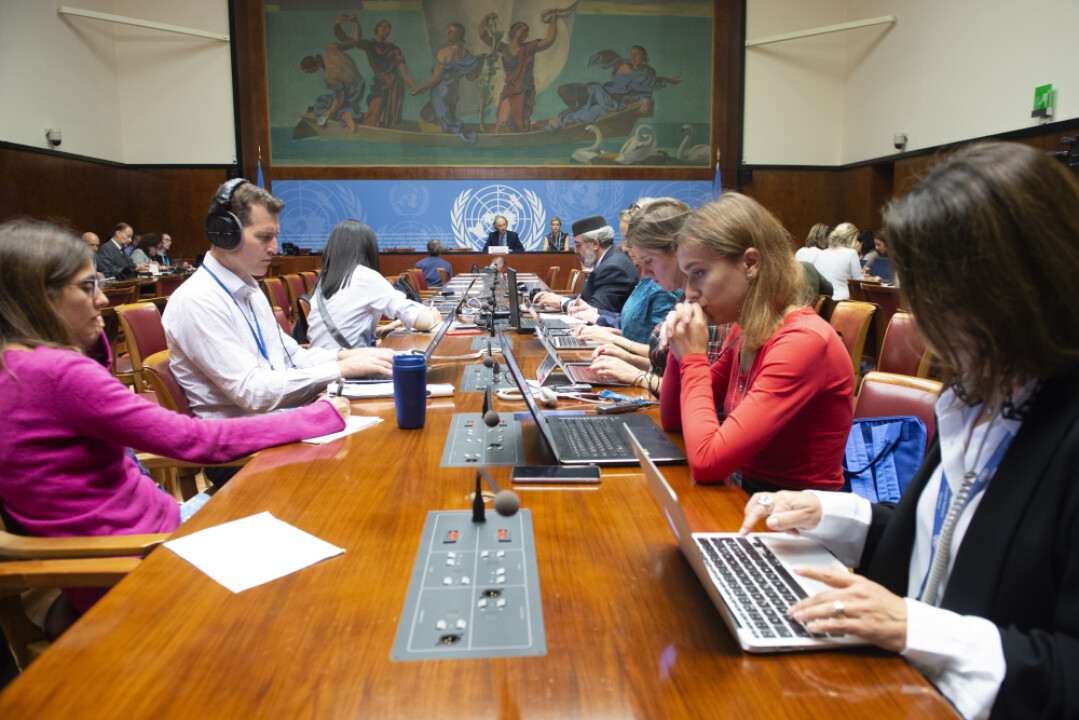
- Medium shot, journalists listening and typing on laptops, profile, Room III.
- SOUNDBITE (English) — Geir O. Pedersen, UN Special Envoy for Syria: “Of course we are very much aware of the fact that the Constitutional Committee alone cannot and will not resolve the Syrian conflict.”
- Wide shot, TV cameras, journalists, Room III.
- SOUNDBITE (English) — Geir O. Pedersen, UN Special Envoy for Syria: “Tens of thousands of Syrians remain detained, abducted or missing and I have appealed in particular for the early release of women and children. I believe that if this would happen, it would send a very powerful signal that we are indeed serious about making a new beginning for Syria.”
- Medium shot, journalists, Room III.
- SOUNDBITE (English) — Geir O. Pedersen, UN Special Envoy for Syria: “My hope is that we can see that the parties in the Committee will reach out to each other, that they will try to understand the other side of the argument and then move forward. And hopefully it will take time before it will be necessary to have voting in the process.”
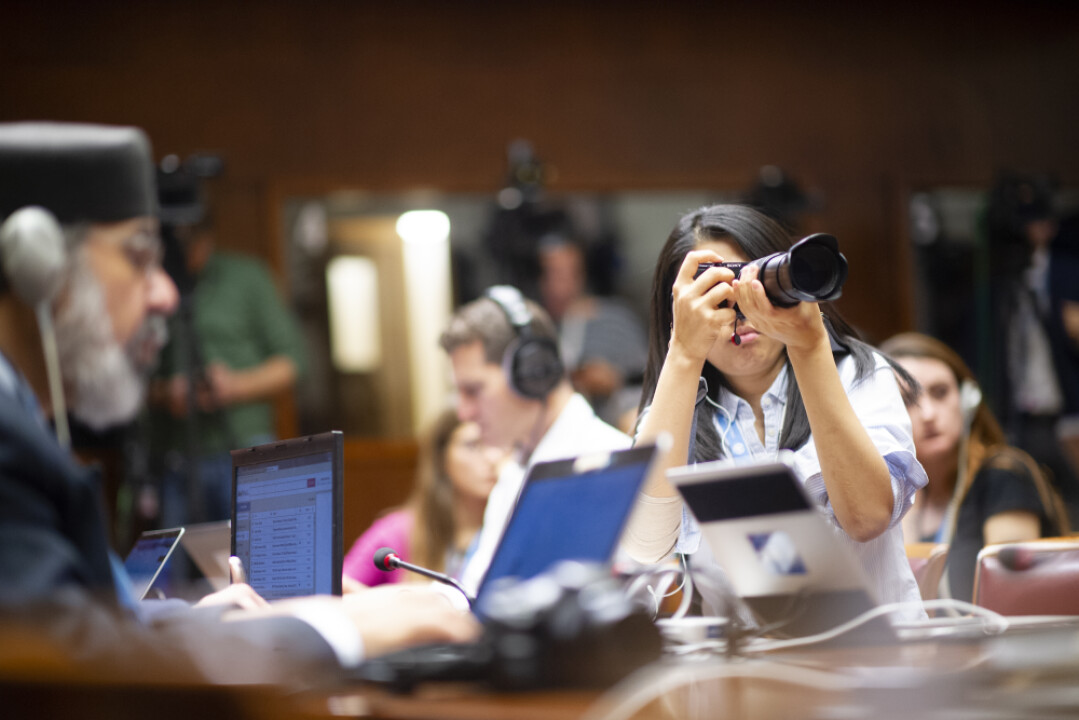
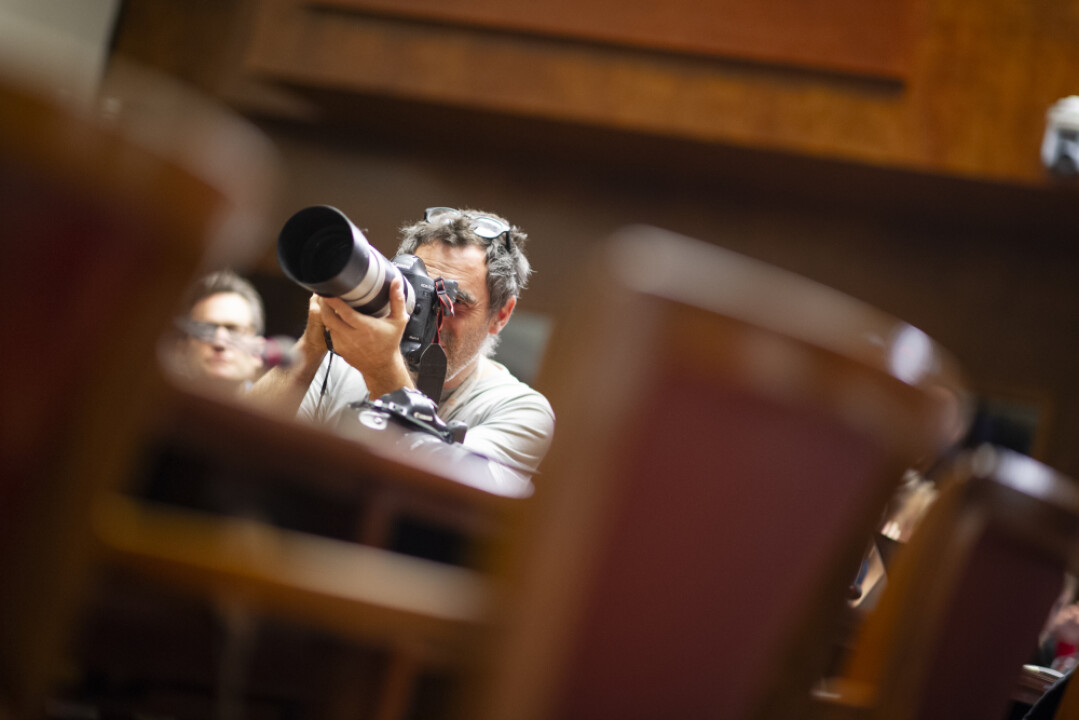
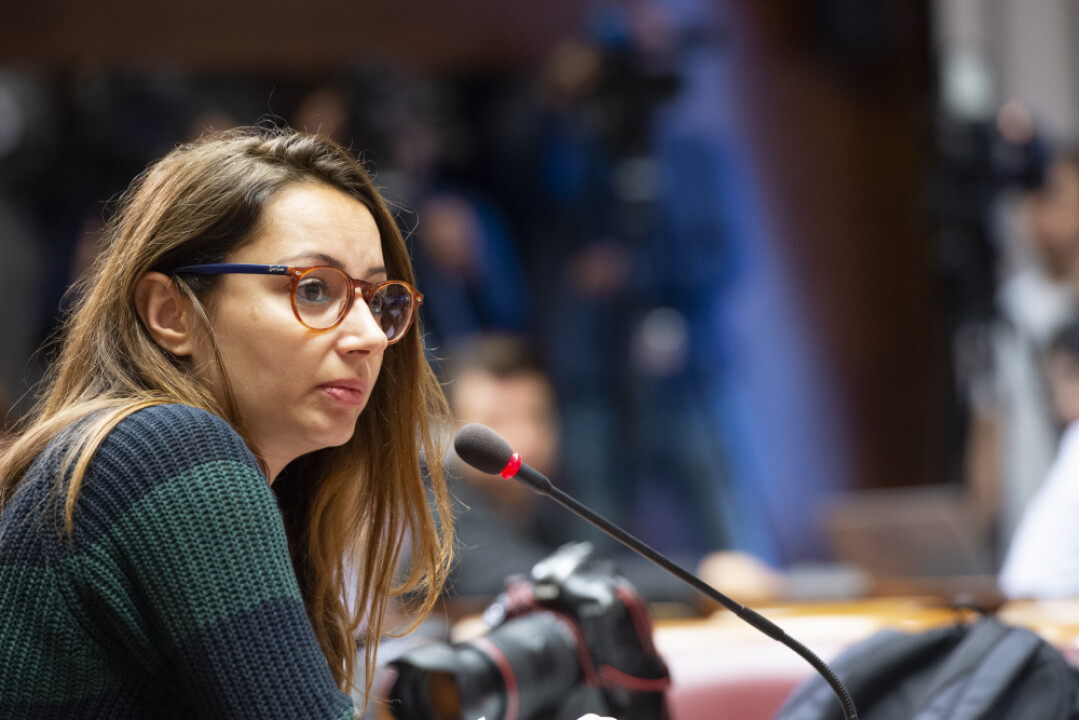
- Medium shot, photographers, profile, Room III.
- Close up, journalists writing on laptops, Room III.
- Medium shot, journalists, TV crews, Room III.
Similar Stories
1
1
1
Edited News | OCHA , UNICEF , WFP
Aid agencies warned on Friday of the fast-developing humanitarian emergency inside Taiz City in Yemen, which has been encircled by de facto Houthi forces fighting government troops along the country’s west coast.

2
17
1
2
Edited News , Press Conferences , Images | OCHA , WMO
Two UN agencies teamed up on Wednesday to issue an appeal for immediate assistance to help communities already being impacted by the strongest El Niño on record.

3
16
2
2
Edited News , B-roll , Conferences , Images | UNITED NATIONS , UNOG
Sixth Consultative Meeting on Enhancing Coordination of Peace Initiatives and Efforts for Sudan

1
1
1
Edited News | UNICEF , WHO , UNHCR
Yemen war continues to force families from homes amid hunger and disease
More than 250,000 people have now fled renewed fighting in Yemen, the UN said on Tuesday, citing particular concern for those sheltering in the southwestern city of Taiz and the wider governorate, where access is “essentially blocked”.

1
1
1
Edited News | UNICEF
A little over one year since a ceasefire agreement was announced between Hamas fighters and Israel, more than 340 children have been reported killed and hundreds more injured, the UN Children’s Fund, UNICEF, said on Friday.

1
1
1
Edited News | UNICEF , IFRC
Six weeks after Nepal’s deadly flooding disaster, communities are still struggling to rebuild their lives, but they will need sustained help as global warming increases the risk of another Himalayan catastrophe, the UN Children’s Fund (UNICEF) said on Friday.

1
1
1
Edited News | WHO
In suspected Russia plague death, testing and monitoring underway – WHO
The death of a lab worker in Russia’s Siberia region has sparked concerns about plague being the cause, the UN World Health Organization (WHO) said on Tuesday, adding that it was following the situation closely.

1
1
Edited News | OHCHR , UNOG
UN Human Rights Chief Volker Türk on Friday provided and oral update to the 63rd session of the Human rights Council on Ukraine.

1
1
1
Edited News | OHCHR , UNOG
UN Human Rights Chief Volker Türk on Friday provided and oral update to the 63rd session of the Human rights Council on the human rights situation in Haiti.

1
1
1
Edited News | WHO
Repeated delays in bringing lifesaving medicines, prosthetics and more from Israel into Gaza risk having devastating consequences on Palestinians who urgently need them in the wartorn enclave, the UN World Health Organization (WHO) said on Friday. “A truck full of non-priority supplies or the right supplies arriving too late, doesn't save lives. That's the question that actually matters," said Dr Reinhilde Van De Weerdt, WHO Representative in the OPT.

1
1
1
Edited News | WHO
DRC: Early access to care and oxygen decisive for Ebola patients’ survival – WHO
In the Democratic Republic of the Congo (DRC), health workers fighting the country’s largest-ever Ebola outbreak are struggling to overcome critical challenges to patient care, the UN World Health Organization (WHO) warned on Tuesday.

1
1
1
Edited News | OCHA , UN
Civilians in Iran are continuing to feel the consequences of months of conflict and military escalation, the UN’s top official in the country has said, as loss of life, damage to civilian infrastructure and mounting economic pressures leave many facing continued uncertainty.