

The United Nations Office at Geneva
Multimedia Newsroom
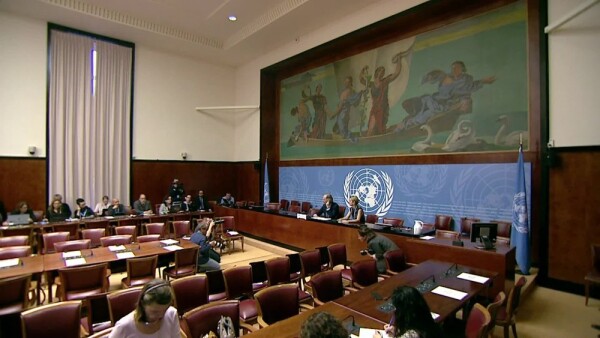
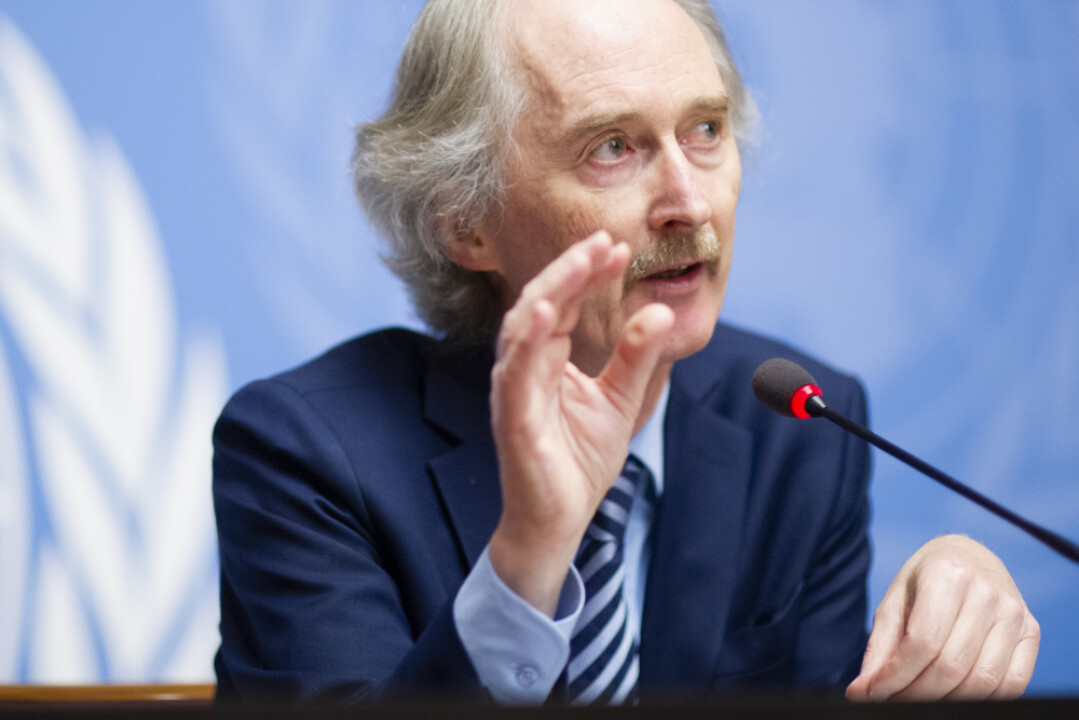
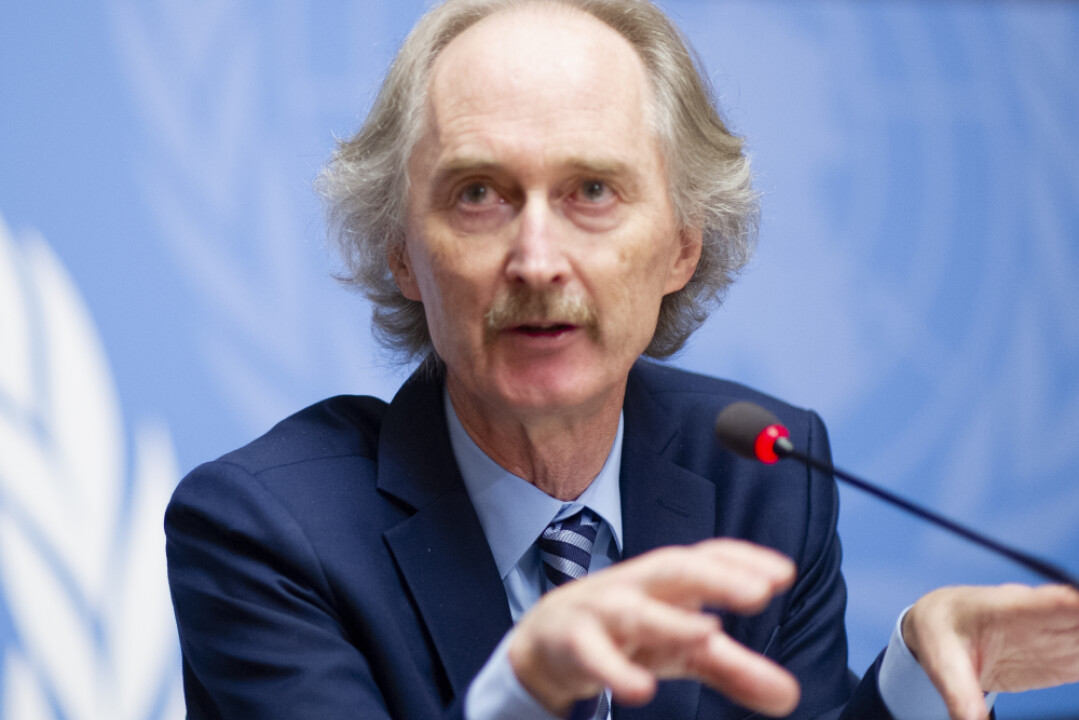
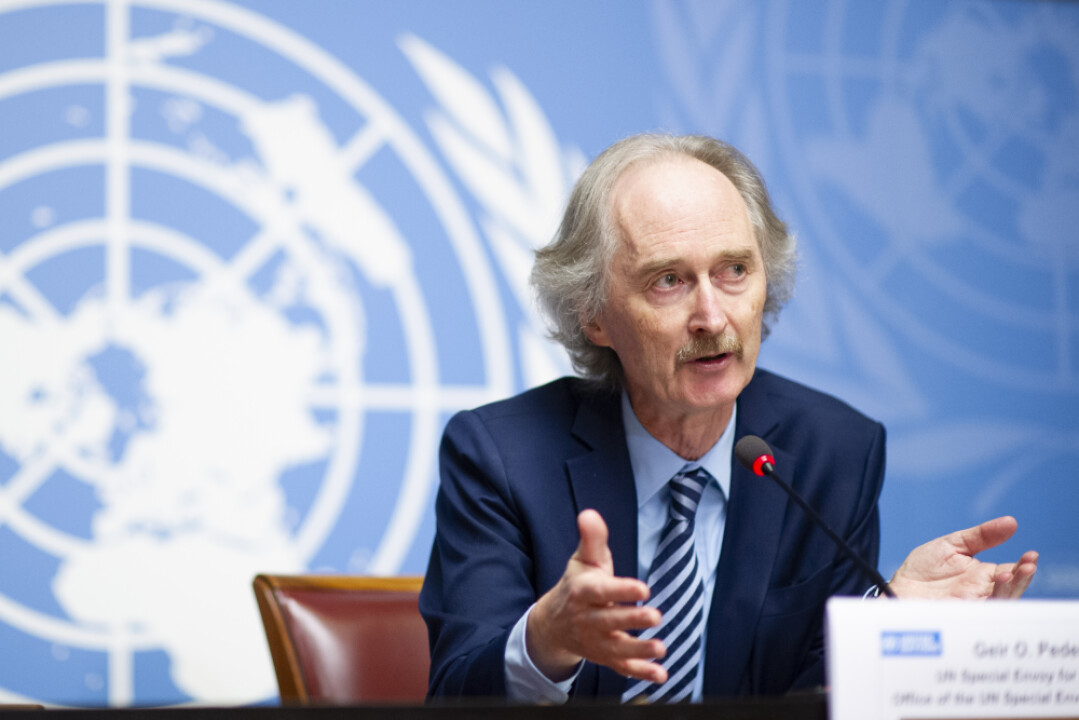
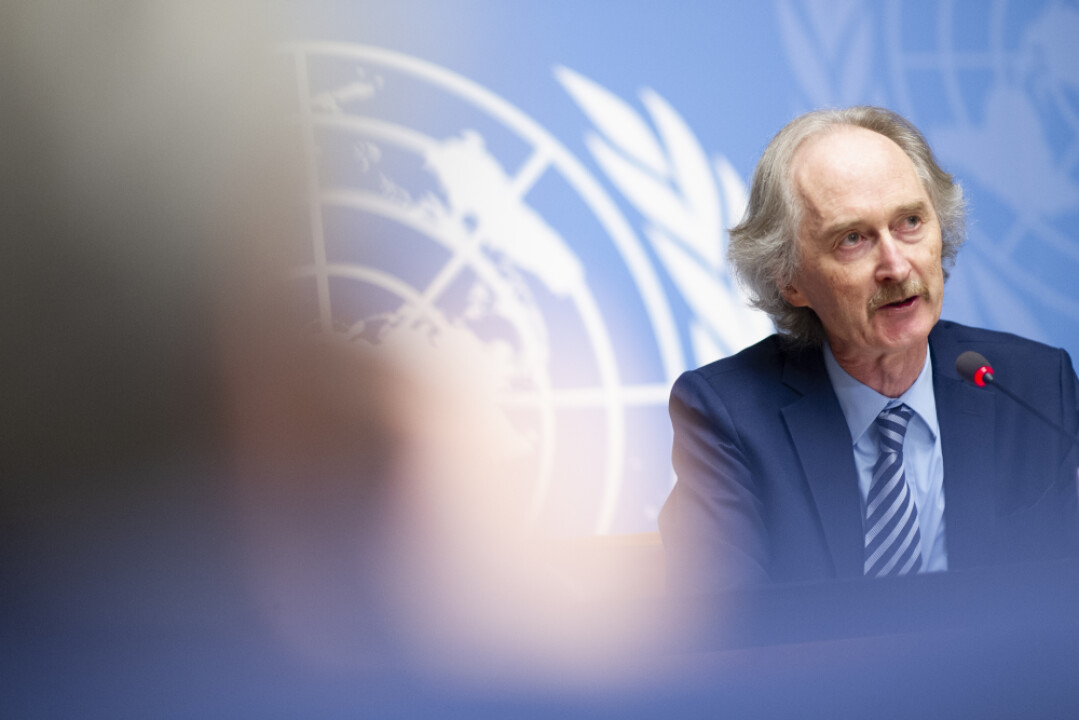
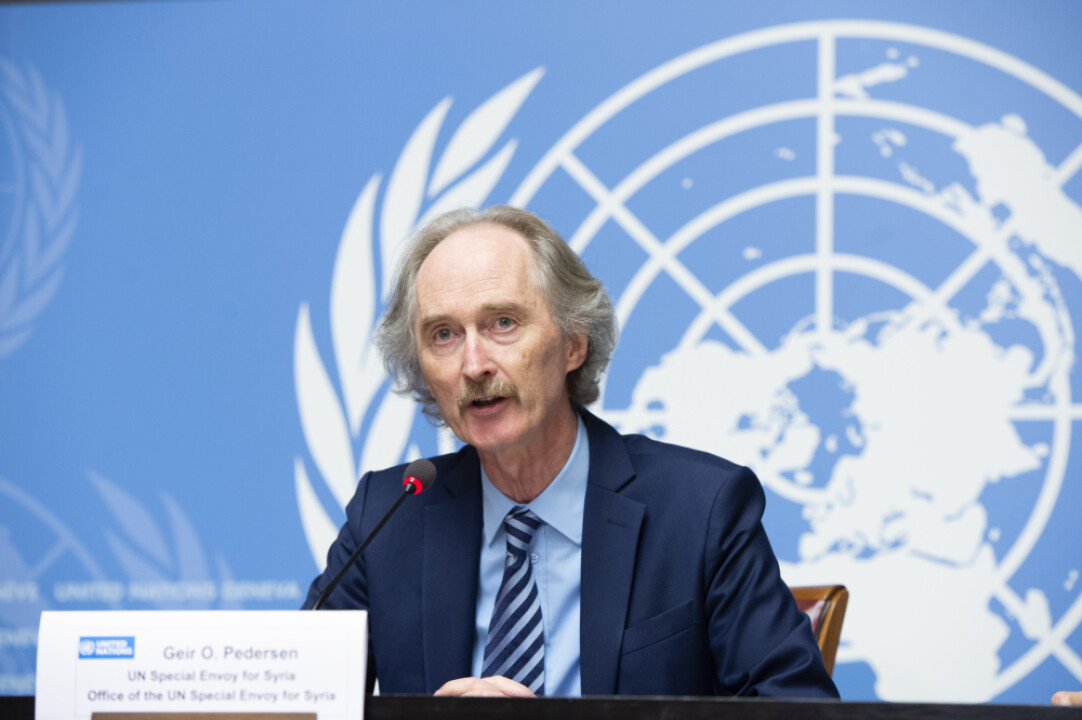
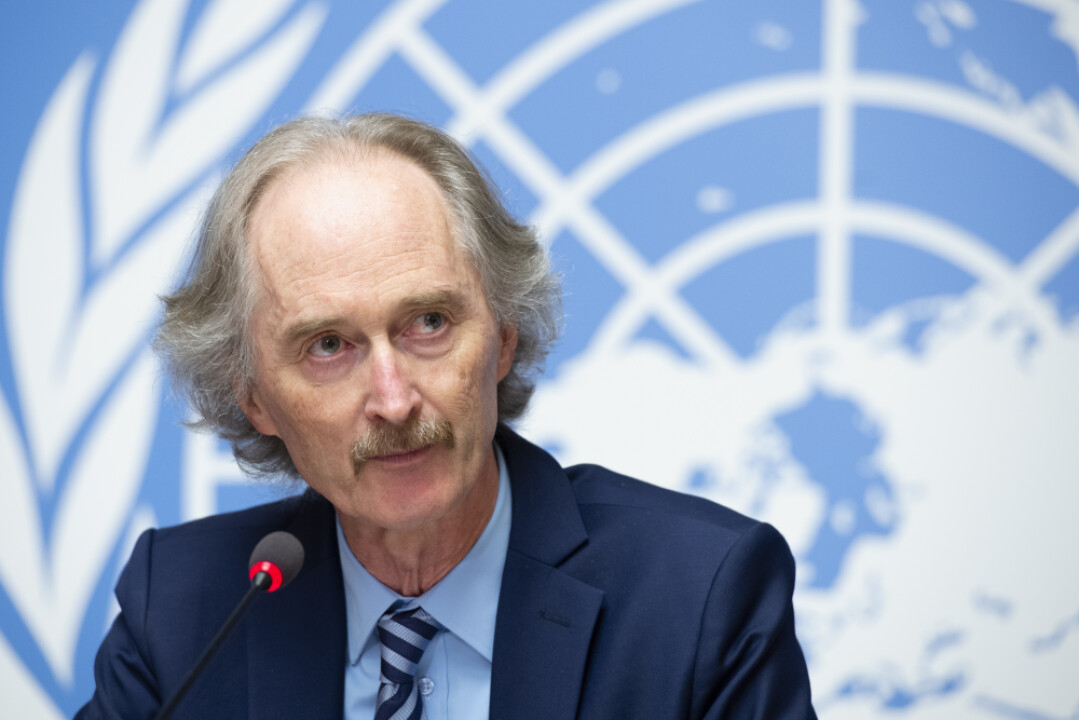
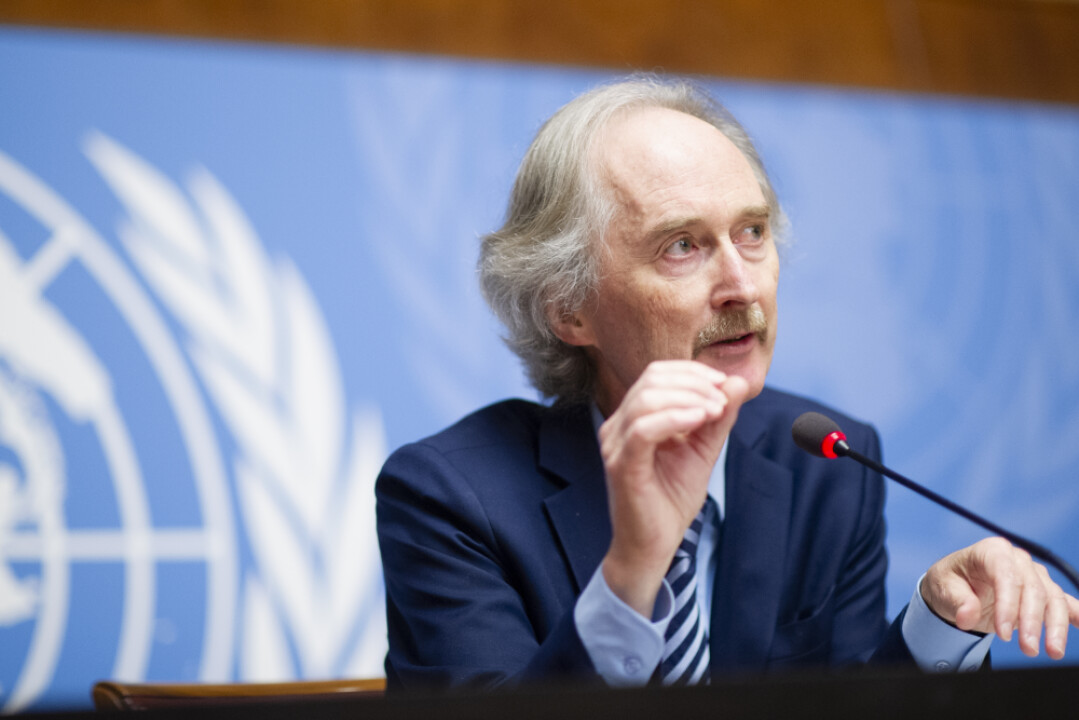
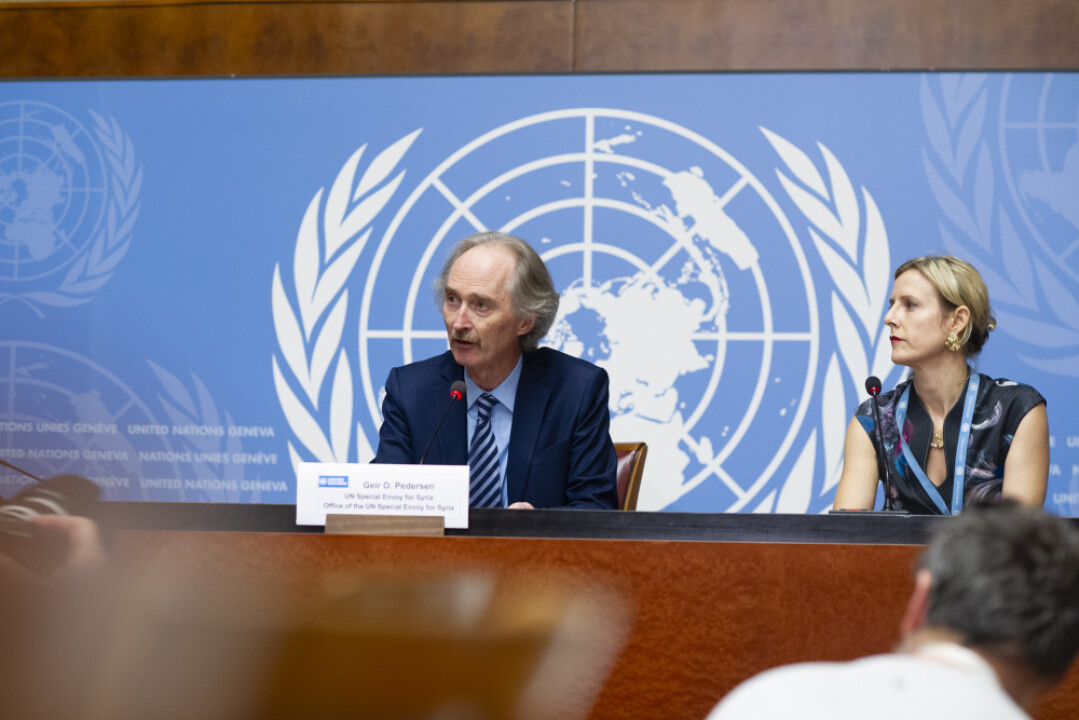
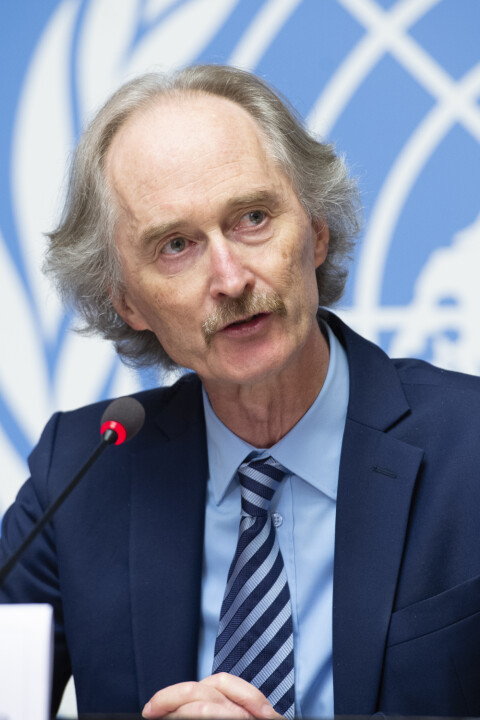
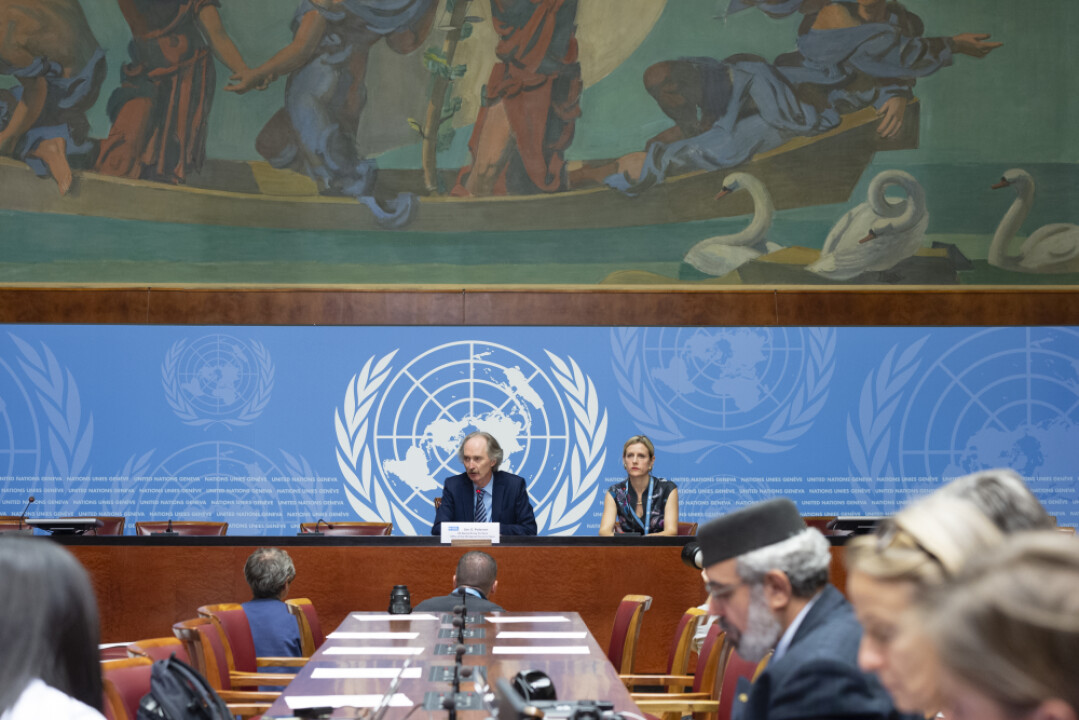
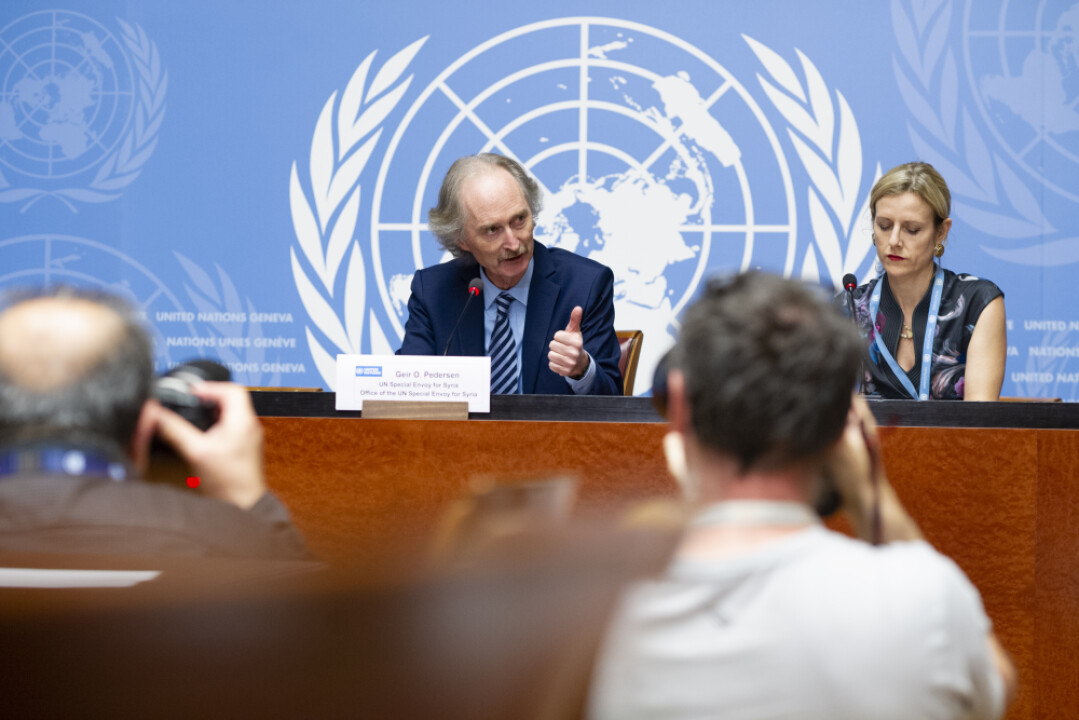
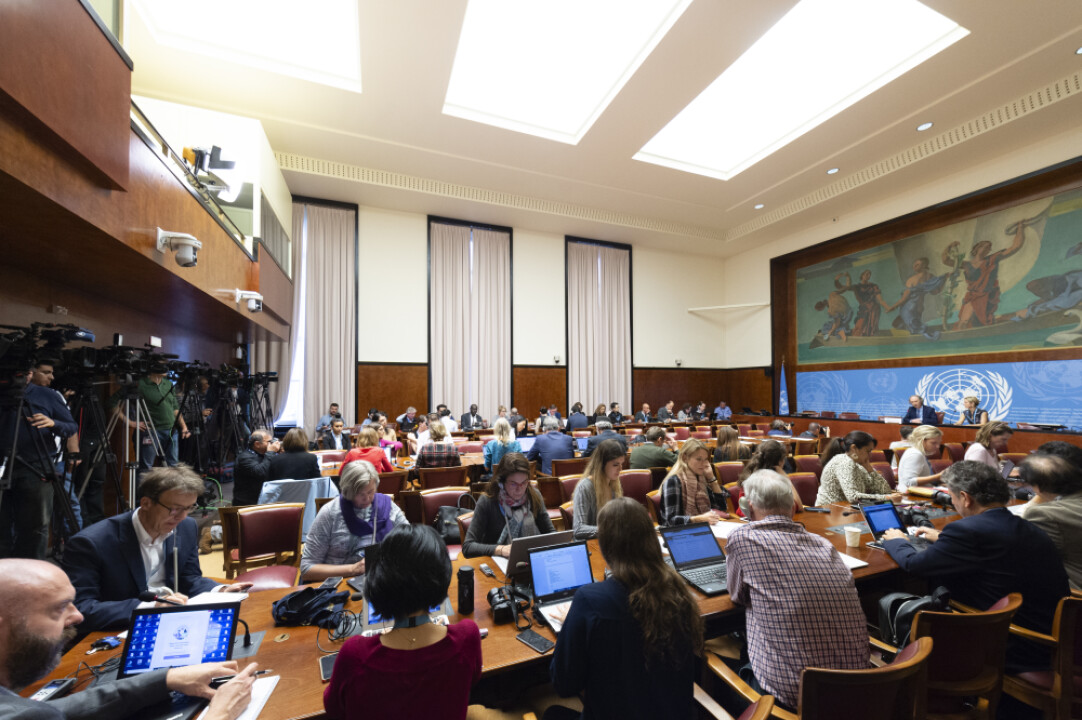
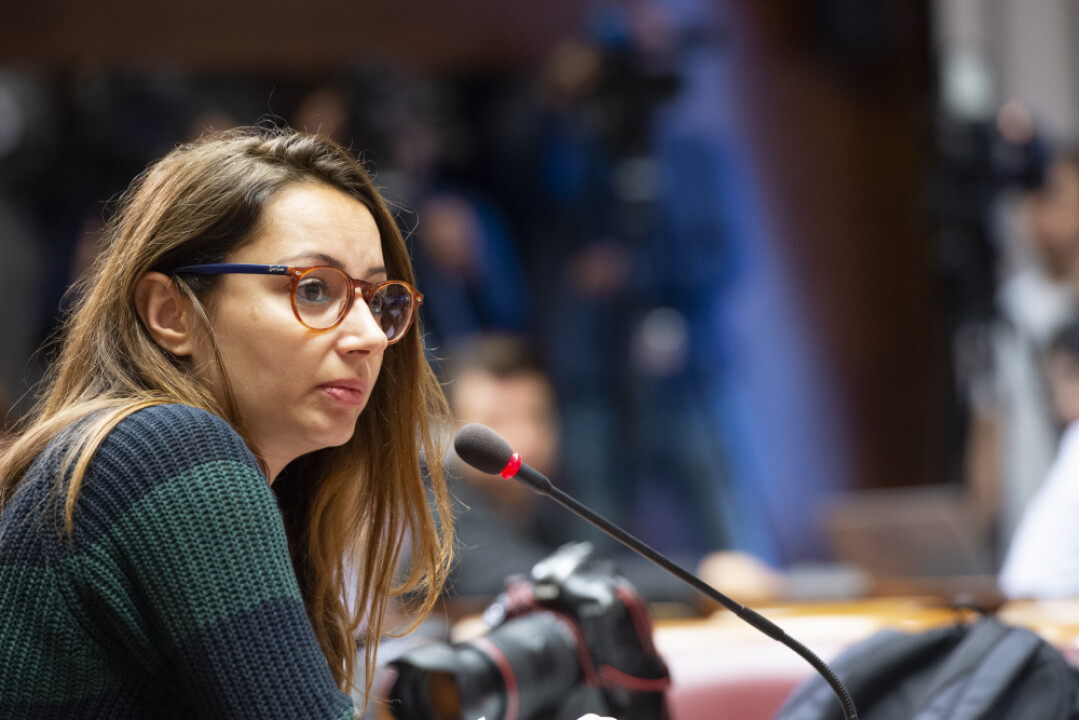
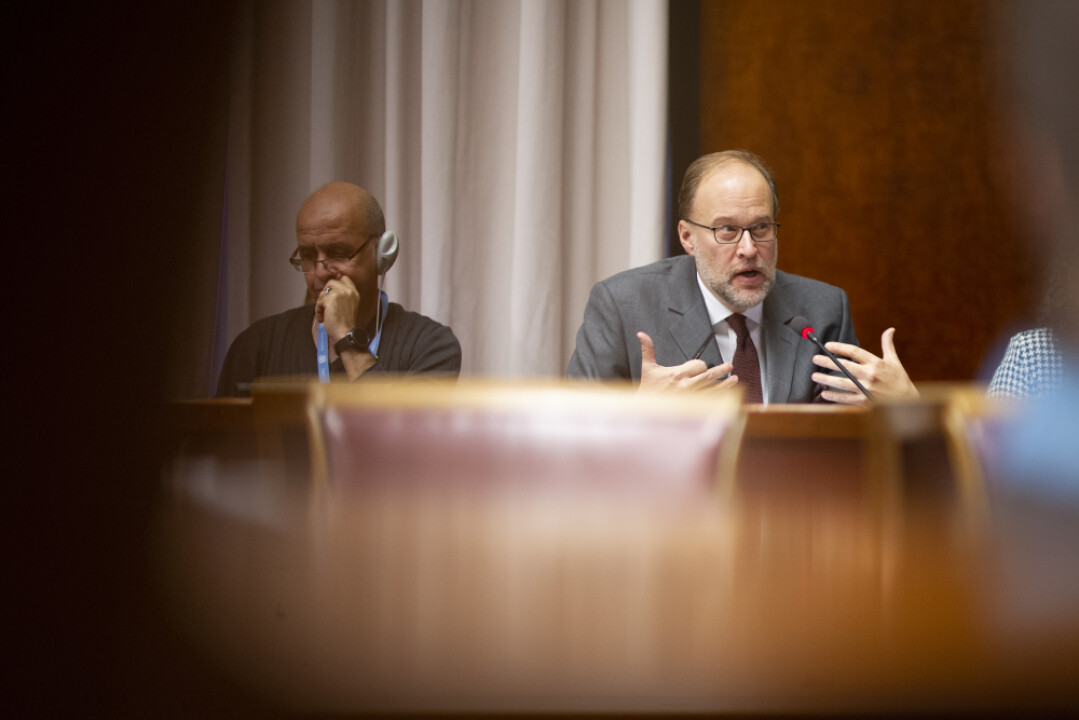
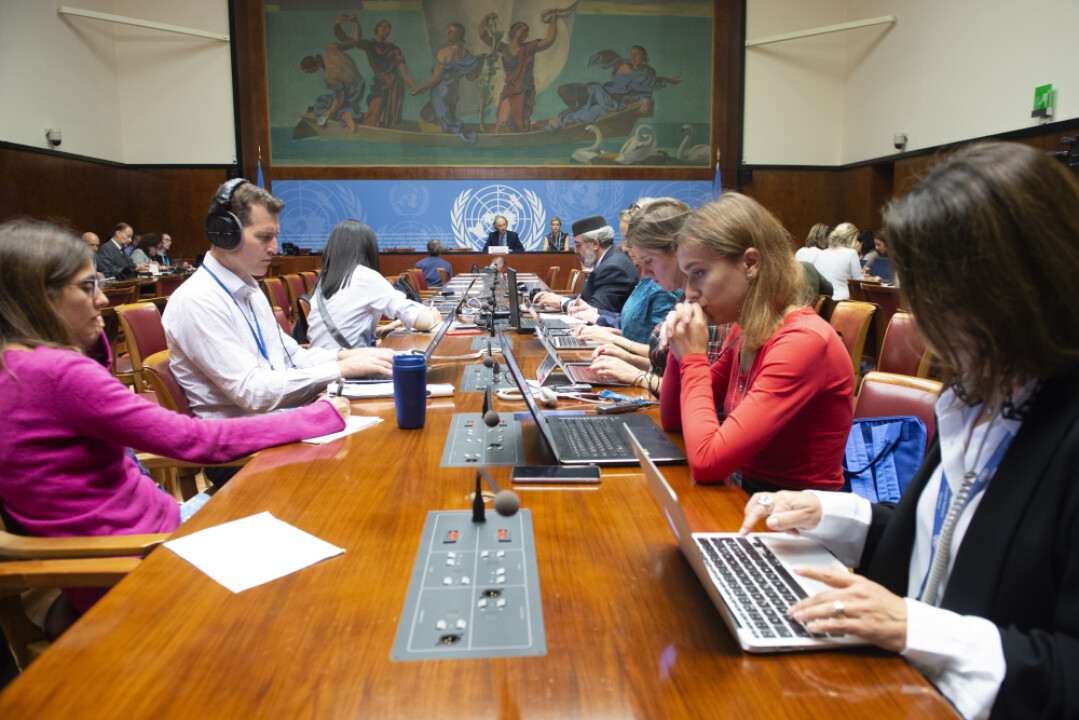
Forty-eight hours before a 150-member Constitutional Committee for Syria meets for the first time in Geneva to try to agree on a new foundational text for the war-ravaged country, UN Special Envoy Geir O. Pedersen on Monday repeated his call for a nationwide ceasefire and the release of prisoners to build trust between belligerents.
“We are strongly appealing for, you know, for the ceasefires to be respected and that we have also been appealing for a nationwide ceasefire to come into effect,” the Special Envoy said, his comments coming two weeks after a Turkish military incursion into north-east Syria that followed the withdrawal of U.S. troops there.
Speaking to journalists in the Swiss city, Mr. Pedersen underscored the significance of the fact that the upcoming meeting marks the first time that representatives from the Government of Syria and opposition groups had “ownership” of a political process that could end more than eight years of brutal conflict that has killed hundreds of thousands and displaced millions inside the country and abroad.
No-one apart from Syrians and the UN would be present for Wednesday’s meeting, he said, before expressing hope of seeing “tangible progress” from the open-ended process.
“The two parties have agreed to work expeditiously and continuously,” he said, referring to Government and opposition delegations that are made up of 50 members each.
A third group of 50 is also slated take part, representing Syrian civil society, with a smaller, 45-person body consisting of 15 Government, 15 opposition and 15 civil society members due to meet subsequently, in order to prepare and draft proposals in line with the UN Charter, Security Council resolutions, Syria’s sovereignty, independence and territorial integrity.
The Special Envoy added that while it was “impossible to say how long it will take for them to conclude its work”, as long as it was done “with serious intentions and we see progress - and as you know I will be reporting to the Security Council - I’m optimistic that we will within the not-too-distant future, that we see a tangible progress in the discussions”.
Such progress should include the release of tens of thousands of Syrians who remain “detained, abducted or missing”, Mr. Pedersen maintained, adding that he had made a special appeal for the early release of women and children.
“I believe that if this would happen, it would send a very powerful signal that we are indeed serious about making a new beginning for Syria,” he insisted.
Describing the Constitutional Committee as “remarkably representative” of Syrian society, Mr. Pedersen confirmed that while there was Kurdish representation, there were no SDF representatives on the Committee, in reference to the Kurdish-led Syrian Democratic Forces that have agreed to pull back from the north-east Syria-Turkey border.
Press remarks by Geir O. Pedersen, United Nations Special Envoy for Syria 28 October 2019 Thank you so much Jenifer and good to see you all. Also, to those who have travelled far, good to see you here in Geneva.
Actually, as we are speaking the 150 members of the Constitutional Committee are arriving here in Geneva.
As you know we have agreed that this is to be a Syrian-led, Syrian-owned Constitutional process– facilitated by the United Nations and I think Jenifer already mentioned it will be launched here on Wednesday, this Wednesday, I will get back to that.
The agreement to establish the Constitutional Committee – with terms of reference and core rules of procedure – marks the first political agreement between the Government of Syria and the opposition. That’s my first point.
My second point is that this marks a clear acceptance of the other as an interlocutor in the political process outlined in Security Council resolution 2254.
And three, it commits the government and the opposition and their nominees to sit together face-to-face in dialogue and negotiations.
And four, it also creates spaces for the voices of civil society and for them to be heard, together with the voices of the government and the opposition.
And last but not the least, it could be a door-opener to a broader political process.
But let me also emphasize, and we have done that from day one, and that is of course that we are very much aware of the fact that the Constitutional Committee alone cannot and will not resolve the Syrian conflict.
The Constitutional Committee can only really matter as a step in the right direction, a step along the difficult path out of this conflict and toward a new Syria.
For that, concrete, tangible progress is needed on other aspects of Security Council resolution 2254; and for that, we need to see meaningful progress on the ground.
And it will matter if it is launched and its work is accompanied by other concrete steps and confidence-building measures among the Syrians themselves and among Syria and the international community.
And as many of you would have known I have appealed from my first day when I took over this job that one issue in particular needs to be addressed and that is the issue about abductees, detainees and missing persons. Tens of thousands of Syrians remain detained, abducted or missing, and I have appealed in particular for the early release of women and children. I believe if this could happen, it will send a very powerful signal that we are indeed serious about making a new beginning for Syria.
Yet for all these caveats, let me emphasize that I do believe that the Constitutional Committee’s launch should be a sign of hope for the long-suffering Syrian people.
The creation of the Constitutional Committee under the auspices of the United Nations is a shared promise to the Syrian people to try in earnest to agree on new constitutional arrangements for Syria’s future – a new social contract to help repair a broken, devastated country.
Let me say a few words about the Constitutional Committee itself. The Constitutional Committee’s work is framed by key principles – including respect for the United Nations charter, relevant Security Council resolutions, Syria’s sovereignty, unity, independence and territorial integrity, and the Syrian-led and -owned nature of the process.
The principles also include the objective of UN supervised elections as envisaged in resolution 2254 based on a new constitution, and the need for a broader political process to implement resolution 2254.
The Committee is mandated, within the context of an UN-facilitated Geneva process, to prepare and draft for popular approval a constitutional reform as a contribution to the political settlement in Syria and the implementation of Security Council resolution 2254. This is now agreed between the government and the opposition.
But above all, let me stress that the future constitution of Syria belongs to the Syrian people and to them alone. It is all about meeting the aspirations of the Syrian people.
Syrians, not outsiders, will draft the constitution. And the Syrian people must popularly approve it.
The United Nations will be there to facilitate the process in a way that ensures its credibility, balance and inclusivity, and to help whenever it is needed. We will deploy our good offices, to provide full secretariat support, and report to the Security Council on progress.
Let me also emphasize that we have aimed at a 30 percent representatives coming from women and that we are indeed very close to achieving that call, that is both for the 150 and for the drafting body of 45.
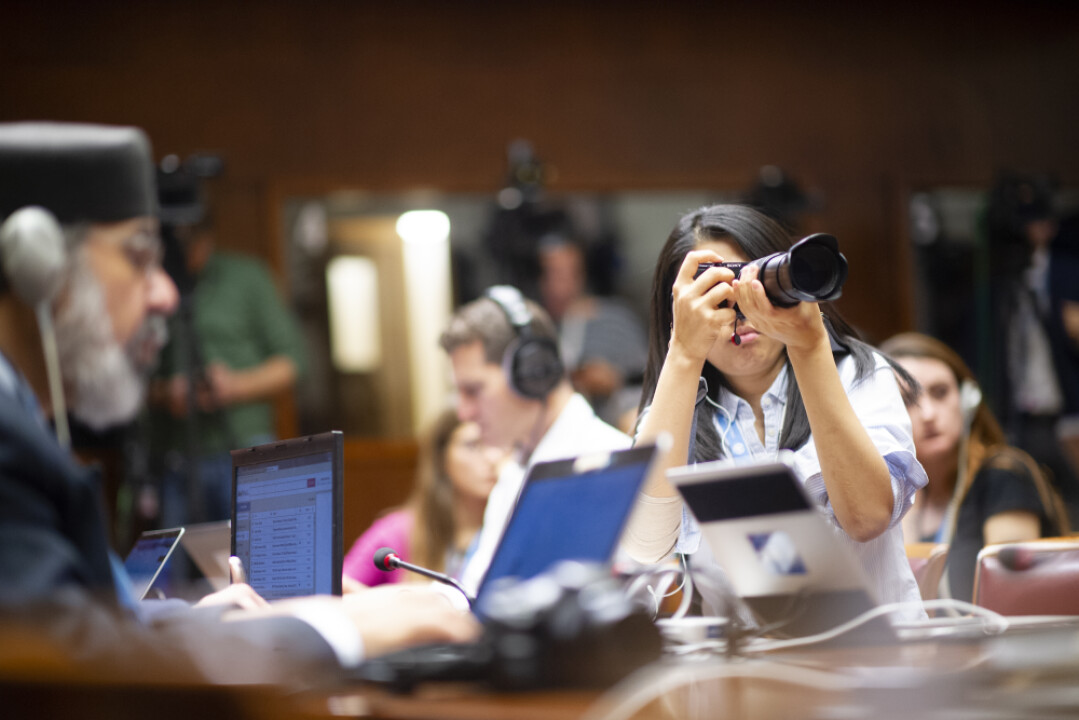
As I said, the Committee will be formally launched on Wednesday the 30 of October at 12 o’clock here in the Palais des Nations at a ceremonial gathering, where the press, of course, will be invited, and it will be myself and the two co-chairs that will then give speeches for the opening.
I then expect that the 150 members will begin their initial discussions the day thereafter on 1 of November.
Thereafter, we aim to have the smaller drafting body of 45 – 15 from the government, 15 from the opposition, 15 from the middle third, that they will then start their work here in Geneva.
As you may know decisions will be taken by consensus, where possible, and otherwise by majority of 75 percent. This of course is to emphasize that no one bloc can dictate the outcomes and it will create, we hope, incentives to reach out to the middle ground and across the divide.
The parties are committed to work expeditiously and continuously to achieve progress and produce real results.
Geneva, 28 October 2019
Thank you so much Jenifer and good to see you all. Also, to those who have travelled far, good to see you here in Geneva.
Actually, as we are speaking the 150 members of the Constitutional Committee are arriving here in Geneva.
As you know we have agreed that this is to be a Syrian-led, Syrian-owned Constitutional process– facilitated by the United Nations and I think Jenifer already mentioned it will be launched here on Wednesday, this Wednesday, I will get back to that.
The agreement to establish the Constitutional Committee – with terms of reference and core rules of procedure – marks the first political agreement between the Government of Syria and the opposition. That’s my first point.
My second point is that this marks a clear acceptance of the other as an interlocutor in the political process outlined in Security Council resolution 2254.
And three, it commits the government and the opposition and their nominees to sit together face-to-face in dialogue and negotiations.
And four, it also creates spaces for the voices of civil society and for them to be heard, together with the voices of the government and the opposition.
And last but not the least, it could be a door-opener to a broader political process.
But let me also emphasize, and we have done that from day one, and that is of course that we are very much aware of the fact that the Constitutional Committee alone cannot and will not resolve the Syrian conflict.
The Constitutional Committee can only really matter as a step in the right direction, a step along the difficult path out of this conflict and toward a new Syria.
For that, concrete, tangible progress is needed on other aspects of Security Council resolution 2254; and for that, we need to see meaningful progress on the ground.
And it will matter if it is launched and its work is accompanied by other concrete steps and confidence-building measures among the Syrians themselves and among Syria and the international community.
And as many of you would have known I have appealed from my first day when I took over this job that one issue in particular needs to be addressed and that is the issue about abductees, detainees and missing persons. Tens of thousands of Syrians remain detained, abducted or missing, and I have appealed in particular for the early release of women and children. I believe if this could happen, it will send a very powerful signal that we are indeed serious about making a new beginning for Syria.
Yet for all these caveats, let me emphasize that I do believe that the Constitutional Committee’s launch should be a sign of hope for the long-suffering Syrian people.
The creation of the Constitutional Committee under the auspices of the United Nations is a shared promise to the Syrian people to try in earnest to agree on new constitutional arrangements for Syria’s future – a new social contract to help repair a broken, devastated country.
Let me say a few words about the Constitutional Committee itself. The Constitutional Committee’s work is framed by key principles – including respect for the United Nations charter, relevant Security Council resolutions, Syria’s sovereignty, unity, independence and territorial integrity, and the Syrian-led and -owned nature of the process.
The principles also include the objective of UN supervised elections as envisaged in resolution 2254 based on a new constitution, and the need for a broader political process to implement resolution 2254.
The Committee is mandated, within the context of an UN-facilitated Geneva process, to prepare and draft for popular approval a constitutional reform as a contribution to the political settlement in Syria and the implementation of Security Council resolution 2254. This is now agreed between the government and the opposition.
But above all, let me stress that the future constitution of Syria belongs to the Syrian people and to them alone. It is all about meeting the aspirations of the Syrian people.
Syrians, not outsiders, will draft the constitution. And the Syrian people must popularly approve it.
The United Nations will be there to facilitate the process in a way that ensures its credibility, balance and inclusivity, and to help whenever it is needed. We will deploy our good offices, to provide full secretariat support, and report to the Security Council on progress.
Let me also emphasize that we have aimed at a 30 percent representatives coming from women and that we are indeed very close to achieving that call, that is both for the 150 and for the drafting body of 45.
As I said, the Committee will be formally launched on Wednesday the 30 of October at 12 o’clock here in the Palais des Nations at a ceremonial gathering, where the press, of course, will be invited, and it will be myself and the two co-chairs that will then give speeches for the opening.
I then expect that the 150 members will begin their initial discussions the day thereafter on 1 of November.
Thereafter, we aim to have the smaller drafting body of 45 – 15 from the government, 15 from the opposition, 15 from the middle third, that they will then start their work here in Geneva.
As you may know decisions will be taken by consensus, where possible, and otherwise by majority of 75 percent. This of course is to emphasize that no one bloc can dictate the outcomes and it will create, we hope, incentives to reach out to the middle ground and across the divide.
The parties are committed to work expeditiously and continuously to achieve progress and produce real results.
Geneva, 28 October 2019
Similar Stories

1
1
1
Press Conferences | IOM , UNDRR
UN stresses importance of household preparedness for disaster risk reduction.

1
1
1
Statements , Press Conferences | OHCHR
1
1
1
Press Conferences | UNHCR , UNICEF , IFRC , OHCHR , UN WOMEN , IOM , OCHA , WHO
UNHCR – ExCom Meeting, UNICEF – Nepal Recovery, IFRC – Flash Floods, WHO – Mental Health, IOM – South Sudan Floods, OCHA – DRC Humanitarian aid, UNHCR – Sahel Displacement, UNICEF – Yemen Update, IOM – Gaza Shelter, UN Women – Gaza Women, OHCHR – Arrests and detentions of Syrians by Israeli force
2
1
2
Press Conferences | UNCTAD
Presentation of the Trade and Developement Report 2026
Embargoed until 9 October 2026 at 11 a.m. (Geneva Time)
UNCTAD: UNCTAD’s flagship report finds that governments increasingly use industrial, trade, financial and technology policies to pursue economic and national security objectives. Market access and the ability to move into higher-value activities now depend more heavily on technology, finance and geopolitics.
1
1
1
Press Conferences | UPU
Release of the State of the Postal Sector Report 2026
1
1
1
Press Conferences | IOM , ITU , UNECE , UNICEF , WHO , WMO
UNICEF: Ebola, DRC - children orphans or separating them from parents and caregivers; IOM: Humanitarian needs in Djibouti amid arrivals from Yemen and increased migrant movements; WHO: Darfur, scale of health needs far exceeds available resources; WMO co-sponsored Global Heat Forum, Bangkok, monthly Global Seasonal Climate Update; UNECE: UN Forum of Mayors; ITU Plenipotentiary Conference 2026; WHO: child and adolescent obesity guidelines and new global roadmap to tackle pregnancy hypertension, a leading cause of maternal mortality
1
1
1
Press Conferences | OCHA , UN WOMEN , UNHCR , WFP , WHO , WTO , UNEP
OCHA – $160M CERF allocation to 12 underfunded crises; UNHCR – 5.8M refugee children remain out of school amid funding cuts; UN Women – Middle East escalation and food security among women/girls; WHO – Gaza supplies and overall situation; WFP – Yemen food insecurity and impact on global hunger ; UNEP - First International Conference of the Global Framework on Chemicals in Geneva | 16-20 November 2026
1
1
1
Press Conferences | UNHCR , WHO
Yemen's health system nears collapse amid conflict, causing rising casualties and medicine shortages.
1
1
1
Press Conferences | HRC
Update by the Expert Mechanism to Advance Racial Justice and Equality in Law Enforcement
1
1
1
Press Conferences | WIPO , WHO , UNICEF , UNHCR , IOM , WFP , FAO
WIPO Global Innovation Index 2026 launch and press conference, WHO Composition of influenza vaccines for the 2027 Southern Hemisphere flu season, UNICEF Yemen hunger and malnutrition; UNHCR Sudan displacement into Chad; IOM Ebola and population movements in DRC; WFP emergency food assistance in Nepal; and FAO food loss and waste.
2
1
2
Press Conferences | UNCTAD
Gaza reconstruction needs reach $71.5 billion as Palestinian economy and public finances face severe strain. Latest UNCTAD report documents the loss of decades of development gains, economic collapse in Gaza and tightening economic constraints in the West Bank.
The report identifies three immediate priorities: transferring withheld Palestinian revenues, safeguarding the banking system and aligning reconstruction support with the documented scale of damage and economic losses.
1
1
1
Press Conferences | HRC
Press conference on the situation of human rights in Nicaragua by the UN Group of Human Rights Experts