

The United Nations Office at Geneva
Multimedia Newsroom
Civilians accounted for 85 per cent of casualties by landmine and explosive remnants of war in 2022, half of them were children
More than 4,710 people were injured or killed by landmines and other explosive remnants in 2022 across 49 states, a UN-backed civil society report said on Tuesday.
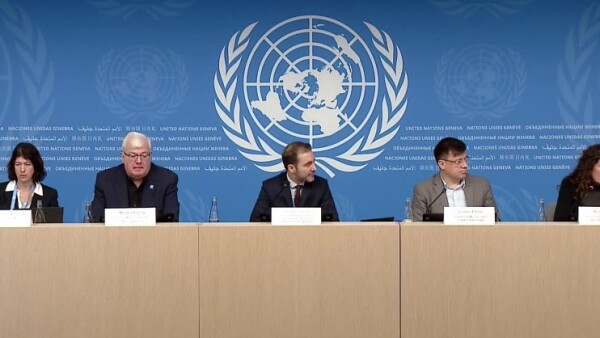
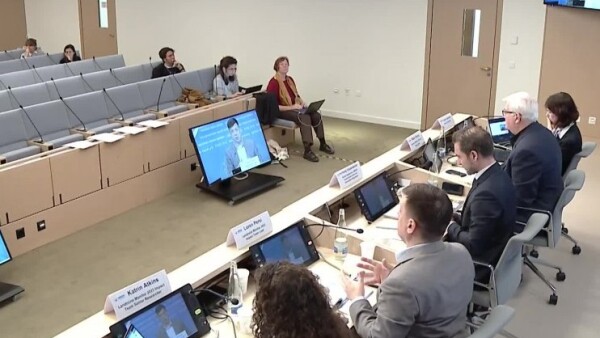
The International Campaign to Ban Landmines (ICBL), a network of over 1,000 NGOs, stated in its latest Landmine Monitor 2023 report that “there were significant increases in some countries, primarily Ukraine, where the number of civilian casualties recorded increased tenfold from around 60 in 2021 to around 600 in 2022,” said Loren Persi, one of the authors of the report, speaking at UN Geneva.
The Landmine Monitor 2023 report has been released ahead of the Mine Ban Treaty’s 21st Meeting of States Parties, which takes place at UN Geneva from 20 to 24 November.
The report states that civilians accounted for 85 per cent of landmine and explosive remnants of war (ERW) casualties recorded in 2022, half of them children (1,171). The highest number of casualties over the course of the year was recorded in Syria (834) and Ukraine (608).
“The effects of landmines and explosive remnants of war continue to mostly harm civilians and particularly children. It was the case that children accounted for basically half of civilian casualties and civilians were the vast majority of casualties in 2022,” said Mr. Persi.
Antipersonnel landmines are explosive devices that kill and wound people during and long after conflicts. They are placed above, under, or on the ground and explode from a person’s presence, proximity, or contact.
Antipersonnel mines are typically placed by hand, but they can also be scattered by aircraft, rockets, and artillery, or dispersed from specialized vehicles.
Amidst the conflict in Ukraine, the country saw a tenfold increase in the number of civilian landmine and ERW casualties compared to 2021 (58), said the report. Yemen and Myanmar both recorded more than 500 casualties in 2022.
New use of the weapon represents one of the greatest challenges to eradicating antipersonnel landmines globally. The 2023 Landmine Monitor report finds that “Ukrainian government forces used anti-personnel mines in violation of the treaty in and around the city of Izium during 2022 when the city was under Russian control.”
Mark Hiznay, Policy Editor of the Landmine Monitor 2023 report, said that Russia had “extensively used anti-personnel mines since its invasion (of Ukraine) in February of 2022. This has created an unprecedented situation where we have a non-State party using the weapon on the territory of a State party.”
In the 20-plus years since the international Ottowa mine ban treaty was signed, “this has really never occurred before”, Mr. Hiznay added.
A total of 30 States Parties have reported clearance of all mined areas from their territory since the Mine Ban Treaty came into force in 1999.
Affected States Parties continued to clear contaminated land in 2022, collectively clearing 219.31km² and destroying 169,276 antipersonnel landmines. Almost 60 per cent of the land cleared in 2022 was cleared in just two countries: Cambodia and Croatia.
However, there are still uncleared landmines in more than 60 countries and territories that destroy livelihoods, deny land use, and disrupt access to essential services.
“At least 60 states or other areas, including 33 state parties that are contaminated by anti-personnel landmines,” said Katrin Atkins, Landmine Monitor 2023 Impact Team Senior Researcher. “We also have ten states parties that should provide more information with regard to a possible or a confirmed contamination with improvised mines.”
Adopted on 18 September 1997, the Mine Ban Treaty prohibits the use, stockpiling, production and transfer of antipersonnel mines and requires victim assistance, mine clearance and stockpile destruction. Currently there are 164 States Parties to the treaty; the last countries to join it were Palestine and Sri Lanka in 2017.
-ends-
STORY: UNIDIR - Press Conference - 14 November 2023
TRT: 2:36”
SOURCE: UNTV CH
LANGUAGE: ENGLISH
ASPECT RATIO: 16:9
DATELINE: 14 November 2023 - GENEVA, SWITZERLAND
SHOTLIST
- Exterior medium shot: UN building with UN flag, UN Geneva.
- Wide shot, press briefing room with journalists and screens, UN Geneva
- SOUNDBITE (ENGLISH) – Loren Persi, Landmine Monitor 2023 Impact Team Lead: “In the previous year there was 4,710 casualties recorded. It was down from 5,544. But there were significant increases in some countries, primarily Ukraine. And in Ukraine, the number of civilian casualties recorded increased tenfold from around 60 in 2021 to around 600 in 2022.”
- Cutaway: Close up, journalist listening, UN Geneva
- SOUNDBITE (ENGLISH) – Loren Persi, Landmine Monitor 2023 Impact Team Lead: “The effects of landmines and explosive remnants of war continue to mostly harm civilians and particularly children. And it was the case that children accounted for basically half of civilian casualties and civilians were the vast majority of casualties in 2022.”
- Cutaway: Medium shot, podium and speakers, UN Geneva
- SOUNDBITE (ENGLISH) - Mark Hiznay, Landmine Monitor 2023 Ban Policy Editor: “Ukrainian government forces used anti-personnel mines in violation of the treaty in and around the city of Izium during 2022 when the city was under Russian control.”
- Cutaway: Close up, journalist listening, UN Geneva
- SOUNDBITE (ENGLISH) – Mark Hiznay, Landmine Monitor 2023 Ban Policy Editor: “Russia has extensively used anti-personnel mines since its invasion in February of 2022. This has created an unprecedented situation where we have a non-state party using the weapon on the territory of a state party. In the 20 plus years, this has really never occurred before.”
- Cutaway: Wide shot, press briefing room with journalists and screens, UN Geneva
- SOUNDBITE (ENGLISH) – Katrin Atkins, Landmine Monitor 2023 Impact Team Senior Researcher: “At least 60 states or other areas, including 33 state parties that are contaminated by anti-personnel landmines. We also have ten states parties that should provide more information with regard to a possible or a confirmed contamination with improvised mines.”
- Cutaway: Medium shot, podium and speakers, UN Geneva
- Cutaway: medium shot, journalist listening, UN Geneva
- Cutaway: Wide shot, press briefing room with journalists and screens, UN Geneva
Similar Stories

1
1
1
Edited News | UNICEF , IFRC
Six weeks after Nepal’s deadly flooding disaster, communities are still struggling to rebuild their lives, but they will need sustained help as global warming increases the risk of another Himalayan catastrophe, the UN Children’s Fund (UNICEF) said on Friday.

1
1
1
Statements , Press Conferences | OHCHR
1
1
1
Press Conferences | UNHCR , UNICEF , IFRC , OHCHR , UN WOMEN , IOM , OCHA , WHO
UNHCR – ExCom Meeting, UNICEF – Nepal Recovery, IFRC – Flash Floods, WHO – Mental Health, IOM – South Sudan Floods, OCHA – DRC Humanitarian aid, UNHCR – Sahel Displacement, UNICEF – Yemen Update, IOM – Gaza Shelter, UN Women – Gaza Women, OHCHR – Arrests and detentions of Syrians by Israeli force
2
1
2
Press Conferences | UNCTAD
Presentation of the Trade and Developement Report 2026
Embargoed until 9 October 2026 at 11 a.m. (Geneva Time)
UNCTAD: UNCTAD’s flagship report finds that governments increasingly use industrial, trade, financial and technology policies to pursue economic and national security objectives. Market access and the ability to move into higher-value activities now depend more heavily on technology, finance and geopolitics.
1
1
1
Press Conferences | UPU
Release of the State of the Postal Sector Report 2026

1
1
1
Edited News | WHO
In suspected Russia plague death, testing and monitoring underway – WHO
The death of a lab worker in Russia’s Siberia region has sparked concerns about plague being the cause, the UN World Health Organization (WHO) said on Tuesday, adding that it was following the situation closely.
1
1
1
Press Conferences | IOM , ITU , UNECE , UNICEF , WHO , WMO
UNICEF: Ebola, DRC - children orphans or separating them from parents and caregivers; IOM: Humanitarian needs in Djibouti amid arrivals from Yemen and increased migrant movements; WHO: Darfur, scale of health needs far exceeds available resources; WMO co-sponsored Global Heat Forum, Bangkok, monthly Global Seasonal Climate Update; UNECE: UN Forum of Mayors; ITU Plenipotentiary Conference 2026; WHO: child and adolescent obesity guidelines and new global roadmap to tackle pregnancy hypertension, a leading cause of maternal mortality

1
1
Edited News | OHCHR , UNOG
UN Human Rights Chief Volker Türk on Friday provided and oral update to the 63rd session of the Human rights Council on Ukraine.

1
1
1
Edited News | OHCHR , UNOG
UN Human Rights Chief Volker Türk on Friday provided and oral update to the 63rd session of the Human rights Council on the human rights situation in Haiti.

1
1
1
Edited News | WHO
Repeated delays in bringing lifesaving medicines, prosthetics and more from Israel into Gaza risk having devastating consequences on Palestinians who urgently need them in the wartorn enclave, the UN World Health Organization (WHO) said on Friday. “A truck full of non-priority supplies or the right supplies arriving too late, doesn't save lives. That's the question that actually matters," said Dr Reinhilde Van De Weerdt, WHO Representative in the OPT.
1
1
1
Press Conferences | OCHA , UN WOMEN , UNHCR , WFP , WHO , WTO , UNEP
OCHA – $160M CERF allocation to 12 underfunded crises; UNHCR – 5.8M refugee children remain out of school amid funding cuts; UN Women – Middle East escalation and food security among women/girls; WHO – Gaza supplies and overall situation; WFP – Yemen food insecurity and impact on global hunger ; UNEP - First International Conference of the Global Framework on Chemicals in Geneva | 16-20 November 2026

1
1
1
Edited News | WHO
DRC: Early access to care and oxygen decisive for Ebola patients’ survival – WHO
In the Democratic Republic of the Congo (DRC), health workers fighting the country’s largest-ever Ebola outbreak are struggling to overcome critical challenges to patient care, the UN World Health Organization (WHO) warned on Tuesday.