

The United Nations Office at Geneva
Multimedia Newsroom
Edited News | OHCHR , UNOG
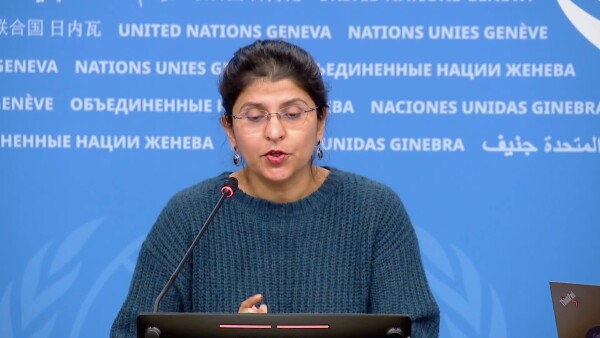
UN Human Rights briefing on Israel -OPT by Ravina Shamdasani, 27 October 2023
“For almost three weeks now, Palestinian civilians in Gaza have endured relentless bombing by Israel from air, land and sea. Thousands dead, lying dead amongst destroyed residential buildings, mosques and bakeries. We receive harrowing testimony of entire families killed by airstrikes on their homes including the families of our own staff members. Of parents writing children’s names on their arms to identify their future remains. Of the terrifying, sleepless nights people are spending in the open air, as airstrikes continue overhead. We mourn the loss of UN colleagues and so many more civilians who are clearly, disproportionately impacted,”she said.
“Despite its repeated orders to residents of northern Gaza to move to the south, suggesting it is safe, Israeli Forces’ strikes on two southern Governorates and Middle Gaza intensified in recent days. Meanwhile, heavy strikes on northern communities, including in Gaza city, continue. Nowhere is safe in Gaza,” Shamdasani said.
“Compelling people to evacuate, including to places such as “the Israeli designated area” of Al Mawasi, and while under a complete siege raises serious concerns over forcible transfer, which is a war crime,”she said.
“Israel’s use of explosive weapons with wide area effects in densely populated areas has caused extensive damage to civilian infrastructure and loss of civilian lives that, by all appearances, is difficult to reconcile with international humanitarian law,” the spokesperson said.
“Collective punishment is occurring through the choking off of water, food, fuel and electricity. Fuel shortages forcing the closure of hospitals and bakeries. People forced into shelters in increasingly dire conditions; overcrowded, with poor sanitation and unsafe drinking water, bringing forward the specter of disease outbreak. A humanitarian catastrophe unfolds for the 2.2 million people locked inside Gaza who are being collectively punished,” Shamdasani said.
“Collective punishment is a war crime. Israel’s collective punishment of the entire population of Gaza must immediately cease. The use of dehumanizing language against Palestinians must also be halted,” she said.
“Indiscriminate attacks by Palestinian armed groups, including through the launching of unguided rockets into Israel, must stop. They must immediately and unconditionally release all civilians who were captured and are still being held. The taking of hostages is also a war crime,” the spokesperson said.
“The High Commissioner is appealing for efforts to seek human rights-based, lasting pathways towards peace for the people of Palestine and Israel. Efforts must be made to bring this escalation to an immediate end. It is of utmost importance that all those with influence negotiate a way out of this protracted, disastrous situation,”she said.
“Peace, security and justice will not be found down this current path. The cycle of vengeance and bloodshed needs to end,” she said.
ENDS
For more information and media requests, please contact:
In Geneva
Ravina Shamdasani - + 41 22 917 9169 / ravina.shamdasani@un.org or
Marta Hurtado - + 41 22 917 9466 / marta.hurtadogomez@un.org
In Nairobi
Seif Magango - +254 788 343 897 / seif.magango@un.org
Tag and share
Twitter @UNHumanRights
Facebook unitednationshumanrights
Instagram @unitednationshumanrights
STORY: UN Human Rights Briefing by Ravina Shamdasani on Israel-OPT
TRT: 03:58
SOURCE: UNTV / OHCHR
RESTRICTIONS: NONE
LANGUAGE: English/NATS
ASPECT RATIO: 16:9
DATELINE: 27 October 2023 GENEVA, SWITZERLAND
SHOTLIST
- Exterior shot: Palais des Nations, Geneva.
- Wide shot: Briefing room
- Soundbite (English)— Ravina Shamdasani, spokesperson, UN Human Rights: “UN High Commissioner for Human Rights Volker Türk is appealing to all sides to heed the calls for peace. The violence needs to end and there need to be strong efforts to seek an alternative to this carnage.”
- Cutaways: Briefing room
- Soundbite (English)— Ravina Shamdasani, spokesperson, UN Human Rights: “For almost three weeks now, Palestinian civilians in Gaza have endured relentless bombing by Israel from air, land and sea. Thousands dead, lying dead amongst destroyed residential buildings, mosques and bakeries. We receive harrowing testimony of entire families killed by airstrikes on their homes including the families of our own staff members. Of parents writing children’s names on their arms to identify their future remains. Of the terrifying, sleepless nights people are spending in the open air, as airstrikes continue overhead. We mourn the loss of UN colleagues and so many more civilians who are clearly, disproportionately impacted.”
- Cutaways: Briefing room
- Soundbite (English)— Ravina Shamdasani, spokesperson, UN Human Rights: “Despite its repeated orders to residents of northern Gaza to move to the south, suggesting it is safe, Israeli Forces’ strikes on two southern Governorates and Middle Gaza intensified in recent days. Meanwhile, heavy strikes on northern communities, including in Gaza city, continue. Nowhere is safe in Gaza.”
- Cutaways: Briefing room
- Soundbite (English)— Ravina Shamdasani, spokesperson, UN Human Rights: “Compelling people to evacuate, including to places such as “the Israeli designated area” of Al Mawasi, and while under a complete siege raises serious concerns over forcible transfer, which is a war crime.”
- Cutaways: Briefing room
- Soundbite (English)— Ravina Shamdasani, spokesperson, UN Human Rights: “Israel’s use of explosive weapons with wide area effects in densely populated areas has caused extensive damage to civilian infrastructure and loss of civilian lives that, by all appearances, is difficult to reconcile with international humanitarian law.”
- Cutaways: Briefing room
- Soundbite (English)— Ravina Shamdasani, spokesperson, UN Human Rights: “Collective punishment is occurring through the choking off of water, food, fuel and electricity. Fuel shortages forcing the closure of hospitals and bakeries. People forced into shelters in increasingly dire conditions; overcrowded, with poor sanitation and unsafe drinking water, bringing forward the specter of disease outbreak. A humanitarian catastrophe unfolds for the 2.2 million people locked inside Gaza who are being collectively punished.”
- Cutaways: Briefing room
- Soundbite (English)— Ravina Shamdasani, spokesperson, UN Human Rights: “Collective punishment is a war crime. Israel’s collective punishment of the entire population of Gaza must immediately cease. The use of dehumanizing language against Palestinians must also be halted.”
- Cutaways: Briefing room
- Soundbite (English)— Ravina Shamdasani, spokesperson, UN Human Rights: ““Indiscriminate attacks by Palestinian armed groups, including through the launching of unguided rockets into Israel, must stop. They must immediately and unconditionally release all civilians who were captured and are still being held. The taking of hostages is also a war crime.”
- Cutaways: Briefing room
- Soundbite (English)— Ravina Shamdasani, spokesperson, UN Human Rights: “The High Commissioner is appealing for efforts to seek human rights-based, lasting pathways towards peace for the people of Palestine and Israel. Efforts must be made to bring this escalation to an immediate end. It is of utmost importance that all those with influence negotiate a way out of this protracted, disastrous situation.”
- Cutaways: Briefing room
- Soundbite (English)— Ravina Shamdasani, spokesperson, UN Human Rights: “Peace, security and justice will not be found down this current path. The cycle of vengeance and bloodshed needs to end.”
Similar Stories
1
1
1
Edited News | OCHA , UNICEF , WFP
Aid agencies warned on Friday of the fast-developing humanitarian emergency inside Taiz City in Yemen, which has been encircled by de facto Houthi forces fighting government troops along the country’s west coast.

2
17
1
2
Edited News , Press Conferences , Images | OCHA , WMO
Two UN agencies teamed up on Wednesday to issue an appeal for immediate assistance to help communities already being impacted by the strongest El Niño on record.

3
16
2
2
Edited News , B-roll , Conferences , Images | UNITED NATIONS , UNOG
Sixth Consultative Meeting on Enhancing Coordination of Peace Initiatives and Efforts for Sudan

1
1
1
Edited News | UNICEF , WHO , UNHCR
Yemen war continues to force families from homes amid hunger and disease
More than 250,000 people have now fled renewed fighting in Yemen, the UN said on Tuesday, citing particular concern for those sheltering in the southwestern city of Taiz and the wider governorate, where access is “essentially blocked”.

1
1
1
Edited News | UNICEF
A little over one year since a ceasefire agreement was announced between Hamas fighters and Israel, more than 340 children have been reported killed and hundreds more injured, the UN Children’s Fund, UNICEF, said on Friday.

1
1
1
Edited News | UNICEF , IFRC
Six weeks after Nepal’s deadly flooding disaster, communities are still struggling to rebuild their lives, but they will need sustained help as global warming increases the risk of another Himalayan catastrophe, the UN Children’s Fund (UNICEF) said on Friday.

1
1
1
Edited News | WHO
In suspected Russia plague death, testing and monitoring underway – WHO
The death of a lab worker in Russia’s Siberia region has sparked concerns about plague being the cause, the UN World Health Organization (WHO) said on Tuesday, adding that it was following the situation closely.

1
1
Edited News | OHCHR , UNOG
UN Human Rights Chief Volker Türk on Friday provided and oral update to the 63rd session of the Human rights Council on Ukraine.

1
1
1
Edited News | OHCHR , UNOG
UN Human Rights Chief Volker Türk on Friday provided and oral update to the 63rd session of the Human rights Council on the human rights situation in Haiti.

1
1
1
Edited News | WHO
Repeated delays in bringing lifesaving medicines, prosthetics and more from Israel into Gaza risk having devastating consequences on Palestinians who urgently need them in the wartorn enclave, the UN World Health Organization (WHO) said on Friday. “A truck full of non-priority supplies or the right supplies arriving too late, doesn't save lives. That's the question that actually matters," said Dr Reinhilde Van De Weerdt, WHO Representative in the OPT.

1
1
1
Edited News | WHO
DRC: Early access to care and oxygen decisive for Ebola patients’ survival – WHO
In the Democratic Republic of the Congo (DRC), health workers fighting the country’s largest-ever Ebola outbreak are struggling to overcome critical challenges to patient care, the UN World Health Organization (WHO) warned on Tuesday.

1
1
1
Edited News | OCHA , UN
Civilians in Iran are continuing to feel the consequences of months of conflict and military escalation, the UN’s top official in the country has said, as loss of life, damage to civilian infrastructure and mounting economic pressures leave many facing continued uncertainty.