

The United Nations Office at Geneva
Multimedia Newsroom
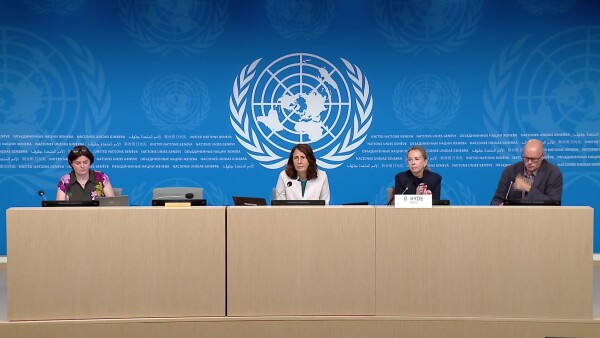
PRESS BRIEFING BY THE UNITED NATIONS INFORMATION SERVICE
24 October 2023
Dire humanitarian situation in Gaza
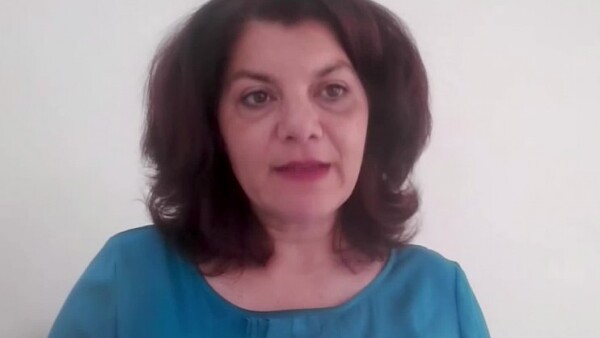
Tamara Alrifai, for the United Nations Relief and Works Agency (UNRWA), speaking from Amman, said that since 21 October, three convoys of humanitarian supplies had gone into the Gaza Strip with a total of 54 trucks. This breakthrough had come through after two weeks of a full siege of the Strip. The convoys had been organized on the Egyptian side with the help of the Egyptian Red Crescent, and on the Gaza side the receipt of the convoys had been handled by UNRWA. UNRWA called for the lifting of the humanitarian siege and continuous and unimpeded humanitarian access to the Strip. The convoys had brought in a combination of food, non-food, and medical items. Fuel was now urgently needed, stressed Ms. Alrifai. Without it, generators could not produce electricity for hospitals and bakeries, and the sea water could not be desalinated. With nearly 400,000 internally displaced persons, there were serious public health risks, further aggravated by the lack of access to clean water.
UNRWA deplored the loss of its 35 staff who had been simply doing their jobs. The IDPs in the UNRWA premises would soon be needing winter clothes; because of the overcrowding, many were sleeping in the courtyards, which would make it very difficult when the winter hit. UNRWA, in cooperation with the World Food Programme, had been distributing bread and wheat flour to the bakeries, but fuel was really of critical importance, stressed Ms. Alrifai, and called once again for an unimpeded, continuous flow of humanitarian assistance to Gaza. The trucks that had arrived so far were only a trickle of what was needed in total.
Dr. Rick Brennan, World Health Organization (WHO) Regional Emergencies Director for Eastern Mediterranean Region, speaking from Cairo, said that the ongoing bombardment of Gaza had resulted in over 5,000 deaths, half of which could be women and children. One third of all hospitals were now not functioning. Not only were the health facilities and workers overwhelmed by the large number of injuries, but the disruption of the health system also meant that people with chronic diseases were finding it more and more difficult to access services they needed, and it was expected that their mortality rate would also increase. An estimated 150 to 200 women were giving birth every day; women experiencing difficulties while giving birth were at particular risk, noted Dr. Brennan. Some 1.4 million people were now acutely displaced; it was unprecedented that such a large number of people had been displaced over such a short time. This was an incredibly difficult situation; displaced people had only one to three liters of clean water per person per day; the bare minimum, according to international standards, stood at 15 liters. There was a real worry of the spread of infectious diseases, which could be just a matter of time.
Civilians were going through an unimaginably catastrophic situation, which seemed to be getting only worse. The 54 trucks that had arrived in the Strip were indeed only a trickle of what was needed. WHO had been able to deliver medical supplies to only three hospitals and two clinics to date, in what had been an incredibly difficult logistical operation. There were huge security risks to the WHO personnel trying to deliver those supplies, and hospitals in the north could not be reached yet. Having fuel was absolutely essential for the functioning of hospitals and ambulances, stressed Dr. Brennan. WHO was pleading for a sustained, scaled-up, protected humanitarian operation. All actors were asked to provide sufficient humanitarian space in order to avert a further catastrophe.
Responding to numerous questions from journalists, Dr. Brennan stated that there were several factors at play making the access into the Gaza Strip more difficult. The verification process at the border crossing was thorough and it was hoped that would become more efficient. Logistics operations within the Strip were also difficult, as there was no active deconfliction protocol in place to guarantee secure, safe passage, especially to the north. He explained that dead bodies as such normally did not represent a significant health risk to the population; it was important to give people dignified burials, in a culturally appropriate way. Problems could arise if decaying bodies got in touch with fresh water sources. Water supply in Gaza was largely dependent on the functioning of the desalination plants; water was a lifeline, and fuel was needed to keep the desalination plants working. On another question, Dr. Brennan said that the WHO was working with UNRWA to establish a system of disease surveillance in UNRWA schools and clinics. The most common infectious disease right now was the respiratory tract infection; chickenpox cases had also been reported, and skin infections were to be expected. For a cholera outbreak to occur, the bacteria needed to be present in the community, which had not been the case in Gaza for many years, but it was not inconceivable as there had been cholera outbreaks in other countries in the region in recent years. There had been no movement of medical or other humanitarian personnel into Gaza thus far, confirmed Dr. Brennan; that could change once the access was provided and security was assured. The medical supplies that had arrived in Gaza consisted of prioritized items, he informed responding to another question. The referral system of transporting gravely ill patients from Gaza to Jerusalem hospitals had been put on hold since the start of the current conflict. Increased acute malnutrition, especially for children under five, could become an issue of concern, stated Dr. Brennan, who also confirmed that there were discussions with the Egyptian authorities on the reception of injured patients from the Gaza Strip.
Ms. Alrifai, answering questions, said that before the conflict, 500 trucks had been arriving to the Gaza Strip every day, a combination of commercial and humanitarian cargo, and coming in both from Israel and Egypt. Fifteen to twenty trucks that had arrived in Gaza per day over the previous three days were but a trickle of what was needed. Ms. Alrifai reminded that, before the conflict, Gazans used to receive by trucks clean drinking water, which had not been the case since the start of the siege, so they had to fully rely on desalination. She said that some of the supplies that had arrived in Gaza, such as lentils or rice, while well-intended, were not very usable at the moment because both water and fuel were needed to prepare them. Clear guidance from the humanitarian groups on the ground, such as UNRWA, ought to be taken into account. Ms. Alrifai confirmed that at least 35 UNRWA colleagues had been killed so far; it was impossible to establish the exact causes of death for each of them. She stressed the importance of respecting the international humanitarian law. UNRWA could not limit its interventions to only one area in the Strip; it needed sufficient supplies and safe access to reach people in need anywhere across the Strip. Convoys were being discussed and approved every day, in what was a consolidated effort by the UN and the broader humanitarian consortium. As long as a convoy was entirely logistically coordinated by UNRWA, the Agency could account for its use, including fuel. UNRWA delivered services and goods directly; it was not working with implementing partners, specified Ms. Alrifai.
Mr. Gómez emphasized that the United Nations was calling for a humanitarian ceasefire and a safe, unimpeded humanitarian access to Gaza. He reminded that there were reportedly some 220 trucks waiting on the Egyptian side of the Rafah crossing.
Global cholera update
Dr. Philippe Barboza, World Health Organization (WHO) Cholera Team Lead, said that cholera continued to pose a growing public health risk globally. This year, nine countries had reported large outbreaks, with over 10,000 reported cases, the highest number of countries in over a decade. The annual cholera report released by WHO the previous month showed that cholera cases in 2022 had been double those in 2021. Preliminary data showed that 2023 would be even worse.
After the launch of the Global Cholera Roadmap in 2017, deaths had been on a steady decline, but the trend had reversed after 2020. The number of deaths reported in 2023 were four times the number in 2020, with about 3,700 deaths reported. In 2022, the International Coordinating Group on Vaccine Provision, the body which managed emergency supplies of vaccines, had made an unprecedented decision to move from a two dose to one dose vaccination regimen for cholera. This decision had been compelled by an acute global shortage of the vaccine. The shortage of vaccines continued, informed Dr. Barboza. While cholera cases continued to grow unabated, the need for cholera vaccines exceeded the available supply. Although vaccine production was expected to marginally rise in 2024, WHO did not expect a substantial increase in vaccine production before 2025.
WHO was helping countries by providing essential supplies, coordinating on-the-ground response with partners while supporting countries to detect, prevent and treat cholera, and informing people how to protect themselves. To enable these efforts, WHO had appealed for USD 160 million. Dr. Barboza stressed that cholera was a problem for which a solution existed. Countries needed to invest in basic access to safe water and sanitation.
Responding to a question, Dr. Barboza said that among the nine countries with cholera cases this year were Syria, Mozambique, Malawi, Democratic Republic of the Congo, and Haiti.
Announcements
Rolando Gómez, for the United Nations Information Service (UNIS), informed that on 25 October at 11 am, the United Nations Conference on Trade and Development (UNCTAD) would hold a press conference to launch of its report on its Programme of Assistance to the Palestinian People 2023. Speakers would be Richard Kozul-Wright, Director, Division on Globalization and development Strategies; and Mutasim Elagraa, Coordinator, UNCTAD Assistance to the Palestinian People.
The Committee on the Elimination of Discrimination Against Women would close on 27 October its 86th session and issue its concluding observations on the eight countries reports reviewed: Bhutan, the Philippines, Jamaica, Guatemala, France, Albania, Malawi, and Uruguay.
The Human Rights Committee would hold a public meeting with States Parties on 26 October from 3 pm in Room XIX of the Palais des Nations.
Mr. Gómez informed that today was the United Nations Day marking the 78 years since the entry into force of the UN Charter. The Secretary-General’s message is available here.
Today at 10 pm Geneva time, the Security Council would hold a meeting on the Middle East. The General Assembly would also hold an emergency special session on the situation on 26 October.
Similar Stories
1
1
1
Press Conferences | CITES
Wildlife trade and conservation policy discussions at the 81st meeting of the CITES Standing Committee (SC81)
1
1
1
Press Conferences | UNHCR , UNCTAD , WMO , OCHA , UNICEF , WHO
UNHCR Hungary’s 1956 Refugee Crisis: 70 Years On, UNCTAD World Investment Forum 2026, Doha, WMO Greenhouse Gas Bulletin and Climate Update for COP31, OCHA Afghanistan: Malnutrition, Girls’ Education and Recovery, UNICEF Yemen: Child Malnutrition and Unsafe Water in Taiz, WHO Inequalities in Noncommunicable Diseases and Risk Factors
1
1
1
Press Conferences | UNHCR
End of UNHCR's 77th Annual Executive Committee (ExCom) meeting week
1
1
1
Press Conferences | UNICEF , IOM , UNHCR
UN Special Assistant to the Personal Envoy Office (SUDAN): Peace Initiatives and Efforts in Sudan; UNICEF: Dire situation of children in Gaza; IOM: Damaged Homes and Energy Attacks Risk Displacing Ukrainians for this winter; UNHCR: update on EXCOM week
1
1
1
Press Conferences | IOM , UNDRR
UN stresses importance of household preparedness for disaster risk reduction.
1
1
1
Statements , Press Conferences | OHCHR
1
1
1
Press Conferences | UNHCR , UNICEF , IFRC , OHCHR , UN WOMEN , IOM , OCHA , WHO
UNHCR – ExCom Meeting, UNICEF – Nepal Recovery, IFRC – Flash Floods, WHO – Mental Health, IOM – South Sudan Floods, OCHA – DRC Humanitarian aid, UNHCR – Sahel Displacement, UNICEF – Yemen Update, IOM – Gaza Shelter, UN Women – Gaza Women, OHCHR – Arrests and detentions of Syrians by Israeli force
2
1
2
Press Conferences | UNCTAD
Presentation of the Trade and Developement Report 2026
Embargoed until 9 October 2026 at 11 a.m. (Geneva Time)
UNCTAD: UNCTAD’s flagship report finds that governments increasingly use industrial, trade, financial and technology policies to pursue economic and national security objectives. Market access and the ability to move into higher-value activities now depend more heavily on technology, finance and geopolitics.
1
1
1
Press Conferences | UPU
Release of the State of the Postal Sector Report 2026
1
1
1
Press Conferences | IOM , ITU , UNECE , UNICEF , WHO , WMO
UNICEF: Ebola, DRC - children orphans or separating them from parents and caregivers; IOM: Humanitarian needs in Djibouti amid arrivals from Yemen and increased migrant movements; WHO: Darfur, scale of health needs far exceeds available resources; WMO co-sponsored Global Heat Forum, Bangkok, monthly Global Seasonal Climate Update; UNECE: UN Forum of Mayors; ITU Plenipotentiary Conference 2026; WHO: child and adolescent obesity guidelines and new global roadmap to tackle pregnancy hypertension, a leading cause of maternal mortality
1
1
1
Press Conferences | OCHA , UN WOMEN , UNHCR , WFP , WHO , WTO , UNEP
OCHA – $160M CERF allocation to 12 underfunded crises; UNHCR – 5.8M refugee children remain out of school amid funding cuts; UN Women – Middle East escalation and food security among women/girls; WHO – Gaza supplies and overall situation; WFP – Yemen food insecurity and impact on global hunger ; UNEP - First International Conference of the Global Framework on Chemicals in Geneva | 16-20 November 2026
1
1
1
Press Conferences | UNHCR , WHO
Yemen's health system nears collapse amid conflict, causing rising casualties and medicine shortages.