

The United Nations Office at Geneva
Multimedia Newsroom
20,000 children displaced each day by weather-related disasters, UNICEF reports
Extreme weather events forcibly displaced 43.1 million children across 44 countries over the past six years, the UN Children’s Fund said on Friday.
That figure translates to an alarming average of 20,000 children uprooted every day.
UNICEF latest report, Children Displaced in a Changing Climate, is the first global analysis of child displacements caused by floods, storms, droughts and wildfires. “The report finds that on average 20,000 children have been displaced by weather-related events every single day for the past six years. Tropical storms, hurricanes, floods or wildfires caused more than 43 million displacements of children in 44 countries over just six years,” explained Verena Knaus, UNICEF’s Global Lead on Migration and Displacement to reporters in Geneva.
China and the Philippines are among the countries that recorded the highest absolute numbers of child displacements, owing to their exposure to extreme weather, large child populations and improved early warning and evacuation capacities, according to the report. “Floods and storms account for 95 per cent of those child displacements, due in part to better reporting and more pre-emptive evacuations,” Ms. Knaus said.
However, when considering the data relative to the size of the child population, children living in small island States such as Dominica and Vanuatu were most affected by storms, while in Somalia and South Sudan, floods were the biggest threat.
UNICEF predicts large-scale displacements of children will likely become more frequent as carbon emissions continue to rise and the impacts of climate change increase. “With every additional one degree of warming, the Intergovernmental Panel on Climate Change (IPCC) believes the global risk of displacement by flooding could rise by 50 per cent,” warned Ms. Knaus. “We are not prepared for this climate-changed future. And the displacement of children is barely on the radar of leaders and will probably be discussed only on the margins at COP28 in Dubai,” she added.
The UN Children’s Fund called for urgent action to support children already uprooted and prepare those at risk of displacement, by improving their adaptive capacity and resilience and involving them in finding solutions. “We need to re-imagine climate finance,” stressed Ms. Knaus. “We need to unlock climate finance to go to the countries where the greatest risks meet the weakest coping capacities.”
Ends
TRT: 2’03
SOURCE: UNTV CH
LANGUAGE: ENGLISH
ASPECT RATIO: 16:9
DATELINE: 06 October 2023
UNCTAC Press Conference
LOCATION: GENEVA, SWITZERLAND
SHOTLIST
- Exterior wide shot, United Nations flag.
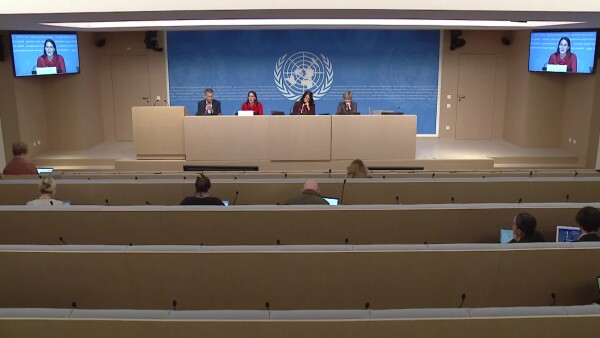
- Wide shot of panel and attendees at press briefing.
- SOUNDBITE: (ENGLISH) Verena Knaus, UNICEF’s Global Lead on Migration and Displacement: “The report finds that on average, every single day 20,000 children have been displaced by floods, storms, wildfires, or droughts. Or put differently: it is disasters like tropical storms, hurricanes, floods – like in Pakistan and wildfires like recently in Canada – that have displaced more than 43 million children over 44 countries in the past six years.”
- Attendee taking photo at briefing.
- SOUNDBITE: (ENGLISH) Verena Knaus, UNICEF’s Global Lead on Migration and Displacement: “The Children Displaced in Changing Climate report finds that floods and storms account for 95 per cent of those child displacements, especially in countries where there are large, good and robust displacement evacuation systems in place or early-warning, many of them are evacuated and their lives are saved, but the numbers keep growing.”
- Mid-shot of attendees.
- SOUNDBITE: (ENGLISH) Verena Knaus, UNICEF’s Global Lead on Migration and Displacement: “With every additional one degree of warming, the IPCC (Intergovernmental Panel on Climate Change) believes the global risk of displacement by flooding – the largest driver – could rise by 50 per cent. We are not prepared for this climate-changed future. And the displacement of children is barely on the radar of leaders and will probably only on the margins be discussed at COP28 in Dubai.”
- Wide shot of panel at press briefing.
- SOUNDBITE: (ENGLISH) Verena Knaus, UNICEF’s Global Lead on Migration and Displacement: “We need to re-imagine climate finance. We need to use all the opportunities we have from risk insurance schemes to green bonds, blue bonds. But most importantly, we need to unlock climate finance to go to the countries where the greatest risks meet the weakest coping capacities.”
- Wide shot of panel and attendees at press briefing.
- Attendees filming and taking photo at briefing.
- Medium shot of panel and attendees at press briefing.
Similar Stories

1
1
1
Edited News | OCHA , UNICEF , WFP
Aid agencies warned on Friday of the fast-developing humanitarian emergency inside Taiz City in Yemen, which has been encircled by de facto Houthi forces fighting government troops along the country’s west coast.

2
17
1
2
Edited News , Press Conferences , Images | OCHA , WMO
Two UN agencies teamed up on Wednesday to issue an appeal for immediate assistance to help communities already being impacted by the strongest El Niño on record.

3
16
2
2
Edited News , B-roll , Conferences , Images | UNITED NATIONS , UNOG
Sixth Consultative Meeting on Enhancing Coordination of Peace Initiatives and Efforts for Sudan

1
1
1
Edited News | UNICEF , WHO , UNHCR
Yemen war continues to force families from homes amid hunger and disease
More than 250,000 people have now fled renewed fighting in Yemen, the UN said on Tuesday, citing particular concern for those sheltering in the southwestern city of Taiz and the wider governorate, where access is “essentially blocked”.

1
1
1
Edited News | UNICEF
A little over one year since a ceasefire agreement was announced between Hamas fighters and Israel, more than 340 children have been reported killed and hundreds more injured, the UN Children’s Fund, UNICEF, said on Friday.

1
1
1
Edited News | UNICEF , IFRC
Six weeks after Nepal’s deadly flooding disaster, communities are still struggling to rebuild their lives, but they will need sustained help as global warming increases the risk of another Himalayan catastrophe, the UN Children’s Fund (UNICEF) said on Friday.

1
1
1
Edited News | WHO
In suspected Russia plague death, testing and monitoring underway – WHO
The death of a lab worker in Russia’s Siberia region has sparked concerns about plague being the cause, the UN World Health Organization (WHO) said on Tuesday, adding that it was following the situation closely.

1
1
Edited News | OHCHR , UNOG
UN Human Rights Chief Volker Türk on Friday provided and oral update to the 63rd session of the Human rights Council on Ukraine.

1
1
1
Edited News | OHCHR , UNOG
UN Human Rights Chief Volker Türk on Friday provided and oral update to the 63rd session of the Human rights Council on the human rights situation in Haiti.

1
1
1
Edited News | WHO
Repeated delays in bringing lifesaving medicines, prosthetics and more from Israel into Gaza risk having devastating consequences on Palestinians who urgently need them in the wartorn enclave, the UN World Health Organization (WHO) said on Friday. “A truck full of non-priority supplies or the right supplies arriving too late, doesn't save lives. That's the question that actually matters," said Dr Reinhilde Van De Weerdt, WHO Representative in the OPT.

1
1
1
Edited News | WHO
DRC: Early access to care and oxygen decisive for Ebola patients’ survival – WHO
In the Democratic Republic of the Congo (DRC), health workers fighting the country’s largest-ever Ebola outbreak are struggling to overcome critical challenges to patient care, the UN World Health Organization (WHO) warned on Tuesday.

1
1
1
Edited News | OCHA , UN
Civilians in Iran are continuing to feel the consequences of months of conflict and military escalation, the UN’s top official in the country has said, as loss of life, damage to civilian infrastructure and mounting economic pressures leave many facing continued uncertainty.