

The United Nations Office at Geneva
Multimedia Newsroom
Edited News | OHCHR
UNOG bi-weekly press briefing: Sudan at a tipping point because of the COVID-19 pandemic - OHCHR
Location: Geneva
Subject: Sudan at a tipping point because of the COVID-19 pandemic.
The UN High Commissioner for Human Rights Michelle Bachelet on Tuesday expressed serious concerns about the crisis facing Sudan’s transition in the midst of the COVID-19 pandemic, saying that untold suffering awaits unless donors act fast.
https://www.ohchr.org/EN/NewsEvents/Pages/DisplayNews.aspx?NewsID=25833&LangID=E
Briefing journalists Jeremy Laurence spokesperson for the Office of the UN High Commissioner for Human Rights stated:
SOUNDBITE (English)—Jeremy Laurence, Spokesperson for the Office of the UN High Commissioner for Human Rights (OHCHR): “We are seriously concerned about the crisis
facing Sudan’s transition in the midst of the COVID-19 pandemic, and believe untold suffering awaits unless donors act fast.”
SOUNDBITE (English)—Jeremy Laurence, Spokesperson for the Office of the UN High Commissioner for Human Rights (OHCHR): “ Barely a year after the removal from power of long-time ruler Omar al-Bashir, the promise of economic and social development, democracy, justice and peace is now being threatened by acute resource constraints on the Transitional Government of Sudan. These are being exacerbated by a combination of the practical effects of ongoing unilateral sanctions, the failure of international institutions to provide debt-relief, and a deficit of international support.”
In a letter to the UN Secretary-General on 8 April 2020, Sudan’s Prime Minister Abdalla Hamdok acknowledged that COVID-19 poses profound challenges to his country’s health system, economy, and society as a whole, and he sought financial and other technical support to tackle the pandemic.
SOUNDBITE (English)—Jeremy Laurence, Spokesperson for the Office of the UN High Commissioner for Human Rights (OHCHR): “The tipping point could be COVID-19. Medical sources have warned there is a serious shortage of equipment and protective gear. As of 27 April, 275 people had been tested positive with COVID-19, 22 of whom have died.”
SOUNDBITE (English)—Jeremy Laurence, Spokesperson for the Office of the UN High Commissioner for Human Rights (OHCHR): “Sudan’s health system is simply not equipped to handle an outbreak on the scale we have seen elsewhere in the world. There is only one way to prevent a humanitarian disaster, and that is for the donors to step up and extend a helping hand to Sudan.”
Of Sudan’s population of 43 million people, nearly 2 million remain internally displaced as a result of conflicts in Darfur, South Kordofan, and Blue Nile state. Most face dire conditions, living in camps or settlements, unable to meet their basic needs. Sudan also hosts more than 1.1 million refugees and migrants from other countries.
SOUNDBITE (English)—Jeremy Laurence, Spokesperson for the Office of the UN High Commissioner for Human Rights (OHCHR): “These issues have been compounded by the effects of Sudan still being on the US list of States sponsoring terrorism. In addition, Sudan is currently among the countries not eligible to access the US$50-billion Trust Fund of the International Monetary Fund and World Bank to assist countries to fight COVID-19.The UN Secretary-General has urged the international community to do all it can to support the country in its transition, and during this time of serious need.”
SOUNDBITE (English)—Jeremy Laurence, Spokesperson for the Office of the UN High Commissioner for Human Rights (OHCHR): “ We believe Sudan will not be able to break out of this cycle of poverty and desperation unless it is freed from the impediments of sanctions which were imposed at the time of the previous government. This would enable Sudan to attract investment for its much-needed economic reforms, and to fully access funds available from the international financial institutions.”
SOUNDBITE (English)—Jeremy Laurence, Spokesperson for the Office of the UN High Commissioner for Human Rights (OHCHR): “Inequality, and economic and social grievances, were the main triggers of Sudan’s revolution last year. If these and other root causes are not addressed as a matter of priority, Sudan’s successful transition to achieving a durable peace remains a distant prospect.”
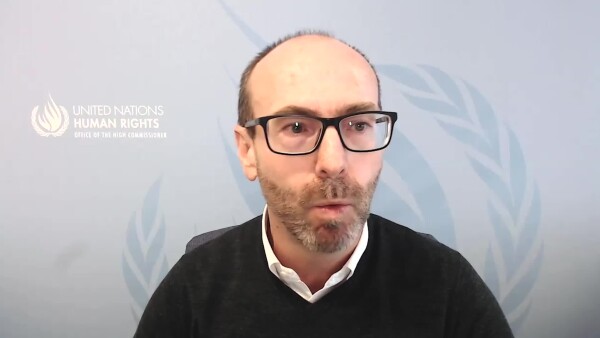
- Medium shot of Jeremy Laurence
Similar Stories

1
1
1
Edited News | OCHA , UNICEF , WFP
Aid agencies warned on Friday of the fast-developing humanitarian emergency inside Taiz City in Yemen, which has been encircled by de facto Houthi forces fighting government troops along the country’s west coast.

2
17
1
2
Edited News , Press Conferences , Images | OCHA , WMO
Two UN agencies teamed up on Wednesday to issue an appeal for immediate assistance to help communities already being impacted by the strongest El Niño on record.

3
16
2
2
Edited News , B-roll , Conferences , Images | UNITED NATIONS , UNOG
Sixth Consultative Meeting on Enhancing Coordination of Peace Initiatives and Efforts for Sudan

1
1
1
Edited News | UNICEF , WHO , UNHCR
Yemen war continues to force families from homes amid hunger and disease
More than 250,000 people have now fled renewed fighting in Yemen, the UN said on Tuesday, citing particular concern for those sheltering in the southwestern city of Taiz and the wider governorate, where access is “essentially blocked”.

1
1
1
Edited News | UNICEF
A little over one year since a ceasefire agreement was announced between Hamas fighters and Israel, more than 340 children have been reported killed and hundreds more injured, the UN Children’s Fund, UNICEF, said on Friday.

1
1
1
Edited News | UNICEF , IFRC
Six weeks after Nepal’s deadly flooding disaster, communities are still struggling to rebuild their lives, but they will need sustained help as global warming increases the risk of another Himalayan catastrophe, the UN Children’s Fund (UNICEF) said on Friday.

1
1
1
Edited News | WHO
In suspected Russia plague death, testing and monitoring underway – WHO
The death of a lab worker in Russia’s Siberia region has sparked concerns about plague being the cause, the UN World Health Organization (WHO) said on Tuesday, adding that it was following the situation closely.

1
1
Edited News | OHCHR , UNOG
UN Human Rights Chief Volker Türk on Friday provided and oral update to the 63rd session of the Human rights Council on Ukraine.

1
1
1
Edited News | OHCHR , UNOG
UN Human Rights Chief Volker Türk on Friday provided and oral update to the 63rd session of the Human rights Council on the human rights situation in Haiti.

1
1
1
Edited News | WHO
Repeated delays in bringing lifesaving medicines, prosthetics and more from Israel into Gaza risk having devastating consequences on Palestinians who urgently need them in the wartorn enclave, the UN World Health Organization (WHO) said on Friday. “A truck full of non-priority supplies or the right supplies arriving too late, doesn't save lives. That's the question that actually matters," said Dr Reinhilde Van De Weerdt, WHO Representative in the OPT.

1
1
1
Edited News | WHO
DRC: Early access to care and oxygen decisive for Ebola patients’ survival – WHO
In the Democratic Republic of the Congo (DRC), health workers fighting the country’s largest-ever Ebola outbreak are struggling to overcome critical challenges to patient care, the UN World Health Organization (WHO) warned on Tuesday.

1
1
1
Edited News | OCHA , UN
Civilians in Iran are continuing to feel the consequences of months of conflict and military escalation, the UN’s top official in the country has said, as loss of life, damage to civilian infrastructure and mounting economic pressures leave many facing continued uncertainty.