

The United Nations Office at Geneva
Multimedia Newsroom
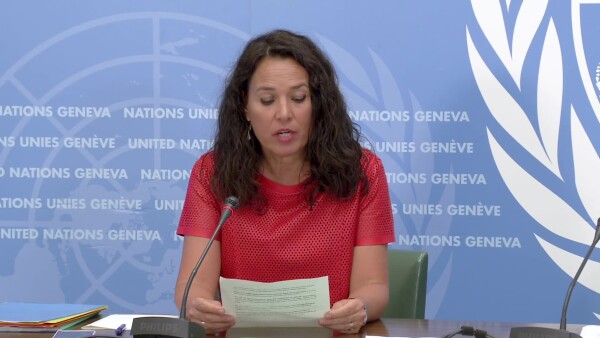
UN Human Rights spokesperson Marta Hurtado made the following statement on Nicaragua athe biweekly press briefing in Geneva:
“We have growing concerns that the authorities in Nicaragua are actively silencing any critical or dissenting voices in the country and are using the justice system to this end,” she said.
“In May alone, 63 people were reported to have been arbitrarily detained throughout the country.”
In a single night, 55 people were charged with ‘conspiracy to undermine national integrity’ and ‘spreading false news’, charges that the Government is apparently using to silence its critics. The UN Human Rights Committee already raised such concerns in 2022 during its review of Nicaragua.
During their custody hearings, none of the 55 accused had a lawyer of their own choosing and were represented instead by a public defender imposed on them.
“Among the detainees were human rights defenders, political opponents, journalists, rural workers, and people linked to the Catholic Church,” Hurtado said.
“This week, three foreign nuns were expelled from Nicaragua and three other nuns were prevented from leaving their convent. Between 21 and 23 May, four priests and four church employees were arrested and detained,” she added.
Three of them are under house arrest and one is in jail.
Bishop Rolando Álvarez, who is serving a 26 year sentence for ‘undermining national integrity’ and ‘spreading false news’ is currently in “La Modelo”, a prison in Tipitapa near Managua, and has not been permitted any visits since 25 March. The Office has received information that his prison cell has inadequate hygiene and sanitation and no natural light, and that he is not allowed outside – conditions that violate international human rights norms and standards.
At least three of the nine dioceses of the Nicaraguan Catholic Church have had their bank accounts frozen for alleged money laundering. The Government has accused the Church of being a criminal organization supporting what it terms "terrorism" and the destabilization of the country.
On 9 and 11 May, the Supreme Court ruled that 26 lawyers and notaries critical of the Government, including some of the country’s most prominent human rights defenders, could no longer practise law in the country. Twenty-five were stripped of their nationality in February, together with 292 other people. The authorities have confiscated some of their assets and properties.
“More than 3,200 organizations have had their legal status cancelled since the end of June 2022. Media outlets have also been forced to close,” Hurtado said.
“We call on the authorities to stop the crackdown on dissent; immediately release all those arbitrarily detained; and restore the legal status of all organizations and media outlets that have been arbitrarily shut down since 2018.”
The Government should also address the current crisis through dialogue, accountability for human rights violations and institutional and legislative reforms to restore the rule of law, the spokesperson noted.
Granting access to UN Human Rights Office staff would be an important step towards improved cooperation with the UN system, Hurtado said.
END.
For more information and media requests, please contact:
Ravina Shamdasani - + 41 22 917 9169 / ravina.shamdasani@un.org or
Liz Throssell + 41 22 917 9296 / elizabeth.throssell@un.org or
Marta Hurtado - + 41 22 917 9466 / marta.hurtadogomez@un.org
Tag and share
Twitter @UNHumanRights
Facebook unitednationshumanrights
Instagram @unitednationshumanrights
Tag and share - Twitter: @UNHumanRights and Facebook: unitednationshumanrights
- Exterior shots: Palais des Nations
- SOUNDBITE (English)—Marta Hurtado, Spokesperson for the Office of the UN High Commissioner for Human Rights (OHCHR): “We have growing concerns that the authorities in Nicaragua are actively silencing any critical or dissenting voices in the country and are using the justice system to this end. In May alone, 63 people were reported to have been arbitrarily detained throughout the country.”
- Cut away: briefing room
- SOUNDBITE (English)—Marta Hurtado, Spokesperson for the Office of the UN High Commissioner for Human Rights (OHCHR): “Among the detainees were human rights defenders, political opponents, journalists, rural workers, and people linked to the Catholic Church.”
- Cut away: briefing room
- SOUNDBITE (English)—Marta Hurtado, Spokesperson for the Office of the UN High Commissioner for Human Rights (OHCHR): “This week, three foreign nuns were expelled from Nicaragua and three other nuns were prevented from leaving their convent. Between 21 and 23 May, four priests and four church employees were arrested and detained.”
- Cut away: briefing room
- SOUNDBITE (English)—Marta Hurtado, Spokesperson for the Office of the UN High Commissioner for Human Rights (OHCHR): “More than 3,200 organizations have had their legal status cancelled since the end of June 2022. Media outlets have also been forced to close.”
- Cut away: briefing room
- SOUNDBITE (English)—Marta Hurtado, Spokesperson for the Office of the UN High Commissioner for Human Rights (OHCHR): “We call on the authorities to stop the crackdown on dissent; immediately release all those arbitrarily detained; and restore the legal status of all organizations and media outlets that have been arbitrarily shut down since 2018.”
- Exterior shot: Palais des Nations
- SOUNDBITE (Spanish)—Marta Hurtado, Spokesperson for the Office of the UN High Commissioner for Human Rights (OHCHR): “Estamos cada vez más preocupados por el deterioro de la situación de los derechos humanos en Nicaragua, donde las autoridades siguen silenciando activamente cualquier voz crítica o disidente en el país y utilizando el sistema de justicia para este fin.
Solo en el mes de mayo, 63 personas habrían sido detenidas arbitrariamente en todo el país.
Entre los detenidos se encontraban defensores de derechos humanos, opositores políticos, periodistas, trabajadores rurales y personas vinculadas a la Iglesia Católica.
Esta semana, tres monjas extranjeras fueron expulsadas de Nicaragua; y a otras tres monjas se les impidió salir de su convento. Entre el 21 y el 23 de mayo, cuatro sacerdotes y cuatro empleados de la iglesia fueron arrestados y detenidos.
Más de 3.200 organizaciones sufrieron la cancelación de su personería jurídica desde finales de junio de 2022. Algunos medios de comunicación también se han visto obligados a cerrar.
Hacemos un llamado a las autoridades para que detengan la represión de la disidencia y liberen de inmediato a todas las personas detenidas arbitrariamente.
La Oficina de Derechos Humanos está lista y disponible para ayudar a Nicaragua a promover los derechos humanos en el país. »
Similar Stories

1
1
1
Edited News | UNICEF , IFRC
Six weeks after Nepal’s deadly flooding disaster, communities are still struggling to rebuild their lives, but they will need sustained help as global warming increases the risk of another Himalayan catastrophe, the UN Children’s Fund (UNICEF) said on Friday.
1
1
1
Statements , Press Conferences | OHCHR
1
1
1
Press Conferences | UNHCR , UNICEF , IFRC , OHCHR , UN WOMEN , IOM , OCHA , WHO
UNHCR – ExCom Meeting, UNICEF – Nepal Recovery, IFRC – Flash Floods, WHO – Mental Health, IOM – South Sudan Floods, OCHA – DRC Humanitarian aid, UNHCR – Sahel Displacement, UNICEF – Yemen Update, IOM – Gaza Shelter, UN Women – Gaza Women, OHCHR – Arrests and detentions of Syrians by Israeli force
2
1
2
Press Conferences | UNCTAD
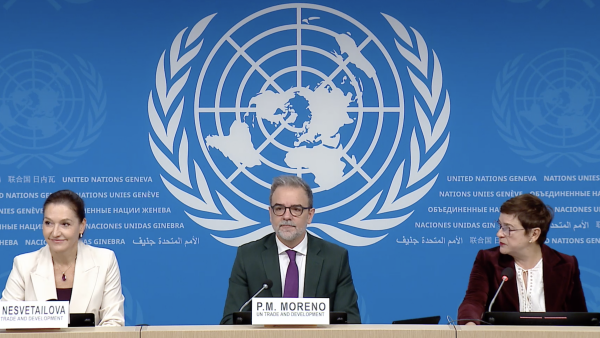
Presentation of the Trade and Developement Report 2026
Embargoed until 9 October 2026 at 11 a.m. (Geneva Time)
UNCTAD: UNCTAD’s flagship report finds that governments increasingly use industrial, trade, financial and technology policies to pursue economic and national security objectives. Market access and the ability to move into higher-value activities now depend more heavily on technology, finance and geopolitics.
1
1
1
Press Conferences | UPU
Release of the State of the Postal Sector Report 2026

1
1
1
Edited News | WHO
In suspected Russia plague death, testing and monitoring underway – WHO
The death of a lab worker in Russia’s Siberia region has sparked concerns about plague being the cause, the UN World Health Organization (WHO) said on Tuesday, adding that it was following the situation closely.
1
1
1
Press Conferences | IOM , ITU , UNECE , UNICEF , WHO , WMO
UNICEF: Ebola, DRC - children orphans or separating them from parents and caregivers; IOM: Humanitarian needs in Djibouti amid arrivals from Yemen and increased migrant movements; WHO: Darfur, scale of health needs far exceeds available resources; WMO co-sponsored Global Heat Forum, Bangkok, monthly Global Seasonal Climate Update; UNECE: UN Forum of Mayors; ITU Plenipotentiary Conference 2026; WHO: child and adolescent obesity guidelines and new global roadmap to tackle pregnancy hypertension, a leading cause of maternal mortality

1
1
Edited News | OHCHR , UNOG
UN Human Rights Chief Volker Türk on Friday provided and oral update to the 63rd session of the Human rights Council on Ukraine.

1
1
1
Edited News | OHCHR , UNOG
UN Human Rights Chief Volker Türk on Friday provided and oral update to the 63rd session of the Human rights Council on the human rights situation in Haiti.

1
1
1
Edited News | WHO
Repeated delays in bringing lifesaving medicines, prosthetics and more from Israel into Gaza risk having devastating consequences on Palestinians who urgently need them in the wartorn enclave, the UN World Health Organization (WHO) said on Friday. “A truck full of non-priority supplies or the right supplies arriving too late, doesn't save lives. That's the question that actually matters," said Dr Reinhilde Van De Weerdt, WHO Representative in the OPT.
1
1
1
Press Conferences | OCHA , UN WOMEN , UNHCR , WFP , WHO , WTO , UNEP
OCHA – $160M CERF allocation to 12 underfunded crises; UNHCR – 5.8M refugee children remain out of school amid funding cuts; UN Women – Middle East escalation and food security among women/girls; WHO – Gaza supplies and overall situation; WFP – Yemen food insecurity and impact on global hunger ; UNEP - First International Conference of the Global Framework on Chemicals in Geneva | 16-20 November 2026

1
1
1
Edited News | WHO
DRC: Early access to care and oxygen decisive for Ebola patients’ survival – WHO
In the Democratic Republic of the Congo (DRC), health workers fighting the country’s largest-ever Ebola outbreak are struggling to overcome critical challenges to patient care, the UN World Health Organization (WHO) warned on Tuesday.