

The United Nations Office at Geneva
Multimedia Newsroom
Edited News | IOM , OCHA , UNHCR , WHO , WMO
WMO warns of humanitarian impact of intensifying cyclone Mocha
WMO warns of humanitarian impact of intensifying cyclone Mocha
The World Meteorological Organization (WMO) warned on Friday that cyclone Mocha has intensified very quickly in the warm waters of the Bay of Bengal and could bring major impacts both ahead and after landfall for potentially hundreds of thousands of the world’s most vulnerable people when it hits Myanmar and Bangladesh this weekend.
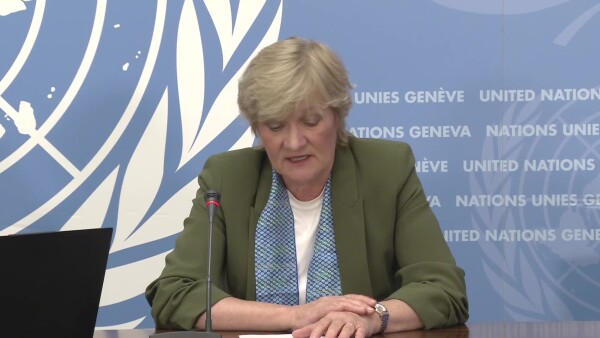
“It is a very dangerous cyclone,” said Clare Nullis, WMO spokesperson. “It is associated with violent winds. What is especially concerning here in this part of the world is the storm surges are forecast to have a height of about two to two and a half meters above the normal astronomical tide level. This is likely to inundate low-lying areas off north Myanmar and adjoining southeast Bangladesh coasts.”
Local communities and humanitarian organizations in Myanmar are urgently preparing for the arrival of severe Cyclone Mocha which is likely to come ashore near the Bangladesh-Myanmar border very close to Cox’s Bazar, Bangladesh, which is home to the world’s largest refugee camp.
“As you know Cox's Bazar hosts the world’s biggest refugee camp”, said Nihan Erdogan, the Bangladesh Deputy Chief of Mission in Cox’s Bazar from the International Organization for Migration (IOM). “There are approximately one million Rohingyas who are living here, and they have been in displacement for many years. They are exposed to quite a number of disasters, and they almost completely depend on humanitarian assistance. And this cyclone comes at a time where our funding is also going down.”
According to the UN Office for the Coordination of Humanitarian Affairs (OCHA), across Rakhine (State in Mynamar) and the country’s north-west, there are already – before the arrival of the cyclone Mocha - about six million people in need of humanitarian assistance and 1.2 million people displaced.
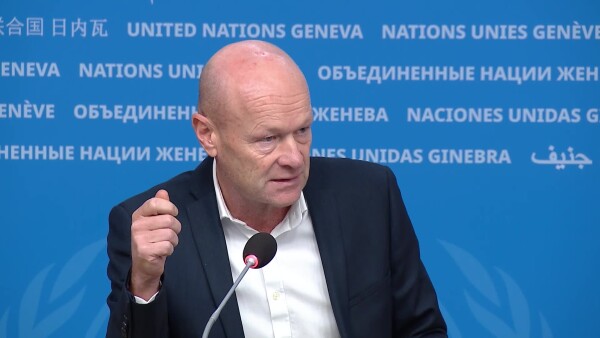
“The expected area of impact in Rakhine is low-lying and highly prone to flooding. Heavy rains and strong winds are also expected to hit inland communities, so away from the coast, in Myanmar’s north-west which are also prone to landslides and flooding,” said OCHA’s spokesperson Jens Laerke.
The World Health Organization (WHO) reported that in Cox’s Bazar a multi-sector preparedness and response planning has been escalated in the last who days. It’s spokesperson, Dr. Margaret Harris said that “there has been a lot of preparation both in Rakhine state and also in Cox’s Bazar, and just to complement on the mobile medical team – we have also got 33 mobile medical teams in Cox’s Bazar composed of personnel from partners on standby ready to deploy to restore or provide access to medical services post-landfall”. She added that “we have got more than 40 ambulances that have been mapped and remain on standby. This is in Cox’s Bazar and we have identified 22 camp-based focal points to facilitate communication and coordination of help.”
In Myanmar, WHO has sent inter-agency health kits and 100,000 water purification tablets to Sittwe in the Rahkine state where the damage is expected to be the worst.
Also, the UN Refugee Agency (UNHCR) has preparations underway, according to spokesperson Olga Sarrado: “The first preparations include tying down shelters and evacuating people to lower risk areas. Some of the essential services and items that are being propositioned with aid agencies, are so we will be able to provide 50,000 daily hot meals if needed.” She added that “certain materials have been propositioned such as tarpaulin, rope and floor mats, and are ready to be distributed in case it is needed, as well as 60,000 jerrycans, 300,000 soaps.”
-ends-
STORY: Humanitarian Impact of Cyclone Mocha: WMO – OCHA – WHO – UNHCR - IOM
TRT: 02’48”
SOURCE: UNTV CH
LANGUAGE: ENGLISH/NATS
ASPECT RATIO: 16:9
RELEASE DATE: 12 May 2023
GENEVA, SWITZERLAND
SHOTLIST
- Exterior wide shot: UN flag alley UN Geneva.
- Wide shot of journalists, conference room, Palais des Nations, Geneva
- SOUNDBITE (ENGLISH): Clare Nullis World Meteorological Organization (WMO): “It is a very dangerous cyclone, as I said. It is associated with violent winds. What is especially concerning here in this part of the world is the storm surges are forecast to have a height of about two to two and a half meters above the normal astronomical tide level. This is likely to inundate low-lying areas off north Myanmar and adjoining southeast Bangladesh coasts.”
- Wide shot: cameras, podium in background
- SOUNDBITE (ENGLISH): Nihan Erdogan, IOM Bangladesh Deputy Chief of Mission in Cox’s Bazar: “As you know Cox's Bazar hosts the world’s biggest refugee camp. There are approximately one million Rohingyas who are living here, and they have been in displacement for many years. They are exposed to quite a number of disasters, and they almost completely depend on humanitarian assistance. And this cyclone comes at a time where our funding is also going down.”
- Wide shot: cameras, technicians
- SOUNDBITE (ENGLISH) Jens Laerke, Spokesperson for the UN Office for the Coordination of Humanitarian Affairs (OCHA): “The expected area of impact in Rakhine is low-lying and highly prone to flooding. Heavy rains and strong winds are also expected to hit inland communities, so away from the coast, in Myanmar’s north-west which are also prone to landslides and flooding.”
- Medium shot: journalists
- SOUNDBITE (ENGLISH) Margaret Harris, World Health Organization (WHO): “There has been a lot of preparation both in Rakhine state and also in Cox’s Bazar, and just to complement on the mobile medical team – we have also got 33 mobile medical teams in Cox’s Bazar composed of personnel from partners on standby ready to deploy to restore or provide access to medical services post-landfall. We have got more than forty ambulances that have been mapped and remain on standby. This is in Cox’s Bazar and we have identified 22 camp-based focal points to facilitate communication and coordination of help.”
- Wide shot: cameras, podium
- SOUNDBITE (ENGLISH) Olga Sarrado, UNHCR spokesperson: “The first preparations include tying down shelters and evacuating people to lower risk areas. Some of the essential services and items that are being propositioned with aid agencies, so we will be able to provide 50,000 daily hot meals if needed. Certain materials have been propositioned such as tarpaulin, rope and floor mats, and are ready to be distributed in case it is needed, as well as 60,000 jerrycans, 300,000 soaps.”
- Wide shot: journalists
- Close up: journalist, tripod
- Medium shot: journalists
Similar Stories
1
1
1
Edited News | OCHA , UNICEF , WFP
Aid agencies warned on Friday of the fast-developing humanitarian emergency inside Taiz City in Yemen, which has been encircled by de facto Houthi forces fighting government troops along the country’s west coast.

2
17
1
2
Edited News , Press Conferences , Images | OCHA , WMO
Two UN agencies teamed up on Wednesday to issue an appeal for immediate assistance to help communities already being impacted by the strongest El Niño on record.

3
16
2
2
Edited News , B-roll , Conferences , Images | UNITED NATIONS , UNOG
Sixth Consultative Meeting on Enhancing Coordination of Peace Initiatives and Efforts for Sudan

1
1
1
Edited News | UNICEF , WHO , UNHCR
Yemen war continues to force families from homes amid hunger and disease
More than 250,000 people have now fled renewed fighting in Yemen, the UN said on Tuesday, citing particular concern for those sheltering in the southwestern city of Taiz and the wider governorate, where access is “essentially blocked”.

1
1
1
Edited News | UNICEF
A little over one year since a ceasefire agreement was announced between Hamas fighters and Israel, more than 340 children have been reported killed and hundreds more injured, the UN Children’s Fund, UNICEF, said on Friday.

1
1
1
Edited News | UNICEF , IFRC
Six weeks after Nepal’s deadly flooding disaster, communities are still struggling to rebuild their lives, but they will need sustained help as global warming increases the risk of another Himalayan catastrophe, the UN Children’s Fund (UNICEF) said on Friday.

1
1
1
Edited News | WHO
In suspected Russia plague death, testing and monitoring underway – WHO
The death of a lab worker in Russia’s Siberia region has sparked concerns about plague being the cause, the UN World Health Organization (WHO) said on Tuesday, adding that it was following the situation closely.

1
1
Edited News | OHCHR , UNOG
UN Human Rights Chief Volker Türk on Friday provided and oral update to the 63rd session of the Human rights Council on Ukraine.

1
1
1
Edited News | OHCHR , UNOG
UN Human Rights Chief Volker Türk on Friday provided and oral update to the 63rd session of the Human rights Council on the human rights situation in Haiti.

1
1
1
Edited News | WHO
Repeated delays in bringing lifesaving medicines, prosthetics and more from Israel into Gaza risk having devastating consequences on Palestinians who urgently need them in the wartorn enclave, the UN World Health Organization (WHO) said on Friday. “A truck full of non-priority supplies or the right supplies arriving too late, doesn't save lives. That's the question that actually matters," said Dr Reinhilde Van De Weerdt, WHO Representative in the OPT.

1
1
1
Edited News | WHO
DRC: Early access to care and oxygen decisive for Ebola patients’ survival – WHO
In the Democratic Republic of the Congo (DRC), health workers fighting the country’s largest-ever Ebola outbreak are struggling to overcome critical challenges to patient care, the UN World Health Organization (WHO) warned on Tuesday.

1
1
1
Edited News | OCHA , UN
Civilians in Iran are continuing to feel the consequences of months of conflict and military escalation, the UN’s top official in the country has said, as loss of life, damage to civilian infrastructure and mounting economic pressures leave many facing continued uncertainty.