

The United Nations Office at Geneva
Multimedia Newsroom
Edited News | UNHCR , UNICEF
Sudan: Warring parties’ accord is ‘first important step toward alleviating human suffering’, says top UN official
Sudan: Warring parties’ accord is ‘first important step toward alleviating human suffering’, says top UN official
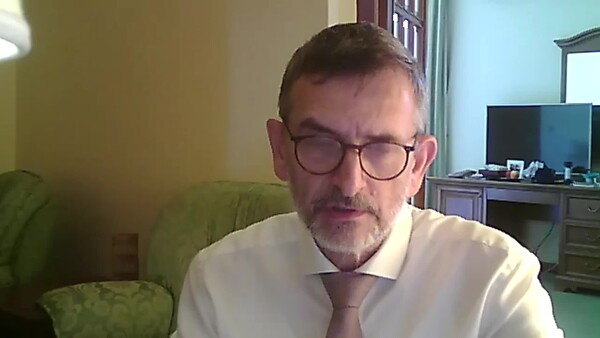
The signing of an agreement by the Sudanese warring parties in the Saudi Arabian port city of Jeddah on Thursday night is a “first important step toward alleviating human suffering and protecting the lives of civilians in Sudan”, the UN’s top official in the country, Volker Perthes, said on Friday.
The agreement intended to lay down the groundwork for humanitarian assistance to resume in Sudan and stipulated that parties to the conflict need to facilitate the safe passage of aid supplies, the withdrawal of forces from hospital and clinics and the respectful burial of the dead.
Mr. Perthes, Special Representative of the Secretary-General for Sudan and Head of the UN Integrated Transition Assistance Mission in Sudan (UNITAMS) said that both sides had committed to continuing their talks with the mediation of Saudi Arabia and the United States. They had reconfirmed on Friday morning their intent to stay and continue talks towards a real ceasefire, which would need to be accompanied by a monitoring mechanism.
Mr. Perthes noted that earlier ceasefires and humanitarian pauses had come up short because they had all been unilateral announcements. The next step will be to negotiate a ceasefire which would allow those action from the signed agreement to take place. “This is the first time that we have a mutual declaration – this is not a ceasefire- but a mutual signed declaration of the two warring parties on respecting international humanitarian law and international human rights law, and some more concrete provisions like vacating hospitals and medical facilities, which is good,” Mr. Perthes said. He added that “of course, the aim is to have a ceasefire which is also mutually agreed which I hope would give more stability and more respect to a ceasefire than when it is only based on unilateral (declarations).”
Also on Friday, the UN Refugee Agency (UNHCR) said that “around 200,000 refugees and returnees have been forced to flee the country with more crossing borders daily, seeking safety”. According to UNHCR spokesperson Olga Sarrado “additionally, hundreds of thousands have been internally displaced with many more people confined to their homes unable to access necessities”.
Ms. Sarrado explained that “the humanitarian response to this emergency is challenging and costly, not only inside Sudan because of insecurity but also as refugees and returnees are arriving in remote border areas in neighboring countries where services and infrastructures are scarce or non-existent. The coming rainy season will make logistics even harder as many roads will become impassible.”
For neighboring Chad, she said that “an additional 30,000 refugees have been arriving in the recent days, this makes the total number of refugees in Chad to about 60,000. The majority are women, and with a large number of women being pregnant.” According to UNHCR, a full 20 per cent of children being between six months and five years caught up in the conflict have been found to be acutely malnourished. To help, additional emergency relief has been airlifted to Chad from the UNHCR warehouse in Dubai."
UN Children’s Fund, UNICEF, reported on Friday that a factory in Khartoum producing therapeutic food for children suffering from malnutrition had been burned down, with vital nutritional support incinerated.
“That fire has destroyed 14,500 cartons of ready to use therapeutic food and that was set to be transported to locations for what is life-saving treatment for around 14,500 children for six to eight weeks. You can equate one carton to one child,” said James Elder, UNICEF's spokesperson.
The destroyed factory had been producing 60 per cent of all therapeutic food to treat malnourished children in Sudan. To respond to the malnutrition crisis in Sudan, UNICEF has sent 34,000 cartons of ready-to-use therapeutic food from France.
Despite the selfless efforts by health professionals on the ground, the conflict has continued to have a very severe effect on children, whose access to health care remains limited and unsafe.
Describing the food carton factory incident as “probably the darkest, most distinct illustration to date of how this conflict is threatening the lives of children through multiple means”, UNICEF’s Mr. Elder said that this is certainly “another bitter blow to the most vulnerable children in Sudan.”
It remains unclear whether the factory was torched intentionally or accidentally.
-ends-
STORY: Sudan – Agreement Signed to Protect Civilians: UNITAMS – UNHCR - UNICEF
TRT: 03’21”
SOURCE: UNTV CH
LANGUAGE: ENGLISH/NATS
ASPECT RATIO: 16:9
RELEASE DATE: 12 May 2023
GENEVA, SWITZERLAND
SHOTLIST
1. Exterior wide shot: UN flag alley UN Geneva.
- Wide shot of journalists, conference room, Palais des Nations, Geneva
- SOUNDBITE (ENGLISH) Volker Perthes, Special Representative of the Secretary-General for Sudan and Head of the UN Integrated Transition Assistance Mission in Sudan (UNITAMS): “The last important element of this understanding that was signed yesterday night is that both sides commit to continue their talks under and with the mediation of the Saudis and the Americans.”
- Medium shot of podium and speaker on the monitor, conference room, Palais des Nations
- SOUNDBITE (ENGLISH) Volker Perthes, Special Representative of the Secretary-General for Sudan and Head of the UN Integrated Transition Assistance Mission in Sudan (UNITAMS): “This is the first time that we have a mutual declaration – this is not a ceasefire- but a mutual signed declaration of the two warring parties on respecting international humanitarian law and international human rights law, and some more concrete provisions like vacating hospitals and medical facilities, which is good. And of course the aim is to have a ceasefire which is also mutually agreed which I hope would give more stability and more respect to a ceasefire than when it is only based on unilateral declarations.”
- Medium shot: podium with monitor and UN logo in the background
- SOUNDBITE (ENGLISH) Olga Sarrado, UNHCR spokesperson: “Around 200,000 refugees and returnees have been forced to flee the country with more crossing borders daily, seeking safety. Additionally, hundreds of thousands have been internally displaced with many more people confined to their homes unable to access necessities.”
- Medium shot: UN logo, with moderator and monitor in background
- SOUNDBITE (ENGLISH): Olga Sarrado, UNHCR spokesperson: “The humanitarian response to this emergency is challenging and costly, not only inside Sudan because of insecurity but also as refugees and returnees are arriving in remote border areas in neighbouring countries where services and infrastructures are scarce or non-existent. The coming rainy season will make logistics even harder as many roads will become impassible.”
- Wide shot: journalists and technicians in the room
- SOUNDBITE (ENGLISH): Olga Sarrado, UNHCR spokesperson: “In Chad, an additional 30,000 refugees have been arriving in the recent days, this makes the total number of refugees in Chad to about 60,000. The majority are women, and with a large number of women being pregnant. One-fifth of the children being between six months and 5 years have been found to be acutely malnourished. Additional emergency relief for example to Chad has been airlifted from the UNHCR warehouse in Dubai.”
- Wide shot: journalists, conference room
- SOUNDBITE (ENGLISH): James Elder, UNICEF spokesperson: “That fire has destroyed 14,500 cartons of ready to use therapeutic food and that was set to be transported to locations for what is life-saving treatment for around 14,500 children for six to eight weeks. You can equate one carton to one child.”
- Medium shot: podium, conference room
- SOUNDBITE (ENGLISH): James Elder, UNICEF spokesperson: “This is probably the darkest, most distinct illustration to date of how this conflict is threatening the lives of children through multiple means. Certainly it is another bitter blow to the most vulnerable children in Sudan.”
- Close-up: technician, conference room in background
- Wide shot: cameras, technicians, journalists in room
- Medium shot: journalists
Similar Stories

1
1
1
Edited News | OCHA , UNICEF , WFP
Aid agencies warned on Friday of the fast-developing humanitarian emergency inside Taiz City in Yemen, which has been encircled by de facto Houthi forces fighting government troops along the country’s west coast.

2
17
1
2
Edited News , Press Conferences , Images | OCHA , WMO
Two UN agencies teamed up on Wednesday to issue an appeal for immediate assistance to help communities already being impacted by the strongest El Niño on record.

3
16
2
2
Edited News , B-roll , Conferences , Images | UNITED NATIONS , UNOG
Sixth Consultative Meeting on Enhancing Coordination of Peace Initiatives and Efforts for Sudan

1
1
1
Edited News | UNICEF , WHO , UNHCR
Yemen war continues to force families from homes amid hunger and disease
More than 250,000 people have now fled renewed fighting in Yemen, the UN said on Tuesday, citing particular concern for those sheltering in the southwestern city of Taiz and the wider governorate, where access is “essentially blocked”.

1
1
1
Edited News | UNICEF
A little over one year since a ceasefire agreement was announced between Hamas fighters and Israel, more than 340 children have been reported killed and hundreds more injured, the UN Children’s Fund, UNICEF, said on Friday.

1
1
1
Edited News | UNICEF , IFRC
Six weeks after Nepal’s deadly flooding disaster, communities are still struggling to rebuild their lives, but they will need sustained help as global warming increases the risk of another Himalayan catastrophe, the UN Children’s Fund (UNICEF) said on Friday.

1
1
1
Edited News | WHO
In suspected Russia plague death, testing and monitoring underway – WHO
The death of a lab worker in Russia’s Siberia region has sparked concerns about plague being the cause, the UN World Health Organization (WHO) said on Tuesday, adding that it was following the situation closely.

1
1
Edited News | OHCHR , UNOG
UN Human Rights Chief Volker Türk on Friday provided and oral update to the 63rd session of the Human rights Council on Ukraine.

1
1
1
Edited News | OHCHR , UNOG
UN Human Rights Chief Volker Türk on Friday provided and oral update to the 63rd session of the Human rights Council on the human rights situation in Haiti.

1
1
1
Edited News | WHO
Repeated delays in bringing lifesaving medicines, prosthetics and more from Israel into Gaza risk having devastating consequences on Palestinians who urgently need them in the wartorn enclave, the UN World Health Organization (WHO) said on Friday. “A truck full of non-priority supplies or the right supplies arriving too late, doesn't save lives. That's the question that actually matters," said Dr Reinhilde Van De Weerdt, WHO Representative in the OPT.

1
1
1
Edited News | WHO
DRC: Early access to care and oxygen decisive for Ebola patients’ survival – WHO
In the Democratic Republic of the Congo (DRC), health workers fighting the country’s largest-ever Ebola outbreak are struggling to overcome critical challenges to patient care, the UN World Health Organization (WHO) warned on Tuesday.

1
1
1
Edited News | OCHA , UN
Civilians in Iran are continuing to feel the consequences of months of conflict and military escalation, the UN’s top official in the country has said, as loss of life, damage to civilian infrastructure and mounting economic pressures leave many facing continued uncertainty.