

The United Nations Office at Geneva
Multimedia Newsroom
Hope of finding work is the leading factor driving people to join fast-growing violent extremist groups in Sub-Saharan Africa. This is the key finding of the latest report entitled “Journey to Extremism in Africa: Pathways to Recruitment and Disengagement” launched today (6 February) by the United Nations Development Programme (UNDP).
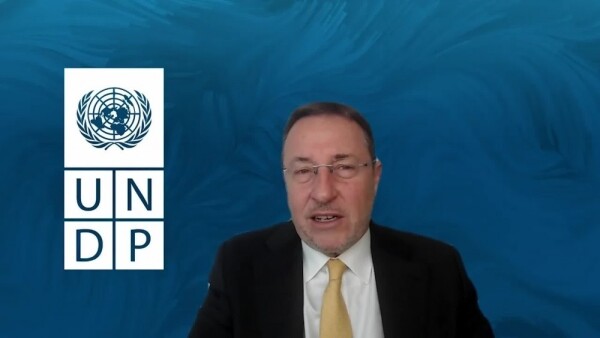
“In many countries where the lack of income, the lack of job opportunities, livelihoods, desperation is essentially pushing people to take up opportunities with whoever offers that”, said Achim Steiner, UNDP Administrator at the report launch. He added that “the research underscores the relevance of these economic factors as drivers of recruitment. 25 % of all recruits cited job opportunities as the primary reason and 40 % said they were in urgent need of livelihoods at the time of the recruitment”.
Sub-Saharan Africa has become the new global epicenter of violent extremis with almost half of global terrorism deaths in 2021. The report draw from interviews with nearly 2,200 interviewees in eight countries: Burkina Faso, Cameroon, Chad, Mali, Nigher, Nigeria, Somalia, and Sudan. More than 1,000 interviewees are former members of violent extremist groups, both voluntary and forced recruits.
One quarter of voluntary recruits cited job opportunities as their main reason for joining violent extremist groups. This is a 92 percent increase from the last UNDP study on violent extremism in 2017.
“We find that in the new report that 48% of voluntary recruits do cite a triggering event that caused them to join and of them 71% cited these human rights abuses such as government action”, said Nirina Kiplagat, main author of the report and UNDP’s Regional Peacebuilding Advisor. Fundamental human rights abuses such as seeing a father arrested, or a brother taken away by the state army are constituting such triggering events.
According to the report, the second reason for joining violent groups are families and friends, for example women who are following their spouses. To enter a violent group for a religion motivation presents the third reason, cited by only 17 percent of the interviewees. This presents a 57 percent decrease from the 2017 findings.
The new report is part of a series of three reports on the prevention of violent extremism. It highlights the urgent need to move away from security-driven responses to development-based approaches focused on prevention. It also recommends greater investment in basic services including child welfare, education and calls for an investment in rehabilitation and community-based reintegration services. “What is important, it is this toxic mix that is created, on the one hand poverty, destitution, it’s not just jobs. 40% actually cite also the urgent need of livelihoods”. Mr. Steiner added that “this phenomena of a society in the sense no longer having a rule of law turning to some of these violent extremists’ groups to provide security, the kidnapping, the forced recruitment that takes place and all these factors play a role”.
Security-driven counter-terrorism responses are often costly and minimally effective, so the UNDP Administrator, and investments in preventive approaches to violent extremism are inadequate. Militant organizations such as ISIS, Boko Harem or Al-Qaeda who have their origins in a local reality but then become part of the enablers for weapons to be secured and financing across the Sahel allowing other groups to resource themselves.
“The geopolitical dimension should not surprise anyone, it is a part of precisely this phenomenon when states are essentially no longer able to provide the rule of law and provide national security, then the opportunity for other actors to become part of this drama grows exponentially, we have seen it in Mali, we have seen it in Libya, we have seen it at the Horn of Africa”, said Mr. Steiner.
Based on the interviews, the report also identified factors that pull recruits to disengage such as unmet financial expectations, and a lack of trust in the group’s leadership as main reasons for leaving.
-ends-
STORY: Report on violent extremism in Sub-Saharan Africa and Arab States - UNDP
TRT: 2 mins 01
SOURCE: UNTV CH
RESTRICTIONS: NONE
LANGUAGE: ENGLISH/NATS
ASPECT RATIO: 16:9
DATELINE: 7 February 2023 GENEVA, SWITZERLAND
SHOTLIST
- Medium shot, UN Geneva flag alley.
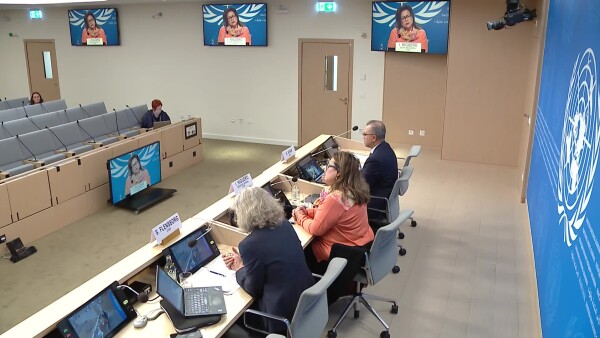
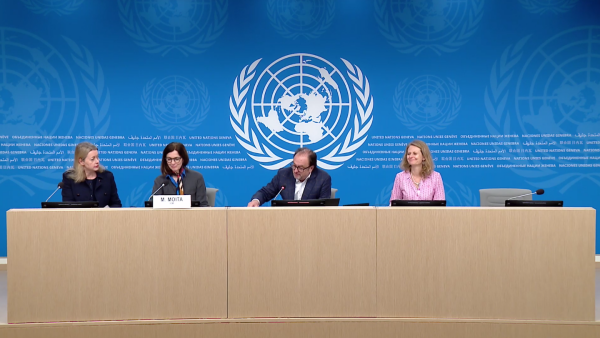
- Wide shot, press room with moderator and screens with speakers.
- SOUNDBITE (ENGLISH) – Nirina Kiplagat, main author and Regional Peacebuilding Advisor: “We find that in the new report that 48% of voluntary recruits do cite a triggering event that caused them to join and of them 71% cited these human rights abuses such as government action”.
- Medium shot, journalist and camera in press room
- SOUNDBITE (ENGLISH) – Achim Steiner, UNDP Administrator: “In many countries where the lack of income, the lack of job opportunities, livelihoods, desperation is essentially pushing people to take up opportunities with whoever offers that. And the research underscores the relevance of these economic factors as drivers of recruitment. 25 % of all recruits cited job opportunities as the primary reason and 40 % said they were in urgent need of livelihoods at the time of the recruitment”.
- Medium shot, journalists listening
- SOUNDBITE (ENGLISH) - Achim Steiner, UNDP Administrator: “The geopolitical dimension should not surprise anyone, it is a part of precisely this phenomenon when states are essentially no longer able to provide the rule of law and provide national security, then the opportunity for other actors to become part of this drama grows exponentially, we have seen it in Mali, we have seen it in Libya, we have seen it at the Horn of Africa”.
- Medium shot, journalists in press briefing room
- SOUNDBITE (ENGLISH) - Achim Steiner, UNDP Administrator: “What is important, it is this toxic mix that is created, on the one hand poverty, destitution, it’s not just jobs. 40% actually cite also the urgent need of livelihoods. Then this phenomena of a society in the sense no longer having a rule of law turning to some of these violent extremists’ groups to provide security, the kidnapping, the forced recruitment that takes place and all these factors play a role”.
- Wide shot, journalist taking a photo with cell phone of podium with moderator
- Medium shot, moderator at podium with speaker on screens
- Medium shot, journalist typing
Similar Stories

1
1
1
Edited News | OCHA , UNICEF , WFP
Aid agencies warned on Friday of the fast-developing humanitarian emergency inside Taiz City in Yemen, which has been encircled by de facto Houthi forces fighting government troops along the country’s west coast.
1
1
1
Press Conferences | UN WOMEN , WFP , WHO
UN WOMEN: Sudan Women and girls one year after the fall of El Fasher; increasing drone attacks across the country; WFP: DRC - Ebola spreads to eighth DRC province as WFP delivers food, builds treatment centres and keeps supplies moving; WHO - Update on Ebola (Bundibugyo Virus Disease)
1
12
1
1
Press Conferences , Images | UNOG
Closing Press Conference following the Sixth Consultative Meeting on Enhancing Coordination of Peace Initiatives and Efforts in Sudan

2
17
1
2
Edited News , Press Conferences , Images | OCHA , WMO
Two UN agencies teamed up on Wednesday to issue an appeal for immediate assistance to help communities already being impacted by the strongest El Niño on record.

3
16
2
2
Edited News , B-roll , Conferences , Images | UNITED NATIONS , UNOG
Sixth Consultative Meeting on Enhancing Coordination of Peace Initiatives and Efforts for Sudan
1
1
1
Press Conferences | CITES
Wildlife trade and conservation policy discussions at the 81st meeting of the CITES Standing Committee (SC81)

1
1
1
Edited News | UNICEF , WHO , UNHCR
Yemen war continues to force families from homes amid hunger and disease
More than 250,000 people have now fled renewed fighting in Yemen, the UN said on Tuesday, citing particular concern for those sheltering in the southwestern city of Taiz and the wider governorate, where access is “essentially blocked”.
1
1
1
Press Conferences | UNHCR , UNCTAD , WMO , OCHA , UNICEF , WHO
UNHCR Hungary’s 1956 Refugee Crisis: 70 Years On, UNCTAD World Investment Forum 2026, Doha, WMO Greenhouse Gas Bulletin and Climate Update for COP31, OCHA Afghanistan: Malnutrition, Girls’ Education and Recovery, UNICEF Yemen: Child Malnutrition and Unsafe Water in Taiz, WHO Inequalities in Noncommunicable Diseases and Risk Factors
1
1
1
Press Conferences | UNHCR
End of UNHCR's 77th Annual Executive Committee (ExCom) meeting week

1
1
1
Edited News | UNICEF
A little over one year since a ceasefire agreement was announced between Hamas fighters and Israel, more than 340 children have been reported killed and hundreds more injured, the UN Children’s Fund, UNICEF, said on Friday.
1
1
1
Press Conferences | UNICEF , IOM , UNHCR
UN Special Assistant to the Personal Envoy Office (SUDAN): Peace Initiatives and Efforts in Sudan; UNICEF: Dire situation of children in Gaza; IOM: Damaged Homes and Energy Attacks Risk Displacing Ukrainians for this winter; UNHCR: update on EXCOM week
1
1
1
Press Conferences | IOM , UNDRR
UN stresses importance of household preparedness for disaster risk reduction.