

The United Nations Office at Geneva
Multimedia Newsroom
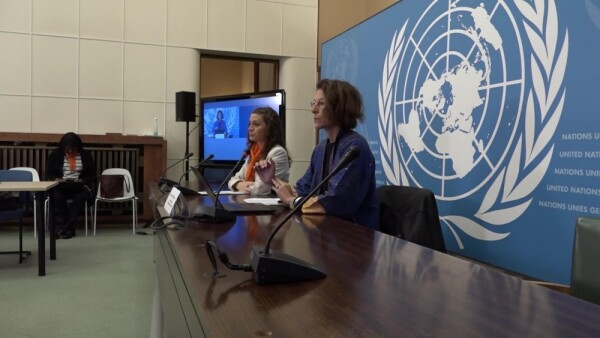
Women human rights defenders play a crucial role in protecting migrant rights. On today’s International Women Human Rights Defenders Day, UN Women is launching a groundbreaking set of recommendations on the protection of women human rights defenders around the world, especially those at risk in migration contexts.
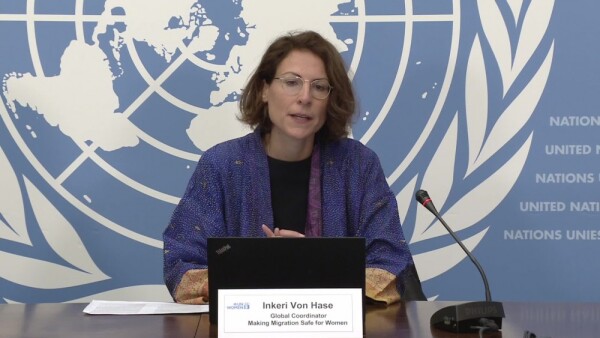
“We are trying to create an environment, like situations, where women migrants can actually do this work without, you know, risking their lives”, said Inkeri Von Hase, Global Coordinator for UN Women in charge of Making Migration Safe for Women, while speaking to the media at the United Nations in Geneva.
These recommendations are the first of their kind and were developed with experts, including migrant women human rights defenders, to protect women human rights defenders who work in an unpaid manner for which they often are silenced and harassed. They reaffirm the legally binding obligations of States parties to human rights defenders and the defence of human rights articulated in international human rights treaties and related authoritative guidance by human rights treaty bodies such as to counter stigmatization and criminalization, develop effective protection measures for migrant women human rights defenders but also secure the rights of migrant women and girls at all stages of migration.
“They do this kind of work individually, but also collectively, as state as well as non-state actors and through professional and employment-related roles, but also voluntarily, just because they see a need for this work to be done and they do it”, emphasized Ms. Von Hase.
Women human rights defenders play a crucial role in securing the right of people on the move but while doing so, they also face enormous threats such as rape, extorsion, use and force of labor. They are the unsung hero who are working in the background of people’s life to protect their rights on the move “by providing food, water, shelter, emergency medical supplies, by documenting and publicizing human rights violations, by accompanying migrants through dangerous routes, searching for those who are missing, reuniting families and facilitating access to justice, just to name a few”.
UN Women documented in recent years a dramatic rise in anti-rights moments, resulting in a backlash against women’s right organizations and a rise in attacks against women human rights defenders and activities. They are exposed to smear campaigns, indirect discrimination, criminalization, censorship, restriction and reprisal.
Furthermore, due to their status as migrants, they are also experiencing “arrest, detention and deportation, refoulement, deprivation of status, deprivation of their liberty, disappearances, torture, cruel, inhumane and degrading treatment, again sexual and gender-based violence, digital and physical surveillance, and racial profiling and public stigmatization,” said UN Women’s Global Coordinator for Making Migration Safe for Women.
According to estimates there are 281 million migrants worldwide, escaping poverty, unemployment, political instability, violence while others leave to pursue opportunities such as better education or to be with their family.
-ends-
STORY: Defending Migrants’ Human Rights – UN Women
TRT: 01:45 mins.
SOURCE: UNTV CH
RESTRICTIONS: NONE
LANGUAGE: ENGLISH/NATS
ASPECT RATIO: 16:9
DATELINE: 28 November 2022 GENEVA, SWITZERLAND
- Medium shot, UN Palais with flags
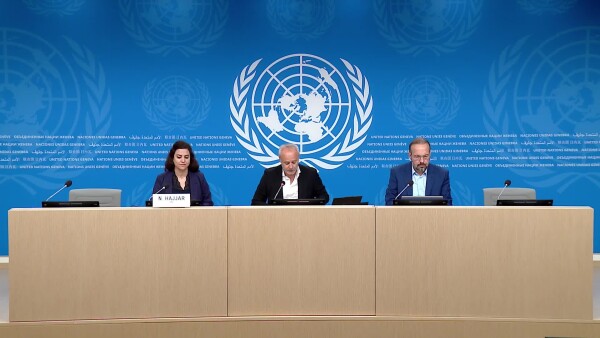
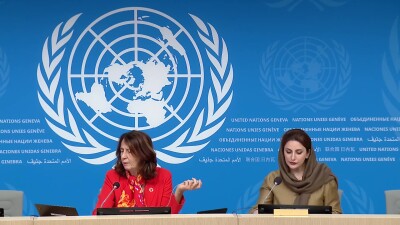
- Wide shot, Press briefing
- SOUNDBITE (English) – Inkeri Von Hase, Global Coordinator, Making Migration Safe for Women, UN Women: “We are trying to create an environment, like situations, where women migrants can actually do this work without, you know, risking their lives.”
- Medium shot, journalist
- SOUNDBITE (English) – Inkeri Von Hase, Global Coordinator, Making Migration Safe for Women, UN Women: “They do this kind of work individually, but also collectively, as state as well as non-state actors and through professional and employment-related roles, but also voluntarily, just because they see a need for this work to be done and they do it”.
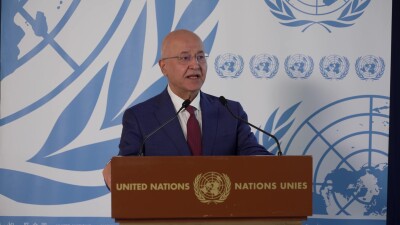
- Medium shot, speaker on laptop screen and at podium
- SOUNDBITE (English) – Inkeri Von Hase, Global Coordinator, Making Migration Safe for Women, UN Women: “By providing food, water, shelter, emergency medical supplies, by documenting and publicizing human rights violations, by accompanying migrants through dangerous routes, searching for those who are missing, reuniting families and facilitating access to justice, just to name a few”.
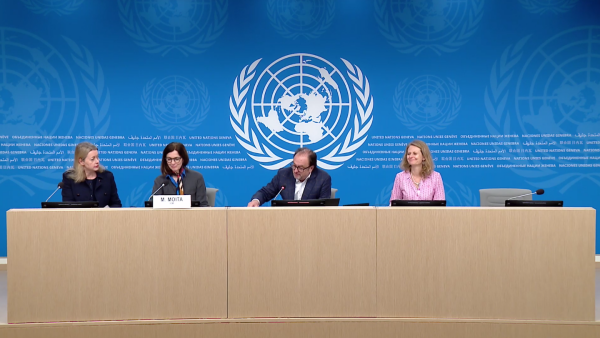
- Medium shot, panelists
- SOUNDBITE (English) – Inkeri Von Hase, Global Coordinator, Making Migration Safe for Women, UN Women: “So these include arrest, detention and deportation, refoulement, deprivation of status, deprivation of their liberty, disappearances, torture, cruel, inhumane and degrading treatment, again sexual and gender-based violence, digital and physical surveillance, and racial profiling and public stigmatization”.
- Close up, journalist listening
- Wide shot, panel with speakers
- Close up, speaker in camera view finder
Similar Stories
1
1
1
Press Conferences | CITES
Wildlife trade and conservation policy discussions at the 81st meeting of the CITES Standing Committee (SC81)

1
1
1
Edited News | UNICEF , WHO , UNHCR
Yemen war continues to force families from homes amid hunger and disease
More than 250,000 people have now fled renewed fighting in Yemen, the UN said on Tuesday, citing particular concern for those sheltering in the southwestern city of Taiz and the wider governorate, where access is “essentially blocked”.
1
1
1
Press Conferences | UNHCR , UNCTAD , WMO , OCHA , UNICEF , WHO
UNHCR Hungary’s 1956 Refugee Crisis: 70 Years On, UNCTAD World Investment Forum 2026, Doha, WMO Greenhouse Gas Bulletin and Climate Update for COP31, OCHA Afghanistan: Malnutrition, Girls’ Education and Recovery, UNICEF Yemen: Child Malnutrition and Unsafe Water in Taiz, WHO Inequalities in Noncommunicable Diseases and Risk Factors
1
1
1
Press Conferences | UNHCR
End of UNHCR's 77th Annual Executive Committee (ExCom) meeting week

1
1
1
Edited News | UNICEF
A little over one year since a ceasefire agreement was announced between Hamas fighters and Israel, more than 340 children have been reported killed and hundreds more injured, the UN Children’s Fund, UNICEF, said on Friday.
1
1
1
Press Conferences | UNICEF , IOM , UNHCR
UN Special Assistant to the Personal Envoy Office (SUDAN): Peace Initiatives and Efforts in Sudan; UNICEF: Dire situation of children in Gaza; IOM: Damaged Homes and Energy Attacks Risk Displacing Ukrainians for this winter; UNHCR: update on EXCOM week
1
1
1
Press Conferences | IOM , UNDRR
UN stresses importance of household preparedness for disaster risk reduction.

1
1
1
Edited News | UNICEF , IFRC
Six weeks after Nepal’s deadly flooding disaster, communities are still struggling to rebuild their lives, but they will need sustained help as global warming increases the risk of another Himalayan catastrophe, the UN Children’s Fund (UNICEF) said on Friday.
1
1
1
Statements , Press Conferences | OHCHR
1
1
1
Press Conferences | UNHCR , UNICEF , IFRC , OHCHR , UN WOMEN , IOM , OCHA , WHO
UNHCR – ExCom Meeting, UNICEF – Nepal Recovery, IFRC – Flash Floods, WHO – Mental Health, IOM – South Sudan Floods, OCHA – DRC Humanitarian aid, UNHCR – Sahel Displacement, UNICEF – Yemen Update, IOM – Gaza Shelter, UN Women – Gaza Women, OHCHR – Arrests and detentions of Syrians by Israeli force
2
1
2
Press Conferences | UNCTAD
Presentation of the Trade and Developement Report 2026
Embargoed until 9 October 2026 at 11 a.m. (Geneva Time)
UNCTAD: UNCTAD’s flagship report finds that governments increasingly use industrial, trade, financial and technology policies to pursue economic and national security objectives. Market access and the ability to move into higher-value activities now depend more heavily on technology, finance and geopolitics.
1
1
1
Press Conferences | UPU
Release of the State of the Postal Sector Report 2026