

The United Nations Office at Geneva
Multimedia Newsroom
STORYLINE
Catastrophic hunger levels leave 500,000 children at risk of dying in Somalia
Catastrophic hunger levels in Somalia have left more than 513,000 children at risk of dying, 173,000 more than during the 2011 famine, UN humanitarians warned on Tuesday.
In a call for immediate funding to help vulnerable communities hit by successive droughts, high food prices and conflict, the UN Children’s Fund UNICEF, the World Food Programme (WFP) and Food and Agriculture Organization (FAO) stressed that the emergency shows no signs of letting up.
Without action, famine “will occur within the next few weeks”, FAO said.
The UN agency added that drought-related deaths “have been occurring” and the toll could be much higher in hard-to-reach rural areas, compared with the number recorded in camps for displaced families.
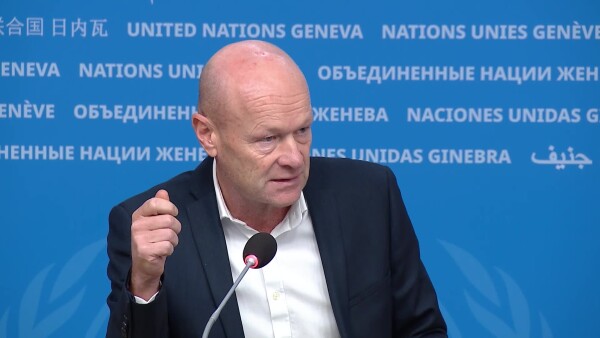
During the famine of 2011, 340,000 children required treatment for severe acute malnutrition, UNICEF spokesperson James Elder told journalists in Geneva. “Today it’s 513,000,” he added. “So we more than half a million facing preventable death. It’s a number, it’s a pending nightmare we have not seen this century.”
According to FAO, approximately 6.7 million people across Somalia will likely endure high levels of acute food insecurity between October and December this year (IPC Phase 3 or above).
This includes more than 300,000 who have been left “empty-handed” by the country’s triple emergency and who are expected to fall into famine (IPC Phase 5).
In pastoral communities where herders have been desperately searching for pasture, “they are now watching their livestock drop dead like flies”, said Etienne Peterschmitt, FAO Representative in Somalia.
The perilous situation for families in Baidoa and Burhakaba districts and of those forced from their homes by hunger in Baidoa town of Bay region in Southern Somalia is particularly concerning, Mr. Peterschmitt added.
“The repeated warnings have been clear: act now or a famine will occur within the next few weeks,” he insisted. “The drought situation is spreading at an alarming rate; more districts and regions are facing emergency levels of food insecurity as the cumulative effects of multiple failed rainy seasons take their toll.”
In a call for radical change to stop famine happening again, UNICEF’s Mr. Elder described the disturbing scenes already playing out in Somalia’s worst-affected region.
“Children are already dying,” he said. “Our partners report that some stabilization centres are in fact full and critically-ill children are receiving treatment on the floor.”
With greater funding, more severe and acutely malnourished children can be given lifesaving food which will make them strong enough to ward off diseases, just like healthier youngsters. “This is not just about nutrition, severely malnourished children are in fact up to 11 times more likely to die from things like diarrhoea and measles than well-nourished boys and girls,” Mr. Elder said, adding that both diseases “are spiking” in the worst-hit areas.
The UN’s response involves reaching the most vulnerable communities to prevent mass displacement before famine has been declared, to help to promote a faster recovery.
Humanitarian assistance has been increasing and reached an average of 3.1 million people per month between April and June 2022 and 4.5 million people per month between July and September 2022, according to FAO’s Mr. Peterschmitt.
“We know that the deaths, half of the deaths of 2011, happened before the declaration of famine,” said El-Khidir Daloum, WFP Somalia Representative and Country Director. “As we speak right now, we are heading to 15 areas classified as hard-to-reach areas and we are scaling up together with UNICEF the nutrition and the priority areas.”
In June, UNICEF reported that 386,000 children aged six to 59 months needed treatment for severe acute malnutrition. “That’s increased (today) to more than half a million, to 513,000; that’s a 33 per cent increase. Said one more way, it means 127 more thousand more children are at risk of death,” Mr. Elder said.
ends
STORY: Somalia Hunger Crisis
TRT: 1 mins 52s
SOURCE: UNTV CH
RESTRICTIONS: NONE
LANGUAGE: ENGLISH/NATS
ASPECT RATIO: 16:9
DATELINE: 13 September 2022, GENEVA, SWITZERLAND
SHOTLIST
- Medium shot, UN Geneva flag alley.
- Wide shot, press room with panel of speakers.
- SOUNDBITE (English): James Elder, UNICEF spokesperson: “To be clear, there’s 386,000 - 386,000 children - six to 59 months, that’s increased to more than half a million, to 513,000, that’s a 33 per cent increase. Said one more way, it means 127 thousand more children are at risk of death.”
- Close up shot, screen showing speaker.
- SOUNDBITE (English): James Elder, UNICEF spokesperson:“Children are already dying, our partners report that some stabilization centres are in fact full and critically-ill children are receiving treatment on the floor.”
- Medium shot, press room with journalists.
- SOUNDBITE (English): James Elder, UNICEF spokesperson:“The famine of 2011 the number was 340,000 children required treatment, today it’s 513(000). So we have more than half a million facing preventable death. It’s a number, it’s a pending nightmare we have not seen this century.”
- Medium shot, journalists taking notes.
- SOUNDBITE (English): James Elder, UNICEF spokesperson:“This is not just about nutrition, severely malnourished children are in fact up to 11 times more likely to die from things like diarrhoea and measles than well-nourished boys and girls.”
- Medium shot, journalists taking notes.
- SOUNDBITE (English): El-Khidir Daloum, WFP Somalia Representative and Country Director (via Zoom from Mogadishu, Somalia):“We know that the deaths, half of the deaths of 2011, happened before the declaration of famine, so we know that.”
- Medium shot, journalists taking notes, screen showing speaker.
- SOUNDBITE (English): El-Khidir Daloum, WFP Somalia Representative and Country Director (via Zoom from Mogadishu, Somalia):“As we speak right now, we are heading to 15 areas classified as hard-to-reach areas and we are scaling up together with UNICEF the nutrition and the priority areas.”
- Medium shot, journalists taking notes.

Similar Stories
1
1
1
Edited News | OCHA , UNICEF , WFP
Aid agencies warned on Friday of the fast-developing humanitarian emergency inside Taiz City in Yemen, which has been encircled by de facto Houthi forces fighting government troops along the country’s west coast.

2
17
1
2
Edited News , Press Conferences , Images | OCHA , WMO
Two UN agencies teamed up on Wednesday to issue an appeal for immediate assistance to help communities already being impacted by the strongest El Niño on record.

3
16
2
2
Edited News , B-roll , Conferences , Images | UNITED NATIONS , UNOG
Sixth Consultative Meeting on Enhancing Coordination of Peace Initiatives and Efforts for Sudan

1
1
1
Edited News | UNICEF , WHO , UNHCR
Yemen war continues to force families from homes amid hunger and disease
More than 250,000 people have now fled renewed fighting in Yemen, the UN said on Tuesday, citing particular concern for those sheltering in the southwestern city of Taiz and the wider governorate, where access is “essentially blocked”.

1
1
1
Edited News | UNICEF
A little over one year since a ceasefire agreement was announced between Hamas fighters and Israel, more than 340 children have been reported killed and hundreds more injured, the UN Children’s Fund, UNICEF, said on Friday.

1
1
1
Edited News | UNICEF , IFRC
Six weeks after Nepal’s deadly flooding disaster, communities are still struggling to rebuild their lives, but they will need sustained help as global warming increases the risk of another Himalayan catastrophe, the UN Children’s Fund (UNICEF) said on Friday.

1
1
1
Edited News | WHO
In suspected Russia plague death, testing and monitoring underway – WHO
The death of a lab worker in Russia’s Siberia region has sparked concerns about plague being the cause, the UN World Health Organization (WHO) said on Tuesday, adding that it was following the situation closely.

1
1
Edited News | OHCHR , UNOG
UN Human Rights Chief Volker Türk on Friday provided and oral update to the 63rd session of the Human rights Council on Ukraine.

1
1
1
Edited News | OHCHR , UNOG
UN Human Rights Chief Volker Türk on Friday provided and oral update to the 63rd session of the Human rights Council on the human rights situation in Haiti.

1
1
1
Edited News | WHO
Repeated delays in bringing lifesaving medicines, prosthetics and more from Israel into Gaza risk having devastating consequences on Palestinians who urgently need them in the wartorn enclave, the UN World Health Organization (WHO) said on Friday. “A truck full of non-priority supplies or the right supplies arriving too late, doesn't save lives. That's the question that actually matters," said Dr Reinhilde Van De Weerdt, WHO Representative in the OPT.

1
1
1
Edited News | WHO
DRC: Early access to care and oxygen decisive for Ebola patients’ survival – WHO
In the Democratic Republic of the Congo (DRC), health workers fighting the country’s largest-ever Ebola outbreak are struggling to overcome critical challenges to patient care, the UN World Health Organization (WHO) warned on Tuesday.

1
1
1
Edited News | OCHA , UN
Civilians in Iran are continuing to feel the consequences of months of conflict and military escalation, the UN’s top official in the country has said, as loss of life, damage to civilian infrastructure and mounting economic pressures leave many facing continued uncertainty.