

The United Nations Office at Geneva
Multimedia Newsroom
Edited News | UNITED NATIONS
UN Special Rapporteur on Afghanistan - Human Rights Council 12SEP2022
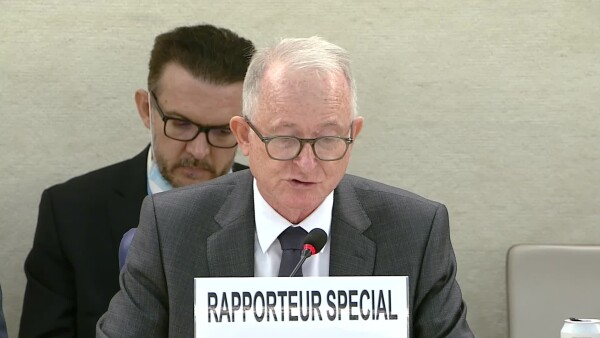
In its first report to the UN Human Rights Council, the Special Rapporteur on the situation of human rights in Afghanistan, Richard Bennett, warned that Afghanistan is trapped in a human rights crisis since the Taliban seized power in August 2021 and that the world seemed powerless to address.
Speaking to the Human Rights Council at the United Nations in Geneva, Mr Bennett said that "I’m gravely concerned about the staggering regression in women and girls enjoyment of civil, political, economic, social and cultural rights since the Taliban seized control of the country. There’s no country in the world where women and girls have so rapidly being deprived of their fundamental human rights purely because of gender.”
Bennett stressed that in light of the grave humanitarian situation, it's the joint responsibility of the Taliban, the de facto authorities, and the international community to ensure international assistance reaches the most marginalised people in the county.
“The dire humanitarian situation is very worrying, with food security becoming more precarious by the day", Mr. Bennett said. He added that "WHO and FAO warned that by November almost 19 million people are estimated to face acute levels of food insecurity. Children in particular, are facing extreme hunger and high risks of exploitation, including forced labor and marriage.”
According to Mr Bennett, the isolation of the Central Bank of Afghanistan from the international banking system, including access to the country's foreign currency reserves, has led the Afghan economy to the brink of the collapse.
Bennett's report raised particular concern about the degrading security situation in the country.
“Security in Afghanistan is deteriorating again", he said. "I remain concerned about the protection of civilians, especially its damaging impact on children, brutal attacks on civilians mainly claimed by the Islamic State – Khorasan Province (ISIL-KP) cast doubt on the de facto authorities’ ability to ensure security and protect people from harm.”
Bennett's report outlined systematic attacks against the civilian population, including revenge killings of former government officials.
“I’m particularly concerned that former Afghan National Defense and security forces and other officials of the former government remain subject to ongoing arbitrary detention, torture, extrajudicial killings and forced disappearances, despite the amnesty declared by the Taliban", the Special Rapporteur said. "I’m also receiving allegations of serious violence committed against the civilian population, allegedly by men representing local de facto authorities. They appear to act with impunity and creating an atmosphere of terror.”
The report indicates also that the situation of ethnic and religious minorities has continued to deteriorate since August 2021.
“Hazaras and Shia communities are one of the most severely persecuted groups", said Mr. Bennett. "Members have been arbitrarily arrested, tortured, summarily executed, displaced from traditional lands, subjected to discriminatory taxation and otherwise marginalized."
Bennett said that press freedom has seriously declined with dozens of journalists being imprisoned, attacked, intimidated and ill-treated and in a few cases filled or disappeared.
The justice system under the Republic has been largely swept aside with former judges, including women judges, excluded. There is uncertainty of the applicable laws and processes. Former judicial officials remain at high risk of reprisals by the Taliban or now-freed prisoners whose cases they presided over.
In response to the report presented by Mr. Bennet, the Ambassador and Permanent Representative of Afghanistan to the United Nations in Geneva, Mr. Nasir Ahmad Andisha, said that “today’s report and the recent report by UNAMA (United Nations Assistance Mission in Afghanistan) fails to capture the full spectre and the full nature and the extent of violation, abuses across the country, insufficient resources and inability to access location where violations are taking place, particularly in the north, and the fear to seek redress from among communities under severe surveillance and mass punishment have made it impossible to grasp the dire situation on the ground. Many violations are going undocumented, many casualties are overlooked.”
-ends-
SHOTLIST
- Medium shot, UN Geneva flag alley
- SOUNDBITE (ENGLISH): Richard Bennett, UN Special Rapporteur on the situation of human rights in Afghanistan: “I’m gravely concerned about the staggering regression in women and girls enjoyment of civil, political, economic, social and cultural rights since the Taliban seized control of the country. There’s no country in the world where women and girls have so rapidly being deprived of their fundamental human rights purely because of gender.”
- Wide shot, podium with speakers in Human Rights Council
- SOUNDBITE (ENGLISH): Richard Bennett, UN Special Rapporteur on the situation of human rights in Afghanistan: “The dire humanitarian situation is very worrying, with food security becoming more precarious by the day. WHO and FAO warned that by November almost 19 million people are estimated to face acute levels of food insecurity. Children in particular, are facing extreme hunger and high risks of exploitation, including forced labor and marriage.”
- Close up shot, representative listening.
- SOUNDBITE(ENGLISH) Richard Bennett, UN Special Rapporteur on the situation of human rights in Afghanistan: “Security in Afghanistan is deteriorating again. I remain concerned about the protection of civilians, especially its damaging impact on children, brutal attacks on civilians mainly claimed by the Islamic State – Khorasan Province (ISIL-KP) cast doubt on the de facto authorities’ ability to ensure security and protect people from harm.”
- Close up shot, woman delegate listening
- SOUNDBITE(ENGLISH) Richard Bennett, UN Special Rapporteur on the situation of human rights in Afghanistan: “I’m particularly concerned that former Afghan National Defense and security forces and other officials of the former government remain subject to ongoing arbitrary detention, torture, extrajudicial killings and forced disappearances, despite the amnesty declared by the Taliban. I’m also receiving allegations of serious violence committed against the civilian population, allegedly by men representing local de facto authorities. They appear to act with impunity and creating an atmosphere of terror.”
- Medium shot, Afghanistan representative.
- SOUNDBITE (ENGLISH): Richard Bennett, UN Special Rapporteur on the situation of human rights in Afghanistan: “Hazaras and Shia communities are one of the most severely persecuted groups. Members have been arbitrarily arrested, tortured, summarily executed, displaced from traditional lands, subjected to discriminatory taxation and otherwise marginalized.”
- Medium shot, various representatives listening in the Human Rights Room
- SOUNDBITE (ENGLISH): Nasir Ahmad Andisha, Ambassador and Permanent Representative of Afghanistan to the UN in Geneva:“Today’s report and the recent report by UNAMA fails to capture the full spectre and the full nature and the extent of violation, abuses across the country, insufficient resources and inability to access location where violations are taking place, particularly in the north, and the fear to seek redress from among communities under severe surveillance and mass punishment have made it impossible to grasp the dire situation on the ground. Many violations are going undocumented, many casualties are overlooked.”
- Close up shot, representative listening.
- Medium shot, various representatives.
- Medium shot, various representatives.
- Medium shot, Human Rights Council ceiling.
Similar Stories

1
1
1
Edited News | UNICEF
A little over one year since a ceasefire agreement was announced between Hamas fighters and Israel, more than 340 children have been reported killed and hundreds more injured, the UN Children’s Fund, UNICEF, said on Friday.

1
1
1
Edited News | UNICEF , IFRC
Six weeks after Nepal’s deadly flooding disaster, communities are still struggling to rebuild their lives, but they will need sustained help as global warming increases the risk of another Himalayan catastrophe, the UN Children’s Fund (UNICEF) said on Friday.

1
1
1
Edited News | WHO
In suspected Russia plague death, testing and monitoring underway – WHO
The death of a lab worker in Russia’s Siberia region has sparked concerns about plague being the cause, the UN World Health Organization (WHO) said on Tuesday, adding that it was following the situation closely.

1
1
Edited News | OHCHR , UNOG
UN Human Rights Chief Volker Türk on Friday provided and oral update to the 63rd session of the Human rights Council on Ukraine.

1
1
1
Edited News | OHCHR , UNOG
UN Human Rights Chief Volker Türk on Friday provided and oral update to the 63rd session of the Human rights Council on the human rights situation in Haiti.

1
1
1
Edited News | WHO
Repeated delays in bringing lifesaving medicines, prosthetics and more from Israel into Gaza risk having devastating consequences on Palestinians who urgently need them in the wartorn enclave, the UN World Health Organization (WHO) said on Friday. “A truck full of non-priority supplies or the right supplies arriving too late, doesn't save lives. That's the question that actually matters," said Dr Reinhilde Van De Weerdt, WHO Representative in the OPT.

1
1
1
Edited News | WHO
DRC: Early access to care and oxygen decisive for Ebola patients’ survival – WHO
In the Democratic Republic of the Congo (DRC), health workers fighting the country’s largest-ever Ebola outbreak are struggling to overcome critical challenges to patient care, the UN World Health Organization (WHO) warned on Tuesday.

1
1
1
Edited News | OCHA , UN
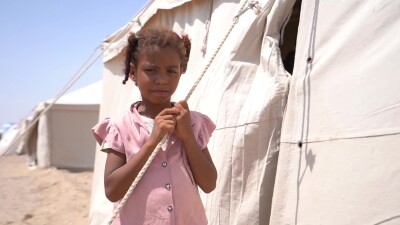
Civilians in Iran are continuing to feel the consequences of months of conflict and military escalation, the UN’s top official in the country has said, as loss of life, damage to civilian infrastructure and mounting economic pressures leave many facing continued uncertainty.
1
1
1
Edited News | WHO , UNICEF
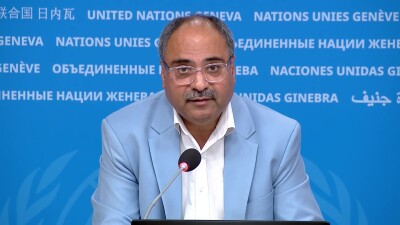
Aid agencies in Yemen highlighted the growing hunger emergency sparked by renewed fighting between Houthi opposition forces and Government troops, after mobile health clinics reported that hundreds of children displaced by the violence are suffering from the most deadly form of malnutrition.
1
1
1
Edited News | UNHCR
Displacement on the rise in Yemen as fighting continues - UNHCR
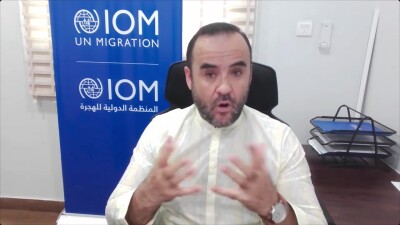
As hostilities worsen in Yemen, more people have been fleeing their homes, further intensifying the humanitarian crisis within the region, the UN Refugee Agency (UNHCR) warned on Tuesday.
1
1
1
Edited News | IOM , OHCHR , UNFPA , UNOG , UNHCR , WHO
Yemen’s humanitarian crisis growing by the hour amid spike in displacement
Yemenis displaced by renewed fighting have described fleeing for their lives amid shelling and gunfire, aid agencies reported on Friday, while highlighting the dramatic increase in humanitarian needs in the country and in Djibouti, where thousands have sought shelter.
1
1
1
Edited News | OHCHR , UNOG
The UN Human Rights Office issued on Friday a report documenting a shocking pattern of sexual violence amid Russia’s full-scale armed attack on Ukraine.