

The United Nations Office at Geneva
Multimedia Newsroom
Edited News , Press Conferences | OHCHR
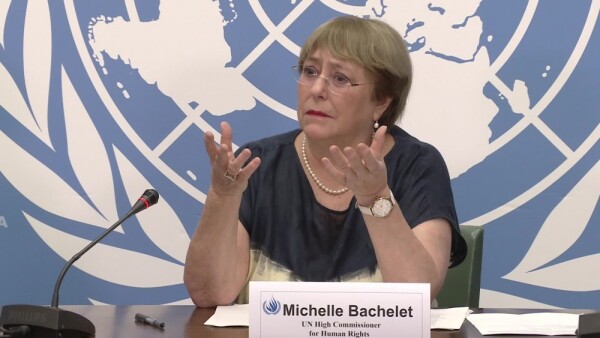
Michelle Bachelet (OHCHR) - Press Conference 25 August 2022
After four years as UN High Commissioner for Human Rights Michelle Bachelet on Thursday held a press conference in Geneva, her mandate ends next week, on 31 August.
“I would say the profound impact of the COVID-19 pandemic, the ever-increasing effects of climate change, and the reverberating shocks of the food, fuel and finance crisis resulting from the war against Ukraine have been the three major issues. Polarization within and among States has reached extraordinary levels and multilateralism is under pressure,” Bachelet told the news conference.
“Important protest movements occurred in every region of the world demanding an end to structural racism, respect for economic and social rights, and against corruption, governance deficits and abuse of power – in many instances accompanied by violence, threats and attacks against protesters and human rights defenders, and at some times against journalists. Some led to real change in the country. In other cases, rather than listening to the voices of the people, governments responded by shrinking the space for debate and dissent,” Bachelet said.
“The UN Human Rights Office has worked, in a myriad of ways, to help monitor, engage and advocate for the protection and promotion of human rights. As I have said before, at the UN, dialogue, engagement, cooperation, monitoring, reporting and public advocacy must all be part of our DNA. We have worked to try to help bridge the gap between government and civil society, to support national implementation of human rights obligations and advise on reforms to bring laws and policies into compliance with international standards, to expand our presences in-country so we are a in a better position to work closely with the people on the ground. We have spoken out in private and public on country-specific and broader issues. And we have seen some progress,” the UN Human Rights Chief said.
“The recognition of the human right to a clean, healthy and sustainable environment by the UN General Assembly last month marked the culmination of many years of advocacy by civil society. I am proud of my Office’s support and strong backing of this movement throughout the course of my mandate. The extreme weather events of the past few months have again driven home, powerfully, the existential need for urgent action to protect our planet for current and future generations. Meeting this need is the greatest human rights challenge of this era – and all States have an obligation to work together on this, and to walk the talk, to fully implement the right to a healthy environment. The response to the triple planetary crisis of pollution, climate change and biodiversity loss must be centred in human rights, including the rights to participation, access to information and justice, and by addressing the disproportionate impact of environmental harms on the most marginalized and disadvantaged,” Bachelet said.
“There has also been steady progress towards abolition of the death penalty – some 170 States have abolished or introduced a moratorium, in law or in practice, or suspended executions for more than 10 years. The Central African Republic, Chad, Kazakhstan, Sierra Leone and Papua New Guinea are among those who have taken steps to fully abolish the death penalty. Other States, including Liberia and Zambia are also actively considering abolition. Malaysia announced that it will abolish the country’s mandatory death penalty, including for drug related offences. As of today, 90 States have ratified the Second Optional Protocol to the International Covenant on Civil and Political Rights, the key international treaty prohibiting the use of the death penalty. Concerns remain, however, about the increased use or resumption of capital punishment in other countries, including Iran, Saudi Arabia, Myanmar and Singapore, and others like China and Viet Nam continue to classify data on its use as a state secret, limiting the possibility of scrutiny,” Bachelet said.
“I have – from the beginning of my mandate – pushed for greater recognition of the indivisibility and interdependence of economic, social and cultural rights with civil and political rights. The effects of the pandemic and the war in Ukraine have brought into stark focus this interdependence,” she said.
“I also call on States to adopt proactive measures, including food, agriculture and fuel subsidies, to mitigate the impact of the crises. All of this needs to be designed with people as part of the solution, through investment in inclusive, safe and meaningful channels for debate and participation at all levels,” Bachelet said.
“In many instances, sustained advocacy on key human rights issues, grounded in international human rights laws and standards, bears fruit. In Colombia this month, the incoming administration has pledged a shift in its approach on drug policy – from a punitive to a more social and public health approach. By addressing one of the deep-rooted causes of violence in Colombia, this approach could be instrumental to better protect the rights of peasants, indigenous and Afro-Colombian communities and of people who use drugs, both in Colombia and globally. My Office has been advocating – globally – for a human rights-based approach on drug policy, and is ready to assist,” she said.
“I have always sought – even on the most challenging issues – to encourage dialogue, to open the door for further exchanges. This means listening as well as speaking, keeping our eyes and ears to the context, identifying entry points and roadblocks, and trying to build trust incrementally, even when it seems unlikely.” Bachelet said.
“During my four years as High Commissioner, I had the privilege of speaking to so many courageous, spirited, extraordinary human rights defenders: the brave, indomitable women human rights defenders in Afghanistan; The determined mothers of the disappeared in Mexico; The inspirational staff working at a health centre in Bunia in the Democratic Republic of the Congo, serving victims of sexual violence; The wisdom and strength of indigenous peoples in Peru, who are on the frontlines of the impact of climate change, illegal mining and logging, and defend their rights in the face of serious risks; And the empathy and generosity of communities hosting internally displaced people in Burkina Faso.I found allies in traditional village leaders in Niger, who were working in their own ways to advance human rights in their communities; I met young people from Malaysia, Sweden, Australia, Costa Rica and elsewhere whose resourcefulness, creativity and ambition was palpable,” she said
“Last week, I spoke with Rohingya refugees in Cox’s Bazar. One teacher I met told me he had earned distinctions in all his classes at school in Myanmar and had dreamed of being a doctor. Instead, he has spent the past five years in a refugee camp, having had to flee his country – because he is Rohingya. “I still cry at night sometimes when I remember my dream,” he told me, adding that “my Buddhist friends are now doctors in Myanmar,” Bachelet said.
“Six unimaginably terrifying months for the people of Ukraine, 6.8 millions of whom have had to flee their country. Millions of others have been internally displaced. We have documented at least 5,587 civilians killed and 7,890 injured. Of these casualties, nearly 1,000 are children, ” she said.
“Six months on, the fighting continues, amid almost unthinkable risks posed to civilians and the environment as hostilities are conducted close to the Zaporizhzhia Nuclear Power Plant.I call on the Russian President to halt armed attack against Ukraine. The Zaporizhzhia plant needs to be immediately demilitarized,” she said.
“The journey to defend human rights never ends – and vigilance against roll-backs of rights is vital. I honour all those who, in their own ways, are working to defend human rights. As a woman and a lifelong feminist, I want to pay particular tribute to women human rights defenders, who have been at the forefront of social movements that have benefitted all of us. They have often been the ones bringing to the table the unheard voices of the most vulnerable. I will continue to stand with you as I return home to Chile, ” Bachelet said in conclusion.
ENDS
STORY: UN High Commissioner for Human Rights Michelle Bachelet’s end of mandate press conference
TRT: 09:27
SOURCE: OHCHR
RESTRICTIONS: NONE
LANGUAGE: English/NATS
ASPECT RATIO: 16:9
DATELINE: 25/08/2022 Geneva, Switzerland
SHOTLIST
- Exterior shot : Alley of flags Palais des Nations
- Medium shot: Michelle Bachelet
- SOUNDBITE (English)—Michelle Bachelet for UN High Commissioner for Human Rights (OHCHR): “I would say the profound impact of the COVID-19 pandemic, the ever-increasing effects of climate change, and the reverberating shocks of the food, fuel and finance crisis resulting from the war against Ukraine have been the three major issues. Polarization within and among States has reached extraordinary levels and multilateralism is under pressure.”
- Cut away: briefing room and participants
- SOUNDBITE (English)—Michelle Bachelet for UN High Commissioner for Human Rights (OHCHR): “Important protest movements occurred in every region of the world demanding an end to structural racism, respect for economic and social rights, and against corruption, governance deficits and abuse of power – in many instances accompanied by violence, threats and attacks against protesters and human rights defenders, and at some times against journalists. Some led to real change in the country. In other cases, rather than listening to the voices of the people, governments responded by shrinking the space for debate and dissent.”
- Cut away: briefing room and participants
- SOUNDBITE (English)—Michelle Bachelet for UN High Commissioner for Human Rights (OHCHR): “The UN Human Rights Office has worked, in a myriad of ways, to help monitor, engage and advocate for the protection and promotion of human rights. As I have said before, at the UN, dialogue, engagement, cooperation, monitoring, reporting and public advocacy must all be part of our DNA. We have worked to try to help bridge the gap between government and civil society, to support national implementation of human rights obligations and advise on reforms to bring laws and policies into compliance with international standards, to expand our presences in-country so we are a in a better position to work closely with the people on the ground. We have spoken out in private and public on country-specific and broader issues. And we have seen some progress.”
- Cut away: briefing room and participants
- SOUNDBITE (English)—Michelle Bachelet for UN High Commissioner for Human Rights (OHCHR): “The recognition of the human right to a clean, healthy and sustainable environment by the UN General Assembly last month marked the culmination of many years of advocacy by civil society. I am proud of my Office’s support and strong backing of this movement throughout the course of my mandate. The extreme weather events of the past few months have again driven home, powerfully, the existential need for urgent action to protect our planet for current and future generations. Meeting this need is the greatest human rights challenge of this era – and all States have an obligation to work together on this, and to walk the talk, to fully implement the right to a healthy environment. The response to the triple planetary crisis of pollution, climate change and biodiversity loss must be centred in human rights, including the rights to participation, access to information and justice, and by addressing the disproportionate impact of environmental harms on the most marginalized and disadvantaged.”
- Cut away: briefing room and participants
- SOUNDBITE (English)—Michelle Bachelet for UN High Commissioner for Human Rights (OHCHR): “There has also been steady progress towards abolition of the death penalty – some 170 States have abolished or introduced a moratorium, in law or in practice, or suspended executions for more than 10 years. The Central African Republic, Chad, Kazakhstan, Sierra Leone and Papua New Guinea are among those who have taken steps to fully abolish the death penalty. Other States, including Liberia and Zambia are also actively considering abolition. Malaysia announced that it will abolish the country’s mandatory death penalty, including for drug related offences. As of today, 90 States have ratified the Second Optional Protocol to the International Covenant on Civil and Political Rights, the key international treaty prohibiting the use of the death penalty. Concerns remain, however, about the increased use or resumption of capital punishment in other countries, including Iran, Saudi Arabia, Myanmar and Singapore, and others like China and Viet Nam continue to classify data on its use as a state secret, limiting the possibility of scrutiny.”
- Cut away: briefing room and participants
- SOUNDBITE (English)—Michelle Bachelet for UN High Commissioner for Human Rights (OHCHR): “I have – from the beginning of my mandate – pushed for greater recognition of the indivisibility and interdependence of economic, social and cultural rights with civil and political rights. The effects of the pandemic and the war in Ukraine have brought into stark focus this interdependence.”
- Cut away: briefing room and participants
- SOUNDBITE (English)—Michelle Bachelet for UN High Commissioner for Human Rights (OHCHR): “I also call on States to adopt proactive measures, including food, agriculture and fuel subsidies, to mitigate the impact of the crises. All of this needs to be designed with people as part of the solution, through investment in inclusive, safe and meaningful channels for debate and participation at all levels.”
- Cut away: briefing room and participants
- SOUNDBITE (English)—Michelle Bachelet for UN High Commissioner for Human Rights (OHCHR): “In many instances, sustained advocacy on key human rights issues, grounded in international human rights laws and standards, bears fruit. In Colombia this month, the incoming administration has pledged a shift in its approach on drug policy – from a punitive to a more social and public health approach. By addressing one of the deep-rooted causes of violence in Colombia, this approach could be instrumental to better protect the rights of peasants, indigenous and Afro-Colombian communities and of people who use drugs, both in Colombia and globally. My Office has been advocating – globally – for a human rights-based approach on drug policy, and is ready to assist,”
- Cut away: briefing room and participants
- SOUNDBITE (English)—Michelle Bachelet for UN High Commissioner for Human Rights (OHCHR): “I have always sought – even on the most challenging issues – to encourage dialogue, to open the door for further exchanges. This means listening as well as speaking, keeping our eyes and ears to the context, identifying entry points and roadblocks, and trying to build trust incrementally, even when it seems unlikely.”
- Cut away: briefing room and participants
- SOUNDBITE (English)—Michelle Bachelet for UN High Commissioner for Human Rights (OHCHR): “During my four years as High Commissioner, I had the privilege of speaking to so many courageous, spirited, extraordinary human rights defenders: The brave, indomitable women human rights defenders in Afghanistan; The determined mothers of the disappeared in Mexico; The inspirational staff working at a health centre in Bunia in the Democratic Republic of the Congo, serving victims of sexual violence; The wisdom and strength of indigenous peoples in Peru, who are on the frontlines of the impact of climate change, illegal mining and logging, and defend their rights in the face of serious risks; And the empathy and generosity of communities hosting internally displaced people in Burkina Faso. I found allies in traditional village leaders in Niger, who were working in their own ways to advance human rights in their communities; I met young people from Malaysia, Sweden, Australia, Costa Rica and elsewhere whose resourcefulness, creativity and ambition was palpable.”
- Cut away: briefing room and participants
- SOUNDBITE (English)—Michelle Bachelet for UN High Commissioner for Human Rights (OHCHR): “Last week, I spoke with Rohingya refugees in Cox’s Bazar. One teacher I met told me he had earned distinctions in all his classes at school in Myanmar and had dreamed of being a doctor. Instead, he has spent the past five years in a refugee camp, having had to flee his country – because he is Rohingya. “I still cry at night sometimes when I remember my dream,” he told me, adding that “my Buddhist friends are now doctors in Myanmar.”
- Cut away: briefing room and participants
- SOUNDBITE (English)—Michelle Bachelet for UN High Commissioner for Human Rights (OHCHR): “Six unimaginably terrifying months for the people of Ukraine, 6.8 million of whom have had to flee their country. Millions others have been internally displaced. We have documented at least 5,587 civilians killed and 7,890 injured. Of these casualties, nearly 1,000 are children. ”
- Cut away: briefing room and participants
- SOUNDBITE (English)—Michelle Bachelet for UN High Commissioner for Human Rights (OHCHR): “Six months on, the fighting continues, amid almost unthinkable risks posed to civilians and the environment as hostilities are conducted close to the Zaporizhzhia Nuclear Power Plant.I call on the Russian President to halt armed attack against Ukraine. The Zaporizhzhia plant needs to be immediately demilitarized.”
- Cut away: briefing room and participants
- SOUNDBITE (English)—Michelle Bachelet for UN High Commissioner for Human Rights (OHCHR): “The journey to defend human rights never ends – and vigilance against roll-backs of rights is vital. I honour all those who, in their own ways, are working to defend human rights. As a woman and a lifelong feminist, I want to pay particular tribute to women human rights defenders, who have been at the forefront of social movements that have benefitted all of us. They have often been the ones bringing to the table the unheard voices of the most vulnerable. I will continue to stand with you as I return home to Chile.”
Similar Stories
1
1
1
Press Conferences | HRC
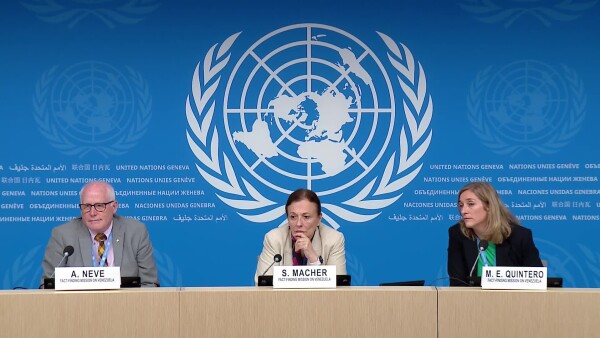
Press conference on the latest report of the Independent International Fact-Finding Mission on the Bolivarian Republic of Venezuela to the UN Human Rights Council
1
1
1
Press Conferences | OHCHR
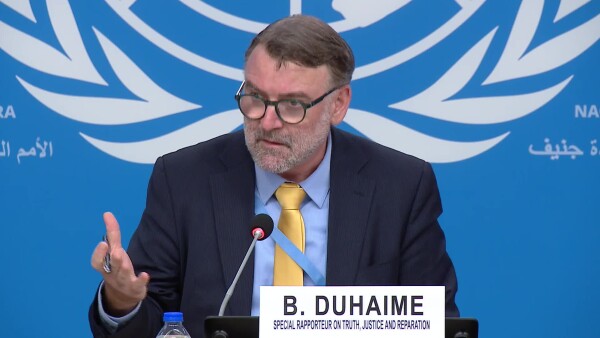
Victims Still Waiting: A Global Briefing on Transitional Justice Around the World
2
1
2
Edited News , Press Conferences | WMO
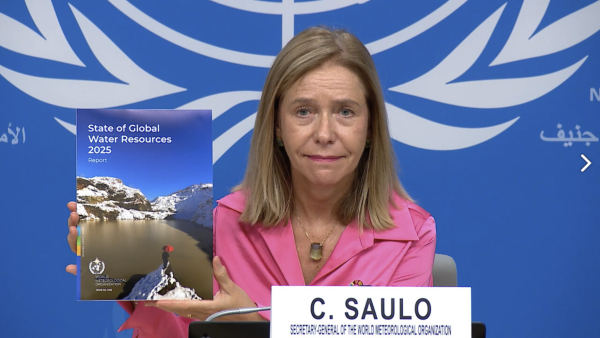
As world’s water reserves change, countries must prepare for a new reality: WMO
New data showing that rivers were at their lowest level for decades last year provides further evidence that the climate crisis is real and countries must act immediately to protect themselves from the increasing threat to communities and livelihoods, the UN World Meteorological Organization (WMO) said on Thursday.
The key findings from WMO’s State of Global Water Resources 2025 report covering the hydrological cycle and extreme events in the five-year period to last year:
- 2025 was one of driest years for river discharge in 35 years
- Past seven years have seen abnorfmal river flows
- Water storage on Earth’s land surface has decreased in past decade
- Widespread glacier loss across all regions for fourth consecutive year
- Asia and Africa are regions most affected by water-related disasters
- Water data availability has improved, but gaps remain in hard-hit areas
Highlighting the long-term decline in the Earth’s freshwater storage and glacier melt, WMO Secretary-General Celeste Saulo explained that the planet’s water reserves used to act as a planetary “savings account” that absorbed the occasional dry season, avoiding a water crisis. “One of the central stories of the 2025 report is what is happening to that savings account? And the simple answer is that we are depleting it,” she told journalists in Geneva.
Groundwater reserves are equally stretched and have been in decline since 2014, WMO’s report states, with nearly two-thirds of monitored wells worldwide showing levels lower than the historical norm and indicating a shift “further toward deficit…not recovery”.
“At the same time, we are seeing more water-related disasters,” Ms. Saulo said, while also stressing that the currently strengthening El Niño “will increase the risk of drought in some areas, and flooding in others”.
Glaciers disappearing
In 2025, for the fourth consecutive year, every major glaciated region on Earth lost ice mass, leading to short-term hazards including floods and long-term water insecurity, according to WMO.
Responding to a question about whether the changing global water cycle might have contributed to the deadly Nepal-China flooding disaster, Ms. Saulo explained that melting ice and rock was just one factor in the chain of events that ultimately sent a massive and deadly wall of water and debris downstream on 26 August, killing at least 1,367 people.
“You asked if it could happen again? Absolutely; the problem in this region is that there’s 63,700 glaciers at the last count,” she told a Press Conference in Geneva. “Even if you’re looking with remote sensing with satellites at these glaciers, you might see some faults, you might see some slight shifting, that does not mean necessarily catastrophic collapse. So, in order to plan for this, it’s very, very difficult. But the international community is looking very hard at ways in which we can bring people together to solve some of these monitoring issues.”
Data indicates that glaciers shrank between 2023 and 2025 with cumulative losses of 1,400 gigatonnes of water – or about one third of annual fresh water needs.
Every major glacier region on Earth lost ice for the fourth consecutive year.
“All 19 glacier regions around the globe lost ice; in Central Asia, Iceland, the Russian Arctic and western Canada and the United States, it was among the three worst years on record,” said Wayne Jenkinson, WMO’s Director of Hydrology and Cryosphere.
Some regions with smaller glaciers such as Central Europe, the Caucasus, the western Canada and the United States may already have reached “peak water”, Mr. Jenkinson warned.
“After this point, the glacier gives less meltwater each year simply because there is less ice left to melt. That matters for every community downstream that relies on water during hot, dry summers,” he explained.
Narelle van der Wel, WMO’s Head of Cryosphere Monitoring, Predictions and Services, stressed that while some further glacier loss is unavoidable, the eventual scale of the decline is not predetermined.
“Some glacier loss is inevitable, but total loss of glaciers is not yet inevitable,” she said, pointing to emissions reductions as central to limiting future losses.
Preparing for moving baselines
The report does not attribute every observed change to climate change alone. WMO says pressure on water resources and natural variability also contribute.
Mr. Jenkinson said governments need to prepare for “moving baselines” as historical patterns become less reliable.
“The situation 30 years ago is not where we are today,” he said. Countries, he added, need to prepare “for those changes that have really already arrived”.
ends
1
1
1
Edited News | OCHA , WHO
The deadly Ebola virus outbreak in DR Congo continues to spread across the vast country despite some success in containing it, aid officials said on Tuesday, in a renewed call for international support to help responders on the ground.
1
1
1
Press Conferences | WMO , OCHA , WHO , UNICEF , UN WOMEN , OHCHR , IOM , UNHCR
Update on Ebola from WHO and OCHA, update on the situation of children with the beginning of school in Ukraine from UNICEF, UN Women on the impact of the settlers and restrictions on women and girls in West Bank, OHCHR on the recovery of extensive human remains in Gaza, IOM and UNHCR on the new wave of displacement in Yemen
2
1
2
Press Conferences , Edited News | WFP
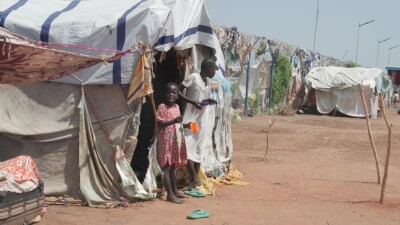
‘Super El Niño’ and converging crises worsen hunger in South Sudan and across the region - WFP
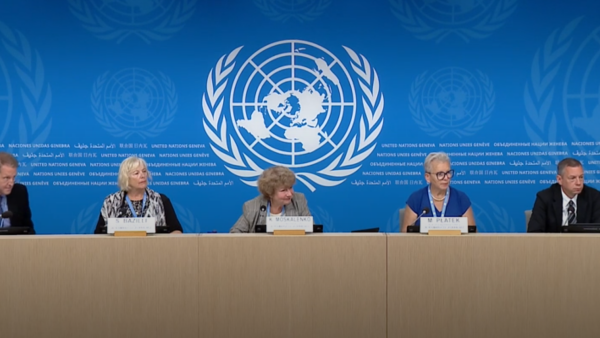
South Sudan’s hunger crisis is becoming increasingly catastrophic as violence, extreme weather and dwindling aid leave millions without enough food, the UN World Food Programme (WFP) warned on Tuesday.
1
1
1
Press Conferences | HRC
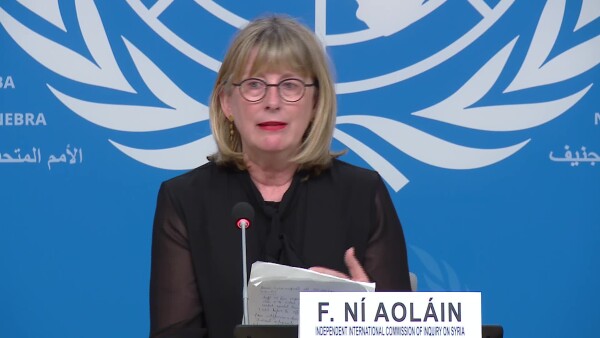
Update on the human rights situation in Belarus by the UN Group of Independent Experts on the Human Rights Situation in Belarus
1
1
1
Press Conferences | HRC , OHCHR
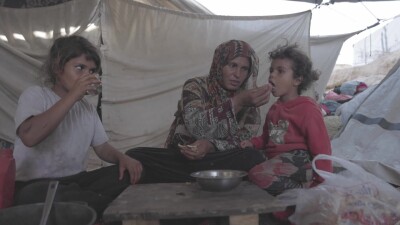
Update on the human rights situation in Syria by the Independent International Commission of Inquiry on the Syrian Arab Republic
1
1
1
Edited News | UN WOMEN
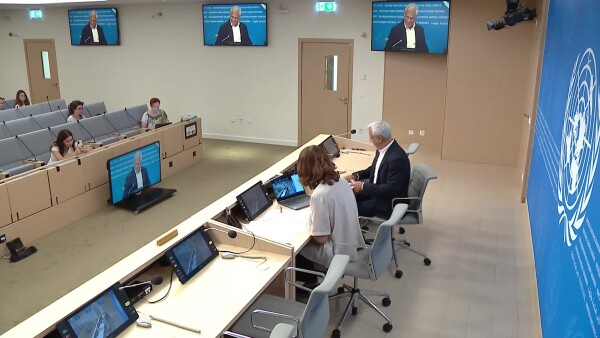
In war-torn Gaza, a growing number of women-headed households face “impossible decisions” every day, amid ongoing Israeli airstrikes and still-scarce resources, UN humanitarians said on Tuesday.
1
1
1
Press Conferences | UNOG , IOM , UN WOMEN , UNCTAD , WHO , UNECE
IOM Yemen's Western Coast displacement; UN WOMEN on Gaza; UNCTAD Strait of Hormuz disruptions impacts; WHO Ebola logistics in DRC; WHO smoking and infertility; UNECE Data centres and energy.
1
1
1
Edited News | OHCHR , UNOG
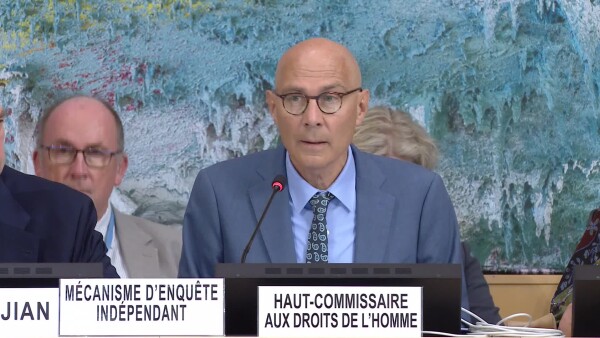
UN Human Rights Chief Volker Türk made the following remarks to the Enhanced Interactive Dialogue on the Independent Investigative Mechanism for Myanmar at the 63rd Human Rights Council.
1
Edited News | OHCHR , UNOG
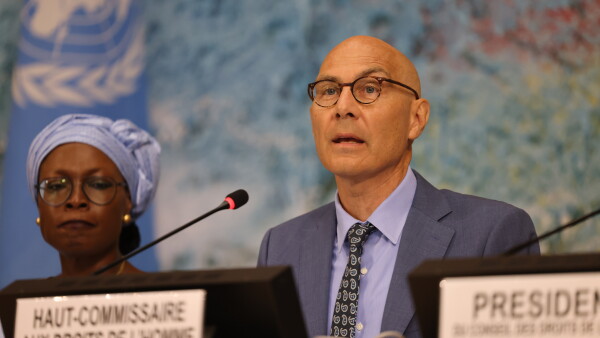
UN Human Rights Chief Volker Türk today delivered an update on the global human rights situation to the 63rdsession of the Human Rights Council in Geneva.