

The United Nations Office at Geneva
Multimedia Newsroom
Edited News , Press Conferences | WMO
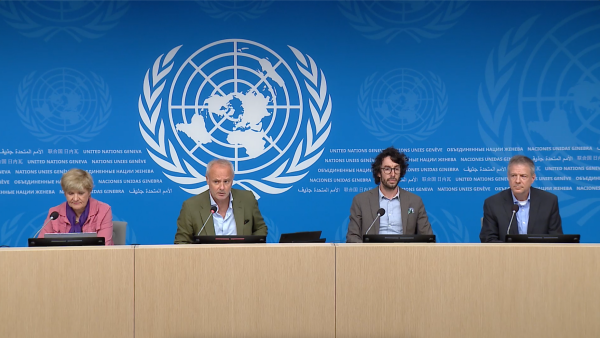
WMO - Press conference: State of Global Water Resources Report 2025 (embargo lifts 6am CET 17 Sept.)
As world’s water reserves change, countries must prepare for a new reality: WMO
New data showing that rivers were at their lowest level for decades last year provides further evidence that the climate crisis is real and countries must act immediately to protect themselves from the increasing threat to communities and livelihoods, the UN World Meteorological Organization (WMO) said on Thursday.
The key findings from WMO’s State of Global Water Resources 2025 report covering the hydrological cycle and extreme events in the five-year period to last year:
- 2025 was one of driest years for river discharge in 35 years
- Past seven years have seen abnorfmal river flows
- Water storage on Earth’s land surface has decreased in past decade
- Widespread glacier loss across all regions for fourth consecutive year
- Asia and Africa are regions most affected by water-related disasters
- Water data availability has improved, but gaps remain in hard-hit areas
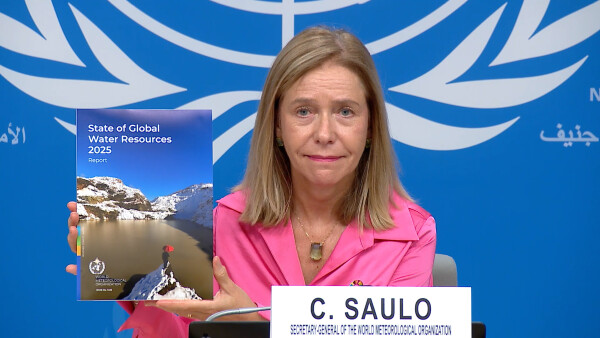
Highlighting the long-term decline in the Earth’s freshwater storage and glacier melt, WMO Secretary-General Celeste Saulo explained that the planet’s water reserves used to act as a planetary “savings account” that absorbed the occasional dry season, avoiding a water crisis. “One of the central stories of the 2025 report is what is happening to that savings account? And the simple answer is that we are depleting it,” she told journalists in Geneva.
Groundwater reserves are equally stretched and have been in decline since 2014, WMO’s report states, with nearly two-thirds of monitored wells worldwide showing levels lower than the historical norm and indicating a shift “further toward deficit…not recovery”.
“At the same time, we are seeing more water-related disasters,” Ms. Saulo said, while also stressing that the currently strengthening El Niño “will increase the risk of drought in some areas, and flooding in others”.
Glaciers disappearing
In 2025, for the fourth consecutive year, every major glaciated region on Earth lost ice mass, leading to short-term hazards including floods and long-term water insecurity, according to WMO.
Responding to a question about whether the changing global water cycle might have contributed to the deadly Nepal-China flooding disaster, Ms. Saulo explained that melting ice and rock was just one factor in the chain of events that ultimately sent a massive and deadly wall of water and debris downstream on 26 August, killing at least 1,367 people.
“You asked if it could happen again? Absolutely; the problem in this region is that there’s 63,700 glaciers at the last count,” she told a Press Conference in Geneva. “Even if you’re looking with remote sensing with satellites at these glaciers, you might see some faults, you might see some slight shifting, that does not mean necessarily catastrophic collapse. So, in order to plan for this, it’s very, very difficult. But the international community is looking very hard at ways in which we can bring people together to solve some of these monitoring issues.”
Data indicates that glaciers shrank between 2023 and 2025 with cumulative losses of 1,400 gigatonnes of water – or about one third of annual fresh water needs.
Every major glacier region on Earth lost ice for the fourth consecutive year.
“All 19 glacier regions around the globe lost ice; in Central Asia, Iceland, the Russian Arctic and western Canada and the United States, it was among the three worst years on record,” said Wayne Jenkinson, WMO’s Director of Hydrology and Cryosphere.
Some regions with smaller glaciers such as Central Europe, the Caucasus, the western Canada and the United States may already have reached “peak water”, Mr. Jenkinson warned.
“After this point, the glacier gives less meltwater each year simply because there is less ice left to melt. That matters for every community downstream that relies on water during hot, dry summers,” he explained.
Narelle van der Wel, WMO’s Head of Cryosphere Monitoring, Predictions and Services, stressed that while some further glacier loss is unavoidable, the eventual scale of the decline is not predetermined.
“Some glacier loss is inevitable, but total loss of glaciers is not yet inevitable,” she said, pointing to emissions reductions as central to limiting future losses.
Preparing for moving baselines
The report does not attribute every observed change to climate change alone. WMO says pressure on water resources and natural variability also contribute.
Mr. Jenkinson said governments need to prepare for “moving baselines” as historical patterns become less reliable.
“The situation 30 years ago is not where we are today,” he said. Countries, he added, need to prepare “for those changes that have really already arrived”.
ends
Story: Global water crisis – WMO
SOURCE: UNTV CH
RESTRICTIONS: NONE
LANGUAGE: ENGLISH / NATS
ASPECT RATIO: 16:9
Duration: 2’40”
DATELINE: 17 September 2026 - GENEVA, SWITZERLAND
Speakers:
- Celeste Saulo, WMO Secretary-General
- Wayne Jenkinson, Director, Division of Hydrology and Cryosphere
SHOTLIST
- Exterior medium shot, UN flag alley.
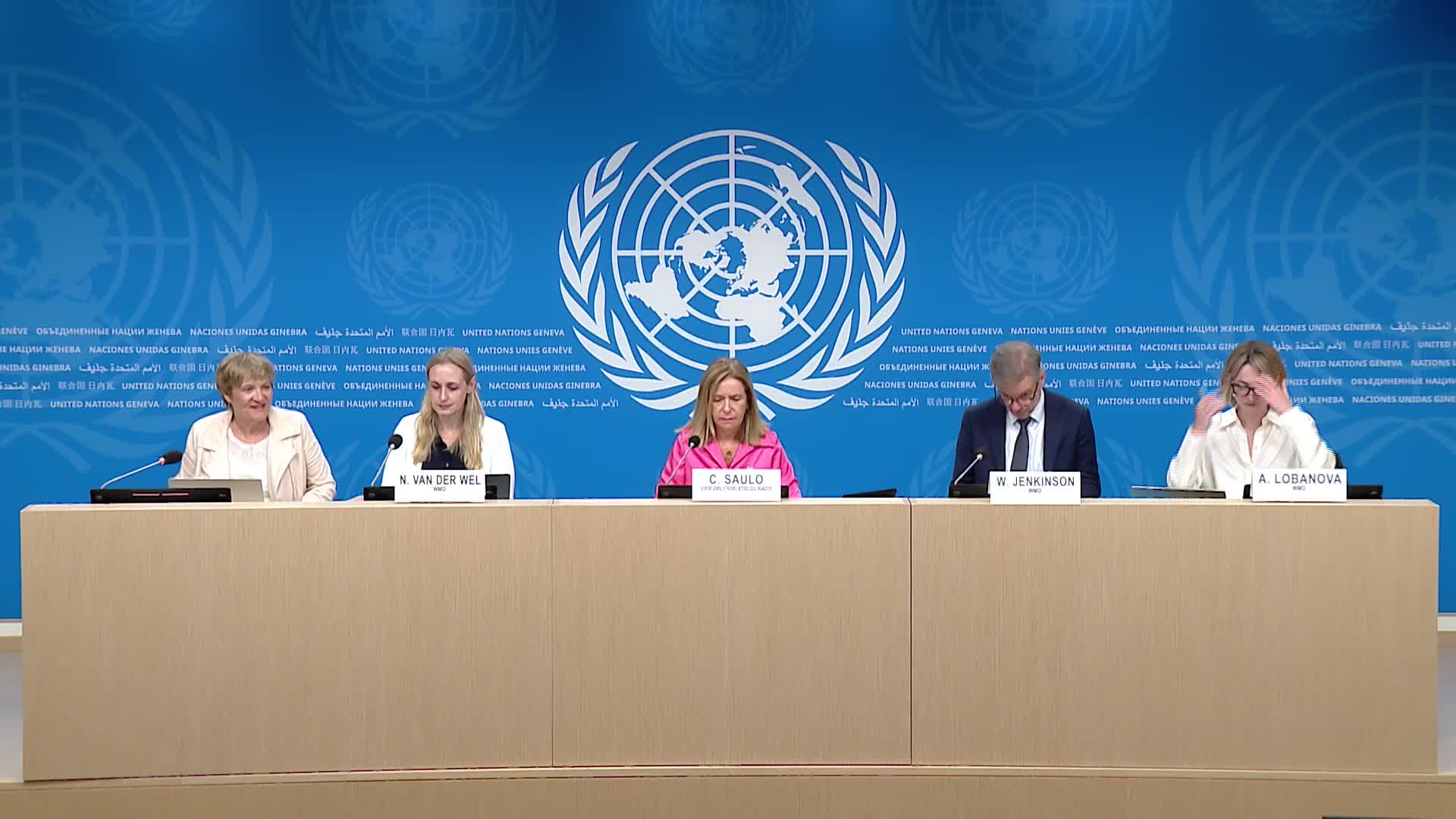
- Wide, Press Room, podium speakers.
- SOUNDBITE (English) - Celeste Saulo, WMO Secretary-General: “Reserves have acted as the planet’s savings account, a buffer that absorbs bad years so that a single drought or a single dry season does not translate directly into a water crisis. One of the central stories of the 2025 report is what is happening to that savings account? And the simple answer is that we are depleting it.”
- Wide, Press Room, podium speakers.
- SOUNDBITE (English) - Celeste Saulo, WMO Secretary-General: “Last year was one of the driest years for river discharge in 35 years. The past seven years have been abnormal river flows. Water-related extreme events continue to devastate communities and economies.”
- Medium-wide, video journalist, journalist.
- SOUNDBITE (English) - Celeste Saulo, WMO Secretary-General: “But it is not all bad news. Some regions showed improvement in 2025. Parts of South America saw a partial recovery in water storage during 2025 after a severe multi-year deficit. Central and southern Africa maintained much above-normal water levels across several major lakes.”
- Medium, podium speakers, Press Room.
- SOUNDBITE (English) - Wayne Jenkinson, Director, Division of Hydrology and Cryosphere: “In 2025 and for the past seven years, how water is distributed across the globe is not what we’ve seen in the previous three decades. Water is often not where we need it, nor when we need it.”
- Wide, video journalist filming with mobile phone.
- SOUNDBITE (English) - Wayne Jenkinson, Director, Division of Hydrology and Cryosphere: “For the seventh year in a row, fewer rivers had normal flows than in any year between 1991 and 2020. For the fourth consecutive year, all major glaciers lost ice. Land is holding less fresh water and has been since the middle of the last decade. Over the past five years, Asia and Africa were the regions most affected by reported water-related disasters, both in the number of events and lives lost.”
- Wide, podium speakers.
- SOUNDBITE (English) - Wayne Jenkinson, Director, Division of Hydrology and Cryosphere: “2025 was the fourth year in a row in which all 19 glacier regions around the globe lost ice; in Central Asia, Iceland, the Russian Arctic and western Canada and the United States, it was among the three worst years on record.”
- Medium, journalist.
- SOUNDBITE (English) - Wayne Jenkinson, Director, Division of Hydrology and Cryosphere: “Some regions with smaller glaciers, such as Central Europe, the Caucasus, the western Canada and the United States may already have reached what we call ‘peak water’. After this point, the glacier gives less meltwater each year simply because there is less ice left to melt. That matters for every community downstream that relies on water during hot, dry summers.”
- Medium, Ms. Saulo holding WMO State of Global Water Resources 2025 report.
Similar Stories
1
1
1
Press Conferences | UNHCR
End of UNHCR's 77th Annual Executive Committee (ExCom) meeting week
1
1
1
Edited News | UNICEF
A little over one year since a ceasefire agreement was announced between Hamas fighters and Israel, more than 340 children have been reported killed and hundreds more injured, the UN Children’s Fund, UNICEF, said on Friday.
1
1
1
Press Conferences | UNICEF , IOM , UNHCR
UN Special Assistant to the Personal Envoy Office (SUDAN): Peace Initiatives and Efforts in Sudan; UNICEF: Dire situation of children in Gaza; IOM: Damaged Homes and Energy Attacks Risk Displacing Ukrainians for this winter; UNHCR: update on EXCOM week
1
1
1
Press Conferences | IOM , UNDRR
UN stresses importance of household preparedness for disaster risk reduction.
1
1
1
Edited News | UNICEF , IFRC
Six weeks after Nepal’s deadly flooding disaster, communities are still struggling to rebuild their lives, but they will need sustained help as global warming increases the risk of another Himalayan catastrophe, the UN Children’s Fund (UNICEF) said on Friday.
1
1
1
Statements , Press Conferences | OHCHR
1
1
1
Press Conferences | UNHCR , UNICEF , IFRC , OHCHR , UN WOMEN , IOM , OCHA , WHO
UNHCR – ExCom Meeting, UNICEF – Nepal Recovery, IFRC – Flash Floods, WHO – Mental Health, IOM – South Sudan Floods, OCHA – DRC Humanitarian aid, UNHCR – Sahel Displacement, UNICEF – Yemen Update, IOM – Gaza Shelter, UN Women – Gaza Women, OHCHR – Arrests and detentions of Syrians by Israeli force
2
1
2
Press Conferences | UNCTAD
Presentation of the Trade and Developement Report 2026
Embargoed until 9 October 2026 at 11 a.m. (Geneva Time)
UNCTAD: UNCTAD’s flagship report finds that governments increasingly use industrial, trade, financial and technology policies to pursue economic and national security objectives. Market access and the ability to move into higher-value activities now depend more heavily on technology, finance and geopolitics.
1
1
1
Press Conferences | UPU
Release of the State of the Postal Sector Report 2026
1
1
1
Edited News | WHO
In suspected Russia plague death, testing and monitoring underway – WHO
The death of a lab worker in Russia’s Siberia region has sparked concerns about plague being the cause, the UN World Health Organization (WHO) said on Tuesday, adding that it was following the situation closely.
1
1
1
Press Conferences | IOM , ITU , UNECE , UNICEF , WHO , WMO
UNICEF: Ebola, DRC - children orphans or separating them from parents and caregivers; IOM: Humanitarian needs in Djibouti amid arrivals from Yemen and increased migrant movements; WHO: Darfur, scale of health needs far exceeds available resources; WMO co-sponsored Global Heat Forum, Bangkok, monthly Global Seasonal Climate Update; UNECE: UN Forum of Mayors; ITU Plenipotentiary Conference 2026; WHO: child and adolescent obesity guidelines and new global roadmap to tackle pregnancy hypertension, a leading cause of maternal mortality
1
1
Edited News | OHCHR , UNOG
UN Human Rights Chief Volker Türk on Friday provided and oral update to the 63rd session of the Human rights Council on Ukraine.