

The United Nations Office at Geneva
Multimedia Newsroom
Edited News , Press Conferences | WMO
WMO - Press conference: State of Global Water Resources Report 2025 (embargo lifts 6am CET 17 Sept.)
As world’s water reserves change, countries must prepare for a new reality: WMO
New data showing that rivers were at their lowest level for decades last year provides further evidence that the climate crisis is real and countries must act immediately to protect themselves from the increasing threat to communities and livelihoods, the UN World Meteorological Organization (WMO) said on Thursday.
The key findings from WMO’s State of Global Water Resources 2025 report covering the hydrological cycle and extreme events in the five-year period to last year:
- 2025 was one of driest years for river discharge in 35 years
- Past seven years have seen abnorfmal river flows
- Water storage on Earth’s land surface has decreased in past decade
- Widespread glacier loss across all regions for fourth consecutive year
- Asia and Africa are regions most affected by water-related disasters
- Water data availability has improved, but gaps remain in hard-hit areas
Highlighting the long-term decline in the Earth’s freshwater storage and glacier melt, WMO Secretary-General Celeste Saulo explained that the planet’s water reserves used to act as a planetary “savings account” that absorbed the occasional dry season, avoiding a water crisis. “One of the central stories of the 2025 report is what is happening to that savings account? And the simple answer is that we are depleting it,” she told journalists in Geneva.
Groundwater reserves are equally stretched and have been in decline since 2014, WMO’s report states, with nearly two-thirds of monitored wells worldwide showing levels lower than the historical norm and indicating a shift “further toward deficit…not recovery”.
“At the same time, we are seeing more water-related disasters,” Ms. Saulo said, while also stressing that the currently strengthening El Niño “will increase the risk of drought in some areas, and flooding in others”.
Glaciers disappearing
In 2025, for the fourth consecutive year, every major glaciated region on Earth lost ice mass, leading to short-term hazards including floods and long-term water insecurity, according to WMO.
Responding to a question about whether the changing global water cycle might have contributed to the deadly Nepal-China flooding disaster, Ms. Saulo explained that melting ice and rock was just one factor in the chain of events that ultimately sent a massive and deadly wall of water and debris downstream on 26 August, killing at least 1,367 people.
“You asked if it could happen again? Absolutely; the problem in this region is that there’s 63,700 glaciers at the last count,” she told a Press Conference in Geneva. “Even if you’re looking with remote sensing with satellites at these glaciers, you might see some faults, you might see some slight shifting, that does not mean necessarily catastrophic collapse. So, in order to plan for this, it’s very, very difficult. But the international community is looking very hard at ways in which we can bring people together to solve some of these monitoring issues.”
Data indicates that glaciers shrank between 2023 and 2025 with cumulative losses of 1,400 gigatonnes of water – or about one third of annual fresh water needs.
Every major glacier region on Earth lost ice for the fourth consecutive year.
“All 19 glacier regions around the globe lost ice; in Central Asia, Iceland, the Russian Arctic and western Canada and the United States, it was among the three worst years on record,” said Wayne Jenkinson, WMO’s Director of Hydrology and Cryosphere.
Some regions with smaller glaciers such as Central Europe, the Caucasus, the western Canada and the United States may already have reached “peak water”, Mr. Jenkinson warned.
“After this point, the glacier gives less meltwater each year simply because there is less ice left to melt. That matters for every community downstream that relies on water during hot, dry summers,” he explained.
Narelle van der Wel, WMO’s Head of Cryosphere Monitoring, Predictions and Services, stressed that while some further glacier loss is unavoidable, the eventual scale of the decline is not predetermined.
“Some glacier loss is inevitable, but total loss of glaciers is not yet inevitable,” she said, pointing to emissions reductions as central to limiting future losses.
Preparing for moving baselines
The report does not attribute every observed change to climate change alone. WMO says pressure on water resources and natural variability also contribute.
Mr. Jenkinson said governments need to prepare for “moving baselines” as historical patterns become less reliable.
“The situation 30 years ago is not where we are today,” he said. Countries, he added, need to prepare “for those changes that have really already arrived”.
ends
Story: Global water crisis – WMO
SOURCE: UNTV CH
RESTRICTIONS: NONE
LANGUAGE: ENGLISH / NATS
ASPECT RATIO: 16:9
Duration: 2’40”
DATELINE: 17 September 2026 - GENEVA, SWITZERLAND
Speakers:
- Celeste Saulo, WMO Secretary-General
- Wayne Jenkinson, Director, Division of Hydrology and Cryosphere
SHOTLIST
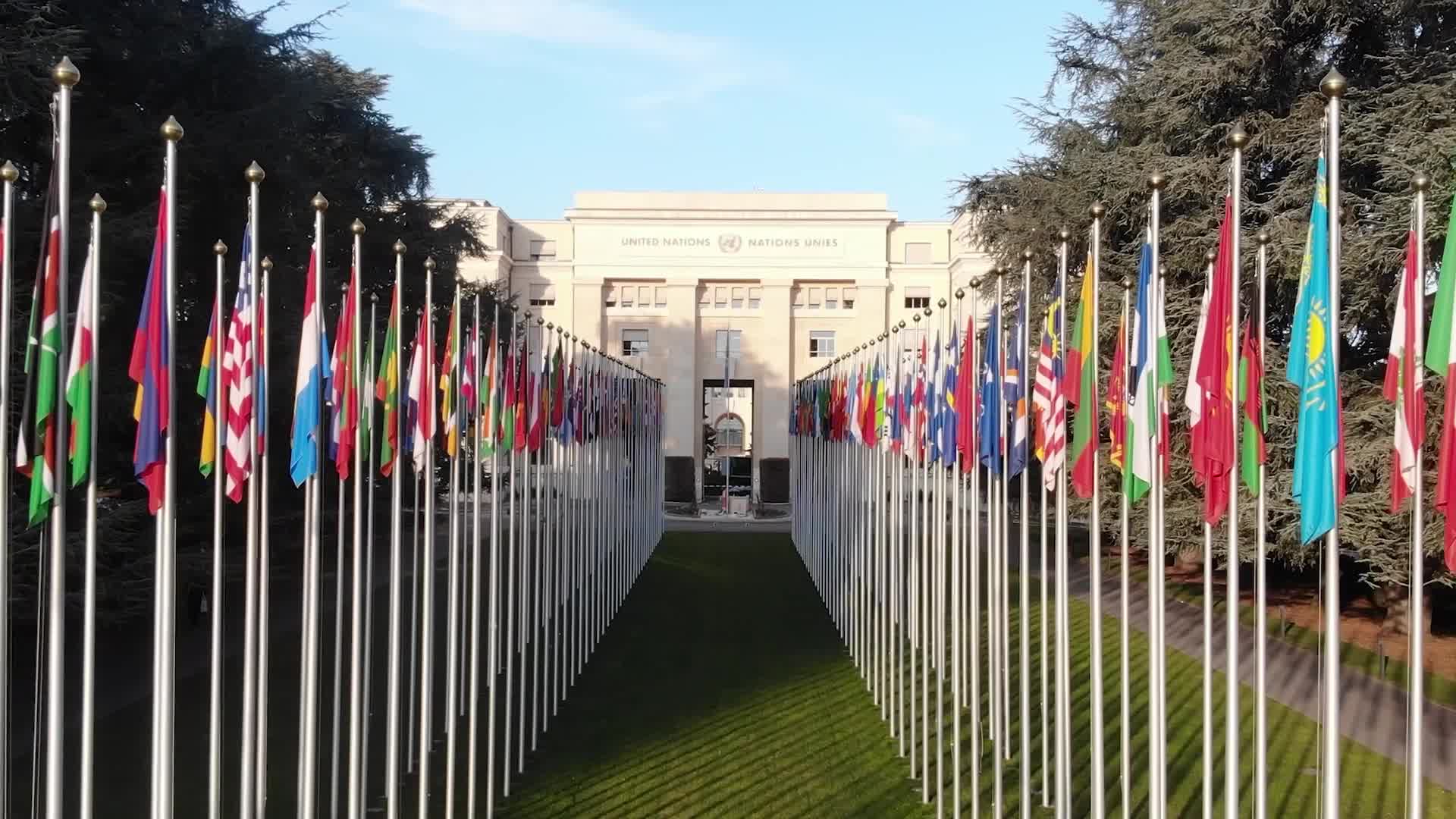
- Exterior medium shot, UN flag alley.
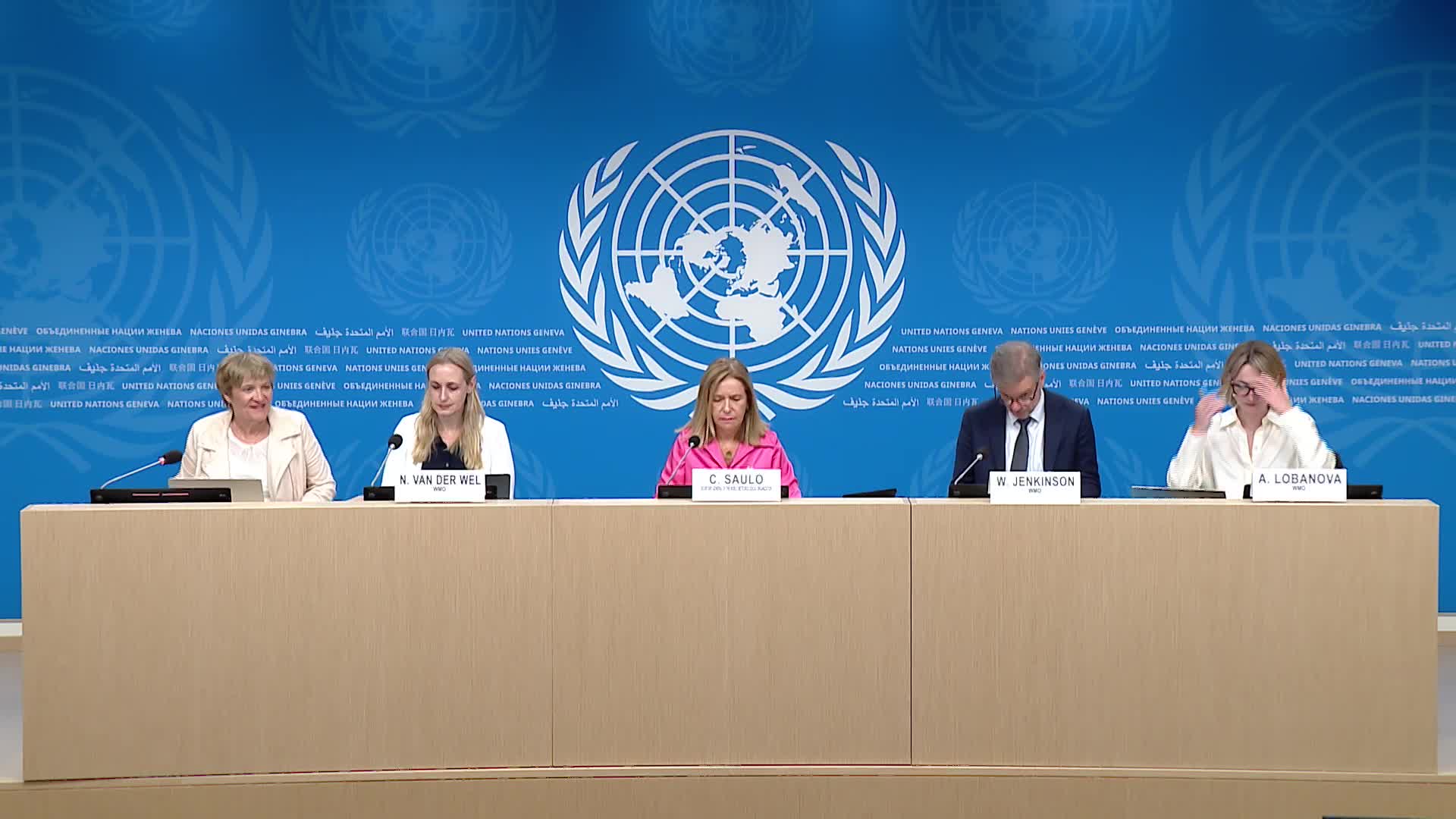
- Wide, Press Room, podium speakers.
- SOUNDBITE (English) - Celeste Saulo, WMO Secretary-General: “Reserves have acted as the planet’s savings account, a buffer that absorbs bad years so that a single drought or a single dry season does not translate directly into a water crisis. One of the central stories of the 2025 report is what is happening to that savings account? And the simple answer is that we are depleting it.”
- Wide, Press Room, podium speakers.
- SOUNDBITE (English) - Celeste Saulo, WMO Secretary-General: “Last year was one of the driest years for river discharge in 35 years. The past seven years have been abnormal river flows. Water-related extreme events continue to devastate communities and economies.”
- Medium-wide, video journalist, journalist.
- SOUNDBITE (English) - Celeste Saulo, WMO Secretary-General: “But it is not all bad news. Some regions showed improvement in 2025. Parts of South America saw a partial recovery in water storage during 2025 after a severe multi-year deficit. Central and southern Africa maintained much above-normal water levels across several major lakes.”
- Medium, podium speakers, Press Room.
- SOUNDBITE (English) - Wayne Jenkinson, Director, Division of Hydrology and Cryosphere: “In 2025 and for the past seven years, how water is distributed across the globe is not what we’ve seen in the previous three decades. Water is often not where we need it, nor when we need it.”
- Wide, video journalist filming with mobile phone.
- SOUNDBITE (English) - Wayne Jenkinson, Director, Division of Hydrology and Cryosphere: “For the seventh year in a row, fewer rivers had normal flows than in any year between 1991 and 2020. For the fourth consecutive year, all major glaciers lost ice. Land is holding less fresh water and has been since the middle of the last decade. Over the past five years, Asia and Africa were the regions most affected by reported water-related disasters, both in the number of events and lives lost.”
- Wide, podium speakers.
- SOUNDBITE (English) - Wayne Jenkinson, Director, Division of Hydrology and Cryosphere: “2025 was the fourth year in a row in which all 19 glacier regions around the globe lost ice; in Central Asia, Iceland, the Russian Arctic and western Canada and the United States, it was among the three worst years on record.”
- Medium, journalist.
- SOUNDBITE (English) - Wayne Jenkinson, Director, Division of Hydrology and Cryosphere: “Some regions with smaller glaciers, such as Central Europe, the Caucasus, the western Canada and the United States may already have reached what we call ‘peak water’. After this point, the glacier gives less meltwater each year simply because there is less ice left to melt. That matters for every community downstream that relies on water during hot, dry summers.”
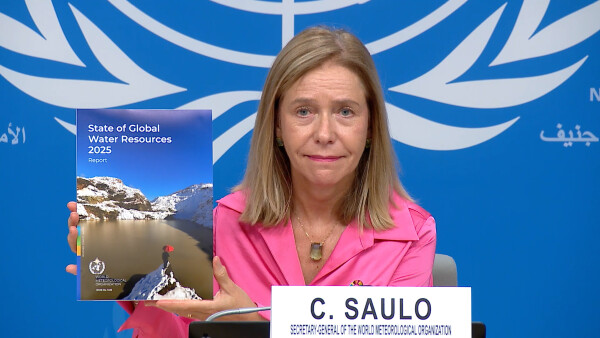
- Medium, Ms. Saulo holding WMO State of Global Water Resources 2025 report.
Similar Stories
2
1
2
Press Conferences | UNCTAD
UNCTAD's flagship report finds that global maritime trade is set to stall in 2026, with zero growth after 1.9% in 2025, as disruptions at major shipping routes and chokepoints force ships onto longer voyages and drive-up costs.
1
1
1
Edited News | UNICEF , WHO
Eastern DR Congo: beyond Ebola, women caught in a cycle of violence
New surveillance findings show how the Ebola outbreak is increasing risk of violence against women and girls, with nearly six in 10 surveyed reporting that abuse has started or intensified since the beginning of the epidemic.
1
1
1
Press Conferences | UNICEF
UNICEF: Increase in emotional, verbal, and physical violence against girls and women in DRC since the start of the Ebola outbreak.
1
1
1
Press Conferences | UNODA
Conclusion of 7th Review Conference on the Convention on Certain Conventional Weapons (CCW)
1
1
1
Edited News | UNICEF , ECW
Shattered playgrounds and freezing classrooms: inside Ukraine’s deadliest year for children
Amid the ruins of a twice-bombed Kyiv kindergarten and day-long power cuts, the United Nations Children’s Fund (UNICEF) on Friday highlighted the dangers to youngsters enduring another brutal winter, while child casualty numbers surge past previous annual records.
1
1
1
Press Conferences | IIMM , WFP , UNICEF , UN WOMEN , ECW , UNAIDS
IIMM: ICC ruling on Myanmar genocide against the Rohingya; WFP Global Outlook 2027: Meeting today’s needs, investing in tomorrow’s solutions; ECW -Education Cannot Wait: US$52 million to keep 300,000 children learning in Lebanon, Myanmar and South Sudan; UNICEF: Alarming number of child casualties in the first 10 months of 2026 as attacks on civilian infrastructure continue; UN WOMEN: assault on the rights and freedoms of women and girls in Afghanistan continues, alongside funding cuts and ongoing humanitarian crises; UNAIDS: UNAIDS World AIDS Day Report 2026
1
1
1
Edited News | OHCHR , UNOG
The UN Human Rights Office on Tuesday published a new report on the conflict in Sudan. Addressing journalists about the report at the weekly press briefing in Geneva, the Office’s spokesperson Marta Hurtado said, “This morning our Office has published a report on the conflict in Sudan, detailing the persistent disregard for the protection of civilians and how fighting continues to exact an unbearable toll on the population.”
1
1
1
Edited News | OHCHR , UNOG
UN Human Rights spokesperson Marta Hurtado today denounced the continued atrocious abuses in Haiti at the bi-weekly briefing in Geneva.
1
1
1
Edited News | WFP , IOM
Winter rains deepen Gaza’s humanitarian crisis as access restrictions and aid cuts threaten millions
Gaza is facing a deepening shelter, sanitation and food security crisis as winter rains flood makeshift shelters, destroy scarce food supplies and leave displaced families struggling to stay warm and fed.
2
1
2
Press Conferences | OHCHR , WFP , IOM , UN WOMEN , UNEP , WHO , UNOPS
OHCHR: Sudan situational update, drones; Rights situation in Haiti. WFP/IOM: Dire humanitarian needs in Gaza as winter approaches, critical funding needs. UN Women: Gaza’s families struggle as rain and sewage flood makeshift shelters. UNEP/WHO - 2026 State of the Science of Endocrine Disrupting Chemicals” report. UNOPS The Global Fund for Coral Reefs - coral reefs face a climate tipping point. UNHCR - new Refugee Data Portal to strengthen evidence and drive solutions for millions displaced. UNIS: 10th 1M1B Impact Summit
1
1
1
Edited News | OHCHR , UNOG
UN Human Rights Chief Volker Türk on Friday called on States to urgently agree to the development of a treaty regulating autonomous weapon systems, as they prepare to meet at the 7th Review Conference of the Convention on Certain Conventional Weapons next week.
1
1
1
Edited News
DR Congo: Ebola outbreak persists six-months on as armed groups violence hamper response
The Ebola outbreak in the Democratic Republic of the Congo (DRC) continues to spread amid persistent deadly attacks against civilians and frontline health workers by armed groups that are obstructing efforts to stop transmission, UN responders said on Friday.