

The United Nations Office at Geneva
Multimedia Newsroom
Press Conferences | UNOG , IOM , UN WOMEN , UNCTAD , WHO , UNECE
UN Geneva Press Briefing - 08 September 2026
UN INFORMATION SERVICE GENEVA PRESS BRIEFING
8 September 2026
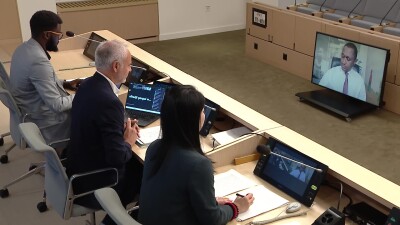
Alessandra Vellucci, Director of the United Nations Information Service in Geneva, chaired a
hybrid press briefing, which was attended by the spokespersons and representatives of the
World Health Organization, UN Women, the International Organization for Migration, the
United Nations Trade and Development, and the United Nations Economic Commission for
Europe.
War and the rise of women-headed households in Gaza
Sofia Calltorp, UN Women Chief of Humanitarian Action, said that today UN Women was
publishing a new report on women-headed households in Gaza, which showed that women
headed nearly one in four households in Gaza: an estimated 86,290 families. This figure
was double the pre-October 2023 rate and followed the widespread killings of Palestinians.
UN Women had been speaking to widows and to women whose husbands were missing,
detained, severely injured, forcibly displaced, or whose fate remained unknown, and it
found a horrific amount of collective heartbreak. Women were dealing with the grief of
losing a husband and a father to their children, and at the same time, facing the sole
responsibility of managing the household, protecting and providing for their families, all in
extremely dire circumstances, and in increasingly unliveable conditions, with limited access
to essential services, amidst continuous Israeli bombardment. Every day, these women had
to decide how to use limited resources to ensure survival of their families.
They were more likely to be displaced or have their home destroyed. Nearly seven in ten
women-headed households did not have adequate shelter, compared with 55 percent of
households headed by a male. Three-quarters of women-headed households report housing
damage, compared with two-thirds of those headed by a male. Women-headed households
had been forced to flee, on average, eight times since October 2023, and two-thirds of them
needed urgent cash assistance to ensure survival. Ms. Calltorp highlighted the continued
danger for women and girls since the ceasefire in October 2025. At least 246 women and
girls had been killed since then, an average of six women and girls killed per day. Ms.
Calltorp went on to provide several examples of Palestinian students killed on their way to
school. The ceasefire had to be implemented, and international humanitarian law had to be
respected. The needs of women and girls had to be placed at the heart of recovery efforts,
stressed Ms. Calltorp.
Escalating hostilities drive displacement Yemen's West Coast
Abdusattor Esoev, Chief of Mission of the International Organization for Migration (IOM) in
Yemen, speaking from Aden, said that IOM was deeply alarmed by the escalating violence
on Yemen’s west coast, which had displaced more than 18,500 people in just 72 hours.
Families were arriving destitute, with no shelter, food, or safe options for return. Many had
already endured multiple displacements over the past 12 years of conflict, and each new
flare-up erased what little stability they had managed to rebuild. The families forced to
move were coming from displacement camps, and the receiving areas were struggling with
accepting such an influx of displaced persons. IOM was equally concerned about the plight
of migrants stranded in Yemen, a country that had long been a transit hub. Today, many of
these migrants faced heightened risks amid deteriorating security and humanitarian
conditions. Protection concerns were also rising, added Mr. Esoev. At this critical moment,
the people of Yemen needed additional support, and IOM stood ready to scale up. It was
using its Displacement Tracking Matrix, assessing the needs of people on the move, and
providing essential services which had to be increased.
The human toll was rising. Fatalities were increasing, families were trapped by blocked
roads and insecurity, and access constraints were hampering the delivery of life-saving
assistance. Protection concerns were mounting, with civilians caught in frontline areas and
unable to move to safety. Over the past two years, Mr. Esoev had observed amazing
resilience of the Yemeni people, but the people could not and should not be facing this
ongoing crisis alone, which was why international support was necessary. While IOM was
focused on cash assistance and rapid response mechanisms, more needed to be done. IOM
was also managing the WASH pipelines and providing health services in one area on the
West Coast, he informed.
Alessandra Vellucci, for the United Nations Information Service (UNIS), referred to the
previous day’s statement by the UN Special Envoy for Yemen, who called on the parties to
cease all hostilities, exercise maximum restraint, and make full use of existing channels,
including the UN’s Military Coordination Committee, to prevent further escalation. All parties
had to uphold their obligations under international humanitarian law and protect civilians
and civilian infrastructure.
Strait of Hormuz disruptions affect global employment
Marcelo Risi, for the United Nations Trade and Development (UNCTAD), said that today
UNCTAD was releasing new analysis on the economic effects of disruptions in the Strait of
Hormuz, which looked into what happened when higher costs reached firms, and why
smaller firms were likely to feel them more. Mr. Risi reminded that small and medium-sized
enterprises accounted for around 90 percent of businesses, 70 percent of global
employment and half of global GDP. That was why a disruption at one strategic point in
global trade could ripple far beyond the Strait itself. While larger companies could often
spread risk across suppliers, markets and financing sources, smaller firms typically had
fewer alternatives when energy, freight, insurance and financing costs rise. Almost half of
small firms in developing economies identified access to finance as an obstacle, around 70
percent more than the figure in developed economies. The shock did not create these
vulnerabilities, but it hit firms that were already operating under very different conditions
and could widen the gap further.
Mr. Risi further explained that the risk went beyond the immediate shock. Smaller firms
could be pushed out of value chains even when overall trade began to recover. While
headline trade figures might recover, participation became more concentrated among larger
firms. This was not only a story about firms; it was also about jobs, incomes and how
broadly the benefits of recovery were shared. Mr. Risi stressed that keeping trade moving
was not enough; smaller firms had to be connected to trade, which meant ensuring access
to trade finance, liquidity and working capital when costs rose and payment cycles
lengthened. It also meant improving access to affordable logistics, trade facilitation, market
information and business services.
The full analysis is available here.
Scaling up Ebola care in the Democratic Republic of the Congo
Luca Fontana, Technical Officer, Health and Technical Logistics at the World Health
Organization (WHO), had returned from the Democratic Republic of the Congo ten days
earlier. The scale of the response was massive, reflecting the scale of the outbreak. There
were some 1,400 beds Across 59 treatment centres, one of the fastest scale-ups ever
witnessed. Another 1,600 beds would nonetheless be required to meet the rapidly growing
needs, said Mr. Fontana. He had met former patients now helping in those centres as
caregivers. Outside of the treatment centres’ gates, however, patients kept arriving from
village outside and far beyond Bunia, a clear sign that the outbreak was spreading and that
the response had to adapt.
Mr. Fontana said that expanding capacities meant having additional health workers; 9,000
health workers had to be trained and equipped to care of the estimated 3,000 patients.
Together with partners, WHO had been installing water supplies and other essential systems
which would continue to benefit the communities even after the outbreak was over. More
support was needed, and additional partners were necessary, stressed Mr. Fontana. Every
functional, fully staffed treatment centre meant saving more lives and bringing the ongoing
outbreak closer to the end.
Answering numerous questions from the media, Mr. Fontana said that as of 5 September,
there had been 6,600 confirmed cases and 3,175 deaths reported. At the beginning, most
patients had been coming from Bunia, but now there was an expanded geographic origin of
the patients. He explained that the safest place during an Ebola outbreak was a treatment
centre. The challenge was not only finding health workers to be trained but also ensuring
continuing of the essential services for other diseases. Identifying, transporting, training and
paying health workers were all important elements for a comprehensive Ebola response.
While the 1,400 beds installed over the past months were an incredible achievement, they
were now at a point of saturation, and more was needed. He said that some 4,000 health
care workers were currently working in the existing treatment centres, while 5,000 more
were still needed. Treatment centres could be built quite fast, but bringing in new staff,
training and supporting them took time. Decisions on where future treatment centres could
be built were essential. Running a treatment centre with 50 beds cost about USD half a
million per month, he explained. He also spoke of the personal protective equipment, which
had to be procured, shipped, then used once, and safely disposed of.
Christian Lindmeier, for the World Health Organization (WHO), reminded that back in June
the Africa Centres for Disease Control and Prevention and the WHO had launched a
joint continental preparedness and response plan on the Ebola outbreak, which aimed to
raise USD 518 million to support African countries together with partners to prepare for,
rapidly detect and respond to the outbreak. There had been USD 1.6 billion pledged funding
as of the end of August. WHO’s needs under the plan were USD 115 million. Given the
rapidly evolving nature of the outbreak, there might be revised planning and cost estimated.
Smoking and infertility
Dr. Kerstin Schotte, Medical Officer, Tobacco Free Initiative, at the World Health Organization
(WHO), said that WHO had launched a new report today which showed that women who
smoked had a 40 percent higher chance of infertility than those who did not. Women
exposed to second-hand smoke had a 20 percent higher chance of infertility compared to
those without such exposure. Men who smoked also had sexual reproductive issues,
including semen quality and sexual dysfunction. On a positive side, women who quit
smoking saw their risk of infertility go down by 25 percent after they quit. WHO message to
those considering parenthood was to stop smoking to improve their overall and reproductive
health. A global webinar was scheduled for 9 September.
Data centres and energy system resilience
Thomas Croll-Knight, for the United Nations Economic Commission for Europe (UNECE),
informed that UNECE experts were warning that the rapid expansion of data-intensive
technologies such as hyperscale data centres, particularly artificial intelligence (AI) data
centres, had significant implications for energy system reliability and resilience. This was in
addition to important implications for infrastructure investment, water and land use,
economic development, and local communities. Global electricity consumption by data
centres was projected to increase from approximately 485 TWh in 2025 to 950 TWh by
2030, equivalent to three percent of global demand. Additional demand came from
cryptocurrency mining (100–130 TWh annually) and industrial electrification.
As outlined in a new paper prepared to inform debates at UNECE’s intergovernmental
Committee on Sustainable Energy, in many regions, demand growth from so called large-
load facilities was outpacing the expansion of electricity infrastructure: while the former
could be deployed within two to five years, transmission networks often required more than
a decade due to planning and permitting constraints. In systems with high shares of
renewables-based generation, AI data centres could have disproportionate effects on
voltage and frequency stability due to their rapid demand variability. In extreme cases, this
could lead to voltage oscillations, unintended disconnections, and cascading failures.
Highlighting limited visibility of this large-load behaviour as a key operational risk, the paper
called for enhanced data transparency, standardized reporting, and real-time information
exchange to support system planning and operation. It also called for stronger coordination
among developers, system operators, regulators, local authorities, and agencies responsible
for water, land use, and infrastructure.
The key message, stressed Mr. Croll-Knight, was that aligning data centre growth with
public interest required integrated governance, treating energy planning, socioeconomic
development, digital policy, environmental management, spatial planning, and national
security as a unified strategic framework. Authorities should respond to the growth of data
centres and other large loads through a phased roadmap combining immediate risk
management with longer-term planning reform. The objective was to move from reactive
power connection decisions to strategic integration, ensuring that large electric loads
supported grid resilience, decarbonization, responsible resource use, and value for the
public.
Announcements
Thomas Croll-Knight, for the United Nations Economic Commission for Europe (UNECE),
informed that Malawi had become the latest, 60 th country, and the 15 th from Africa, to join
the UN Water Convention.
Recalling a UNOPS statement and the one of the Spokesman of the Secretary-General,
Alessandra Vellucci stated that this week marked one year since the de facto authorities had
implemented the ban on Afghan female colleagues entering UN premises across the country.
The UN continued to call on the de facto authorities in Afghanistan to allow female
colleagues to return to their workplaces and to let women and girls in Afghanistan to return
to school, places of work, and help shape the country's future.
Alessandra Vellucci, for the United Nations Information Service (UNIS), informed that today
at 2 pm, the Independent International Commission of Inquiry on the Syrian Arab Republic
would hold a press conference to provide an update on the human rights situation in Syria.
On 14 September at 1 pm, the World Trade Organization would hold an embargoed press
conference on the "2026 World Trade Report, in Room D at the WTO and on Zoom. The
embargo would lift on 15 September at 11:45 am. The speaker would be Chief Economist
Robert Staiger. Interested journalists should email mediateam@wto.org.
On 8 and 9 September, in Room VIII at the Palais des Nations, the United Nations Institute
for Disarmament Research (UNIDIR) was convening the Outer Space Security Conference
2026.
This morning, the Committee on the Rights of the Child was ending the review of the report
of Uganda, after which it would review the report of Burkina Faso.
In New York, at 5 pm Geneva time, the General Assembly would hold a plenary session in to
close its 80 th session, and at 9 pm Geneva time, the Assembly would open its 81 st session.
Finally, Ms. Vellucci informed that the Palais des Nations would be closed on 10 September
for the public holiday of Jeûne genevois. Journalists would be informed whether a regular
press briefing would be held on 11 September.
TOPICS:
IOM Omondi Okoth (PR) with Abdusattor Esoev, IOM Chief of Mission (Zoom)
Escalating hostilities drives displacement Yemen's Western Coast.
UN WOMEN Sofia Calltorp, Chief of Humanitarian Action (Zoom)
New UN Women report: Left to carry households alone: War and the rise
of women-headed households in Gaza.
UN Trade & Development Marcelo Risi (PR)
New UNCTAD analysis: Strait of Hormuz disruptions could hit hardest
the firms behind 70% of global employment.
WHO Christian Lindmeier (PR) with Luca Fontana, Technical officer, Health and
Technical Logistics, WHO
Building 1400 Ebola treatment beds in three months: scaling up care in the
Democratic Republic of the Congo
Christian Lindmeier (PR) with Dr Kerstin Schotte, Medical Officer, Tobacco
Free Initiative, WHO (PR)
Smoking and Infertility: an overlooked public health challenge.
UNECE Thomas Croll-Knight (PR)
Data centres and energy system resilience
Similar Stories
1
1
1
Press Conferences | UNHCR
End of UNHCR's 77th Annual Executive Committee (ExCom) meeting week
1
1
1
Press Conferences | UNICEF , IOM , UNHCR
UN Special Assistant to the Personal Envoy Office (SUDAN): Peace Initiatives and Efforts in Sudan; UNICEF: Dire situation of children in Gaza; IOM: Damaged Homes and Energy Attacks Risk Displacing Ukrainians for this winter; UNHCR: update on EXCOM week
1
1
1
Press Conferences | IOM , UNDRR
UN stresses importance of household preparedness for disaster risk reduction.
1
1
1
Statements , Press Conferences | OHCHR
1
1
1
Press Conferences | UNHCR , UNICEF , IFRC , OHCHR , UN WOMEN , IOM , OCHA , WHO
UNHCR – ExCom Meeting, UNICEF – Nepal Recovery, IFRC – Flash Floods, WHO – Mental Health, IOM – South Sudan Floods, OCHA – DRC Humanitarian aid, UNHCR – Sahel Displacement, UNICEF – Yemen Update, IOM – Gaza Shelter, UN Women – Gaza Women, OHCHR – Arrests and detentions of Syrians by Israeli force
2
1
2
Press Conferences | UNCTAD
Presentation of the Trade and Developement Report 2026
Embargoed until 9 October 2026 at 11 a.m. (Geneva Time)
UNCTAD: UNCTAD’s flagship report finds that governments increasingly use industrial, trade, financial and technology policies to pursue economic and national security objectives. Market access and the ability to move into higher-value activities now depend more heavily on technology, finance and geopolitics.
1
1
1
Press Conferences | UPU
Release of the State of the Postal Sector Report 2026
1
1
1
Press Conferences | IOM , ITU , UNECE , UNICEF , WHO , WMO
UNICEF: Ebola, DRC - children orphans or separating them from parents and caregivers; IOM: Humanitarian needs in Djibouti amid arrivals from Yemen and increased migrant movements; WHO: Darfur, scale of health needs far exceeds available resources; WMO co-sponsored Global Heat Forum, Bangkok, monthly Global Seasonal Climate Update; UNECE: UN Forum of Mayors; ITU Plenipotentiary Conference 2026; WHO: child and adolescent obesity guidelines and new global roadmap to tackle pregnancy hypertension, a leading cause of maternal mortality
1
1
1
Press Conferences | OCHA , UN WOMEN , UNHCR , WFP , WHO , WTO , UNEP
OCHA – $160M CERF allocation to 12 underfunded crises; UNHCR – 5.8M refugee children remain out of school amid funding cuts; UN Women – Middle East escalation and food security among women/girls; WHO – Gaza supplies and overall situation; WFP – Yemen food insecurity and impact on global hunger ; UNEP - First International Conference of the Global Framework on Chemicals in Geneva | 16-20 November 2026
1
1
1
Press Conferences | UNHCR , WHO
Yemen's health system nears collapse amid conflict, causing rising casualties and medicine shortages.
1
1
1
Press Conferences | HRC
Update by the Expert Mechanism to Advance Racial Justice and Equality in Law Enforcement
1
1
1
Press Conferences | WIPO , WHO , UNICEF , UNHCR , IOM , WFP , FAO
WIPO Global Innovation Index 2026 launch and press conference, WHO Composition of influenza vaccines for the 2027 Southern Hemisphere flu season, UNICEF Yemen hunger and malnutrition; UNHCR Sudan displacement into Chad; IOM Ebola and population movements in DRC; WFP emergency food assistance in Nepal; and FAO food loss and waste.