

The United Nations Office at Geneva
Multimedia Newsroom
Edited News , Press Conferences | OHCHR
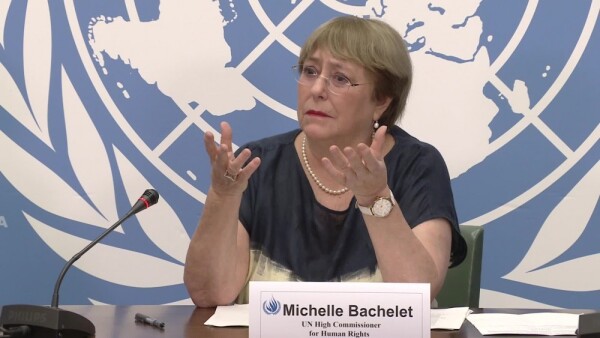
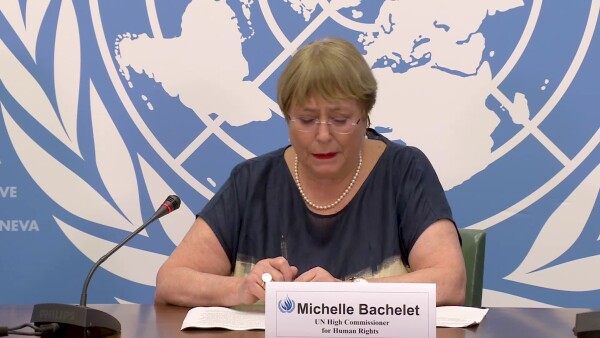
Michelle Bachelet (OHCHR) - Press Conference 25 August 2022
After four years as UN High Commissioner for Human Rights Michelle Bachelet on Thursday held a press conference in Geneva, her mandate ends next week, on 31 August.
“I would say the profound impact of the COVID-19 pandemic, the ever-increasing effects of climate change, and the reverberating shocks of the food, fuel and finance crisis resulting from the war against Ukraine have been the three major issues. Polarization within and among States has reached extraordinary levels and multilateralism is under pressure,” Bachelet told the news conference.
“Important protest movements occurred in every region of the world demanding an end to structural racism, respect for economic and social rights, and against corruption, governance deficits and abuse of power – in many instances accompanied by violence, threats and attacks against protesters and human rights defenders, and at some times against journalists. Some led to real change in the country. In other cases, rather than listening to the voices of the people, governments responded by shrinking the space for debate and dissent,” Bachelet said.
“The UN Human Rights Office has worked, in a myriad of ways, to help monitor, engage and advocate for the protection and promotion of human rights. As I have said before, at the UN, dialogue, engagement, cooperation, monitoring, reporting and public advocacy must all be part of our DNA. We have worked to try to help bridge the gap between government and civil society, to support national implementation of human rights obligations and advise on reforms to bring laws and policies into compliance with international standards, to expand our presences in-country so we are a in a better position to work closely with the people on the ground. We have spoken out in private and public on country-specific and broader issues. And we have seen some progress,” the UN Human Rights Chief said.
“The recognition of the human right to a clean, healthy and sustainable environment by the UN General Assembly last month marked the culmination of many years of advocacy by civil society. I am proud of my Office’s support and strong backing of this movement throughout the course of my mandate. The extreme weather events of the past few months have again driven home, powerfully, the existential need for urgent action to protect our planet for current and future generations. Meeting this need is the greatest human rights challenge of this era – and all States have an obligation to work together on this, and to walk the talk, to fully implement the right to a healthy environment. The response to the triple planetary crisis of pollution, climate change and biodiversity loss must be centred in human rights, including the rights to participation, access to information and justice, and by addressing the disproportionate impact of environmental harms on the most marginalized and disadvantaged,” Bachelet said.
“There has also been steady progress towards abolition of the death penalty – some 170 States have abolished or introduced a moratorium, in law or in practice, or suspended executions for more than 10 years. The Central African Republic, Chad, Kazakhstan, Sierra Leone and Papua New Guinea are among those who have taken steps to fully abolish the death penalty. Other States, including Liberia and Zambia are also actively considering abolition. Malaysia announced that it will abolish the country’s mandatory death penalty, including for drug related offences. As of today, 90 States have ratified the Second Optional Protocol to the International Covenant on Civil and Political Rights, the key international treaty prohibiting the use of the death penalty. Concerns remain, however, about the increased use or resumption of capital punishment in other countries, including Iran, Saudi Arabia, Myanmar and Singapore, and others like China and Viet Nam continue to classify data on its use as a state secret, limiting the possibility of scrutiny,” Bachelet said.
“I have – from the beginning of my mandate – pushed for greater recognition of the indivisibility and interdependence of economic, social and cultural rights with civil and political rights. The effects of the pandemic and the war in Ukraine have brought into stark focus this interdependence,” she said.
“I also call on States to adopt proactive measures, including food, agriculture and fuel subsidies, to mitigate the impact of the crises. All of this needs to be designed with people as part of the solution, through investment in inclusive, safe and meaningful channels for debate and participation at all levels,” Bachelet said.
“In many instances, sustained advocacy on key human rights issues, grounded in international human rights laws and standards, bears fruit. In Colombia this month, the incoming administration has pledged a shift in its approach on drug policy – from a punitive to a more social and public health approach. By addressing one of the deep-rooted causes of violence in Colombia, this approach could be instrumental to better protect the rights of peasants, indigenous and Afro-Colombian communities and of people who use drugs, both in Colombia and globally. My Office has been advocating – globally – for a human rights-based approach on drug policy, and is ready to assist,” she said.
“I have always sought – even on the most challenging issues – to encourage dialogue, to open the door for further exchanges. This means listening as well as speaking, keeping our eyes and ears to the context, identifying entry points and roadblocks, and trying to build trust incrementally, even when it seems unlikely.” Bachelet said.
“During my four years as High Commissioner, I had the privilege of speaking to so many courageous, spirited, extraordinary human rights defenders: the brave, indomitable women human rights defenders in Afghanistan; The determined mothers of the disappeared in Mexico; The inspirational staff working at a health centre in Bunia in the Democratic Republic of the Congo, serving victims of sexual violence; The wisdom and strength of indigenous peoples in Peru, who are on the frontlines of the impact of climate change, illegal mining and logging, and defend their rights in the face of serious risks; And the empathy and generosity of communities hosting internally displaced people in Burkina Faso.I found allies in traditional village leaders in Niger, who were working in their own ways to advance human rights in their communities; I met young people from Malaysia, Sweden, Australia, Costa Rica and elsewhere whose resourcefulness, creativity and ambition was palpable,” she said
“Last week, I spoke with Rohingya refugees in Cox’s Bazar. One teacher I met told me he had earned distinctions in all his classes at school in Myanmar and had dreamed of being a doctor. Instead, he has spent the past five years in a refugee camp, having had to flee his country – because he is Rohingya. “I still cry at night sometimes when I remember my dream,” he told me, adding that “my Buddhist friends are now doctors in Myanmar,” Bachelet said.
“Six unimaginably terrifying months for the people of Ukraine, 6.8 millions of whom have had to flee their country. Millions of others have been internally displaced. We have documented at least 5,587 civilians killed and 7,890 injured. Of these casualties, nearly 1,000 are children, ” she said.
“Six months on, the fighting continues, amid almost unthinkable risks posed to civilians and the environment as hostilities are conducted close to the Zaporizhzhia Nuclear Power Plant.I call on the Russian President to halt armed attack against Ukraine. The Zaporizhzhia plant needs to be immediately demilitarized,” she said.
“The journey to defend human rights never ends – and vigilance against roll-backs of rights is vital. I honour all those who, in their own ways, are working to defend human rights. As a woman and a lifelong feminist, I want to pay particular tribute to women human rights defenders, who have been at the forefront of social movements that have benefitted all of us. They have often been the ones bringing to the table the unheard voices of the most vulnerable. I will continue to stand with you as I return home to Chile, ” Bachelet said in conclusion.
ENDS
STORY: UN High Commissioner for Human Rights Michelle Bachelet’s end of mandate press conference
TRT: 09:27
SOURCE: OHCHR
RESTRICTIONS: NONE
LANGUAGE: English/NATS
ASPECT RATIO: 16:9
DATELINE: 25/08/2022 Geneva, Switzerland
SHOTLIST
- Exterior shot : Alley of flags Palais des Nations
- Medium shot: Michelle Bachelet
- SOUNDBITE (English)—Michelle Bachelet for UN High Commissioner for Human Rights (OHCHR): “I would say the profound impact of the COVID-19 pandemic, the ever-increasing effects of climate change, and the reverberating shocks of the food, fuel and finance crisis resulting from the war against Ukraine have been the three major issues. Polarization within and among States has reached extraordinary levels and multilateralism is under pressure.”
- Cut away: briefing room and participants
- SOUNDBITE (English)—Michelle Bachelet for UN High Commissioner for Human Rights (OHCHR): “Important protest movements occurred in every region of the world demanding an end to structural racism, respect for economic and social rights, and against corruption, governance deficits and abuse of power – in many instances accompanied by violence, threats and attacks against protesters and human rights defenders, and at some times against journalists. Some led to real change in the country. In other cases, rather than listening to the voices of the people, governments responded by shrinking the space for debate and dissent.”
- Cut away: briefing room and participants
- SOUNDBITE (English)—Michelle Bachelet for UN High Commissioner for Human Rights (OHCHR): “The UN Human Rights Office has worked, in a myriad of ways, to help monitor, engage and advocate for the protection and promotion of human rights. As I have said before, at the UN, dialogue, engagement, cooperation, monitoring, reporting and public advocacy must all be part of our DNA. We have worked to try to help bridge the gap between government and civil society, to support national implementation of human rights obligations and advise on reforms to bring laws and policies into compliance with international standards, to expand our presences in-country so we are a in a better position to work closely with the people on the ground. We have spoken out in private and public on country-specific and broader issues. And we have seen some progress.”
- Cut away: briefing room and participants
- SOUNDBITE (English)—Michelle Bachelet for UN High Commissioner for Human Rights (OHCHR): “The recognition of the human right to a clean, healthy and sustainable environment by the UN General Assembly last month marked the culmination of many years of advocacy by civil society. I am proud of my Office’s support and strong backing of this movement throughout the course of my mandate. The extreme weather events of the past few months have again driven home, powerfully, the existential need for urgent action to protect our planet for current and future generations. Meeting this need is the greatest human rights challenge of this era – and all States have an obligation to work together on this, and to walk the talk, to fully implement the right to a healthy environment. The response to the triple planetary crisis of pollution, climate change and biodiversity loss must be centred in human rights, including the rights to participation, access to information and justice, and by addressing the disproportionate impact of environmental harms on the most marginalized and disadvantaged.”
- Cut away: briefing room and participants
- SOUNDBITE (English)—Michelle Bachelet for UN High Commissioner for Human Rights (OHCHR): “There has also been steady progress towards abolition of the death penalty – some 170 States have abolished or introduced a moratorium, in law or in practice, or suspended executions for more than 10 years. The Central African Republic, Chad, Kazakhstan, Sierra Leone and Papua New Guinea are among those who have taken steps to fully abolish the death penalty. Other States, including Liberia and Zambia are also actively considering abolition. Malaysia announced that it will abolish the country’s mandatory death penalty, including for drug related offences. As of today, 90 States have ratified the Second Optional Protocol to the International Covenant on Civil and Political Rights, the key international treaty prohibiting the use of the death penalty. Concerns remain, however, about the increased use or resumption of capital punishment in other countries, including Iran, Saudi Arabia, Myanmar and Singapore, and others like China and Viet Nam continue to classify data on its use as a state secret, limiting the possibility of scrutiny.”
- Cut away: briefing room and participants
- SOUNDBITE (English)—Michelle Bachelet for UN High Commissioner for Human Rights (OHCHR): “I have – from the beginning of my mandate – pushed for greater recognition of the indivisibility and interdependence of economic, social and cultural rights with civil and political rights. The effects of the pandemic and the war in Ukraine have brought into stark focus this interdependence.”
- Cut away: briefing room and participants
- SOUNDBITE (English)—Michelle Bachelet for UN High Commissioner for Human Rights (OHCHR): “I also call on States to adopt proactive measures, including food, agriculture and fuel subsidies, to mitigate the impact of the crises. All of this needs to be designed with people as part of the solution, through investment in inclusive, safe and meaningful channels for debate and participation at all levels.”
- Cut away: briefing room and participants
- SOUNDBITE (English)—Michelle Bachelet for UN High Commissioner for Human Rights (OHCHR): “In many instances, sustained advocacy on key human rights issues, grounded in international human rights laws and standards, bears fruit. In Colombia this month, the incoming administration has pledged a shift in its approach on drug policy – from a punitive to a more social and public health approach. By addressing one of the deep-rooted causes of violence in Colombia, this approach could be instrumental to better protect the rights of peasants, indigenous and Afro-Colombian communities and of people who use drugs, both in Colombia and globally. My Office has been advocating – globally – for a human rights-based approach on drug policy, and is ready to assist,”
- Cut away: briefing room and participants
- SOUNDBITE (English)—Michelle Bachelet for UN High Commissioner for Human Rights (OHCHR): “I have always sought – even on the most challenging issues – to encourage dialogue, to open the door for further exchanges. This means listening as well as speaking, keeping our eyes and ears to the context, identifying entry points and roadblocks, and trying to build trust incrementally, even when it seems unlikely.”
- Cut away: briefing room and participants
- SOUNDBITE (English)—Michelle Bachelet for UN High Commissioner for Human Rights (OHCHR): “During my four years as High Commissioner, I had the privilege of speaking to so many courageous, spirited, extraordinary human rights defenders: The brave, indomitable women human rights defenders in Afghanistan; The determined mothers of the disappeared in Mexico; The inspirational staff working at a health centre in Bunia in the Democratic Republic of the Congo, serving victims of sexual violence; The wisdom and strength of indigenous peoples in Peru, who are on the frontlines of the impact of climate change, illegal mining and logging, and defend their rights in the face of serious risks; And the empathy and generosity of communities hosting internally displaced people in Burkina Faso. I found allies in traditional village leaders in Niger, who were working in their own ways to advance human rights in their communities; I met young people from Malaysia, Sweden, Australia, Costa Rica and elsewhere whose resourcefulness, creativity and ambition was palpable.”
- Cut away: briefing room and participants
- SOUNDBITE (English)—Michelle Bachelet for UN High Commissioner for Human Rights (OHCHR): “Last week, I spoke with Rohingya refugees in Cox’s Bazar. One teacher I met told me he had earned distinctions in all his classes at school in Myanmar and had dreamed of being a doctor. Instead, he has spent the past five years in a refugee camp, having had to flee his country – because he is Rohingya. “I still cry at night sometimes when I remember my dream,” he told me, adding that “my Buddhist friends are now doctors in Myanmar.”
- Cut away: briefing room and participants
- SOUNDBITE (English)—Michelle Bachelet for UN High Commissioner for Human Rights (OHCHR): “Six unimaginably terrifying months for the people of Ukraine, 6.8 million of whom have had to flee their country. Millions others have been internally displaced. We have documented at least 5,587 civilians killed and 7,890 injured. Of these casualties, nearly 1,000 are children. ”
- Cut away: briefing room and participants
- SOUNDBITE (English)—Michelle Bachelet for UN High Commissioner for Human Rights (OHCHR): “Six months on, the fighting continues, amid almost unthinkable risks posed to civilians and the environment as hostilities are conducted close to the Zaporizhzhia Nuclear Power Plant.I call on the Russian President to halt armed attack against Ukraine. The Zaporizhzhia plant needs to be immediately demilitarized.”
- Cut away: briefing room and participants
- SOUNDBITE (English)—Michelle Bachelet for UN High Commissioner for Human Rights (OHCHR): “The journey to defend human rights never ends – and vigilance against roll-backs of rights is vital. I honour all those who, in their own ways, are working to defend human rights. As a woman and a lifelong feminist, I want to pay particular tribute to women human rights defenders, who have been at the forefront of social movements that have benefitted all of us. They have often been the ones bringing to the table the unheard voices of the most vulnerable. I will continue to stand with you as I return home to Chile.”
Similar Stories
1
1
1
Edited News | UNHCR
More than 280,000 people have now been displaced by fighting in Yemen and many vulnerable people are unable to access lifesaving relief because it is too dangerous to do so, the UN refugee agency (UNHCR) said on Friday.
1
1
1
Press Conferences | OCHA , UN , UNHCR
UN Joint Inspection Unit: JIU at 60 - Who Holds the UN System Accountable? From Recommendations to Results – How Independent System-wide Oversight Contributes to Change; UNHCR: UNHCR winter appeal: 9m people urgently need winter aid as resources dwindle and temperatures slide; Refugees in Yemen trapped between conflict, displacement and dangerous journeys
1
1
1
Edited News | UN
Tour guides at UN Geneva turned heads at the Palace of Nations on Thursday as they unveiled stylish new uniforms, designed in partnership with leading Italian sustainable fashion designers and manufacturers.
1
1
1
Press Conferences | WMO , UNHCR , WHO , ILO
WMO: Greenhouse Gas Bulletin; UNHCR: As attacks intensify UNHCR urges support for war ravaged Ukrainians; WHO: Clinical trials in DRC: vaccines and beyond; ILO: New global and regional estimates on domestic work, informality and working conditions
1
1
1
Edited News | OCHA , UNICEF , WFP
Aid agencies warned on Friday of the fast-developing humanitarian emergency inside Taiz City in Yemen, which has been encircled by de facto Houthi forces fighting government troops along the country’s west coast.
1
1
1
Press Conferences | UN WOMEN , WFP , WHO
UN WOMEN: Sudan Women and girls one year after the fall of El Fasher; increasing drone attacks across the country; WFP: DRC - Ebola spreads to eighth DRC province as WFP delivers food, builds treatment centres and keeps supplies moving; WHO - Update on Ebola (Bundibugyo Virus Disease)
1
12
1
1
Press Conferences , Images | UNOG
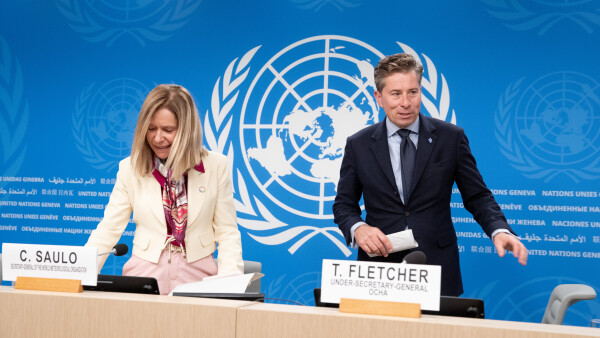
Closing Press Conference following the Sixth Consultative Meeting on Enhancing Coordination of Peace Initiatives and Efforts in Sudan
2
17
1
2
Edited News , Press Conferences , Images | OCHA , WMO
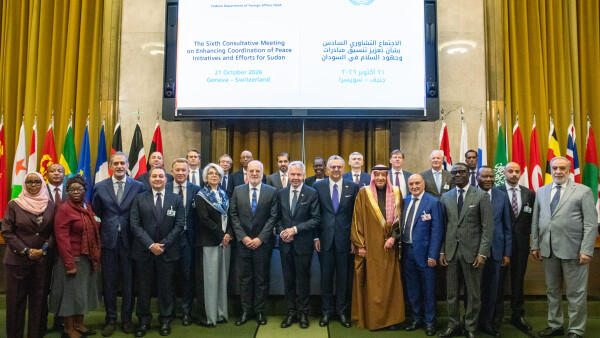
Two UN agencies teamed up on Wednesday to issue an appeal for immediate assistance to help communities already being impacted by the strongest El Niño on record.
3
16
2
2
Edited News , B-roll , Conferences , Images | UNITED NATIONS , UNOG
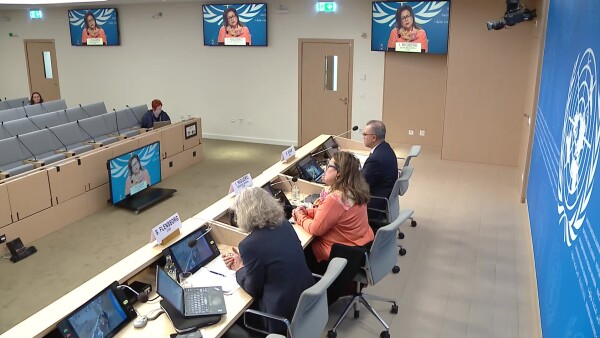
Sixth Consultative Meeting on Enhancing Coordination of Peace Initiatives and Efforts for Sudan
1
1
1
Press Conferences | CITES
Wildlife trade and conservation policy discussions at the 81st meeting of the CITES Standing Committee (SC81)
1
1
1
Edited News | UNICEF , WHO , UNHCR
Yemen war continues to force families from homes amid hunger and disease
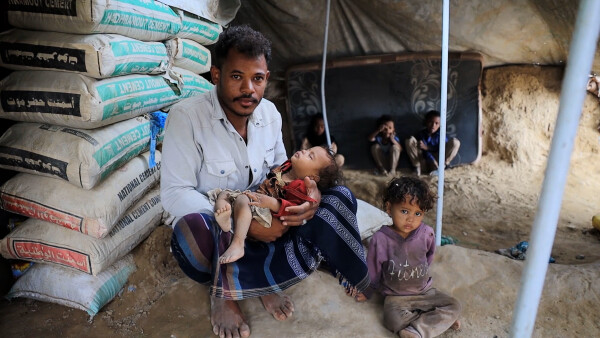
More than 250,000 people have now fled renewed fighting in Yemen, the UN said on Tuesday, citing particular concern for those sheltering in the southwestern city of Taiz and the wider governorate, where access is “essentially blocked”.
1
1
1
Press Conferences | UNHCR , UNCTAD , WMO , OCHA , UNICEF , WHO
UNHCR Hungary’s 1956 Refugee Crisis: 70 Years On, UNCTAD World Investment Forum 2026, Doha, WMO Greenhouse Gas Bulletin and Climate Update for COP31, OCHA Afghanistan: Malnutrition, Girls’ Education and Recovery, UNICEF Yemen: Child Malnutrition and Unsafe Water in Taiz, WHO Inequalities in Noncommunicable Diseases and Risk Factors