

The United Nations Office at Geneva
Multimedia Newsroom
PRESS BRIEFING BY THE UNITED NATIONS INFORMATION SERVICE
15 July 2022
2021 estimates of national immunization coverage
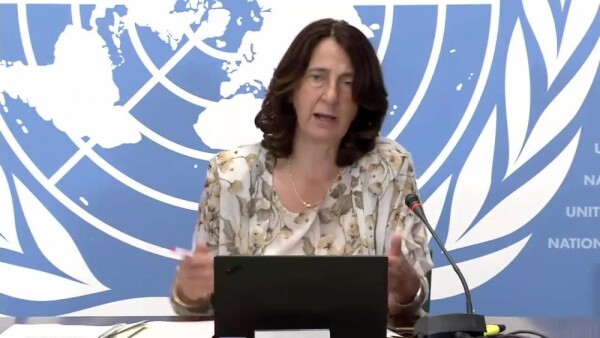
Kate O’Brien, World Health Organization (WHO) Director of Immunization, Vaccines and Biologicals, said that the official global immunization coverage data for 2021 published that day raised heightened concerns for vaccine inequity and the health impact of backsliding on immunization. Over half of countries had not seen their immunization rates bounce back in 2021, and the world had seen the largest sustained decline in childhood vaccinations in 30 years. The percentage of children who had received the third dose of the diphtheria, tetanus, pertussis (DTP) vaccine had fallen by 5 per cent between 2019 and 2021, to 81 per cent. In other words, 25 million children had missed out on one or more doses of DTP through routine immunization services in 2021 alone, causing a threat of outbreaks of diseases such as measles, polio, meningitis, and yellow fever that could lead to death or lifelong health consequences.
The world was off track to achieve the global target of reaching every child with life-saving vaccines by 2030. Therefore, there was a need to sustain and enhance momentum on the population’s immunity to coronavirus disease (COVID-19) and to urgently restore vaccination efforts for measles, HPV, pneumonia and diarrhea. It was not a question of either/or; both had to be done.
Nevertheless, some countries were doing well. For instance, Bangladesh had maintained near-universal routine immunization coverage and had high COVID-19 vaccination rates, especially among older adults. Pakistan had devoted extensive resources to maintaining routine immunization services and preventing backsliding. Furthermore, there had been the largest ever number of new vaccine introductions in 2021, though not as many for non-COVID vaccines as hoped.
Ephrem Tekle Lemango, United Nations Children's Fund (UNICEF) Associate Director, Health-Immunisation, said that on the one hand, the world was witnessing the largest continued drop in vaccination in a generation. UNICEF was deeply concerned about what the backsliding meant for children, especially those in low- and middle-income countries. The consequences were already being felt, chiefly with avoidable outbreaks of diseases, such as polio in Malawi and Mozambique and measles in nearly 30 countries, including Somalia, Yemen, Nigeria, Afghanistan and Ethiopia. Measles was of particular concern given its lethality and extreme contagiousness and could forewarn outbreaks of other, less contagious vaccine-preventable diseases. Furthermore, it was important to bear in mind the disproportionate impact of the immunity gap in countries with other risk factors, such as fragility, conflict and, above all, the current level of malnutrition. Malnourished children had weakened immune systems; therefore, missed vaccinations could mean that common childhood illnesses quickly became lethal.
The COVID-19 pandemic had impacted routine immunization in major ways: already overstretched health systems had been forced to reduce immunization efforts as they diverted resources to the COVID-19 response; supply chain disruptions had resulted in decreased availability of vaccines; containment measures and lockdowns had prevented parents from taking their children to be vaccinated; economic difficulties had decreased government expenditure on health and immunization; and lower household income had compelled families to choose between food and seeking medical care.
On the other hand, it was clear from our collective experience over the last two years that when political will, community support and adequate funding converged, vaccination could reach billions. There was an opportunity to ensure that the COVID-19 response helped boost routine immunization efforts rather than further hinder them by immediately identifying children who had missed their immunizations, strengthening systems and community engagement and leaping forward to reach the immunization targets under the 2030 Agenda for Sustainable Development. The world could not emerge from the COVID-19 pandemic only to trade it for a host of other vaccine-preventable diseases that began as an outbreak then grew to become epidemics and even pandemics.
Replying to questions from journalists, Dr. O’Brien said that catching up on missed routine immunization meant rolling out campaigns, which required political support, organizational logistics and financing. Moreover, campaigns should be integrated, addressing multiple vaccines and other health issues, such as nutrition, deworming and malaria. Answering another question, she said that while WHO/PAHO was the best source for country-specific information on Latin America, she could say that Brazil was among the top 10 countries with the highest number of children without a single dose of the DTP or the measles vaccine, partly due to the sheer size of the population which meant that even with its reasonably good vaccine coverage, hundreds of thousands of children still went unvaccinated. Although no other countries in the Americas were in the top 10 lists, the region had been suffering a decline in vaccination since 2016, with no sign of recovery. The main driver of the lack of vaccination was access to and quality of services, not disinformation. Nevertheless, it was important for local authorities to keep abreast of misinformation that might be circulating in their communities about a particular vaccine at a particular time in order to counter it, something that was most effectively achieved by trusted community leaders. Interestingly, the African region had seen less backsliding than other regions, though its overall DTP3 coverage was the lowest of all regions. That said, conflict and fragile States were main reasons for low vaccine uptake. In combination with food insecurity, health problems were expected to worsen in 2022.
Mr. Lemango added that targeted immunization campaigns required significant human and financial resources, as well as additional supplies and community engagement. The backsliding in Latin America was due in part to misinformation – though not to the anti-vaccination movement – but also to supply problems resulting from a decrease of prioritization and expenditure on the part of Governments. Moreover, as middle-income countries, much of Latin America was ineligible for funding from Gavi, the Vaccine Alliance. Vaccine coverage in Africa was declining in the east and south and stagnating in the west.
Current heatwaves and their consequences
Lorenzo Labrador, World Meteorological Organization (WMO) Global Atmosphere Watch Programme, said that the stable, high-pressure conditions over western Europe causing the current heatwave were continuing. The United Kingdom national weather service had issued an amber extreme heat warning for 17 and 18 July, including for London, where temperatures above 32°C were forecast, or 10 degrees above its average mid-July highs. Extreme heat had already spread over Portugal, Spain and France, where temperatures had reached up to 46°C. More than 20 wildfires had been reported in Portugal, western Spain and south-west France. A recent modelling study, published in Nature Geoscience, had concluded that the expansion of a high-pressure system over the Atlantic — the Azores High — was leading to the driest conditions on the Iberian Peninsula in the last thousand years. The area of high pressure currently sitting over the United Kingdom would progressively move east and reach the Northern Balkans by the middle of the following week, leading to high temperatures for much of western Europe.
High temperatures were not the only adverse consequence of heatwaves. The stable, stagnant atmosphere acted as a lid to trap atmospheric pollutants, resulting in a degradation of air quality and adverse health effects, particularly for vulnerable people. Likewise, the abundant sunshine, high concentration of atmospheric pollutants and stable atmosphere was conducive to episodes of ozone formation near the surface, which had detrimental effects on people and plants.
In response to journalists, Mr. Labrador said that heatwaves were a natural phenomenon, and no single high-pressure system could easily be attributed to climate change. However, it was possible to make that link over an extended period of years, and evidence did point to heatwaves becoming more prevalent and more intense in the future.
Consumer protection and competition talks
Catherine Huissoud, for the United Nations Conference on Trade and Development (UNCTAD), said that UNCTAD was convening talks with ministers, Government experts, civil society and private sector representatives on how to better protect consumers amid the global cost-of-living crisis. The sixth session of the Intergovernmental Group of Experts on Consumer Protection Law and Policy would take place on 18 and 19 July, followed by the twentieth session of the Intergovernmental Group of Experts on Competition Law and Policy from 20 to 22 July, in Geneva and online. Participants would discuss consumer protection issues related to financial products, health services and the international trade of unsafe products, particularly products withdrawn from one market due to non-compliance with safety requirements then sold on other markets. There would also be a discussion on how to implement a recommendation on preventing cross-border distribution of known unsafe consumer products and the presentation of the updated world consumer protection map. The meetings were open to the public, but registration was required.
Announcements
Alessandra Vellucci, for the United Nations Information Service, recalled the Secretary-General’s statement on World Youth Skills Day, in which he had stated that young people were disproportionately impacted by interlinked global crises, exacerbated by the COVID-19 pandemic. In 2020 alone, youth employment had fallen by 39 million, and 24 million young people were at risk of not returning to school. He would convene a Transforming Education Summit in September, bringing together world leaders, youth and other education actors. Young people were drivers of change and must be fully engaged in decisions affecting their future. A global event entitled Transforming Youth Skills for the Future, organized by UNESCO, ILO, the Special Envoy of the Secretary-General on Youth Employment and the Permanent Missions of Portugal and Sri Lanka, would be webcast that afternoon at 4 p.m.
Ms. Vellucci also said that 18 July was Nelson Mandela International Day. Ahead of that occasion, the Secretary-General had invited the world to find hope in Nelson Mandela's example and inspiration in his vision and to honour his legacy by speaking out against hate, standing up for human rights, embracing our common humanity and together making the world more just, compassionate, prosperous and sustainable for all.
Ms. Vellucci announced that the Committee against Torture (CAT) would be reviewing the reports of the State of Palestine (19–20 July) and Botswana (20–21 July). The second meeting dedicated to the report of Nicaragua scheduled to take place at 3 p.m. had been cancelled, as the State party had declined to send a delegation to meet with the Committee.
She also announced that on Monday, 18 July, at 3 p.m., the Human Rights Committee would be holding a public, informal meeting with States parties to the International Covenant on Civil and Political Rights.
Similar Stories
1
1
1
Press Conferences | UN WOMEN , WFP , WHO
UN WOMEN: Sudan Women and girls one year after the fall of El Fasher; increasing drone attacks across the country; WFP: DRC - Ebola spreads to eighth DRC province as WFP delivers food, builds treatment centres and keeps supplies moving; WHO - Update on Ebola (Bundibugyo Virus Disease)
1
12
1
1
Press Conferences , Images | UNOG
Closing Press Conference following the Sixth Consultative Meeting on Enhancing Coordination of Peace Initiatives and Efforts in Sudan

2
17
1
2
Edited News , Press Conferences , Images | OCHA , WMO
Two UN agencies teamed up on Wednesday to issue an appeal for immediate assistance to help communities already being impacted by the strongest El Niño on record.
1
1
1
Press Conferences | CITES
Wildlife trade and conservation policy discussions at the 81st meeting of the CITES Standing Committee (SC81)
1
1
1
Press Conferences | UNHCR , UNCTAD , WMO , OCHA , UNICEF , WHO
UNHCR Hungary’s 1956 Refugee Crisis: 70 Years On, UNCTAD World Investment Forum 2026, Doha, WMO Greenhouse Gas Bulletin and Climate Update for COP31, OCHA Afghanistan: Malnutrition, Girls’ Education and Recovery, UNICEF Yemen: Child Malnutrition and Unsafe Water in Taiz, WHO Inequalities in Noncommunicable Diseases and Risk Factors
1
1
1
Press Conferences | UNHCR
End of UNHCR's 77th Annual Executive Committee (ExCom) meeting week
1
1
1
Press Conferences | UNICEF , IOM , UNHCR
UN Special Assistant to the Personal Envoy Office (SUDAN): Peace Initiatives and Efforts in Sudan; UNICEF: Dire situation of children in Gaza; IOM: Damaged Homes and Energy Attacks Risk Displacing Ukrainians for this winter; UNHCR: update on EXCOM week

1
1
1
Press Conferences | IOM , UNDRR
UN stresses importance of household preparedness for disaster risk reduction.
1
1
1
Statements , Press Conferences | OHCHR
1
1
1
Press Conferences | UNHCR , UNICEF , IFRC , OHCHR , UN WOMEN , IOM , OCHA , WHO
UNHCR – ExCom Meeting, UNICEF – Nepal Recovery, IFRC – Flash Floods, WHO – Mental Health, IOM – South Sudan Floods, OCHA – DRC Humanitarian aid, UNHCR – Sahel Displacement, UNICEF – Yemen Update, IOM – Gaza Shelter, UN Women – Gaza Women, OHCHR – Arrests and detentions of Syrians by Israeli force
2
1
2
Press Conferences | UNCTAD
Presentation of the Trade and Developement Report 2026
Embargoed until 9 October 2026 at 11 a.m. (Geneva Time)
UNCTAD: UNCTAD’s flagship report finds that governments increasingly use industrial, trade, financial and technology policies to pursue economic and national security objectives. Market access and the ability to move into higher-value activities now depend more heavily on technology, finance and geopolitics.
1
1
1
Press Conferences | UPU
Release of the State of the Postal Sector Report 2026