

The United Nations Office at Geneva
Multimedia Newsroom
Edited News | OCHA , WFP
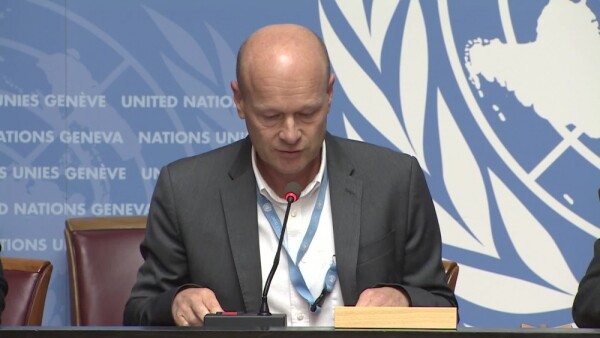
Bi-weekly press briefing: Northern Syria update - OHCHR/UNHCR/OCHA/UNICEF/WFP
Briefing journalists in Geneva, Jens Laerke from the Office for the Coordination of Humanitarian Affairs (OCHA) described the security situation in north-east Syria as “highly volatile”, with continuing reports of airstrikes and ground attacks linked to Turkey’s military incursion.
“The security situation in north-east Syria remains highly volatile with continuing reports of airstrikes and ground attacks as the military operation continues,” Laerke said. “On both side of the border, civilian deaths are being reported.”
To date, at least 160,000 civilians have been displaced since the offensive began last Wednesday, according to UN data, with hospitals and schools and other public infrastructure hit or affected by the fighting. Highlighting the commitment of the UN and its partners to “stay to deliver until it becomes absolutely impossible to do so”, Laerke noted that the organization continues to operate out of the town of Qamishli for the time being.
“The United Nations remains in Qamishli along with our staff,’ he said. “But we have seen of course that in some areas where there is active fighting it is for obvious reasons impossible to go there. And aid is being redirected towards areas where those who can help are moving.”
Echoing that message and at the same appealing for security guarantees for all humanitarians, Herve Verhoosel, spokesperson for the World Food Programme (WFP), said that 130,000 people “will receive food soon because that’s already dispatched”.
Of that number, 83,000 have already received food, he added, noting that it “is arriving where the people need it the most”.
Although the civilian toll is unclear, given the difficulty of verifying information in a conflict zone, Marixie Mercado from UN Children’s Fund, UNICEF, confirmed the deaths “of at least four children and the injuries of nine in north-east Syria”, along with seven other youngsters in Turkey.
Another incident – reportedly linked to a Turkish airstrike - resulted in the deaths of four civilians including two journalists, UN human rights office, OHCHR, said.
“The worst incident we are aware of so far, which we are still seeking to fully verify, is a report that at least four civilians, including two journalists, were killed and tens of others injured when a convoy of vehicles was hit by a Turkish airstrike,” OHCHR spokesperson Rupert Colville explained.
Inside Turkey, the authorities reported that 18 civilians have been killed since the conflict escalated started last week, Colville added, “including a nine-month-old baby, by cross-border mortar and sniper fire by Kurdish fighters”.
Disturbing video footage has also emerged of what appear to be executions later streamed online, by forces linked to the Turkish military.
“We have received reports and viewed two separate pieces of video footage showing what appear to be summary executions carried out by fighters belonging to the Ahrar Al-Sharqiya armed group, which is affiliated with Turkey, on 12 October,” Colville explained.
“One of the videos – both of which have been widely shared on social media – seems to show the fighters filming themselves capturing and executing three Kurdish captives on the Al-Hassakeh – Manbij Highway, that’s the M4. Only one of the captives appeared to be wearing military uniform.”
At least 170,000 children could need humanitarian assistance as a result of the violence, UNICEF’s Mercado added, noting that 70,000 children have been displaced since hostilities escalated last week. Most have sought shelter with relatives, friends and host communities, but there are also 33 collective shelters “mostly schools and unfinished buildings” across Al Hasakeh city, Raqqa city and Tal Tamer, Mercado said.
They host around 3,400 people “but the numbers fluctuate quickly as most people do not stay long”, she added, while OCHA’s Jens Laerke noted that the organization was providing aid there.
“We heard about 33 shelter points further to the south in Al-Hassakeh; so, of course we try to move aid to where people are,” he said.
Underscoring the impact of the conflict on already weakened health services, the World Health Organization (WHO) announced that 40 tonnes of medical supplies would be dispatched to Qamishli later on Tuesday, to complement the nearly 15 tons of life-saving aid that reached the city’s National Hospital on Monday. Elsewhere, in the embattled north-east, “the national hospital in Ras Al-Ain is currently out of service and the national hospital and two health centres in Tel Abyad are also currently non-functional”, WHO spokesperson Tarik Jasarevic said. “Health facilities in camps hosting displaced people in Mabruka, Ain Issa and Ras Al-Ain were also evacuated, with additional facilities under threat as the conflict rapidly moves forward.”
In Al-Hol camp, where about 64,000 children and women are housed - some with suspected links to ISIL fighters - the WHO spokesperson noted that the three field hospitals had reduced their services since 12 October, because the hostilities had impeded the access of health staff.
Similar Stories

2
17
1
2
Edited News , Press Conferences , Images | OCHA , WMO
Two UN agencies teamed up on Wednesday to issue an appeal for immediate assistance to help communities already being impacted by the strongest El Niño on record.
3
16
2
2
Edited News , B-roll , Conferences , Images | UNITED NATIONS , UNOG
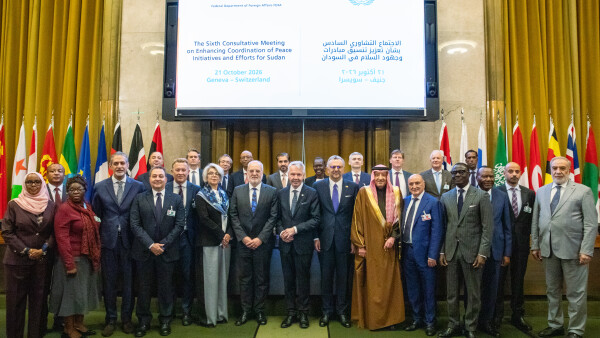
Sixth Consultative Meeting on Enhancing Coordination of Peace Initiatives and Efforts for Sudan

1
1
1
Edited News | UNICEF , WHO , UNHCR
Yemen war continues to force families from homes amid hunger and disease
More than 250,000 people have now fled renewed fighting in Yemen, the UN said on Tuesday, citing particular concern for those sheltering in the southwestern city of Taiz and the wider governorate, where access is “essentially blocked”.

1
1
1
Edited News | UNICEF
A little over one year since a ceasefire agreement was announced between Hamas fighters and Israel, more than 340 children have been reported killed and hundreds more injured, the UN Children’s Fund, UNICEF, said on Friday.

1
1
1
Edited News | UNICEF , IFRC
Six weeks after Nepal’s deadly flooding disaster, communities are still struggling to rebuild their lives, but they will need sustained help as global warming increases the risk of another Himalayan catastrophe, the UN Children’s Fund (UNICEF) said on Friday.

1
1
1
Edited News | WHO
In suspected Russia plague death, testing and monitoring underway – WHO
The death of a lab worker in Russia’s Siberia region has sparked concerns about plague being the cause, the UN World Health Organization (WHO) said on Tuesday, adding that it was following the situation closely.

1
1
Edited News | OHCHR , UNOG
UN Human Rights Chief Volker Türk on Friday provided and oral update to the 63rd session of the Human rights Council on Ukraine.

1
1
1
Edited News | OHCHR , UNOG
UN Human Rights Chief Volker Türk on Friday provided and oral update to the 63rd session of the Human rights Council on the human rights situation in Haiti.

1
1
1
Edited News | WHO
Repeated delays in bringing lifesaving medicines, prosthetics and more from Israel into Gaza risk having devastating consequences on Palestinians who urgently need them in the wartorn enclave, the UN World Health Organization (WHO) said on Friday. “A truck full of non-priority supplies or the right supplies arriving too late, doesn't save lives. That's the question that actually matters," said Dr Reinhilde Van De Weerdt, WHO Representative in the OPT.

1
1
1
Edited News | WHO
DRC: Early access to care and oxygen decisive for Ebola patients’ survival – WHO
In the Democratic Republic of the Congo (DRC), health workers fighting the country’s largest-ever Ebola outbreak are struggling to overcome critical challenges to patient care, the UN World Health Organization (WHO) warned on Tuesday.

1
1
1
Edited News | OCHA , UN
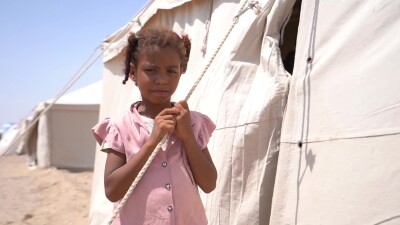
Civilians in Iran are continuing to feel the consequences of months of conflict and military escalation, the UN’s top official in the country has said, as loss of life, damage to civilian infrastructure and mounting economic pressures leave many facing continued uncertainty.
1
1
1
Edited News | WHO , UNICEF
Aid agencies in Yemen highlighted the growing hunger emergency sparked by renewed fighting between Houthi opposition forces and Government troops, after mobile health clinics reported that hundreds of children displaced by the violence are suffering from the most deadly form of malnutrition.