

The United Nations Office at Geneva
Multimedia Newsroom
Edited News , Press Conferences | OHCHR , UNITED NATIONS , UNOG
Counter-terrorism and Human Rights
STORYLINE
Counter-terrorism policies are used to target, constrain, and attack civil society across the globe, says human rights expert at UN - Detentions in Guantánamo, Xinjiang, and Northeast Syria highlighted as ongoing egregious violations of human rights.
--
A new human rights report presented at the United Nations in Geneva draws a “clear and sustained line” between the torture and extraordinary rendition that have been part of the so-called ‘war on terror’ and contemporary practices of mass arbitrary detention and torture, cruel, inhuman and degrading treatment in Xinjiang (China) and northeast Syria.
Lack of access, transparency, accountability and remedy — highlighted as part of the 20th year of since the 9-11 attacks and the first rendition to Guantánamo Bay (Cuba) - are the elements that have enabled and sustained a permissive environment for contemporary large-scale detention and harm to individuals, said the report’s author, Fionnuala Ní Aoláin.
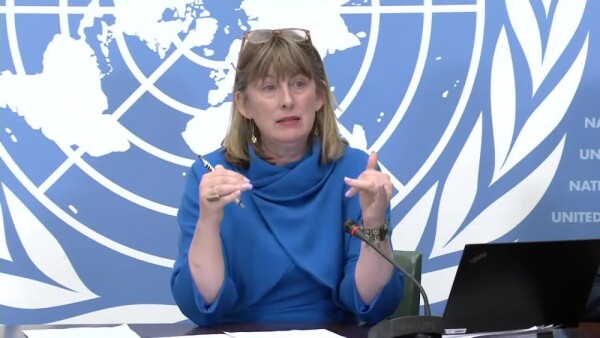
Ms. Ní Aoláin is the UN Special Rapporteur on human rights and counter-terrorism. Her latest report is a billed as a follow-up to a seminal 2010 report, referred to as the “Joint Study”.
“The report does not make for easy reading. It shouldn't make for easy reading. We should all feel profoundly troubled by the ongoing reality of sustained arbitrary detention and torture, cruel, inhuman and degrading treatment that continued since 2001, despite the unequivocal call by the Joint Study and other human rights bodies to bring an end to these practices.”
The most important part of her report was its annex, Ms. Ní Aoláin said, as it listed the names of every single individual identified who was subject to secret detention.
“Counterterrorism discourses essentially justified the most egregious of human rights violations: from the practice of waterboarding to solitary confinement, to the denial of medical treatment, to physical harm to the bodies of those who are slapped across borders and then detained many of them for decades,” Ms. Ní Aoláin told reporters in Geneva.
The practice of torture by “waterboarding” (simulated drowning) was legally justified and brutally carried out in “black sites” controlled by the United States, Ms. Ní Aoláin said at her presentation to the Human Rights Council today, adding that detainees were placed in coffin-like structures for extended periods of time, kept in solitary confinement - often for months at a time - and subjected to degrading forms of sexual torture. She later reminded reporters that 38 detainees are still being held without trial at Guantánamo.
Her report also identifies grave concerns about practices of arbitrary mass and secret detention with other serious violations of international law directed at the Uighurs and other ethnic groups in the Xinjiang Uighur Autonomous Region under the banner of “re-education” — the subject of multiple communications by experts of the Human Rights Council.
Her mandate continued to highlight the scale of human rights and humanitarian law violations that followed from holding thousands of men, women and children in a situation of mass arbitrary detention in northeast Syria. The conditions in these camps met the threshold of torture, cruel, inhuman and degrading treatment under international law. Repatriation was the only international law compliant solution to the existence of these camps and sites of detention, she said.
“No decent or humane society should accept that leaving their children in a situation of cradle to grave. Arbitrary detention is unacceptable,” Fionnuala Ní Aoláin said. Speaking of all three situations highlighted by the report, Ms. Ní Aoláin said that “all of these places of detention are, in my view, dark stains on our collective conscience.”
Ms. Ní Aoláin said that not a single individual who was subject to extraordinary rendition and torture had received an adequate remedy. There is a clear obligation under international law to provide adequate remedy to individuals and their families who experienced these profound violations, she said. She also reminded her audience that there is no statute of limitations on these grave violations of international law. “Those who planned, executed or colluded in these grave violations have to be held accountable” the Special Rapporteur said. This need for accountability remains important, she said, “ despite the great desire to engage in a process of collective forgetting and a compact of comfortable amnesia on torture and rendition.”
Ends-
SHOTLIST
- Exterior Wide Shot, Palais des Nations, UN Geneva
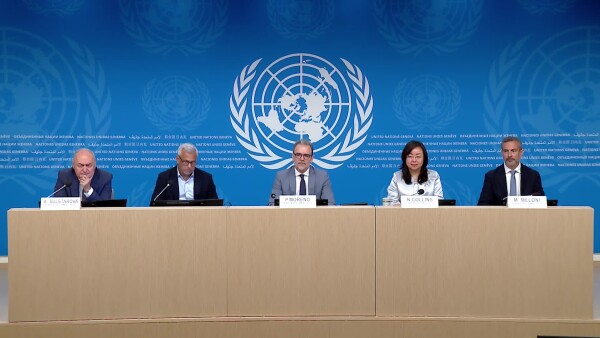
- Wide Shot, Press briefing room UN Geneva
- Soundbite, Fionnuala Ní Aoláin, Special Rapporteur on human rights and counter-terrorism (in English): “The report does not make for easy reading. It shouldn't make for easy reading. We should all feel profoundly troubled by the ongoing reality of sustained arbitrary detention and torture, cruel, inhuman and degrading treatment that continued since 2001, despite the unequivocal call by the Joint Study and other human rights bodies to bring an end to these practices.”
- Medium Shot, Journalist on his phone
- Soundbite, Fionnuala Ní Aoláin, Special Rapporteur on human rights and counter-terrorism (in English): “Counterterrorism discourses essentially justified the most egregious of human rights violations: from the practice of waterboarding to solitary confinement, to the denial of medical treatment, to physical harm to the bodies of those who were slapped across borders and then detained many of them for decades”
- Wide Shot, Press briefing room
- Soundbite, Fionnuala Ní Aoláin, Special Rapporteur on human rights and counter-terrorism (in English): “No decent or humane society should accept that leaving their children in a situation of cradle to grave. Arbitrary detention is unacceptable. All of these places of detention are, in my view, dark stains on our collective conscience.”
- Medium Shot, cameraman
- Soundbite, Fionnuala Ní Aoláin, Special Rapporteur on human rights and counter-terrorism (in English): “Those who planned, executed or colluded in these grave violations have to be held accountable, despite the great desire to engage in a process of collective forgetting and a compact of comfortable amnesia on torture and rendition.”
- Close up, broadcast engineer
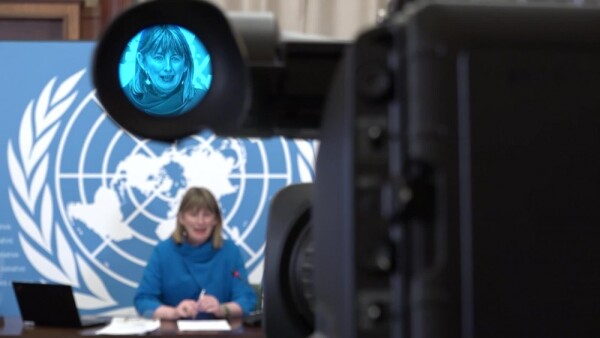
- Close up of speaker in camera viewfinder within Wide shot of room
- Wide shot of room
Similar Stories
1
1
1
Edited News | OHCHR , UNOG
UN Human Rights spokeperson Jeremy Laurence appealed for calm in Pakistan-Administered Kashmir amid a wave of unrest ahead of regional elections at the end of the month.
1
1
1
Edited News | WFP
UN humanitarians working in war-torn Sudan warned on Friday of growing dramatic needs among the more than 100,000 displaced people now sheltering in camps in the city of El Obeid. "We are providing even not the full food ration to the people, but even that reduced food ration is being shared by the recipients with other families, because they know that they don't have any other source of income," said World Food Programme (WFP) Sudan Country Director Abdallah Alwardat.
1
1
1
Press Conferences | IOM , OHCHR , UN WOMEN , WHO , WFP
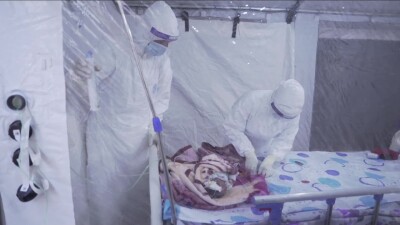
WFP: Mass displacement from El Obeid as food stocks run low; IOM: Ebola outbreak in the East, Horn and Southern Africa region; OHCHR: Wave of unrest in Pakistan-Administered Kashmir; UN WOMEN: Report launch: Women on the Move in Europe and Central Asia
1
1
1
Edited News | WHO
‘This is a fire’: DRC Ebola outbreak is fastest-growing ever, warns WHO
Infections of the Bundibugyo species of Ebola in the Democratic Republic of the Congo (DRC) have reached record highs and a majority of new cases are coming from “unknown chains of transmission”, the World Health Organization (WHO) warned on Tuesday.
1
1
1
Press Conferences | UNHCR , UNOG , WHO
Alessandra Vellucci, Director of the United Nations Information Service (UNIS) in Geneva, chaired the hybrid briefing which was attended by spokespersons and representatives from the United Nations High Commissioner for Refugees and the World Health Organization.
1
1
1
Edited News | WHO
In war-torn Sudan, a deadly new cholera outbreak has already claimed more than 100 lives, heightening serious concerns for vulnerable communities including in besieged El-Obeid, where daily drone attacks reportedly continue to hamper aid access.
1
1
1
Press Conferences | UNOG , UN WOMEN , WHO , WMO
Alessandra Vellucci, Director of the United Nations Information Service (UNIS) in Geneva, chaired the hybrid briefing, which was attended by spokespersons and representatives of UN Women, WHO and WMO
1
1
1
Edited News | UNIFIL
Ceasefire reduces violence in South Lebanon, but challenges remain as communities face devastation.
1
1
1
Edited News | WHO
Ebola continues to spread in DRC, death toll passes 500 – WHO
The outbreak of the deadly Bundibugyo species of Ebola in the eastern Democratic Republic of the Congo (DRC) is expanding, while the push to accelerate testing and identify effective treatment options continues, the UN World Health Organization (WHO) said on Tuesday.
1
1
1
Press Conferences | WHO , IFRC , ICRC , UNHCR , WMO , UN80
Alessandra Vellucci, Director of the United Nations Information Service (UNIS) in Geneva, chaired the hybrid briefing, which was attended by the United Nations Under-Secretary-General for Policy, and spokespersons and representatives from the World Health Organization, International Committee of the Red Cross, International Federation of Red Cross and Red Crescent Societies, United Nations High Commissioner for Refugees, and the World Meteorological Organization.
2
1
2
Press Conferences | UNCTAD
Global investment is rising again. But it's becoming more concentrated, more selective and less accessible to many developing countries.
The recovery remains fragile. Growth is concentrated in a small number of economies and in capital- and technology-intensive sectors.
1
1
1
Press Conferences | UN , ODET , ITU , UNESCO , PGA
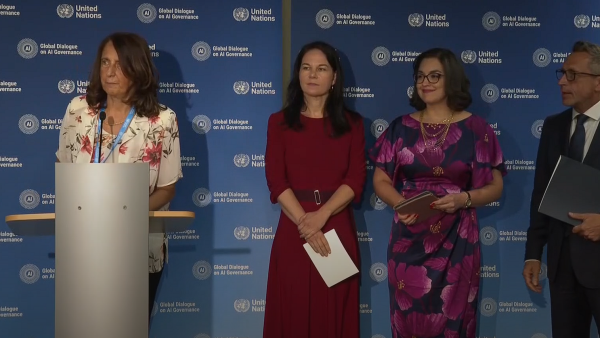
Opening of the Global Dialogue on AI Governance