

The United Nations Office at Geneva
Multimedia Newsroom
STORYLINE
US$4.3 billion needed to help over 17 million people across Yemen – OCHA
Donors convene this Wednesday to pledge support for humanitarian response in war-torn Yemen
Ukraine adds to Yemen’s woes as hunger emergency spreads
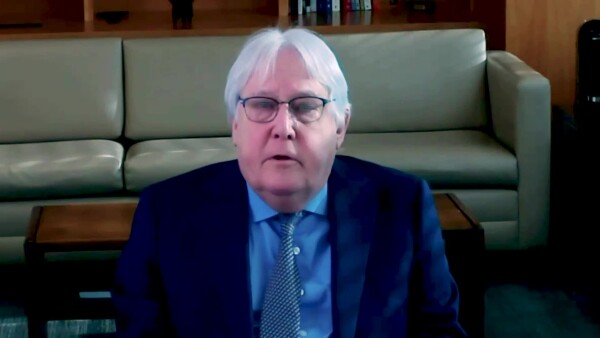
After more than seven years of war, over 23 million Yemenis face hunger, disease, and other life-threatening risks as the country’s basic services and economy are collapsing, according to the UN Office for Humanitarian Coordination (OCHA). The number of vulnerable people has risen by 13 per cent since last year, and some 161,000 people are likely to experience famine over the second half of this year, a fivefold increase from the current figure. Addressing journalists from New-York, UN humanitarian chief Martin Griffiths underlined that “almost three quarters of the population will depend on humanitarian assistance and protection in 2022”, which makes Yemen's humanitarian condition among the worst in the world.
Nearly US$4.3 billion is required in 2022 to reach 17.2 million people and reverse the downward spiral according to the humanitarian agency. The civil war in Yemen is the main driver of hunger and the crisis is likely to deteriorate due to the conflict in Ukraine. 90% of Yemen’s food is imported, with one third of its wheat imports coming from Russia and Ukraine. “Ending the war in Ukraine now, is of greatest importance” insisted Mr Griffiths, “because as it goes on, it has secondary and tertiary impacts upon the new harvest, the new planting season and so forth. Ukraine is a breadbasket.” “We already see food prices skyrocketing and we expect restrictions on supply. This comes on top of the fact that the food prices nearly doubled anyway last year”, he added.
Ensuring commercial imports can get through is an additional challenge for the humanitarian agency. “We need to allow these ships to flow in and out of those ports, -certainly, a check for the embargo of arms- but not stopped when they have food, fuel or other things that are needed for the welfare of the people”, insisted the humanitarian chief.
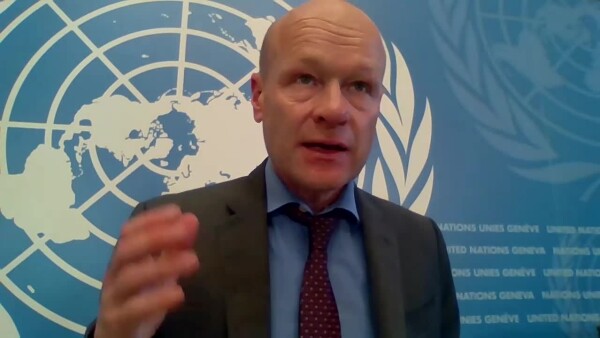
The poorest Arab nation plunged into civil war in 2014, when Iran-backed Houthi rebels took control of its capital, Sanaa, and part of the north, forcing the government to flee to the south, then to Saudi Arabia. The war has deteriorated into a stalemate. Leading Manuel Bessler of the Swiss agency for development and cooperation to point out “the needs, are humanitarian, but economic as well as political. And in this regard, it is important to see this crisis in a holistic crisis and to mobilize all the attention and all the support we can get.”
Funding shortages have forced two-thirds of major UN projects in Yemen to scale down or close their operations in Yemen. Earlier this year, 8 million people saw their food rations cut in half, with further reductions on the way. “We need to turn every stone to make sure that these dramatically increased needs can be met with the resources that we have available", said Carl Skau from the Swedish Ministry for foreign affairs, adding “we need to broaden the donor base.”
The high-level event will be launched in Geneva today March, 16 at 1430 CET. UN Secretary-General, António Guterres will deliver opening remarks. UNHCR Special Envoy Angelina Jolie will also address the gathering. Ms Jolie recently travelled to Yemen to draw attention to the devastating impact of the war and called for support for Yemeni civilians who are facing one of the worst humanitarian crises in the world.
ends
Speakers:
- Martin Griffiths, Under-Secretary-General for Humanitarian Affairs and Emergency Relief Coordinator, from New-York
- Manuel Bessler, Deputy Director-General and Head of Humanitarian Aid Department, Swiss Agency for Development and Cooperation, Federal Department of Foreign Affairs, Switzerland
- Carl Skau, Deputy Director-General, Head of Department for UN Policy, Conflict and Humanitarian Affairs, Ministry for Foreign Affairs, Sweden
STORY: Yemen humanitarian crisis ahead of Hi-Level Pledging Event on 16 March
TRT: 3 mins 23s
SOURCE: UNTV CH
RESTRICTIONS: EMBARGO UNTIL WEDNESDAY 16 MARCH – 0600AM CET
LANGUAGE: ENGLISH
ASPECT RATIO: 16:9
DATELINE: 15 March 2022
VIRTUAL PRESS BRIEFING
GENEVA, SWITZERLAND
SHOTLIST
- Exterior wide shot, UN flag alley UN Geneva.
- Wide shot, Press room, UN Geneva
- SOUNDBITE (ENGLISH) Martin Griffiths, Under-Secretary-General for Humanitarian Affairs and Emergency Relief Coordinator, OCHA: “We started 2022 with a $41 billion global humanitarian problem, as I presented in the overview in December. That's a lot of money to raise, and many crises are getting worse, like Afghanistan and parts of the Horn of Africa. But the war in Ukraine has added another appeal in the billions of dollars, and the total is now $43 billion.”
- Cutaways: Medium shot of participant in press room
- SOUNDBITE (ENGLISH) Martin Griffiths, Under-Secretary-General for Humanitarian Affairs and Emergency Relief Coordinator, OCHA: “Almost three quarters of the population will depend on humanitarian assistance and protection in 2022. And it is this figure, this proportion that makes us often say that Yemen's humanitarian condition is among the worst in the world.”
- Cutaways: wide shot of press room with spokesperson Jens Laerke at podium
- SOUNDBITE (ENGLISH) Martin Griffiths, Under-Secretary-General for Humanitarian Affairs and Emergency Relief Coordinator, OCHA: “This year's response needs nearly $4.3 billion, just shy of $4.3 billion, to help over 17 million people across Yemen.”
- Cutaways: Medium shot participants in press room
- SOUNDBITE (ENGLISH) Martin Griffiths, Under-Secretary-General for Humanitarian Affairs and Emergency Relief Coordinator, OCHA: “Ending the war in Ukraine now, is of greatest importance because, as it goes on, it has secondary and tertiary impacts upon the new harvest, the new planting season and so forth. Ukraine is a bread basket.”
- Cutaways: close shot of participant listening
- SOUNDBITE (ENGLISH) Martin Griffiths, Under-Secretary-General for Humanitarian Affairs and Emergency Relief Coordinator, OCHA: “About a third of Yemen's wheat comes from Russia and Ukraine. We already see food prices skyrocketing and we expect restrictions on supply. This comes on top of the fact that the food prices nearly doubled in Yemen anyway last year.”
- Cutaways: Medium shot
- SOUNDBITE (ENGLISH) Manuel Bessler, Deputy Director-General and Head of Humanitarian Aid Department, Swiss Agency for Development and Cooperation, Federal Department of Foreign Affairs, Switzerland: “The needs, yes, are humanitarian, but economic as well as political. And in this regard, it is important to see this crisis in a holistic crisis and to mobilize all the attention and all the support we can get.”
- Cutaways: Medium shot journalists taking notes
- SOUNDBITE (ENGLISH) Carl Skau, Deputy Director-General, Head of Department for UN Policy, Conflict and Humanitarian Affairs, Ministry for Foreign Affairs, Sweden: “We need to turn every stone to make sure that these dramatically increased needs can be met with the resources that we have available and as part of this also, is that we need to broaden the donor base.”
- Cutaways: Medium shot press room
- SOUNDBITE (ENGLISH) Martin Griffiths, Under-Secretary-General for Humanitarian Affairs and Emergency Relief Coordinator, OCHA: “We need to allow these ships to flow in and out of those ports, -certainly, a check for the embargo of arms- but not stopped when they have food fuel or other things that are needed for the welfare of the people.”
B-Roll from WFP, shot between 17 and 24 February 2022 in Yemen:
- Wide shot of Hamoud camp for displaced people - Shot on 17 Feb. 2022 in Mokha, Yemen
- 7-year-old boy being tested for malnutrition and receiving special nutritious food supplements from WFP. - Shot in Mokah, Yemen – 21 Feb.2022
- Mothers with their children waiting for to be tested and treated for malnutrition in Bani Hawat Public Health Centre - Shot on 24 Feb 2022 in Sana’a, Yemen
- Mother holding her daughter who suffers from severe malnutrition since birth - Shot: 24 Feb 2022 in Sana’a, Yemen
Similar Stories
1
1
1
Press Conferences | WMO , UNHCR , WHO , ILO
WMO: Greenhouse Gas Bulletin; UNHCR: As attacks intensify UNHCR urges support for war ravaged Ukrainians; WHO: Clinical trials in DRC: vaccines and beyond; ILO: New global and regional estimates on domestic work, informality and working conditions
1
1
1
Edited News | OCHA , UNICEF , WFP
Aid agencies warned on Friday of the fast-developing humanitarian emergency inside Taiz City in Yemen, which has been encircled by de facto Houthi forces fighting government troops along the country’s west coast.
1
1
1
Press Conferences | UN WOMEN , WFP , WHO
UN WOMEN: Sudan Women and girls one year after the fall of El Fasher; increasing drone attacks across the country; WFP: DRC - Ebola spreads to eighth DRC province as WFP delivers food, builds treatment centres and keeps supplies moving; WHO - Update on Ebola (Bundibugyo Virus Disease)
1
12
1
1
Press Conferences , Images | UNOG
Closing Press Conference following the Sixth Consultative Meeting on Enhancing Coordination of Peace Initiatives and Efforts in Sudan

2
17
1
2
Edited News , Press Conferences , Images | OCHA , WMO
Two UN agencies teamed up on Wednesday to issue an appeal for immediate assistance to help communities already being impacted by the strongest El Niño on record.
3
16
2
2
Edited News , B-roll , Conferences , Images | UNITED NATIONS , UNOG
Sixth Consultative Meeting on Enhancing Coordination of Peace Initiatives and Efforts for Sudan
1
1
1
Press Conferences | CITES
Wildlife trade and conservation policy discussions at the 81st meeting of the CITES Standing Committee (SC81)

1
1
1
Edited News | UNICEF , WHO , UNHCR
Yemen war continues to force families from homes amid hunger and disease
More than 250,000 people have now fled renewed fighting in Yemen, the UN said on Tuesday, citing particular concern for those sheltering in the southwestern city of Taiz and the wider governorate, where access is “essentially blocked”.
1
1
1
Press Conferences | UNHCR , UNCTAD , WMO , OCHA , UNICEF , WHO
UNHCR Hungary’s 1956 Refugee Crisis: 70 Years On, UNCTAD World Investment Forum 2026, Doha, WMO Greenhouse Gas Bulletin and Climate Update for COP31, OCHA Afghanistan: Malnutrition, Girls’ Education and Recovery, UNICEF Yemen: Child Malnutrition and Unsafe Water in Taiz, WHO Inequalities in Noncommunicable Diseases and Risk Factors
1
1
1
Press Conferences | UNHCR
End of UNHCR's 77th Annual Executive Committee (ExCom) meeting week

1
1
1
Edited News | UNICEF
A little over one year since a ceasefire agreement was announced between Hamas fighters and Israel, more than 340 children have been reported killed and hundreds more injured, the UN Children’s Fund, UNICEF, said on Friday.
1
1
1
Press Conferences | UNICEF , IOM , UNHCR
UN Special Assistant to the Personal Envoy Office (SUDAN): Peace Initiatives and Efforts in Sudan; UNICEF: Dire situation of children in Gaza; IOM: Damaged Homes and Energy Attacks Risk Displacing Ukrainians for this winter; UNHCR: update on EXCOM week