

The United Nations Office at Geneva
Multimedia Newsroom
STORYLINE
Ukraine war creating a child refugee almost every second: UNICEF
Almost one child per second in Ukraine is becoming a refugee of the war, UN humanitarians said on Tuesday, as the total number of people who have now fled the country since the Russian invasion began, passed three million.
“We have now reached three million mark in terms of movements of people out of Ukraine to neighbouring countries. And among these people there are some 157,000 third-country nationals,” said Paul Dillon, spokesperson for the International Organization for Migration (IOM), speaking in Geneva.
Some 1.5 million children have now joined the exodus from Ukraine, at a rate of just under one per second, since the Russian invasion on 24 February.
“Every day, over the past 20 days, in Ukraine more than 70,000 children have become refugees. Okay, that’s every minute, 55 children fleeing the country,” said James Elder, spokesperson for the UN Children’s Fund (UNICEF).
Highlighting that nine in 10 of those fleeing unrelenting violence in Ukraine are women and children, Mr. Elder warned that youngsters are prey to traffickers, as they arrive in unfamiliar new surroundings.
“To give a sense of the border that I used to visit - the main border, Medyka, Poland to Ukraine - it is scores of people standing around buses and minivans calling out names of capital cities - or at least it was a week ago - people getting onto those,” he said. “The vast, vast majority of course are people with wonderful intentions and great generosity, but there is no doubt given what we understand of trafficking in Europe, that that remains a very, very grave issue.”
The development follows a warning from the UN Secretary-General, who on Monday said that Russia’s military offensive against civilians was “reaching terrifying proportions”.
In Mariupol, humanitarians warned that the situation in the port city has deteriorated further, after further heavy Russian bombardment.
Hundreds of thousands of people are being “suffocated” by a lack of supplies and are unable to flee the city, besieged by Russian forces.
The International Committee of the Red Cross (ICRC) on Tuesday described the situation as “dire and desperate”.
“The bottom line here is that hundreds of thousands of people remain without aid today,” said spokesperson Ewan Watson. “They are unable to leave the city today and they are essentially being suffocated in this city right now with no aid.”
Mr. Watson also confirmed that “some vehicles …were able to leave the city yesterday. The ICRC was not involved in that evacuation of people. But what I would say is that is really a drop in the ocean.”
Amid reports that families are being forced to gather water from streams and that fights have broken out over food, Mr. Watson urged the Ukrainian and Russian authorities to find a solution so that aid can reach the city’s people.
The ICRC spokesperson also announced that the Organization intended to evacuate people from the besieged northeastern city of Sumy on Tuesday, using 30 buses.
Across the country, UN humanitarians are delivering lifesaving aid where they have access. But UNICEF’s Mr. Elder reported “indiscriminate attacks time and again on critical infrastructure, particularly water has been targeted. Anecdotally from those colleagues there, we know of families who are undoing all heaters to take water coolant out as a last resort, as something to drink.”
ends
STORY: Ukraine Update – IOM, UNICEF, ICRC
TRT: 2 mins 25s
SOURCE: UNTV CH
RESTRICTIONS: NONE
LANGUAGE: ENGLISH
ASPECT RATIO: 16:9
DATELINE: 15 March 2022 GENEVA, SWITZERLAND
SHOTLIST
- Exterior wide shot, flag alley, UN Geneva.
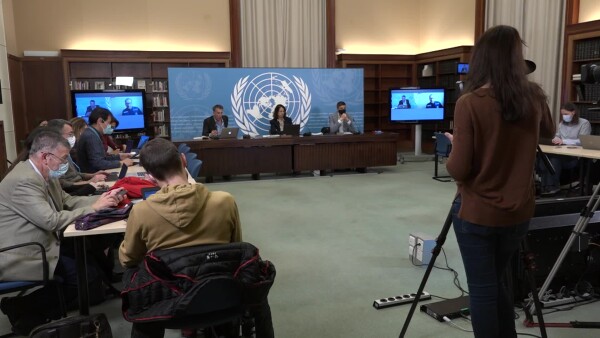
- Medium shot, Press room, UN Geneva, participants, TV cameras, podium.
- SOUNDBITE (ENGLISH) Paul Dillion, International Organization for Migration (IOM): “We have now reached three million mark in terms of movements of people out of Ukraine to neighbouring countries. And among these people there are some 157,000 third-country nationals.”
- Medium shot, video journalists.
- SOUNDBITE (ENGLISH) James Elder, UN Children’s Fund (UNICEF): “When it comes to central supplies we’ve had indiscriminate attacks time and again on critical infrastructure, particularly water has been targeted. Anecdotally from those colleagues there, we know of families who are undoing all heaters to take water coolant out as a last resort, as something to drink.”
- Wide shot, Press room, UN Geneva, participants seated, podium speakers.
- SOUNDBITE (ENGLISH) Ewan Watson, International Committee of the Red Cross (ICRC): “The bottom line here is that hundreds of thousands of people remain without aid today, they are unable to leave the city today and they are essentially being suffocated in this city right now with no aid.”
- Medium shot, Press room, podium speaker in focus, with participants blurred in foreground.
- SOUNDBITE (ENGLISH) Ewan Watson, International Committee of the Red Cross (ICRC): “There were, as reported, some vehicles that were able to leave the city yesterday. the ICRC was not involved in that evacuation of people. But what I would say is that is really a drop in the ocean.”
- Close-up, Press room, UN Geneva, participants’ faces.
- SOUNDBITE (ENGLISH) James Elder, UN Children’s Fund (UNICEF): “Every day, over the past 20 days, in Ukraine more than 70,000 children have become refugees. Okay, that’s every minute 55 children fleeing the country.”
- Close-up: TV camera monitor showing podium speaker.
- SOUNDBITE (ENGLISH) James Elder, UN Children’s Fund (UNICEF): “To give a sense of the border I used to visit the main border, Medyka, Poland to Ukraine, it is scores of people standing around buses and minivans calling out names of capital cities - or at least it was a week ago - people getting onto those; the vast, vast majority of course are people with wonderful intentions and great generosity, but there is no doubt given what we understand of trafficking in Europe, that that remains a very, very grave issue.”
- Medium shot: participants seated and working on laptops.
- Close-up: hands on laptop keyboard and mouse, rings in focus.
- Medium shot, participants working on laptops or checking phone.
Similar Stories

1
1
1
Edited News | UNICEF
A little over one year since a ceasefire agreement was announced between Hamas fighters and Israel, more than 340 children have been reported killed and hundreds more injured, the UN Children’s Fund, UNICEF, said on Friday.

1
1
1
Edited News | UNICEF , IFRC
Six weeks after Nepal’s deadly flooding disaster, communities are still struggling to rebuild their lives, but they will need sustained help as global warming increases the risk of another Himalayan catastrophe, the UN Children’s Fund (UNICEF) said on Friday.

1
1
1
Edited News | WHO
In suspected Russia plague death, testing and monitoring underway – WHO
The death of a lab worker in Russia’s Siberia region has sparked concerns about plague being the cause, the UN World Health Organization (WHO) said on Tuesday, adding that it was following the situation closely.

1
1
Edited News | OHCHR , UNOG
UN Human Rights Chief Volker Türk on Friday provided and oral update to the 63rd session of the Human rights Council on Ukraine.

1
1
1
Edited News | OHCHR , UNOG
UN Human Rights Chief Volker Türk on Friday provided and oral update to the 63rd session of the Human rights Council on the human rights situation in Haiti.

1
1
1
Edited News | WHO
Repeated delays in bringing lifesaving medicines, prosthetics and more from Israel into Gaza risk having devastating consequences on Palestinians who urgently need them in the wartorn enclave, the UN World Health Organization (WHO) said on Friday. “A truck full of non-priority supplies or the right supplies arriving too late, doesn't save lives. That's the question that actually matters," said Dr Reinhilde Van De Weerdt, WHO Representative in the OPT.

1
1
1
Edited News | WHO
DRC: Early access to care and oxygen decisive for Ebola patients’ survival – WHO
In the Democratic Republic of the Congo (DRC), health workers fighting the country’s largest-ever Ebola outbreak are struggling to overcome critical challenges to patient care, the UN World Health Organization (WHO) warned on Tuesday.

1
1
1
Edited News | OCHA , UN
Civilians in Iran are continuing to feel the consequences of months of conflict and military escalation, the UN’s top official in the country has said, as loss of life, damage to civilian infrastructure and mounting economic pressures leave many facing continued uncertainty.
1
1
1
Edited News | WHO , UNICEF
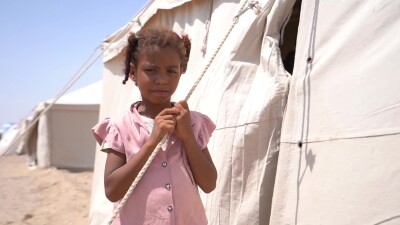
Aid agencies in Yemen highlighted the growing hunger emergency sparked by renewed fighting between Houthi opposition forces and Government troops, after mobile health clinics reported that hundreds of children displaced by the violence are suffering from the most deadly form of malnutrition.
1
1
1
Edited News | UNHCR
Displacement on the rise in Yemen as fighting continues - UNHCR
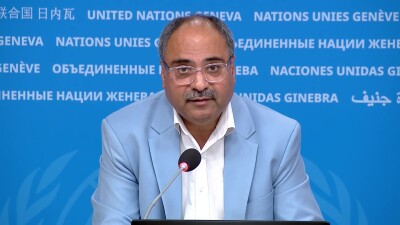
As hostilities worsen in Yemen, more people have been fleeing their homes, further intensifying the humanitarian crisis within the region, the UN Refugee Agency (UNHCR) warned on Tuesday.
1
1
1
Edited News | IOM , OHCHR , UNFPA , UNOG , UNHCR , WHO
Yemen’s humanitarian crisis growing by the hour amid spike in displacement
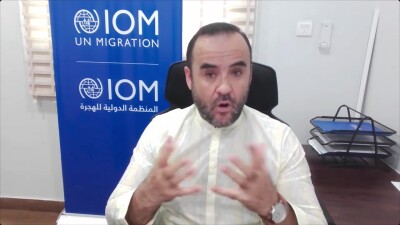
Yemenis displaced by renewed fighting have described fleeing for their lives amid shelling and gunfire, aid agencies reported on Friday, while highlighting the dramatic increase in humanitarian needs in the country and in Djibouti, where thousands have sought shelter.
1
1
1
Edited News | OHCHR , UNOG
The UN Human Rights Office issued on Friday a report documenting a shocking pattern of sexual violence amid Russia’s full-scale armed attack on Ukraine.