

The United Nations Office at Geneva
Multimedia Newsroom
“More than 1 Million Lebanese need relief assistance to cover their basic needs”, estimates the UN Office in Lebanon
As Lebanon is facing one of its worst financial and economic crises in its modern history grappling with an economic and financial meltdown, the UN estimates that over the next 8 months around $ 300 million are required to cover the crucial needs of 1,5 million Lebanese and 400,000 migrant workers affected by the ongoing crisis.
“The explosion at the Beirut port has accelerated a lot of things, that's for sure”, said Najat Rochdi, Deputy Special Coordinator and UN Resident Coordinator and Humanitarian Coordinator for Lebanon Speaking while talking to the media at the United Nations in Geneva. “The fact that the reforms were not carried out on time and normally they should have already started in 2018 - if it was not in 2018, they should have started in 2019 - because the economic and financial crisis, a lot of analysts had already predicted before. We're not talking about something that takes us by surprise today. I think everyone knew about it”.
Between April 2019 and April 2021, the consumer Price Index has increased by more than 208 per cent and the price of food and beverages increased by 670 per cent. As a result, over half of Lebanese people are now living in poverty.
”The crisis in the economy, the currency devaluation, as well as the governance vacuum has meant a breakdown of public services at a time when they are most needed”, said Ms. Rochdi. She added that "the pandemic has worsened a situation which was already fragile, and which somewhere has reached where we are today".
For the UN Resident Coordinator and Humanitarian Coordinator for Lebanon Najat Rochdi, there are several reasons for the political, socioeconomic and humanitarian crises that Lebanon is facing today . “The fact that there was no government formation also obviously had a huge impact on number one, the confidence”, she said. “You know there is not a single investor who will be ready to come to Lebanon at least if there is really a very, very clear confidence in the banking system, in the institutions, etc. and above all it also accelerated the pauperization of the population”.
Extreme poverty registered a threefold increase from 2019 to 2020. More and more Lebanese households are unable to afford basic services like food, health, electricity, water, internet, and education.
”The country is in the middle of a phase of hyperinflation, eroding the value of the national currency, people’s purchasing power and what remains of their trust in their leaders and institutions”, said Najat Rochdi. ”The public health system is stretched beyond its limits from the double impact of the economic crisis and the Covid-19 outbreak. People are increasingly unable to access and afford health care amid growing shortages of important medicines and medical supplies”.
Alarming levels of poverty among refugees were shown in the latest UN survey: 9 out of 10 Syrian refugees are falling under the extreme poverty line – a 60 % increase since 2019. Refugee protection is a growing issue with sea departures on the rise and a considerable risk of chain refoulement.
”The crisis affects everyone in Lebanon, not just the Lebanese. As you know, Lebanon hosts the highest number of refugees per capita of residents in the world, with over 1 million Syrian refugees and more than 270 000 Palestine refugees”.
The UN with the international community in collaboration with the Lebanese authorities is aiming for a rapid transition towards recovery efforts under the so-called “Reform, Recovery and Reconstruction Framework (3RF)”. This plan entails a focus on governance, social protection, social cohesion, inclusion and gender, health, education, housing with special focus.
According to Ms Rochdi, “the solutions are known, the list of priority reforms is very clearly articulated in the 3RF, in the 'Reform, Recovery and Reconstruction Framework', which was in all cases discussed with civil society, with local authorities, with national authorities, with the private sector, with the international community, so it's really a 'no brainer'. It is known, it is well known what must be done".
The international community has warned that without a government that implements meaningful structural reforms, no investments will be made beyond the necessary urgent humanitarian aid and early recovery efforts.
For Ms Rochdi it is obvious that “the development of Lebanon is the responsibility of the Lebanese. The development of Lebanon is not the responsibility of the international community. We always hope that at the internal level that the Lebanese, whether at the level of political leadership, or other leadership, that there is indeed a decision to obviously put the interest of the country and the interest of the Lebanese as a priority ”.
Lebanon has been without a government for quite some time. Ten months have passed since the resignation of the government in the wake of the Beirut port explosions on 4 August. Seven months ago Saad Hariri was designated as Prime Minister tasked with forming a new government that has still not seen the light.
-ends-
- Exterior wide shot, Palais des Nations flag alley, nations’ flags flying, a sunny day.
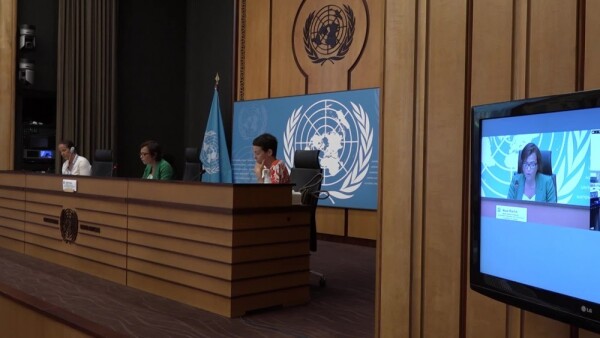
- Wide shot, press briefing at the UN in Geneva
- SOUNDBITE (French) – Najat Rochdi, Deputy Special Coordinator, UN Resident Coordinator and Humanitarian Coordinator for Lebanon: “L ‘explosion du port de Beyrouth a accéléré beaucoup de choses, c’est sur. Le fait que les reformes n’ont pas été conduits à temps et normalement ils auront déjà dû commencer en 2018 - si ce n’était pas en 2018, ils auraient dû commencer en 2019 - parce que la crise économique et financière, beaucoup d’analystes avait déjà prédit avant. On ne parle pas de quelque chose qui nous prend par surprise aujourd’hui. Je pense que tout le monde était au courant».
- Medium shot, podium of the press briefing and room
- SOUNDBITE (English) - Najat Rochdi, Deputy Special Coordinator, UN Resident Coordinator and Humanitarian Coordinator for Lebanon: ”The crisis in the economy, the currency devaluation, as well as the governance vacuum has meant a breakdown of public services at a time when they are most needed”.
- Close up, cameraman
- SOUNDBITE (French) - Najat Rochdi, Deputy Special Coordinator, UN Resident Coordinator and Humanitarian Coordinator for Lebanon: ”La pandémie est venue aggravée une situation qui a été déjà fragile, et qui quelque part est arrivée là où on est aujourd’hui ».
- Close up, view finder
- SOUNDBITE (French) - Najat Rochdi, Deputy Special Coordinator, UN Resident Coordinator and Humanitarian Coordinator for Lebanon: “Le fait qu’il n’y ait pas eu de formation du gouvernement a aussi bien évidemment impacté énormément : 1) la confiance. Vous savez il n’y a pas un seul investisseur qui sera prêt à venir au Liban au moins qu’il y ait vraiment une confiance très très claire dans le système bancaire, dans les institutions, etc. et surtout ça a accéléré aussi la paupérisation de la population ».
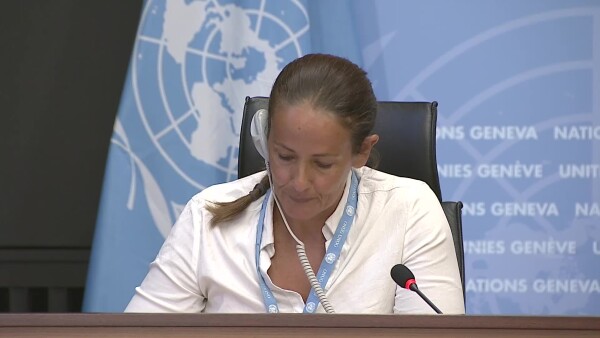
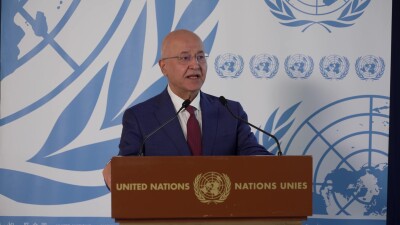
- Close up, Najat Rochdi speaking at podium
- SOUNDBITE (English) - Najat Rochdi, Deputy Special Coordinator, UN Resident Coordinator and Humanitarian Coordinator for Lebanon: ”The country is in the middle of a phase of hyperinflation, eroding the value of the national currency, people’s purchasing power and what remains of their trust in their leaders and institutions”.
- Medium shot, speakers at podium
- SOUNDBITE (English) - Najat Rochdi, Deputy Special Coordinator, UN Resident Coordinator and Humanitarian Coordinator for Lebanon: ”The public health system is stretched beyond its limits from the double impact of the economic crisis and the Covid-19 outbreak. People are increasingly unable to access and afford health care amid growing shortages of important medicines and medical supplies”.
- Medium shot, technician operating zoom meeting
- SOUNDBITE (English) - Najat Rochdi, Deputy Special Coordinator, UN Resident Coordinator and Humanitarian Coordinator for Lebanon: ”The crisis affects everyone in Lebanon, not just the Lebanese. As you know, Lebanon hosts the highest number of refugees per capita of residents in the world with over 1 million Syrian refugees and more than 270 000 Palestine refugees”.
- Wide shot, podium with speakers and screen
- SOUNDBITE (French) - Najat Rochdi, Deputy Special Coordinator, UN Resident Coordinator and Humanitarian Coordinator for Lebanon: “Les solutions sont connues, la liste des reformes prioritaires elle est très clairement articulé dans le RRRF, dans ‘Reform, Recovery and Reconstruction Framework’, qui a été dans tous les cas discuté avec la société civile, avec les autorités locales, avec les autorités nationales, avec le secteur privé, avec la communauté internationale, donc c’est vraiment un ‘ no brainer’. C’est connu, c’est qui doit être fait est connu ».
- Close up, journalist
- SOUNDBITE (French) - Najat Rochdi, Deputy Special Coordinator, UN Resident Coordinator and Humanitarian Coordinator for Lebanon: “Le développement de Liban est la responsabilité des Libanais. Le développement de Liban n’est pas la responsabilité de la communauté internationale. Nous espérons toujours qu’au niveau interne que les Libanais, que ça soit au niveau de leadership politique, ou d’autres leadership, qu’il y ait effectivement une décision pour mettre bien évidement l’intérêt du pays et l’intérêt des Libanais en priorité ».
- Wide shot, press briefing room with podium and speaker
- Medium shot, Najat Rochdi speaking from podium
- Medium shot, cameraman filming in front of screen
“The explosion at the Beirut port has accelerated a lot of things, that's for sure. The fact that the reforms were not carried out on time and normally they should have already started in 2018 - if it was not in 2018, they should have started in 2019 - because the economic and financial crisis, a lot of analysts had already predicted before. We're not talking about something that takes us by surprise today. I think everyone knew about it”.
"The pandemic has worsened a situation which was already fragile, and which somewhere has reached where we are today".
“The fact that there was no government formation also obviously had a huge impact on number one, the confidence. You know there is not a single investor who will be ready to come to Lebanon at least if there is really a very, very clear confidence in the banking system, in the institutions, etc. and above all it also accelerated the pauperization of the population”.
“The solutions are known, the list of priority reforms is very clearly articulated in the RRRF, in the 'Reform, recovery and reconstruction framework', which was in all cases discussed with civil society, with local authorities, with national authorities, with the private sector, with the international community, so it's really a 'no brainer'. It is known, it is well known what must be done".
“The development of Lebanon is the responsibility of the Lebanese. The development of Lebanon is not the responsibility of the international community. We always hope that at the internal level that the Lebanese, whether at the level of political leadership, or other leadership, that there is indeed a decision to obviously put the interest of the country and the interest of the Lebanese as a priority ”.
Similar Stories
1
1
1
Press Conferences | CITES
Wildlife trade and conservation policy discussions at the 81st meeting of the CITES Standing Committee (SC81)

1
1
1
Edited News | UNICEF , WHO , UNHCR
Yemen war continues to force families from homes amid hunger and disease
More than 250,000 people have now fled renewed fighting in Yemen, the UN said on Tuesday, citing particular concern for those sheltering in the southwestern city of Taiz and the wider governorate, where access is “essentially blocked”.
1
1
1
Press Conferences | UNHCR , UNCTAD , WMO , OCHA , UNICEF , WHO
UNHCR Hungary’s 1956 Refugee Crisis: 70 Years On, UNCTAD World Investment Forum 2026, Doha, WMO Greenhouse Gas Bulletin and Climate Update for COP31, OCHA Afghanistan: Malnutrition, Girls’ Education and Recovery, UNICEF Yemen: Child Malnutrition and Unsafe Water in Taiz, WHO Inequalities in Noncommunicable Diseases and Risk Factors
1
1
1
Press Conferences | UNHCR
End of UNHCR's 77th Annual Executive Committee (ExCom) meeting week

1
1
1
Edited News | UNICEF
A little over one year since a ceasefire agreement was announced between Hamas fighters and Israel, more than 340 children have been reported killed and hundreds more injured, the UN Children’s Fund, UNICEF, said on Friday.
1
1
1
Press Conferences | UNICEF , IOM , UNHCR
UN Special Assistant to the Personal Envoy Office (SUDAN): Peace Initiatives and Efforts in Sudan; UNICEF: Dire situation of children in Gaza; IOM: Damaged Homes and Energy Attacks Risk Displacing Ukrainians for this winter; UNHCR: update on EXCOM week
1
1
1
Press Conferences | IOM , UNDRR
UN stresses importance of household preparedness for disaster risk reduction.

1
1
1
Edited News | UNICEF , IFRC
Six weeks after Nepal’s deadly flooding disaster, communities are still struggling to rebuild their lives, but they will need sustained help as global warming increases the risk of another Himalayan catastrophe, the UN Children’s Fund (UNICEF) said on Friday.
1
1
1
Statements , Press Conferences | OHCHR
1
1
1
Press Conferences | UNHCR , UNICEF , IFRC , OHCHR , UN WOMEN , IOM , OCHA , WHO
UNHCR – ExCom Meeting, UNICEF – Nepal Recovery, IFRC – Flash Floods, WHO – Mental Health, IOM – South Sudan Floods, OCHA – DRC Humanitarian aid, UNHCR – Sahel Displacement, UNICEF – Yemen Update, IOM – Gaza Shelter, UN Women – Gaza Women, OHCHR – Arrests and detentions of Syrians by Israeli force
2
1
2
Press Conferences | UNCTAD
Presentation of the Trade and Developement Report 2026
Embargoed until 9 October 2026 at 11 a.m. (Geneva Time)
UNCTAD: UNCTAD’s flagship report finds that governments increasingly use industrial, trade, financial and technology policies to pursue economic and national security objectives. Market access and the ability to move into higher-value activities now depend more heavily on technology, finance and geopolitics.
1
1
1
Press Conferences | UPU
Release of the State of the Postal Sector Report 2026